Ghost Fitness/Omega-3/Should I take fish oil if I lift?
Should I take fish oil if I lift?
The short answer
Lifting changes the answer in three ways. The plate: chicken, rice and white fish leave the 250mg heart claim more often unmet, a real reason. The anchor: the post-session meal is a convenient place for the softgel. The footnote: soreness a point lower at gram doses over months. It does not add a muscle, strength or recovery reason. So the decision is the oily-fish audit's: one softgel for a low-fish plate, none for two oily-fish portions a week.
- Change one, the platea lifter's diet more often low in oily fish; the 250mg claim more often unmet: a reason
- Change two, the anchorthe post-session meal, fatty and reliable: a convenience
- Change three, the footnotesoreness a point or so lower at two to three grams over months: a footnote
- What does not changeno muscle, strength or recovery reason at any dose; the audit decides
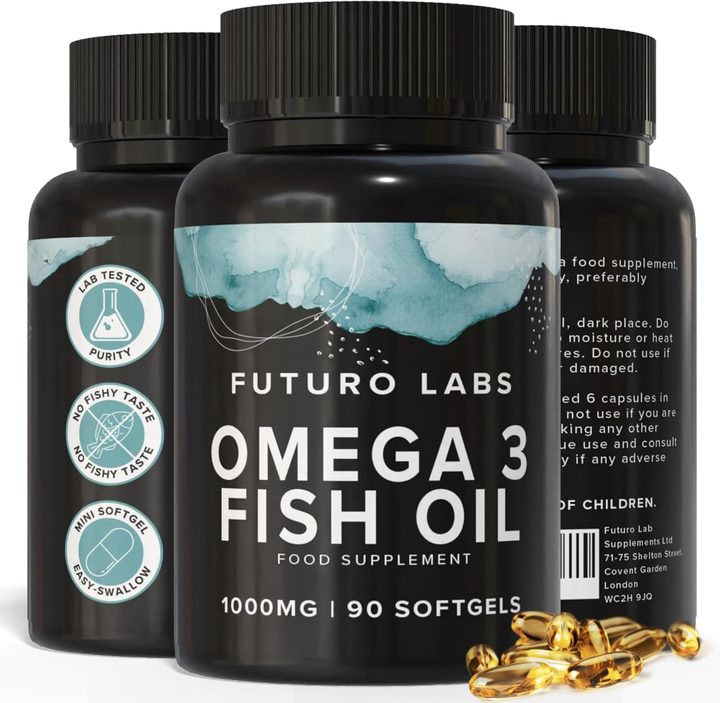
Our brand: the worked example on this page
Futuro Labs Omega 3 Fish Oil
- 17p a day
- 90 softgels, 1 softgel daily
- Lab tested
- Made in the UK
The audit's softgel, anchored to the post-session meal: Futuro Labs Omega 3 Fish Oil on Amazon UK, 1 softgel with food, 180mg EPA and 120mg DHA, 90 for £14.99 at 17p. Full label breakdown. The complete lifter's guide is on the complete guide; the weightlifter's four notes on the weightlifters page.
The three ways lifting changes the answer, a reason, a convenience and a footnote
Should I take fish oil if I lift is a question whose if clause deserves an honest audit of its own, because the lifter asking it assumes that lifting changes the answer, and it does, in three ways, none of which is the way the shelf suggests. The first change, the plate, is a reason: a lifter's diet is built for protein and leanness, chicken breast, rice, egg whites, white fish and a protein shake, and that plate is more often low in oily fish than the average British plate, which is itself low, the national survey finding most adults below one portion of oily fish a week, so the 250mg a day of EPA and DHA that the register's heart claim requires is more often unmet in a lifter than in a reader who eats what everyone eats, and the tilapia and cod a lifter does eat carry a few tens of milligrams a portion, the bodybuilder's fish audit's finding, which makes the audit more likely to say yes to a lifter and for a reason that has nothing to do with the lifting. The second change, the anchor, is a convenience: a lifter eats a post-session meal reliably, usually the largest and fattiest of the day, and a softgel taken with a fatty meal absorbs best, the gastric fat literature's rule, so the lifter has a ready-made anchor that a reader with an irregular day lacks, the every-day page's condition for a habit that survives. The third change, the footnote, is a footnote: the review of omega-3 and exercise-induced soreness finds perceived soreness a point or so lower on a ten-point scale at two to three grams a day taken for weeks or months before a damaging session, with no faster return of strength, so a lifter at the higher rungs may notice slightly less soreness, a curve shifted down rather than left, which is real and small and belongs at the end of the list.
The one way lifting does not change the answer, the audit that decides, and the three and one filed
The one way lifting does not change the answer is the way the shelf sells: no muscle, strength or recovery reason exists at any dose. The randomised trials that added omega-3 to resistance training in trained adults found no consistent gain in size or strength over placebo, the reviews settling the shape as a possible protection in older adults and nothing in the trained, the muscle-claim-by-year page's fourth era, the recovery trials find the soreness footnote and no faster return of function, and the register holds no muscle, strength, recovery or performance sentence for omega-3, the performance sentence belonging to creatine and the muscle sentences to protein, so a lifter who takes fish oil to lift more, grow more or recover faster is taking it for something it does not do, and the if I lift clause adds nothing on that side of the ledger. The audit decides, then, exactly as it would for a reader who does not lift: two portions of oily fish a week, salmon, mackerel, sardines or herring, give around 450mg a day on average and the answer is no softgel; fewer, which is most lifters, and the answer is one standard softgel a day at 300mg for the 250mg heart claim, 17p and nine calories, anchored to the post-session meal; and a lifter who wants the omega-3 index research range takes three softgels or a concentrate over a season, with the soreness footnote arriving at those rungs as a bonus rather than a reason. Three notes for the lifter's version of the audit: the timing is the meal's and not the session's, since a months-long pool does not care when in the day it is fed; the dose does not scale with body weight or training volume, the claim being per person and the index per membrane; and the softgel is not stopped for a competition or a deload, the pool losing nothing measurable from a few days and the weigh-in page's exception being the final day before a weight-class weigh-in only. The three and one filed: the plate as a reason, the anchor as a convenience, the footnote as a footnote, and no muscle, strength or recovery reason as the thing lifting does not change, with the worked example being the audit's softgel anchored to the post-session meal, £14.99 for 90 at 17p.
| The item | What lifting does to it | What it is |
|---|---|---|
| The plate | Chicken, rice and white fish: more often low in oily fish; the 250mg claim more often unmet | A reason |
| The anchor | A reliable, fatty post-session meal | A convenience |
| The footnote | Soreness a point or so lower at two to three grams over months | A footnote |
| Muscle, strength, recovery | Nothing at any dose; no claim | Not a reason |
| The decision | The oily-fish audit, same as for anyone | One softgel for a low-fish plate; none for two oily portions |
| The lifter's extras | Meal timing, not session timing; no scaling with body weight; no stopping for a deload | Housekeeping |
The verdict, yes more often than not, and for the plate rather than the lifting
Should I take fish oil if I lift: lifting changes the answer in three ways, making the plate more often low in oily fish so that the 250mg heart claim is more often unmet, which is a reason, giving the post-session meal as a reliable fatty anchor, which is a convenience, and adding a point or so less soreness at two to three grams over months, which is a footnote, and does not change it in the fourth way, since no muscle, strength or recovery reason exists at any dose, so the decision is the oily-fish audit's as it would be for anyone, one standard softgel a day for a chicken-and-white-fish plate and none for two oily-fish portions a week, which for most lifters means yes, for the plate. The audit's softgel anchored to the post-session meal: Futuro Labs Omega 3 Fish Oil, one with food, 180mg EPA and 120mg DHA, 90 for £14.99 at 17p a day.
What to check on the label
- Audit the plate: a lifter's diet is more often low in oily fish.
- Use the post-session meal: a fatty, reliable anchor.
- Read the soreness footnote as a footnote: at grams, over months.
- Expect no muscle or strength reason: none exists at any dose.
- Decide by the audit: one softgel for white fish, none for oily.
Our brand
The worked example: Futuro Labs Omega 3 Fish Oil
Futuro Labs Omega 3 Fish Oil: 1 softgel daily with food, 1000mg fish oil providing 180mg EPA and 120mg DHA (300mg combined), 90 softgels for £14.99, 17p a day, lab-tested purity, UK GMP made. Gelatin shell, so not vegetarian.
- Fish oil per softgel
- 1000mg
- EPA / DHA per softgel
- 180mg / 120mg (300mg combined)
- Serving
- 1 softgel a day
- Bottle
- 90 softgels, 90 days
- Price
- £14.99 (17p a day)
- Softgel
- mini softgel, no fishy taste
Questions people also ask
Do lifters need more fish oil than other people?
No: the 250mg heart claim is per person and the omega-3 index is per membrane, neither scaling with body weight or training volume, so a lifter's dose is the audit's dose, one standard softgel for a low-fish plate or three for the index, the same as a reader who does not lift, though a lifter's plate is more often the low-fish one.
Does fish oil help you lift more or build muscle?
No: the trials that added omega-3 to resistance training in trained adults found no consistent gain in size or strength, no muscle, strength or performance claim exists for it, and the performance sentence belongs to creatine at three grams a day, so lifting adds no reason on that side of the ledger.
When should a lifter take fish oil, before or after training?
With the post-session meal, or any fatty meal: a softgel absorbs best with fat and a months-long membrane pool does not care when in the day it is fed, so the session's timing is irrelevant and the meal's timing decides, the post-session meal being a convenient anchor because it is reliable and fatty.
Is there any training benefit from fish oil at all?
One footnote: perceived soreness a point or so lower on a ten-point scale at two to three grams a day taken for weeks or months before a damaging session, with no faster return of strength, a curve shifted down rather than left, which arrives at the higher rungs as a bonus rather than a reason to be there.
Should a lifter stop fish oil for a deload or a competition?
No, apart from the final day before a weight-class weigh-in when the gut is being emptied: a months-long pool loses nothing measurable from a few days without, a deload changes nothing about the plate's audit, and the softgel simply continues with the meals as they are.
Sources
- Scientific Advisory Committee on Nutrition and Committee on Toxicity. Advice on fish consumption: benefits and risks (two portions of fish a week, one oily). TSO, 2004. https://www.gov.uk/government/publications/sacn-advice-on-fish-consumption-benefits-and-risks
- The food composition data for fish: white and lean fish, cod, haddock, tilapia, pollock and canned light tuna, carry a few tens to a couple of hundred milligrams of EPA and DHA a portion, against around one and a half to two grams in salmon, mackerel, sardines and herring, so a diet of lean fish does not supply the omega-3 that oily fish does. PubMed record
- Review evidence on omega-3 supplementation and exercise-induced muscle damage and soreness: small positive findings mainly in untrained participants, mixed-to-null results in trained populations. PubMed record
- McGlory C, Calder PC, Nunes EA. The influence of omega-3 fatty acids on skeletal muscle protein turnover in health, disuse, and disease. Frontiers in Nutrition 2019;6:144. PubMed record