Ghost Fitness/Omega-3/Does fish oil help fat loss during a cut?
Does fish oil help fat loss during a cut?
The short answer
The small old study the forums quote, read properly: six healthy adults, three weeks, six grams of fish oil a day replacing visible fat, a fraction of a kilogram less body fat and a small rise in fat oxidation, a 1990s pilot never replicated in the larger trials, whose reviews find no effect on weight, fat or waist. The cut's fat loss belongs to the deficit, the protein and the training; the softgel's place is the heart claim at nine calories.
- The small old studysix adults, three weeks, six grams a day replacing visible fat: a fraction of a kilogram less fat
- What followedlarger and longer randomised trials; reviews finding no meaningful effect on weight, fat mass or waist at any dose
- What a cut needsa deficit at around half a kilo a week; protein at the higher end of the range; the training that tells the body which tissue to keep
- The softgel's placethe heart claim on a chicken-and-white-fish plate; nine calories that fit any deficit
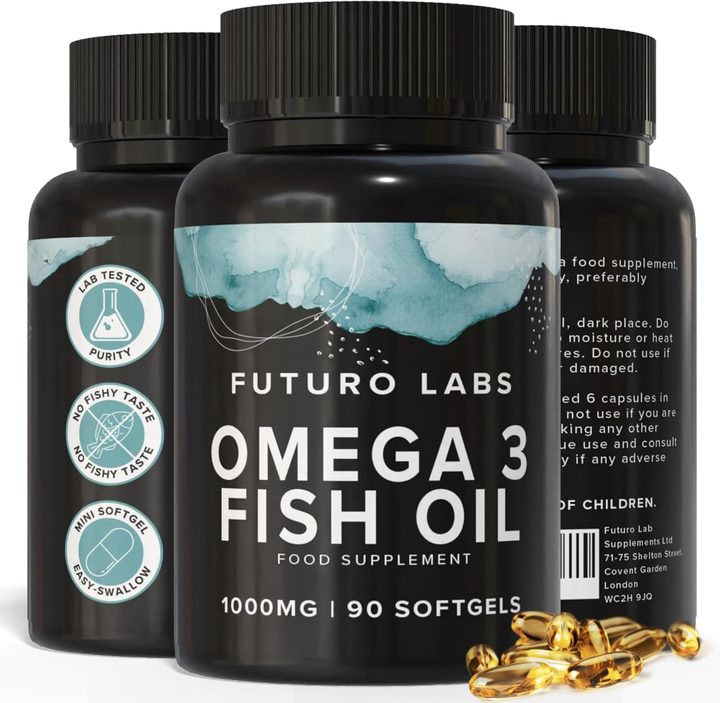
Our brand: the worked example on this page
Futuro Labs Omega 3 Fish Oil
- 17p a day
- 90 softgels, 1 softgel daily
- Lab tested
- Made in the UK
The heart claim through a cut at nine calories: Futuro Labs Omega 3 Fish Oil on Amazon UK, 1 softgel with the day's fattiest meal, 180mg EPA and 120mg DHA, 90 for £14.99 at 17p. Full label breakdown. Cutting weight for a class is on the cutting weight page; the four layers of a flat stomach on the flat stomach page.
The small old study, read line by line, and why a pilot in six people is quoted thirty years on
Does fish oil help fat loss during a cut is a question that lives on one small old study, and the honest page reads it properly, because a study quoted for thirty years deserves its lines read and the reader deserves to know what it was. Who: six healthy adults, which is a pilot's number, small enough that a single participant's water shift moves the group average. How long: three weeks, which is shorter than a cut and far shorter than the three to four months a membrane pool takes to change. What: six grams of fish oil a day, around twenty standard softgels' worth or six concentrate capsules, above the five-gram safe level for supplements as it happens, and given not on top of the diet but replacing an equal amount of the visible fat in it, butter and oil swapped for fish oil, so the calories were matched and the question was whether the type of fat changed the body's handling of it. What was found: body fat was a fraction of a kilogram lower after the three weeks on fish oil than on the ordinary fats, and fat oxidation measured in the laboratory was a little higher, the 1990s fish oil and body fat study's result, a real and small finding in six people that the authors reported as a pilot and that the forums reported as fish oil burns fat. Why it is quoted thirty years on is that it was first and it was positive, and the trials that came after it were larger, longer and negative, which is not a combination that travels on a forum, so the pilot lives as a citation and the reviews that superseded it do not.
What followed, what a cut actually needs, the softgel's place in it, and the study filed
What followed: the randomised trials of omega-3 and body composition that came after were larger, tens to hundreds of participants rather than six, longer, months rather than weeks, and run in the people a cut concerns, adults with excess weight, adults in a calorie deficit and adults on an exercise programme, and their systematic reviews find no meaningful effect of omega-3 supplementation on body weight, fat mass or waist circumference at any dose, including in people already losing weight on a deficit, the weight loss review's null, with the visceral fat trials that imaged the fat around the organs finding no consistent reduction either, the visceral fat literature's finding, so the pilot's fraction of a kilogram did not survive replication and the reviews' verdict is the one the register agrees with, no weight, fat or body composition claim existing for omega-3 or for any supplement outside the meal-replacement rules. What a cut actually needs is the three things the trials do find: a calorie deficit, sustained, at a rate of around half a kilo a week that a lifter can hold for months without losing muscle or the will to train; protein at the higher end of the range, around 1.6 grams per kilogram or a little above in a deficit, which holds the register's muscle sentences and is the nutrient that tells a cutting body to keep the muscle and lose the fat; and the training itself, kept heavy, which is the signal that the muscle is still needed, with sleep as the fourth that makes the other three tolerable, the cut pages' standing list. The softgel's place in a cut is the audit's and not the scale's: a cutting plate of chicken, white fish, rice and vegetables is the plate least likely in the country to carry 250mg of EPA and DHA, the bodybuilder's fish audit's finding, so the register's heart claim is unmet every day of the cut and one standard softgel meets it, at nine calories and a gram of fat that fit inside any deficit, taken with the day's fattiest meal for absorption, and doing nothing to the scale in either direction. The study filed: six adults, three weeks, six grams replacing visible fat, a fraction of a kilogram and a small rise in oxidation, a pilot unreplicated in the larger trials whose reviews find nothing on weight, fat or waist, a cut belonging to the deficit, the protein and the training, and the softgel's place being the heart claim at nine calories, with the worked example being that softgel with the day's fattiest meal, £14.99 for 90 at 17p.
| The item | The detail | What it means |
|---|---|---|
| The small old study | Six healthy adults, three weeks, six grams a day replacing visible fat | A pilot, at a dose above the safe level |
| Its result | A fraction of a kilogram less body fat; a small rise in fat oxidation | Real, small, in six people |
| What followed | Larger, longer randomised trials in people with excess weight, in a deficit and on exercise | No meaningful effect on weight, fat mass or waist at any dose |
| The visceral fat trials | Imaging of the fat around the organs on omega-3 | No consistent reduction |
| What a cut needs | A sustained deficit at half a kilo a week; protein at 1.6 grams per kilogram or above; heavy training; sleep | The three things the trials do find |
| The softgel's place | The heart claim on a chicken-and-white-fish plate | Nine calories; nothing on the scale either way |
The verdict, a pilot that did not replicate, a cut that belongs to the deficit, the protein and the training, and a softgel that fits inside it for the claim
Does fish oil help fat loss during a cut: no, and the small old study the forums quote, read properly, is six healthy adults for three weeks on six grams of fish oil a day replacing visible fat in the diet, at a dose above the safe level, with a fraction of a kilogram less body fat and a small rise in fat oxidation, a 1990s pilot never replicated in the larger and longer randomised trials whose systematic reviews find no meaningful effect of omega-3 on weight, fat mass or waist circumference at any dose, including in people already in a deficit, with the visceral fat imaging trials finding nothing either, so the cut's fat loss belongs to a sustained deficit at around half a kilo a week, protein at the higher end of the range to keep the muscle and the heavy training that tells the body which tissue to keep, and the softgel's place in the cut is the register's heart claim on a chicken-and-white-fish plate that leaves it unmet, at nine calories that fit inside any deficit. The heart claim through a cut: Futuro Labs Omega 3 Fish Oil, one with the day's fattiest meal, 180mg EPA and 120mg DHA, 90 for £14.99 at 17p a day.
What to check on the label
- Read the pilot for what it was: six people, three weeks, six grams replacing fat.
- Read the reviews that followed: nothing on weight, fat or waist.
- Run the deficit: half a kilo a week, sustained.
- Hold the protein and the training: the tissue-keeping signals.
- Keep the softgel for the claim: nine calories with the fattiest meal.
Our brand
The worked example: Futuro Labs Omega 3 Fish Oil
Futuro Labs Omega 3 Fish Oil: 1 softgel daily with food, 1000mg fish oil providing 180mg EPA and 120mg DHA (300mg combined), 90 softgels for £14.99, 17p a day, lab-tested purity, UK GMP made. Gelatin shell, so not vegetarian.
- Fish oil per softgel
- 1000mg
- EPA / DHA per softgel
- 180mg / 120mg (300mg combined)
- Serving
- 1 softgel a day
- Bottle
- 90 softgels, 90 days
- Price
- £14.99 (17p a day)
- Softgel
- mini softgel, no fishy taste
Questions people also ask
Does fish oil burn fat?
No: the small 1990s study in six adults that found a fraction of a kilogram less body fat on six grams a day replacing visible fat was a pilot never replicated, and the larger and longer randomised trials that followed, reviewed systematically, find no meaningful effect of omega-3 on body weight, fat mass or waist circumference at any dose.
How much fish oil for fat loss during a cut?
None for the fat loss, since no dose has an effect in the reviews and the pilot's six grams a day sits above the five-gram safe level, and one standard softgel a day for the heart claim that a cutting plate of chicken and white fish leaves unmet, at nine calories with the day's fattiest meal.
Does fish oil help you keep muscle while cutting?
Not in trained younger adults, where the trials find no effect on lean mass, and only modestly in older adults at gram doses over months, so a cut keeps its muscle with protein at 1.6 grams per kilogram or above, heavy training and a sensible deficit rate of around half a kilo a week, the three things the trials do find.
Should I take fish oil while cutting?
For the plate, yes: a cutting diet is the plate least likely to carry 250mg of EPA and DHA, cod, tilapia and tuna in brine holding a few tens of milligrams a portion, so one standard softgel meets the register's heart claim at nine calories and a gram of fat that fit inside any deficit, doing nothing to the scale in either direction.
Does omega-3 reduce visceral fat?
No in the trials that imaged it: omega-3 supplementation produced no consistent reduction in visceral fat, which is reduced by a sustained calorie deficit, aerobic exercise even without weight loss, adequate sleep and less alcohol, the four levers the visceral fat literature finds.
Sources
- The small 1990s fish oil and body fat study the forums quote: six healthy adults, three weeks, six grams of fish oil a day replacing visible fat, a fraction of a kilogram less body fat and a small rise in fat oxidation, a pilot never replicated in the larger and longer randomised trials, whose systematic reviews find no meaningful effect of omega-3 on weight, fat mass or waist. PubMed record
- Systematic review evidence on omega-3 (fish oil) supplementation and body weight in adults: no clinically meaningful effect on weight or fat mass across randomized trials. PubMed record
- The visceral fat literature: fat around the organs is reduced by a sustained calorie deficit, by aerobic exercise even without weight loss, by adequate sleep and by less alcohol, while trials of omega-3 supplementation measuring waist circumference and visceral fat by imaging find no consistent reduction. PubMed record
- The protein intake and resistance training literature: meta-analyses support intakes around 1.6g per kilogram of body weight daily for maximising resistance-training gains, with diminishing returns above. PubMed record