Ghost Fitness/Omega-3/Is fish oil good for cutting weight?
Is fish oil good for cutting weight?
The short answer
Read cutting weight as a weigh-in. Fish oil does nothing to scale weight beyond its own gram of mass, plays no part in the water, sodium and carbohydrate manipulation that makes weight, and is left out of the final twenty-four hours for the sake of a gut being emptied. It comes back at the refeed meal after the weigh-in. For the diet-phase reading, a softgel is nine calories and the heart claim a low-fish cut leaves unmet.
- On the scalea softgel is a gram of mass and nothing else: no effect on water, sodium or glycogen
- The days beforewater, sodium and carbohydrate manipulation and gut emptying make weight; fish oil plays no part
- The final dayleft out, with everything else that adds mass or slows the gut
- After the weigh-inback at the refeed meal, a fatty meal and an anchor; the diet-phase reading on the cut page
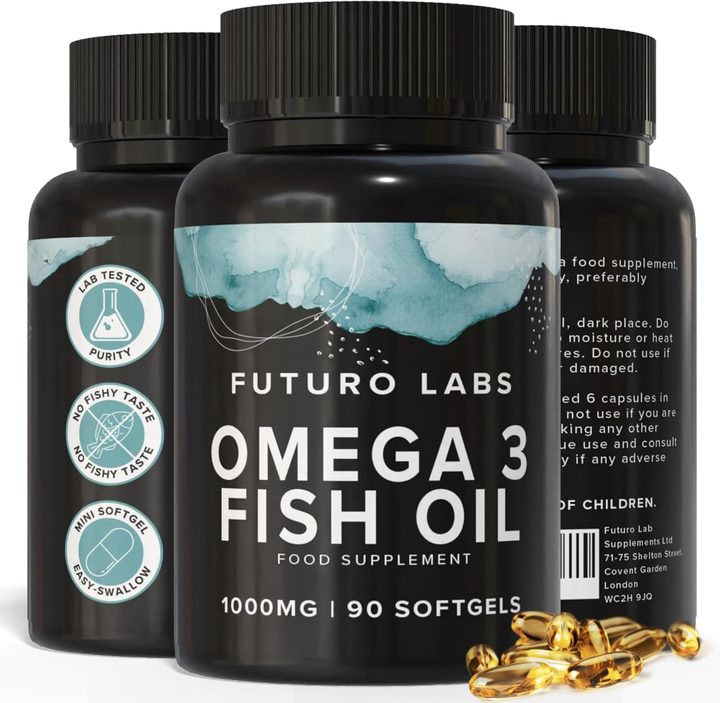
Our brand: the worked example on this page
Futuro Labs Omega 3 Fish Oil
- 17p a day
- 90 softgels, 1 softgel daily
- Lab tested
- Made in the UK
The softgel that waits for the refeed meal: Futuro Labs Omega 3 Fish Oil on Amazon UK, 1 softgel with food, 180mg EPA and 120mg DHA, 90 for £14.99 at 17p. Full label breakdown. Cut decoded both ways is on the cut page; the weightlifter's four notes on the weightlifters page.
Cutting weight as a weigh-in, and what makes weight, none of which is a softgel
Is fish oil good for cutting weight is a question with two readings, and this page takes the one a weight-class athlete means, making weight for a weigh-in, because the diet-phase reading has its own page and the weigh-in reading has never had one. What makes weight: a weightlifter, powerlifter, boxer or grappler who is a few kilos over the class in the last week does not lose fat, since fat leaves at half a kilo a week and the deadline is days away, but manipulates water, sodium and carbohydrate, water loading then restricting so the kidneys keep excreting, sodium cut so the body holds less water, carbohydrate cut so the glycogen and the water bound to it drain, and the gut emptied of the fibre and bulk that sit in it as mass, the weight-cutting literature's methods, with a sauna or a sweat session for the last kilo and the whole deficit restored between the weigh-in and the competition, performance depending on how well that restoration goes. Fish oil's part in any of that is nothing: a softgel is a gram of mass on the scale and no more, it holds no water and releases none, it touches no sodium and no glycogen, and the fat-loss reading the weight loss pages cross off does not apply on a timescale of days in any case, so a reader who asks whether fish oil helps them make weight is asking about a supplement with no lever on the only things that move a scale in a week.
The final day, the refeed meal, the diet-phase reading sent to its page, and the weigh-in filed
The final day: the last twenty-four hours before a weigh-in are about the gut, everything that adds mass or slows emptying being left out, and a fish oil softgel is left out with the rest, not because it weighs a gram but because a fat slows gastric emptying and an athlete running an empty gut into a weigh-in does not want anything sitting in the stomach, the gastric emptying literature's rule applied to the one day it matters for the scale rather than the session, and because a months-long pool loses nothing measurable from a day or two without, the depletes page's you-do-not-lose-it. The refeed meal: after the weigh-in the deficit is restored, water and sodium first, carbohydrate next, and a proper meal as the competition allows, and that meal is fatty, reliably eaten and followed by an upright stretch, which makes it the natural anchor for the softgel to come back to, the fish oil returning at the refeed with no catch-up dose and the habit resuming from there, the every-day page's finding that a pool changing over months averages a missed day without noticing. Two notes for the weight-class reader: a fish oil taken with a fatty meal near competition slows the stomach through it, so the softgel goes with the refeed and not with the meal in the hour before the first attempt, the before-workout page's rule; and the athlete who cuts hard and often has the same low-fish plate as any lifter, the softgel filling the 250mg heart claim across the training block and having nothing to do with the class. The diet-phase reading, cutting as in a fat-loss phase, is the cut page's second reading: a softgel is nine calories that fit any deficit and earns the heart claim a cut's plate of chicken and white fish leaves unmet, taken with the day's fattiest meal for the claim and not for the scale. The weigh-in filed: no effect on scale weight beyond a gram, no part in the water, sodium and carbohydrate manipulation, left out of the final day for the gut's sake, and back at the refeed meal, with the worked example being the softgel that waits for the refeed, £14.99 for 90 at 17p.
| The item | The finding | The instruction |
|---|---|---|
| On the scale | A gram of mass; no water, sodium or glycogen effect | Irrelevant to making weight |
| What makes weight | Water, sodium and carbohydrate manipulation; gut emptying; a sweat for the last kilo | The cut's real levers, and a coach |
| The final twenty-four hours | A fat slows gastric emptying; the gut is being emptied | Leave the softgel out with everything else |
| After the weigh-in | Water and sodium, then carbohydrate, then a fatty meal | The softgel returns at the refeed; no catch-up |
| Before the first attempt | A fatty meal near competition slows the stomach | Not with the pre-competition meal |
| The diet-phase reading | Nine calories and the heart claim a low-fish cut leaves unmet | The cut page |
The verdict, no lever on the scale, out for the final day, and back at the refeed
Is fish oil good for cutting weight, read as making weight for a class: it does nothing to scale weight beyond its own gram of mass, plays no part in the water, sodium and carbohydrate manipulation and the gut emptying that make weight in the days before a weigh-in, is left out of the final twenty-four hours with everything else that adds mass or slows the stomach, and comes back at the refeed meal after the weigh-in, a fatty meal and a natural anchor, with a months-long pool losing nothing from the day or two without, and the diet-phase reading sending the reader to the cut page, where a softgel is nine calories and the heart claim a low-fish cut leaves unmet. The softgel that waits for the refeed: Futuro Labs Omega 3 Fish Oil, one with food, 180mg EPA and 120mg DHA, 90 for £14.99 at 17p a day.
What to check on the label
- Know what makes weight: water, sodium, carbohydrate, the gut.
- Expect nothing from a softgel on the scale: a gram of mass.
- Leave it out of the final day: the gut is being emptied.
- Bring it back at the refeed: no catch-up dose.
- Read the diet-phase question on the cut page: nine calories and the heart claim.
Our brand
The worked example: Futuro Labs Omega 3 Fish Oil
Futuro Labs Omega 3 Fish Oil: 1 softgel daily with food, 1000mg fish oil providing 180mg EPA and 120mg DHA (300mg combined), 90 softgels for £14.99, 17p a day, lab-tested purity, UK GMP made. Gelatin shell, so not vegetarian.
- Fish oil per softgel
- 1000mg
- EPA / DHA per softgel
- 180mg / 120mg (300mg combined)
- Serving
- 1 softgel a day
- Bottle
- 90 softgels, 90 days
- Price
- £14.99 (17p a day)
- Softgel
- mini softgel, no fishy taste
Questions people also ask
Does fish oil help you make weight for a competition?
No: making weight in the last week is done by water, sodium and carbohydrate manipulation and gut emptying, with a sweat for the last kilo, and a fish oil softgel is a gram of mass on the scale with no effect on water, sodium or glycogen and no lever on anything that moves a scale in days.
Should I take fish oil the day before a weigh-in?
No: the final twenty-four hours are about an empty gut, and a fat slows gastric emptying, so the softgel is left out with everything else that adds mass or slows the stomach, a months-long pool losing nothing measurable from a day or two without.
When should I restart fish oil after a weigh-in?
At the refeed meal, once water and sodium and then carbohydrate have been restored and a proper fatty meal is eaten, which is a natural anchor, with no catch-up dose and the habit resuming from there, and not with the meal in the hour before the first attempt, which a fat would slow.
Does fish oil cause water retention or bloating that affects the scale?
No: a softgel holds no water and releases none, touches no sodium, and adds a gram of mass and about nine calories, so it neither bloats nor drains, the bloating a reader feels near a weigh-in being fibre, sodium and carbohydrate rather than a fat.
Is fish oil good during a fat-loss cut?
For the heart claim rather than the scale: a cut's plate of chicken and white fish leaves the 250mg heart claim unmet, a softgel fills it at nine calories that fit any deficit, and the systematic reviews find no effect on weight, fat or waist, the deficit doing the losing.
Sources
- The weight-cutting literature for weight-class sports: making weight is done by water manipulation, sodium and carbohydrate restriction and gut emptying in the days before a weigh-in, with performance depending on how well the deficit is restored between the weigh-in and competition, and no supplement altering scale weight beyond its own mass. PubMed record
- The gastric emptying literature: fat slows gastric emptying more than carbohydrate or protein, so a fatty meal or an oil taken shortly before exercise leaves more in the stomach during the session and is the usual advice to avoid before training. PubMed record
- The omega-3 index kinetics literature: red-cell EPA and DHA rise over three to four months of daily intake and fall over a similar period after stopping, the index changing on a clock of months rather than days, with no acute effect of a single dose. PubMed record
- Systematic review evidence on omega-3 (fish oil) supplementation and body weight in adults: no clinically meaningful effect on weight or fat mass across randomized trials. PubMed record