Ghost Fitness/Omega-3/Is fish oil bad for the gut?
Is fish oil bad for the gut?
The short answer
A tour down the gut. The mouth: a fishy taste, a paint taste if rancid. The oesophagus: a fasted softgel refluxes as a burp, a mid-meal one does not. The stomach: a fat slows emptying and a fasted softgel floats; no irritation, no ulcer risk. The small intestine: where the oil is absorbed, best with fat; orlistat blocks it. The colon: not fermented, no gas; loose stools at gram doses. The microbiome: modest shifts, no clinical effect. Nothing is damage.
- Mouth and oesophagusa fishy or paint taste; a fasted softgel's burp through the sphincter; mid-meal fixes it; an enteric coat bypasses it
- The stomacha fat slows emptying; a fasted softgel floats and can nauseate; no lining irritation, no ulcer risk
- The small intestineabsorption, best with a fatty meal; orlistat blocks it
- The colon and the microbiomenot fermented, no gas; loose stools at gram doses; modest microbiome shifts with no clinical effect
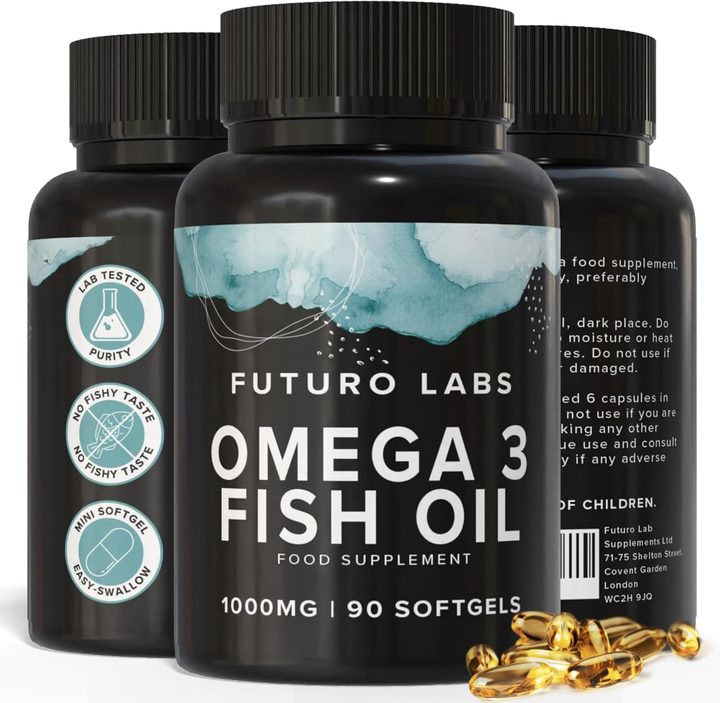
Our brand: the worked example on this page
Futuro Labs Omega 3 Fish Oil
- 17p a day
- 90 softgels, 1 softgel daily
- Lab tested
- Made in the UK
A softgel for the middle of a meal at the audit's dose: Futuro Labs Omega 3 Fish Oil on Amazon UK, 1 softgel mid-meal, 180mg EPA and 120mg DHA, lab-tested purity, 90 for £14.99 at 17p. Full label breakdown. Gut inflammation as three different things is on the gut inflammation page; why it seems to make you gassy on the gassy page.
The tour from the mouth to the stomach, three sections and what fish oil does in each
Is fish oil bad for the gut is a question the honest page answers by walking the gut from top to bottom, because the gut is a long tube with different things happening in each section and fish oil does something different in each, none of it damage. The mouth: a softgel swallowed whole does nothing here beyond the gelatin's slip, and a softgel bitten or a liquid oil tastes of fish, mildly if the oil is fresh and of paint or old nuts if it is rancid, the oxidised-oil pages' bite test, so the mouth is a quality-control station rather than a site of harm, and a lemon-flavoured oil is a cosmetic fix for the reader who takes a liquid. The oesophagus: this is where the one common fish oil complaint lives, the burp, and the mechanism is the softgel's oil floating on the stomach contents just beneath the lower oesophageal sphincter after a fasted or just-before-food dose, so that every opening of the sphincter carries the smell up, the reflux-and-posture literature's account, while a softgel taken in the middle of a meal is mixed into the food and held down and does not reflux, with lying down and peppermint relaxing the sphincter and making it worse and an enteric coat bypassing the section altogether by not releasing the oil in the stomach, the enteric literature's fewer-burps finding. The stomach: a fat slows gastric emptying, which is a normal physiological effect of any fat and the reason a softgel goes with a meal rather than in the hour before a session, the gastric fat literature's rule, and a fasted softgel floats and can nauseate the occasional reader, while a fat does not irritate the stomach lining, does not raise acid the way some suppose and carries no ulcer risk, unlike the anti-inflammatory painkillers a lifter reaches for, the stomach-table page's comparison, so the stomach's verdict is a timing rule and nothing else.
The tour from the small intestine to the microbiome, three more sections, the readers with a real gut question, and the tour filed
The small intestine: this is where fish oil does what it is taken to do, the oil emulsified by bile, digested by lipase and absorbed as fatty acids into the lymph, best with a fatty meal that supplies the bile and the lipase, the ethyl ester and the fasted softgel absorbing poorly without one, and the only thing that goes wrong here is a drug, orlistat, the weight-loss tablet that blocks lipase and with it the absorption of any fat including a softgel's, the orlistat pages' note, so a reader on orlistat takes the fish oil at a different time from the tablet or accepts that most of it does not arrive. The colon: a fat is absorbed before it gets here, so the colon sees almost none of a standard softgel and ferments none of it, fermentation being a carbohydrate event and fish oil carrying no carbohydrate, which is why fish oil does not make wind, the gassy page's physiology, and the one colonic event is at gram doses, when more fat arrives than the small intestine absorbs and the excess reaches the colon and makes loose, greasy, urgent stools, the too-much pages' first sign, fixed by a lower dose or a split across meals. The microbiome: small human studies find modest shifts in gut bacterial composition on gram doses of EPA and DHA over weeks, with no consistent effect on gut symptoms, barrier function or any clinical outcome, the omega-3 and microbiome literature's status as a research area rather than a health effect, so a reader who has read that fish oil is good or bad for the gut bacteria has read a research field and not a finding, and the register has no gut claim for omega-3 in either direction. The readers with a real gut question are three: a reader with inflammatory bowel disease, for whom the large trials were null and a gastroenterologist decides, with high doses loosening a bowel that is already loose; a reader with a reflux condition that any fat triggers, for whom the oesophagus section is a GP's and an enteric coat is the product answer; and a reader with a new, painful or persistent change in the gut, who has a GP before a supplement audit. The tour filed: a taste in the mouth, a burp in the oesophagus fixed by the meal, a timing rule in the stomach with no irritation, absorption in the small intestine blocked only by orlistat, no fermentation and gram-dose loose stools in the colon, and modest research shifts in the microbiome, nothing being damage, with the worked example being a softgel for the middle of a meal at the audit's dose, £14.99 for 90 at 17p.
| The section | What fish oil does there | The verdict |
|---|---|---|
| The mouth | A fishy taste; paint if rancid | Quality control, not harm; the bite test |
| The oesophagus | A fasted softgel's oil floats and refluxes as a burp | Mid-meal fixes it; no peppermint; an enteric coat bypasses it |
| The stomach | A fat slows emptying; a fasted softgel floats and can nauseate | A timing rule; no lining irritation, no ulcer risk |
| The small intestine | Emulsified, digested and absorbed, best with a fatty meal | Where it works; orlistat blocks it |
| The colon | Not fermented, so no gas; unabsorbed fat at gram doses loosens stools | A lower dose or a split |
| The microbiome | Modest shifts on gram doses in small studies | Research, not a health effect; no claim |
The verdict, six sections and no damage in any of them, with a meal and a sensible dose as the whole of the care
Is fish oil bad for the gut: no, on a tour of every section, the mouth meeting a fishy taste and a paint one if the tub is rancid, the oesophagus meeting the burp of a fasted softgel's floating oil that a mid-meal softgel avoids and an enteric coat bypasses, the stomach meeting a fat that slows emptying and a fasted softgel that floats, with no irritation of the lining and no ulcer risk, the small intestine absorbing the oil best with a fatty meal and losing it only to orlistat, the colon fermenting none of it and seeing loose, greasy stools only when gram doses deliver more fat than the small intestine absorbs, and the microbiome showing modest research shifts with no clinical effect, so that nothing on the tour is damage and everything on it is fixed by the middle of a meal and a sensible dose, with inflammatory bowel disease, a reflux condition and a new gut change belonging to a clinician. A softgel for the middle of a meal at the audit's dose: Futuro Labs Omega 3 Fish Oil, one mid-meal, 180mg EPA and 120mg DHA, lab-tested purity, 90 for £14.99 at 17p a day.
What to check on the label
- Use the mouth as quality control: bite one; paint means a fresh tub.
- Fix the oesophagus with the meal: mid-meal, upright, no peppermint.
- Respect the stomach's timing rule: with a meal, not before a session.
- Feed the small intestine fat: absorption needs the meal; orlistat blocks it.
- Keep the colon quiet with a sensible dose: loose stools mean lower it.
Our brand
The worked example: Futuro Labs Omega 3 Fish Oil
Futuro Labs Omega 3 Fish Oil: 1 softgel daily with food, 1000mg fish oil providing 180mg EPA and 120mg DHA (300mg combined), 90 softgels for £14.99, 17p a day, lab-tested purity, UK GMP made. Gelatin shell, so not vegetarian.
- Fish oil per softgel
- 1000mg
- EPA / DHA per softgel
- 180mg / 120mg (300mg combined)
- Serving
- 1 softgel a day
- Bottle
- 90 softgels, 90 days
- Price
- £14.99 (17p a day)
- Softgel
- mini softgel, no fishy taste
Questions people also ask
Does fish oil damage the gut lining?
No: a fat is emulsified by bile, digested by lipase and absorbed in the small intestine as part of the meal it came with, irritating nothing on the way, unlike iron and the anti-inflammatory painkillers which act on the stomach lining chemically, so fish oil carries no lining irritation and no ulcer risk at any dose.
Is fish oil good or bad for gut bacteria?
Neither, on the evidence: small human studies find modest shifts in gut bacterial composition on gram doses of EPA and DHA over weeks, with no consistent effect on gut symptoms, barrier function or any clinical outcome, so the microbiome is a research area for omega-3 rather than a health effect, and no gut claim exists on the register.
Why does fish oil give me loose stools?
Because the dose is high: at gram doses more fat arrives than the small intestine absorbs and the excess reaches the colon, where it makes loose, greasy, urgent stools, the first sign of too much oil, fixed by a lower dose or by splitting the dose across meals, while a standard softgel is absorbed before the colon sees it.
Does fish oil affect absorption of other things in the gut?
The other way round is the one that matters: orlistat, the weight-loss tablet, blocks the lipase that digests fat and with it the absorption of a softgel's oil, so a reader on orlistat separates the two in time, while fish oil itself blocks nothing and is absorbed best with a fatty meal that supplies the bile and lipase.
Can I take fish oil with a gut condition?
With a clinician knowing: inflammatory bowel disease has null trials at four grams and a gastroenterologist deciding, with high doses loosening a bowel that is already loose, a reflux condition that any fat triggers is a GP's with an enteric coat as the product answer, and a new, painful or persistent change in the gut is a GP's before any supplement audit.
Sources
- The reflux and posture literature: lying flat within an hour or two of eating, and of taking an oil, increases reflux because the stomach's contents sit against the oesophageal junction, so a fish oil softgel taken at the pillow refluxes more than the same softgel taken with an upright meal. PubMed record
- The gastric emptying literature: fat slows gastric emptying more than carbohydrate or protein, so a fatty meal or an oil taken shortly before exercise leaves more in the stomach during the session and is the usual advice to avoid before training. PubMed record
- The orlistat interaction literature: the fat-blocking weight-loss medicine reduces the absorption of dietary fat and of fat-soluble vitamins and oils taken with it, so a fish oil taken at the same meal as orlistat is partly blocked and is separated from it by at least two hours. https://www.medicines.org.uk/emc/search?q=orlistat
- The omega-3 and gut microbiome literature: small human studies report modest shifts in gut bacterial composition on gram doses of EPA and DHA over weeks, with no consistent effect on gut symptoms or barrier function and no clinical outcome, a research area rather than a health effect. PubMed record