Ghost Fitness/Magnesium/Does magnesium reduce cortisol?
Does magnesium reduce cortisol?
The short answer
Not on evidence that reaches a claim: the trials that measured cortisol with magnesium are small, old and inconsistent, mostly 1990s athlete studies reporting blunted stress-hormone rises in marginal-status men, and the review grades the stress literature suggestive and low quality. The settling trial has not been run.
- The trials that measured cortisolsmall 1990s studies in endurance athletes; blunted post-exercise rises in marginal status; inconsistent, unreplicated
- The reviewmagnesium and subjective stress and anxiety: suggestive, low quality, better trials needed
- The claimnone for cortisol or stress
- The trial that would settle itrandomised, placebo, replete versus deficient arms, salivary cortisol rhythm, eight or more weeks: not run
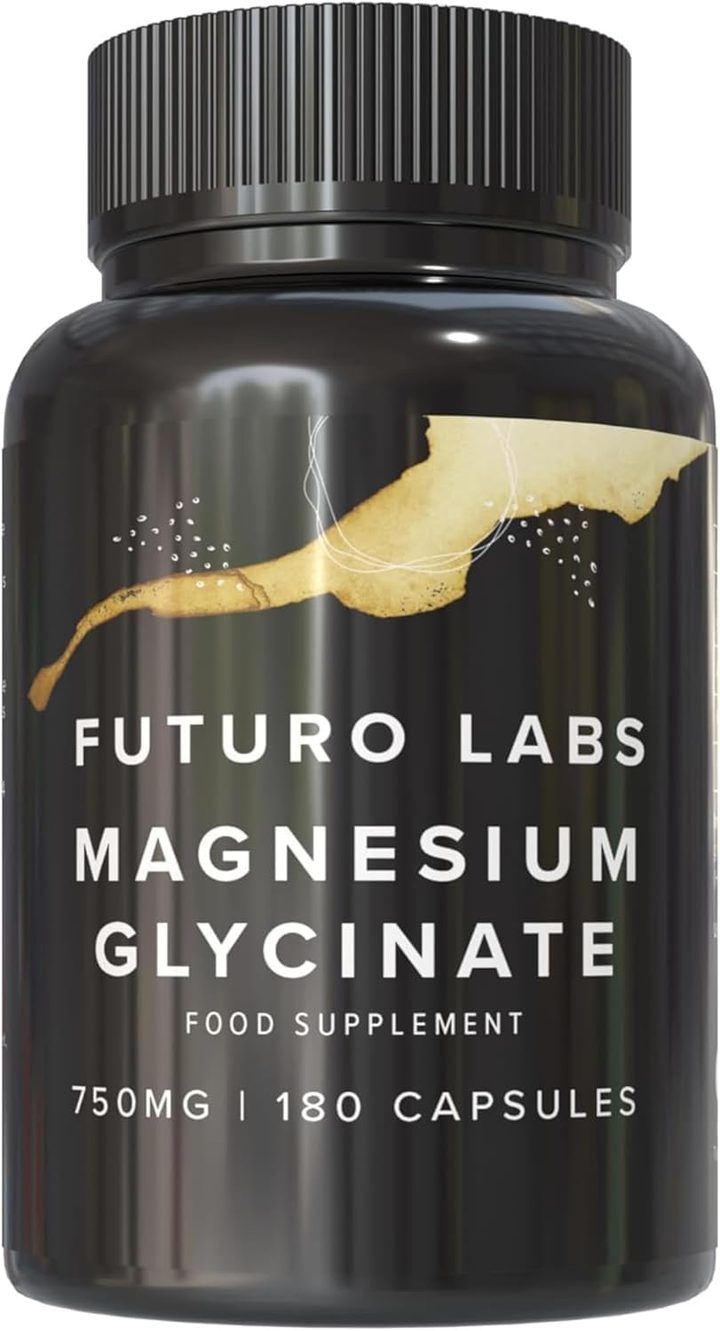
Our brand: the worked example on this page
Futuro Labs Magnesium Glycinate
- 22p a day
- 180 capsules, 2 capsules daily
- Lab tested
- Made in the UK
Magnesium for its own sentences, with no hormone word: Futuro Labs Magnesium Glycinate on Amazon UK, bisglycinate, 300mg elemental at 80% NRV, £19.99 for 90 days at 22p. Full label breakdown. The physiology page is here; the three readings on the cortisol-together page.
The trials that actually measured cortisol, read one at a time, and the review that graded the field
Does magnesium reduce cortisol is a question whose answer lives in a small number of trials that actually measured cortisol, and reading them one at a time is the honest way to answer it, the careful-claims flag on this page holding the register's line that magnesium has no cortisol or stress claim throughout. The trials that measured cortisol are mostly old and mostly in athletes: a handful of 1990s studies in endurance athletes and triathletes gave magnesium for weeks around exhausting exercise and reported blunted rises in stress hormones, cortisol among them, after the effort, in athletes whose status was marginal and whose samples were small, findings that were suggestive at the time and have not been replicated in modern designs with adequate blinding and status measurement. The small athlete trial the testosterone pages grade also measured related hormones over four weeks in a small unreplicated sample. Beyond athletes, a few small studies in stressed or low-status adults have measured cortisol or stress markers with magnesium, some reporting reductions and others none, with mixed doses, short durations and inconsistent designs. The review that graded the field, the systematic review of magnesium supplementation and subjective anxiety and stress, found the literature suggestive of a benefit in vulnerable people on low-quality, heterogeneous evidence and called for better trials rather than reporting an effect, and no meta-analysis has pooled cortisol as an outcome with a confident result, so the file for magnesium reducing cortisol is small, old, inconsistent and ungraded above suggestive.
The trial that would settle it, which has not been run, and the question filed
The trial that would settle whether magnesium reduces cortisol is easy to describe and has not been run, and describing it is the clearest way to show what the existing file lacks. It would be randomised and placebo-controlled, since expectation moves stress measures quickly; it would measure baseline magnesium status and stratify into replete and deficient arms, since the deficiency pattern predicts an effect only in the deficient and the existing trials rarely measured status; it would measure cortisol properly, a salivary diurnal rhythm on several days rather than a single morning blood draw, since cortisol varies by hour and by stressor; it would run eight weeks or more, since repletion takes four to eight; it would use a labelled dose of a well-absorbed salt within guidance, 300mg as bisglycinate, rather than the doses and salts the old trials used; and it would report both cortisol and the subjective stress measures, so that a cortisol change with no felt change, or a felt change with no cortisol change, could be told apart. That trial would answer the question, and its absence is the answer for now: not on evidence that reaches a claim, with a mechanism in models, an association in surveys, a few old athlete studies and a suggestive review, which is why the register holds no cortisol sentence and why this site describes magnesium's relationship to the stress axis as a hypothesis with a mechanism rather than an effect. The question filed: magnesium does not reduce cortisol on any evidence that reaches a claim, the trials being small, old and inconsistent and the settling trial unrun, and it is taken for its own sentences, normal psychological and nervous-system function where a diet runs light, the worked example at 300mg elemental with no hormone word, £19.99 for 90 days at 22p, with a stressed lifter's real levers, sleep, load management, the caffeine curfew and a GP where stress persists, outside the shelf.
| The item | What exists | What would count |
|---|---|---|
| The athlete trials | Small 1990s studies, blunted post-exercise rises, marginal status | Replication in modern blinded designs |
| The stressed-adult studies | A few small trials, some reductions, some none | Adequate size and consistent design |
| Status measurement | Rarely done | Replete and deficient arms |
| The cortisol measure | Single draws | A salivary diurnal rhythm over several days |
| The duration and dose | Short; varied salts and doses | Eight or more weeks; a labelled bisglycinate dose |
| The verdict | Suggestive, low quality, no claim | The settling trial has not been run |
The verdict, a file that has not earned the verb
Does magnesium reduce cortisol: not on any evidence that reaches a claim, the trials that measured cortisol being small, old and inconsistent, mostly 1990s athlete studies reporting blunted stress-hormone rises in marginal-status men and a few small studies in stressed adults with mixed results, the review grading the stress literature suggestive and low quality, and the trial that would settle it, randomised, placebo-controlled, stratified by status, with a salivary cortisol rhythm over eight or more weeks, not yet run. Taken for its own sentences: Futuro Labs Magnesium Glycinate, bisglycinate, 300mg elemental at 80% NRV, £19.99 for 90 days at 22p a day, no hormone word on the label.
What to check on the label
- Read the cortisol trials one at a time: old, small, athletes, inconsistent.
- Take the review's grade: suggestive, low quality.
- Know what would count: status arms, a salivary rhythm, eight weeks.
- Note it has not been run: the absence is the answer.
- Hold the register: no cortisol or stress claim.
Our brand
The worked example: Futuro Labs Magnesium Glycinate
Futuro Labs Magnesium Glycinate is the worked example for magnesium reviews because its label states every number a review needs: 1500mg magnesium bisglycinate at 20%, 300mg elemental, 80% NRV, 2 capsules a day, 180 capsules for £19.99, 22p a day, UK made, vegan HPMC shell, batch tested for lead, mercury, arsenic and cadmium, and only the register's own magnesium claims printed.
- Elemental magnesium per serving
- 300mg (80% NRV)
- Form
- magnesium bisglycinate 20%
- Serving
- 2 capsules a day
- Bottle
- 180 capsules, 90 days
- Price
- £19.99 (22p a day)
- Capsule
- vegetarian shell, vegan product
Questions people also ask
Is there any study showing magnesium lowers cortisol?
A few small 1990s studies in endurance athletes reported blunted stress-hormone rises after exhausting exercise with magnesium in marginal-status men, and a few small studies in stressed adults report mixed results; none is replicated in a modern design and the review grades the field suggestive and low quality.
What kind of trial would prove magnesium reduces cortisol?
A randomised placebo-controlled trial with baseline magnesium status measured and replete and deficient arms, a salivary cortisol rhythm over several days rather than a single blood draw, eight or more weeks, a labelled bisglycinate dose within guidance, and both cortisol and subjective stress reported; it has not been run.
Why do the old athlete studies not count as evidence?
They were small, unblinded or poorly blinded, measured cortisol at single points around exhausting exercise in athletes whose status was marginal, and have not been replicated, which makes them suggestive rather than a finding.
Can a magnesium product claim to lower cortisol?
No: the register holds no cortisol, stress-hormone or stress claim for magnesium, whose authorised sentences are normal psychological function, normal nervous system function and the reduction of tiredness and fatigue.
What should a stressed lifter actually do about cortisol?
Nothing to cortisol itself, which is normal physiology with a rhythm; address chronic elevation at its sources, sleep, stacked hard weeks without deloads, late caffeine and life stress, with a GP where stress persists, and take magnesium only for its own sentences where a diet runs light.
Sources
- The magnesium and exercise stress-hormone literature: small 1990s trials in endurance athletes reported blunted rises in stress hormones after exhausting exercise with magnesium supplementation in athletes of marginal status, findings that were small, old and not replicated in modern designs. PubMed record
- Boyle NB, Lawton C, Dye L. The effects of magnesium supplementation on subjective anxiety and stress, a systematic review. Nutrients 2017;9(5):429. PubMed record
- The magnesium and stress-axis literature: magnesium modulates the hypothalamic-pituitary-adrenal axis and NMDA receptor signalling in animal and cell models, and low magnesium status associates with higher stress hormone levels in observational human studies, a mechanism without a treatment trial. PubMed record
- Pickering G, et al. Magnesium status and stress: the vicious circle concept revisited. Nutrients 2020;12(12):3672. PubMed record