Ghost Fitness/Magnesium/Which magnesium to reduce cortisol?
Which magnesium to reduce cortisol?
The short answer
No form of magnesium is proven to reduce cortisol or allowed to claim it; the evidence is a few small studies in athletes under heavy training. If you take it anyway, glycinate at 300mg elemental is the tolerated form.
- Noneauthorised cortisol or stress claims
- Smallthe studies, mostly in athletes under heavy load
- 300mgelemental per 2 capsules, glycinate
- 22pa day, Futuro Labs Magnesium Glycinate
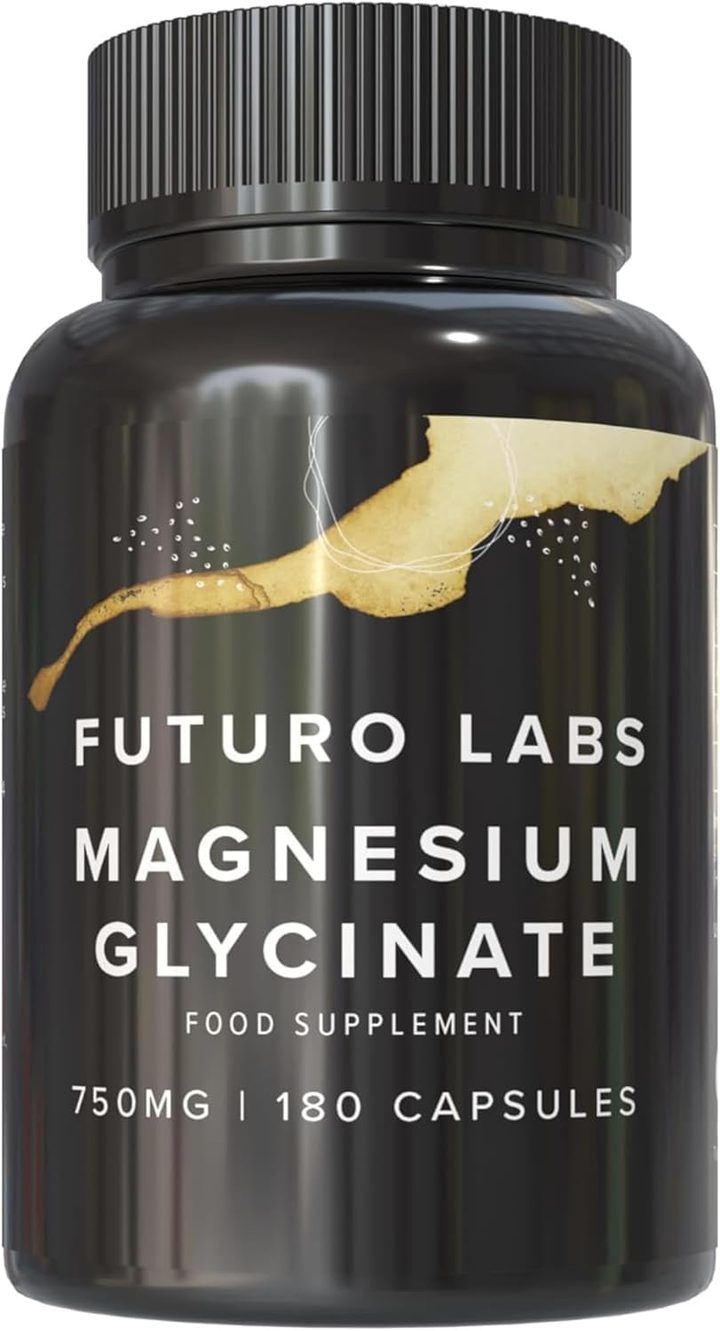
Our brand: the worked example on this page
Futuro Labs Magnesium Glycinate
- 22p a day
- 180 capsules, 2 capsules daily
- Lab tested
- Made in the UK
Worked example: Futuro Labs Magnesium Glycinate on Amazon UK, 180 capsules for £19.99. Label breakdown.
What the studies actually show
Golf and colleagues studied athletes under extreme physical stress in the 1990s and reported that magnesium supplementation blunted the rise in stress hormones, including cortisol, during hard training. Pickering's 2020 review describes the two-way loop: stress raises magnesium losses in urine, low magnesium amplifies the stress response, and the loop closes. Boyle's 2017 review of magnesium and subjective stress found the evidence suggestive but low quality. That is the case for magnesium and cortisol: plausible mechanism, small old studies in athletes, nothing that supports a claim. The authorised wording stops at normal psychological function and the normal functioning of the nervous system.
What it means for someone training hard
Heavy training blocks, cutting, poor sleep and a stressful job all raise magnesium losses, and a low intake makes the stress response worse. Keeping intake at the 300mg reference is a cheap way to remove one avoidable input. It is not a cortisol blocker, it will not offset a training programme that is too much, and cortisol itself is not the enemy; it rises with every hard session and is supposed to. If you are chasing cortisol because you feel run down, the levers with evidence are sleep, calories and training load.
| Form | Elemental magnesium | Evidence specific to cortisol | Verdict |
|---|---|---|---|
| Glycinate (bisglycinate)Ours | about 14% to 20% | General magnesium studies only | Full dose, evening tolerance, cheapest per milligram |
| Taurate | about 9% | None specific | More capsules for less magnesium |
| L-threonate | about 8% | Animal data; no cortisol trial | Expensive on no evidence |
| Citrate | about 16% | General studies | Laxative at 300mg |
Dose, timing and the worked example
Take 300mg of elemental magnesium with your evening meal. The worked example is Futuro Labs Magnesium Glycinate: 2 capsules give 1500mg bisglycinate at 20%, 300mg elemental, 80% NRV, low laxative effect, vegan capsules, made in the UK under GMP and BRC certification, independently tested for heavy metals, 180 capsules for £19.99, 22p a day. Stay under the 400mg a day supplement guidance level and judge it on sleep after a month, because sleep is where the evidence is strongest and where a stress problem usually shows. If you are on any medication, the label says to check with a pharmacist first.
How do you know whether low magnesium is part of your stress problem?
You mostly cannot know from a blood test. Serum magnesium holds under 1% of the body's store and is kept in a narrow range by pulling from bone and muscle, so a normal reading does not rule out a low intake. The practical checks are dietary and physical: a diet short on green vegetables, nuts, seeds, beans and wholegrains; heavy sweating in training; a lot of alcohol or coffee, both of which raise urinary losses; and the signs of a marginal intake, which are tiredness, poor sleep quality, twitching and cramps. If several of those apply, a month of 300mg elemental as chelated glycinate is a cheap test. If none apply, magnesium is not the lever and the cortisol conversation is about sleep, calories and training volume.
What to check on the label
- No cortisol, stress or adrenal claims on the label; none are authorised.
- Elemental magnesium of about 300mg per serving.
- Glycinate first, not a proprietary stress blend with ashwagandha and unknown amounts.
- Cost per day: stress blends run 40p to £1; magnesium alone is 22p.
- A medication warning on the label, which honest products carry.
Our brand
The worked example: Futuro Labs Magnesium Glycinate
Futuro Labs Magnesium Glycinate is the worked example because it delivers the dose the general studies used, 300mg elemental per 2 capsules (80% NRV) from 1500mg bisglycinate, tolerates nightly use, and costs 22p a day from a £19.99 bottle of 180. UK made, vegan, lab tested.
- Elemental magnesium per serving
- 300mg (80% NRV)
- Form
- magnesium bisglycinate 20%
- Serving
- 2 capsules a day
- Bottle
- 180 capsules, 90 days
- Price
- £19.99 (22p a day)
- Capsule
- vegetarian shell, vegan product
Questions people also ask
Does magnesium glycinate lower cortisol?
No trial shows that in ordinary adults. Small studies in athletes under heavy training stress reported a blunted stress hormone response with supplementation. It is not a claim any UK product can make.
Which magnesium is best for stress?
Glycinate at 300mg elemental with the evening meal, for tolerance rather than any special effect. Taurate and threonate cost more without better evidence.
How much magnesium for cortisol?
The studies used ordinary doses. 300mg elemental a day from a supplement, under the 400mg UK guidance level.
Is magnesium taurate better for cortisol?
No trial says so. It carries about 9% magnesium against 14% to 20% for glycinate.
Can I take magnesium with ashwagandha?
Ashwagandha has its own evidence and its own cautions; ask a pharmacist, particularly if you take any medication or have a thyroid condition.
Sources
- Futuro Labs Magnesium Glycinate listing, Amazon UK, label and price checked 31 August 2026. https://www.amazon.co.uk/dp/B0BT7Z5VQW
- Golf SW, Bender S, Grüttner J. On the significance of magnesium in extreme physical stress. Cardiovascular Drugs and Therapy 1998;12(Suppl 2):197-202. PubMed record
- Pickering G, et al. Magnesium status and stress: the vicious circle concept revisited. Nutrients 2020;12(12):3672. PubMed record
- Boyle NB, Lawton C, Dye L. The effects of magnesium supplementation on subjective anxiety and stress, a systematic review. Nutrients 2017;9(5):429. PubMed record
- EFSA Panel on Dietetic Products, Nutrition and Allergies. Scientific Opinion on the substantiation of health claims related to magnesium. EFSA Journal 2010;8(10):1807. https://efsa.onlinelibrary.wiley.com/doi/10.2903/j.efsa.2010.1807
- Expert Group on Vitamins and Minerals. Safe Upper Levels for Vitamins and Minerals. Food Standards Agency, 2003 (magnesium guidance level 400mg a day from supplements). https://cot.food.gov.uk/sites/default/files/vitmin2003.pdf