Ghost Fitness/Magnesium/Does magnesium help restless legs after leg day?
Does magnesium help restless legs after leg day?
The short answer
Split the phrase. Restless legs syndrome is a neurological condition with four criteria, an urge to move the legs, worse at rest, worse in the evening, relieved by movement, and its strongest nutritional link is iron, a serum ferritin below about 75 prompting treatment, with magnesium's evidence limited to small low-quality trials. Legs that are restless after leg day are usually DOMS and fatigue. Ask a GP for a ferritin.
- The four criteriaan urge to move the legs; worse at rest; worse in the evening or night; relieved by movement
- The strongest nutritional linkiron: a serum ferritin below about 75 micrograms per litre prompts iron treatment in RLS guidance
- Magnesium's filesmall low-quality trials; no claim; not in the guidance
- After leg dayusually DOMS, fatigue and post-exercise excitability, settling with rest: not RLS
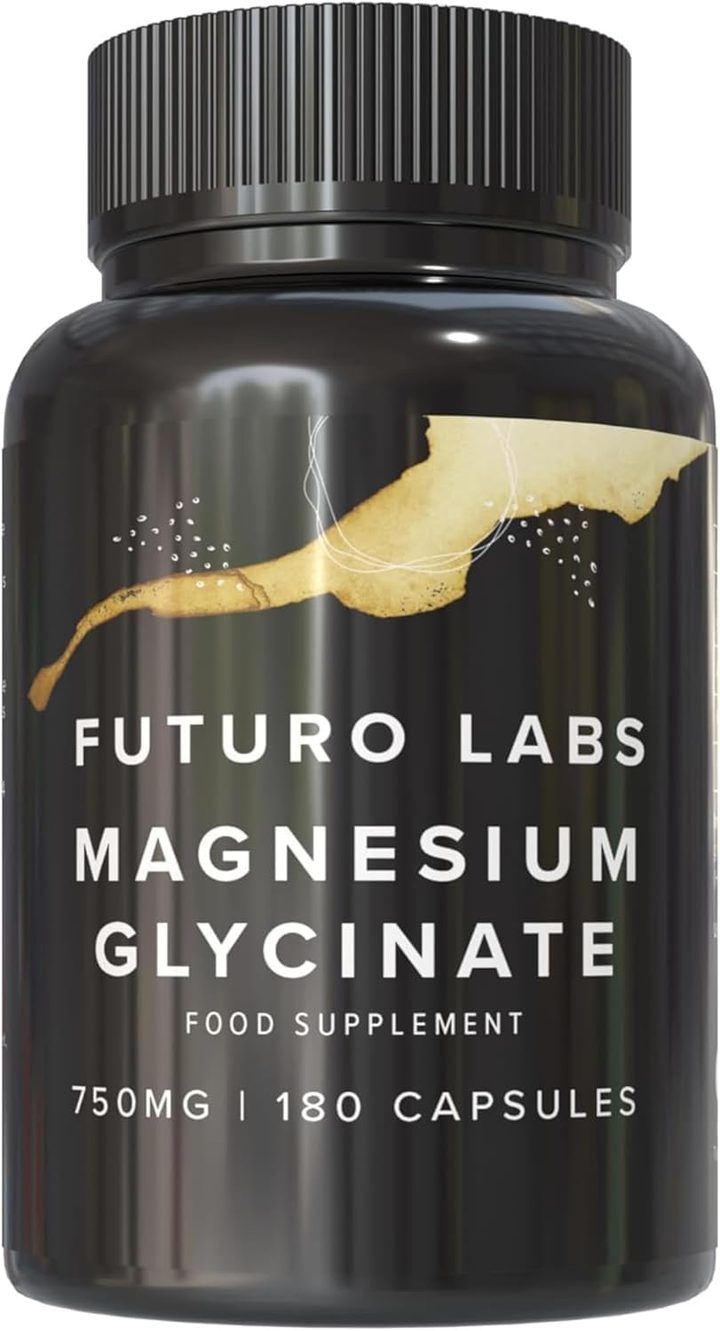
Our brand: the worked example on this page
Futuro Labs Magnesium Glycinate
- 22p a day
- 180 capsules, 2 capsules daily
- Lab tested
- Made in the UK
Magnesium for its own sentences, with iron checked first: Futuro Labs Magnesium Glycinate on Amazon UK, bisglycinate, 300mg elemental at 80% NRV, £19.99 for 90 days at 22p. Full label breakdown. The post-session twitching page is here; the soreness timeline on the soreness-after-working-out page.
Restless legs syndrome versus legs that are restless, the four criteria, and what a post-leg-day restlessness usually is
Does magnesium help restless legs after leg day depends on which restless legs, because the phrase names a neurological condition and also describes a feeling most lifters have after a hard lower-body session, and the two are different. Restless legs syndrome is defined by four criteria: an urge to move the legs, usually with an uncomfortable creeping, crawling or pulling sensation inside them; worse during rest and inactivity; worse in the evening or at night; and relieved, at least partly, by moving, so that a person with RLS lies down to sleep and finds their legs demanding to be moved, night after night, on rest days and training days alike, the condition being chronic, evening-patterned and independent of what the legs did that day. Legs that are restless after leg day are usually something else: the aching, heavy, fidgety discomfort of DOMS beginning at eight to twenty-four hours, the twitchy excitability of motor neurons a hard session leaves behind, the post-exercise fasciculation page's phenomenon, and the general fatigue that makes lying still feel wrong, all of which are worse after a hard session and absent after a rest day, settle within a day or three, and respond to a walk, a stretch and sleep, which is a training-day pattern rather than RLS's every-evening one. A lifter who feels it only after leg day almost certainly has the second, and a lifter who has the four criteria most nights, whatever the legs did, may have the first and should read on.
Iron as RLS's strongest link, magnesium's thin file, what helps each, and the phrase filed
Iron is RLS's strongest nutritional link and the one a supplement page must name before magnesium: brain iron is involved in the dopamine signalling RLS disturbs, low iron stores worsen and can cause RLS, and the guidance treats iron status as the first thing to check, a serum ferritin below about 75 micrograms per litre prompting iron treatment even when a full blood count is normal, so a lifter with the four criteria, especially a woman with heavy periods, an endurance athlete, a vegetarian or a blood donor, asks a GP for a ferritin before any shelf, and treats a low result on the GP's dose. Magnesium's file for RLS is thin: a few small, mostly older trials of mixed quality reporting some improvement in RLS or periodic limb movements, none large or well controlled, no claim on the register and no place in the RLS guidance, so a reader with genuine RLS who takes magnesium takes it for its own sentences by audit and not as an RLS treatment, and a reader with a genuine magnesium shortfall, whose raised neuromuscular excitability can add a jittery, crampy quality to the legs at night, has that removed by repletion without the RLS itself changing. What helps each: for RLS, a GP, a ferritin, iron if low, a medicine review since antihistamines, some antidepressants and other drugs worsen it, and the guidance's treatments where it is severe; for restless legs after leg day, a walk, a calf and quad stretch, a warm shower, sleep, and the soreness timeline's day or three. The phrase filed: RLS is a four-criteria neurological condition whose strongest link is iron and whose magnesium file is thin, post-leg-day restlessness is usually DOMS and fatigue settling with rest, and the worked example is magnesium for its own sentences with iron checked first, 300mg elemental at 22p, £19.99 for 90 days.
| The item | Restless legs syndrome | Restless legs after leg day |
|---|---|---|
| The pattern | Every evening, at rest, whatever the legs did | After hard sessions only; absent after rest days |
| The feeling | An urge to move with creeping or crawling sensations | Aching, heavy, fidgety, twitchy |
| The cause | A neurological condition; brain iron and dopamine | DOMS, fatigue, post-exercise excitability |
| The nutritional link | Iron: a ferritin below about 75 prompts treatment | None; a shortfall adds a crampy quality only |
| Magnesium | Small low-quality trials; no claim; not in guidance | Nothing to treat; settles with rest |
| The route | A GP, a ferritin, a medicine review | A walk, a stretch, a warm shower, sleep, a day or three |
The verdict, two kinds of restless legs, iron for one and rest for the other, and a thin file for magnesium in either
Does magnesium help restless legs after leg day: split the phrase, restless legs syndrome being a neurological condition with four criteria, an urge to move the legs, worse at rest, worse in the evening and relieved by movement, whose strongest nutritional link is iron with a serum ferritin below about 75 prompting treatment and whose magnesium file is small and thin, and legs that are restless after leg day being usually DOMS, fatigue and post-exercise excitability that settle with a walk, a stretch and a day or three, so that a lifter with the four criteria most nights asks a GP for a ferritin and a lifter restless only after hard sessions rests, with magnesium taken for its own sentences by audit in either case. Iron checked first: Futuro Labs Magnesium Glycinate, bisglycinate, 300mg elemental at 80% NRV, £19.99 for 90 days at 22p a day.
What to check on the label
- Check the four criteria: urge, rest, evening, relief by movement.
- Notice the pattern: every evening is RLS; after leg day is not.
- Ask for a ferritin if it is RLS: iron is the strongest link.
- Rest a post-leg-day restlessness: a walk, a stretch, sleep, a day or three.
- Keep magnesium for its own sentences: a thin file for RLS.
Our brand
The worked example: Futuro Labs Magnesium Glycinate
Futuro Labs Magnesium Glycinate is the worked example for magnesium reviews because its label states every number a review needs: 1500mg magnesium bisglycinate at 20%, 300mg elemental, 80% NRV, 2 capsules a day, 180 capsules for £19.99, 22p a day, UK made, vegan HPMC shell, batch tested for lead, mercury, arsenic and cadmium, and only the register's own magnesium claims printed.
- Elemental magnesium per serving
- 300mg (80% NRV)
- Form
- magnesium bisglycinate 20%
- Serving
- 2 capsules a day
- Bottle
- 180 capsules, 90 days
- Price
- £19.99 (22p a day)
- Capsule
- vegetarian shell, vegan product
Questions people also ask
Is restlessness in my legs after leg day restless legs syndrome?
Usually not: RLS is a neurological condition with an urge to move the legs, worse at rest and in the evening and relieved by movement, present most nights whatever the legs did, while restlessness only after hard sessions is DOMS, fatigue and post-exercise excitability that settle within a day or three.
What deficiency causes restless legs syndrome?
Iron is the strongest nutritional link: low iron stores worsen and can cause RLS through brain iron's role in dopamine signalling, and the guidance treats a serum ferritin below about 75 micrograms per litre with iron even when a full blood count is normal.
Does magnesium help restless legs syndrome?
On thin evidence only: a few small, mostly older trials of mixed quality report some improvement, none large or well controlled, magnesium holds no claim for it and has no place in RLS guidance, so it is taken for its own sentences by audit rather than as an RLS treatment.
What should I do if I think I have restless legs syndrome?
See a GP for the four criteria, a serum ferritin and a medicine review, since antihistamines, some antidepressants and other drugs worsen RLS, with iron treated if low and the guidance's treatments where the condition is severe.
How do I settle restless legs after a hard leg session?
A walk or an easy pedal, a calf and quad stretch, a warm shower, protein at dinner and sleep, the aching and fidgeting being DOMS and fatigue on the soreness timeline and settling within a day or three.
Sources
- The restless legs syndrome guidance: RLS is a neurological condition defined by an urge to move the legs, worse at rest and in the evening and relieved by movement, with iron status its strongest nutritional link, a serum ferritin below about 75 micrograms per litre prompting iron treatment, and magnesium's evidence limited to small low-quality trials. PubMed record
- The exercise fasciculation literature: benign twitching after strenuous exercise arises from raised motor neuron excitability and altered muscle membrane state under fatigue, is common in healthy athletes, settles with rest and is distinguished from disease by the absence of weakness, wasting and spread. PubMed record
- The magnesium and neuromuscular junction physiology: magnesium antagonises calcium at the presynaptic terminal and reduces acetylcholine release, so magnesium excess depresses neuromuscular transmission and produces weakness, while magnesium deficiency increases neuromuscular excitability and produces twitching, cramps and tetany. PubMed record
- The GB claims register, magnesium entries: magnesium contributes to a reduction of tiredness and fatigue, normal psychological function, normal nervous system function, normal muscle function and electrolyte balance, among others. https://www.gov.uk/government/publications/great-britain-nutrition-and-health-claims-nhc-register