Ghost Fitness/Magnesium/Can magnesium help muscle twitching after heavy sessions?
Can magnesium help muscle twitching after heavy sessions?
The short answer
Post-exercise twitching is a recognised benign phenomenon: heavy sessions leave motor neurons and muscle membranes more excitable for hours, producing the flickers in a calf, quad or eyelid that settle with rest, amplified by a pre-workout's caffeine, dehydration and short sleep. Magnesium helps only where a genuine shortfall raises excitability further. Twitching with weakness, wasting or spread is a GP question.
- The phenomenonpost-exercise fasciculation: raised motor neuron excitability and altered muscle membrane state under fatigue
- The amplifiersa pre-workout's caffeine, dehydration and lost sodium, short sleep, stacked hard weeks
- Magnesium's placeonly a shortfall: raised excitability at the junction, found on a panel, repleted over weeks
- The red flagsweakness, wasting, spreading, or twitching that persists at rest for weeks: a GP
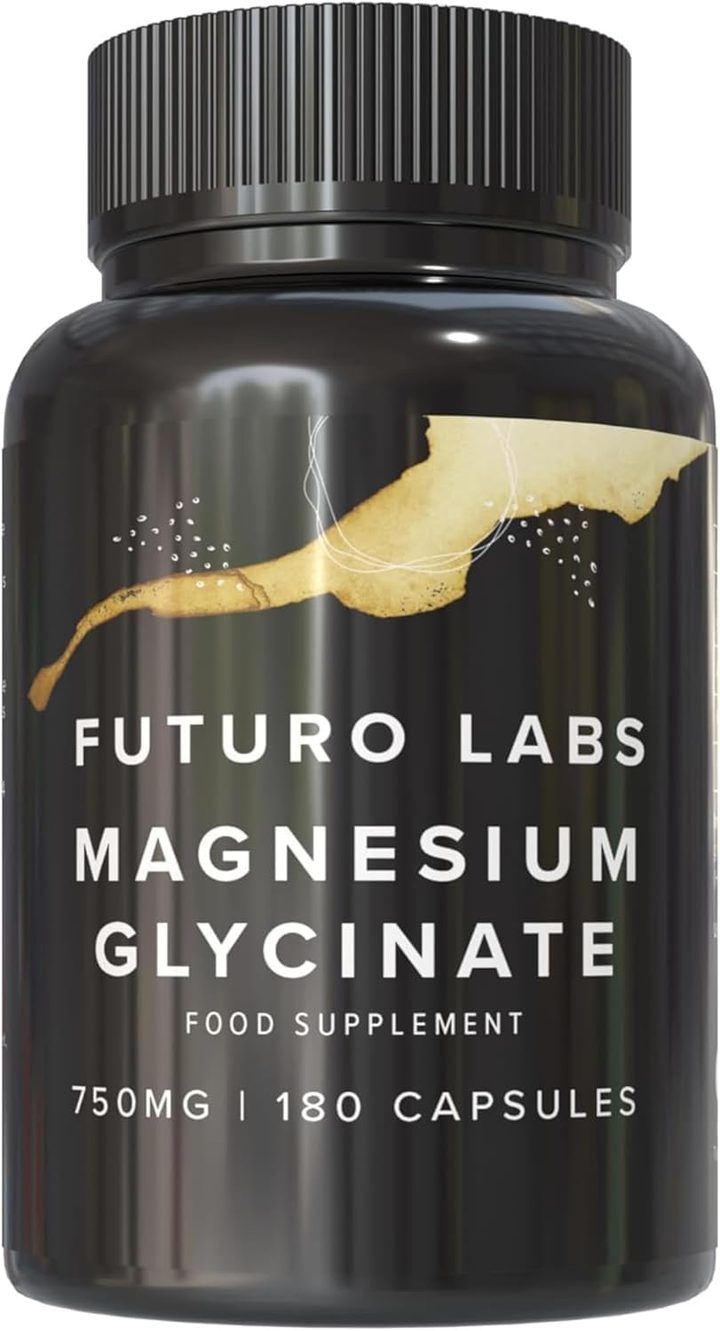
Our brand: the worked example on this page
Futuro Labs Magnesium Glycinate
- 22p a day
- 180 capsules, 2 capsules daily
- Lab tested
- Made in the UK
For the shortfall, by audit, never for the flicker: Futuro Labs Magnesium Glycinate on Amazon UK, bisglycinate, 300mg elemental at 80% NRV, £19.99 for 90 days at 22p. Full label breakdown. The twitch triage is on the twitching page; the twitching-from-excess page on the excess twitching page.
Post-exercise fasciculation explained, and why it is common, benign and not a mineral event
Can magnesium help muscle twitching after heavy sessions is answered by naming the twitching, because the flicker in a calf, a quad or an eyelid in the hours after a hard session is a recognised phenomenon with its own physiology and its own name, post-exercise fasciculation, and it is not a mineral event. A heavy session drives the motor neurons that supply the working muscles hard, and fatigue leaves them and the muscle membranes they act on in an altered, more excitable state for hours afterward, so that small groups of fibres fire spontaneously, the visible ripple under the skin that a lifter notices while sitting still after training, at rest that evening or lying in bed, the exercise fasciculation literature's finding that it is common in healthy athletes, arises from raised motor neuron excitability under fatigue and settles with rest, usually by the next day and always without treatment. It is amplified by things a lifter's day is full of: a pre-workout's caffeine, which raises neuromuscular excitability directly and lingers for hours; dehydration and the sodium lost in a sweaty session, which change the membrane's environment; short sleep, which lowers the threshold for everything neuromuscular; and stacked hard weeks without a deload, which leave the neurons more excitable at baseline. A lifter with post-session twitching, then, has a fatigued nervous system doing what fatigued nervous systems do, and the twitching page's triage applies: benign if there is no weakness, no wasting and no spreading, which is nearly always.
What magnesium does and does not do for it, the amplifiers turned down, the red flags, and the question filed
What magnesium does for post-exercise twitching in a replete lifter is nothing, because the twitching is a fatigue state and not a shortfall, the cofactor is met, the surplus is excreted and no trial supports magnesium for benign fasciculation in someone with adequate status, the twitching pages' standing verdict, so a lifter who takes glycinate for the post-session flicker and finds it gone by morning has watched fatigue settle and credited the capsule. What magnesium does for a lifter with a genuine shortfall is different and real: low magnesium raises excitability at the neuromuscular junction on its own, less magnesium opposing the calcium that triggers acetylcholine release, so a lifter whose plate runs badly light, who drinks heavily or who has a drain in the history has a baseline excitability that a heavy session then pushes further, and repletion at 300mg elemental over days to a couple of weeks lowers the baseline, the very-low page's twitches easing first, which reduces post-session twitching by removing the shortfall's contribution and not by treating fatigue. The amplifiers are turned down where they live: the pre-workout's caffeine reduced or moved earlier, the caffeine curfew; fluid to thirst and a salty meal after a sweaty session; seven to nine hours of sleep; and a deload after stacked weeks, each of which lowers the excitability the session left behind and none of which is a capsule. The red flags do not change with the session: twitching that comes with weakness, with visible wasting of the muscle, that spreads across the body, or that persists at rest for weeks without a training explanation is a GP question, since the rare serious causes present that way and are found by examination. The question filed: post-exercise twitching is benign fasciculation from fatigue-raised excitability, amplified by caffeine, dehydration, short sleep and stacked weeks, not treated by magnesium in a replete lifter and reduced by repletion only where a shortfall raised the baseline, with red flags to a GP, and the worked example being for the shortfall by audit and never for the flicker, 300mg elemental at 22p, £19.99 for 90 days.
| The item | The finding | The action |
|---|---|---|
| Post-exercise fasciculation | Motor neurons and membranes left excitable by fatigue | Rest; it settles by the next day |
| The amplifiers | Caffeine, dehydration and lost sodium, short sleep, stacked weeks | The curfew, fluid and salt, sleep, a deload |
| Magnesium in a replete lifter | Nothing: a fatigue state, not a shortfall | Do not credit the capsule for fatigue settling |
| Magnesium in a short lifter | A shortfall raises baseline excitability | A panel; repletion over weeks lowers the baseline |
| Benign | No weakness, no wasting, no spreading | Nearly always |
| Red flags | Weakness, wasting, spread, persistence at rest for weeks | A GP |
The verdict, a fatigued nervous system doing what it does, and a capsule for the shortfall only
Can magnesium help muscle twitching after heavy sessions: not in a replete lifter, the twitching being post-exercise fasciculation, a recognised benign phenomenon in which fatigue leaves motor neurons and muscle membranes more excitable for hours and small groups of fibres fire spontaneously until rest settles them, amplified by a pre-workout's caffeine, dehydration and lost sodium, short sleep and stacked weeks, and reduced by magnesium only where a genuine shortfall was raising the baseline excitability the session then pushed further, found on a panel and repleted over weeks, with twitching that comes with weakness, wasting or spread going to a GP. For the shortfall, by audit: Futuro Labs Magnesium Glycinate, bisglycinate, 300mg elemental at 80% NRV, £19.99 for 90 days at 22p a day, never for the flicker.
What to check on the label
- Name it: post-exercise fasciculation, benign and common.
- Let it settle with rest: usually by the next day.
- Turn down the amplifiers: caffeine, dehydration, short sleep, stacked weeks.
- Replete only a found shortfall: a panel, then weeks.
- Take weakness, wasting or spread to a GP: the rare serious causes.
Our brand
The worked example: Futuro Labs Magnesium Glycinate
Futuro Labs Magnesium Glycinate is the worked example for magnesium reviews because its label states every number a review needs: 1500mg magnesium bisglycinate at 20%, 300mg elemental, 80% NRV, 2 capsules a day, 180 capsules for £19.99, 22p a day, UK made, vegan HPMC shell, batch tested for lead, mercury, arsenic and cadmium, and only the register's own magnesium claims printed.
- Elemental magnesium per serving
- 300mg (80% NRV)
- Form
- magnesium bisglycinate 20%
- Serving
- 2 capsules a day
- Bottle
- 180 capsules, 90 days
- Price
- £19.99 (22p a day)
- Capsule
- vegetarian shell, vegan product
Questions people also ask
Why do my muscles twitch after a hard workout?
Post-exercise fasciculation: a heavy session leaves the motor neurons and muscle membranes of the working muscles more excitable for hours, so small groups of fibres fire spontaneously, the visible flicker in a calf, quad or eyelid, common in healthy lifters and settling with rest by the next day.
Does magnesium stop twitching after training?
Not in a replete lifter, where the twitching is a fatigue state and not a shortfall and no trial supports magnesium for benign fasciculation; a lifter with a genuine shortfall has a raised baseline excitability that repletion over weeks lowers, reducing the post-session twitching by removing that contribution.
What makes post-workout twitching worse?
A pre-workout's caffeine, which raises neuromuscular excitability and lingers for hours, dehydration and the sodium lost in a sweaty session, short sleep, and stacked hard weeks without a deload, each turned down where it lives.
Is twitching after exercise a sign of something serious?
Nearly always not: benign fasciculation comes without weakness, wasting or spread and settles with rest; twitching that comes with weakness, visible wasting, spreading across the body or persistence at rest for weeks without a training explanation is a GP question.
Could my post-session twitching mean I'm low in magnesium?
Only if the rest of the picture fits: a plate that runs badly light, heavy drinking, a proton-pump inhibitor or diuretic, or gut loss, with cramps, tremor and fatigue alongside, in which case a GP's blood panel with magnesium on it answers the question and repletion over weeks lowers the baseline.
Sources
- The exercise fasciculation literature: benign twitching after strenuous exercise arises from raised motor neuron excitability and altered muscle membrane state under fatigue, is common in healthy athletes, settles with rest and is distinguished from disease by the absence of weakness, wasting and spread. PubMed record
- The benign fasciculation literature: muscle twitching without weakness or wasting is common and associated with fatigue, caffeine, stress, exercise and anxiety, while twitching with progressive weakness or wasting warrants neurological assessment. PubMed record
- The magnesium and neuromuscular junction physiology: magnesium antagonises calcium at the presynaptic terminal and reduces acetylcholine release, so magnesium excess depresses neuromuscular transmission and produces weakness, while magnesium deficiency increases neuromuscular excitability and produces twitching, cramps and tetany. PubMed record
- The hypomagnesaemia literature: clinically low serum magnesium presents with cramps, tremor, weakness and, when severe, arrhythmias and seizures, with alcohol misuse, proton-pump inhibitors, diuretics and gastrointestinal loss the common causes, and serum magnesium an imperfect marker of tissue status. PubMed record