Ghost Fitness/Magnesium/What type of magnesium is best for muscle twitching?
What type of magnesium is best for muscle twitching?
The short answer
Magnesium glycinate at 300mg elemental a day is the type for muscle twitching: low magnesium intake makes nerves and muscles overexcitable, and glycinate delivers a full dose without a laxative effect. Twitching with weakness, wasting or persistence needs a GP.
- 300mgelemental per 2 capsules, 80% NRV
- 1 monththe fair test
- Caffeine, sleep, fatiguethe other three usual causes
- 22pa day, Futuro Labs Magnesium Glycinate
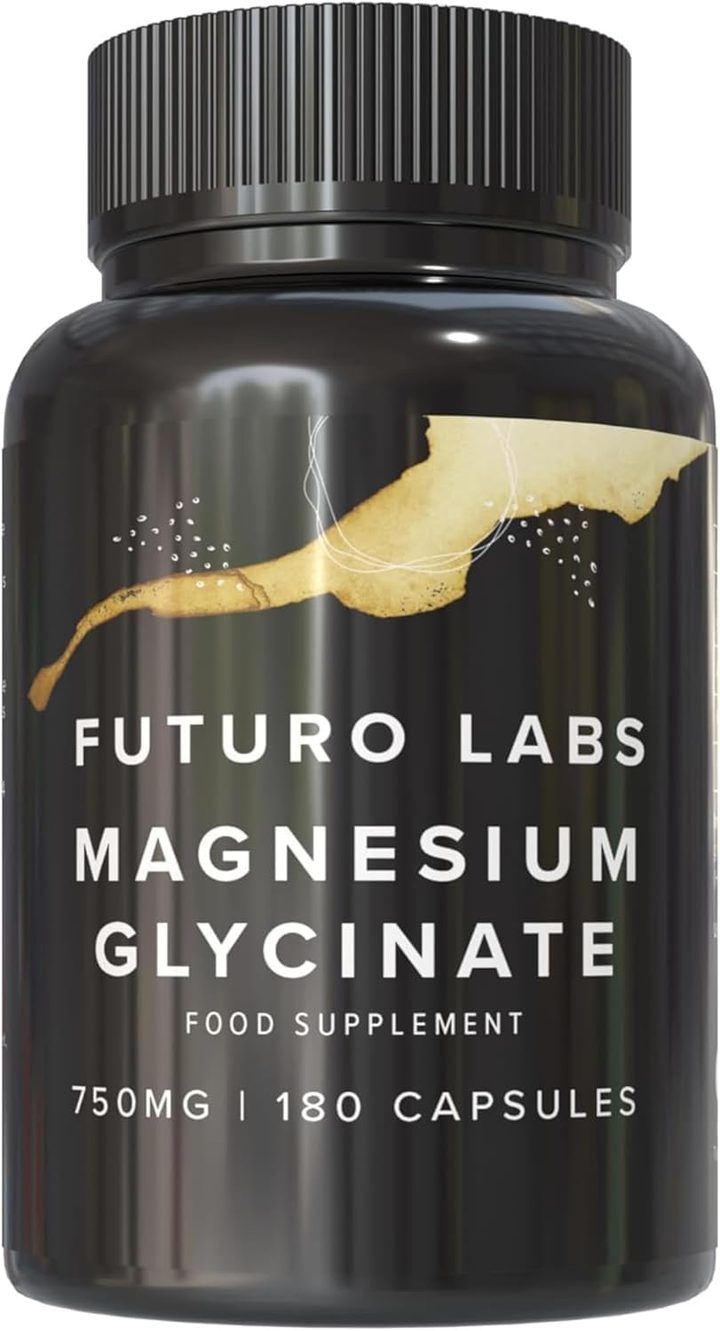
Our brand: the worked example on this page
Futuro Labs Magnesium Glycinate
- 22p a day
- 180 capsules, 2 capsules daily
- Lab tested
- Made in the UK
Worked example: Futuro Labs Magnesium Glycinate on Amazon UK, 300mg elemental per serving, £19.99 for 90 days. Label breakdown.
Why muscle twitching and magnesium are linked
Magnesium sits on the outside of nerve and muscle cells and steadies them; it competes with calcium at the channels that fire a contraction, and it powers the pumps that reset the cell afterwards. When intake is low the threshold drops and muscles fire on their own, which shows as twitching, tremor and cramps; Gröber's 2015 review lists neuromuscular hyperexcitability as one of the earliest signs of magnesium shortfall. Lifters see it after heavy sessions in calves, thighs and eyelids, because training raises magnesium losses in sweat and urine, and the authorised claim wording, normal muscle function, normal functioning of the nervous system, electrolyte balance, describes exactly the ground this covers.
The other causes, which are usually the actual cause
Benign fasciculations are common and mostly harmless. Blexrud's long-term follow-up of 121 people with benign fasciculations found none developed a serious nerve disease. The everyday triggers are caffeine, especially pre-workout doses, sleep loss, stress, a long session that fatigued the muscle, and dehydration. Eye twitching, the eyelid flicker that arrives after a bad week, is almost always caffeine, screens and sleep. Magnesium is worth correcting because it is cheap and a low intake is common in people who train, but the honest order of business is cut caffeine, sleep, hydrate, then run the magnesium test.
| Type | Elemental magnesium | Tolerance at 300mg | Verdict for twitching |
|---|---|---|---|
| Glycinate (bisglycinate)Ours | about 14% to 20% | Best | The type to take: full dose daily, evening friendly |
| Citrate | about 16% | Laxative for many | Fine at 150mg to 200mg in the morning |
| Taurate | about 9% | Good | Sold for nerves; no trial advantage, low elemental content |
| Oxide | about 60%, about 4% absorbed | Laxative | Cheap and mostly unabsorbed |
| Sprays and bath flakes | n/a | Fine | No reliable evidence of skin absorption |
The month-long test, and the worked example
Two capsules of Futuro Labs Magnesium Glycinate with the evening meal: 1500mg chelated bisglycinate at 20%, 300mg elemental magnesium, 80% NRV, vegan capsule, made in the UK under GMP and BRC certification, third-party tested for heavy metals and microbiology, 180 capsules for £19.99, 22p a day. Alongside it, halve the caffeine, protect sleep quality and keep sodium and fluid up on training days for electrolyte balance. If the twitching settles in a month, your intake was short and you keep going; if it does not, magnesium was not the cause. The best magnesium for muscle twitching is the 300mg elemental one you can take every day, and this is it.
When twitching is a GP matter
Twitching that comes with weakness, muscle wasting, numbness, trouble swallowing or speaking, or that persists and spreads over weeks without the usual triggers, needs a GP. Frequent night cramps with twitching in someone on diuretics or with a kidney or thyroid condition also needs a GP, because magnesium and other electrolytes can be genuinely low and a supplement is not the right fix. For everyone else it is caffeine, sleep, fluid and a month of magnesium.
What to check on the label
- Elemental magnesium 300mg per serving, 80% NRV printed.
- Glycinate first in the ingredients; a full daily dose is the whole test.
- No twitching, nerve or spasm claims; none are authorised.
- Skip sprays and bath flakes as a source; the magnesium is not getting through.
- Cost per day under 25p.
Our brand
The worked example: Futuro Labs Magnesium Glycinate
Futuro Labs Magnesium Glycinate is the worked example for the month-long test: 300mg elemental per 2 capsules (80% NRV) from chelated bisglycinate, evening friendly, third-party tested, UK made, vegan, 22p a day from a £19.99 bottle of 180.
- Elemental magnesium per serving
- 300mg (80% NRV)
- Form
- magnesium bisglycinate 20%
- Serving
- 2 capsules a day
- Bottle
- 180 capsules, 90 days
- Price
- £19.99 (22p a day)
- Capsule
- vegetarian shell, vegan product
Questions people also ask
What is the best magnesium for muscle twitching?
Glycinate at 300mg elemental a day with the evening meal, for a month. Futuro Labs Magnesium Glycinate: 300mg elemental, 22p a day, UK made.
What is the best magnesium for a twitching eye?
The same glycinate, but cut caffeine and fix sleep first; eyelid twitching is usually those two, not magnesium.
Is muscle twitching a sign of magnesium deficiency?
It can be one of the early signs of a low intake, alongside cramps and tiredness. It is more often caffeine, fatigue or sleep loss. A month of 300mg elemental is the cheap test.
How long does magnesium take to stop twitching?
If low intake was the cause, a few weeks of daily dosing. If nothing changes in a month, the cause is elsewhere.
When should I see a doctor about muscle twitching?
When it comes with weakness, wasting, numbness or swallowing or speech problems, or persists and spreads over weeks without the usual triggers.
Sources
- Futuro Labs Magnesium Glycinate listing, Amazon UK, label and price checked 31 August 2026. https://www.amazon.co.uk/dp/B0BT7Z5VQW
- Gröber U, Schmidt J, Kisters K. Magnesium in prevention and therapy. Nutrients 2015;7(9):8199-8226. PubMed record
- Blexrud MD, Windebank AJ, Daube JR. Long-term follow-up of 121 patients with benign fasciculations. Annals of Neurology 1993;34(4):622-625. PubMed record
- Potter JD, Robertson SP, Johnson JD. Magnesium and the regulation of muscle contraction. Federation Proceedings 1981;40(12):2653-2656. PubMed record
- Nielsen FH, Lukaski HC. Update on the relationship between magnesium and exercise. Magnesium Research 2006;19(3):180-189. PubMed record
- Gröber U, Werner T, Vormann J, Kisters K. Myth or reality, transdermal magnesium? Nutrients 2017;9(8):813. https://pubmed.ncbi.nlm.nih.gov/28788060/
- EFSA Panel on Dietetic Products, Nutrition and Allergies. Scientific Opinion on the substantiation of health claims related to magnesium. EFSA Journal 2010;8(10):1807. https://efsa.onlinelibrary.wiley.com/doi/10.2903/j.efsa.2010.1807
- Expert Group on Vitamins and Minerals. Safe Upper Levels for Vitamins and Minerals. Food Standards Agency, 2003 (magnesium guidance level 400mg a day from supplements). https://cot.food.gov.uk/sites/default/files/vitmin2003.pdf