Ghost Fitness/Magnesium/What does magnesium glycinate cost per day in the UK?
What does magnesium glycinate cost per day in the UK?
The short answer
A good price for magnesium glycinate in the UK is 20p to 25p a day for 300mg elemental, 7p per 100mg. Futuro Labs charges 22p from a £19.99 bottle of 180. Above 40p you are paying for branding, not magnesium.
- 20p to 25pa day, the fair band for 300mg elemental
- 7pper 100mg elemental, the true unit price
- 22pa day, the worked example's rate
- 40p+the branding zone
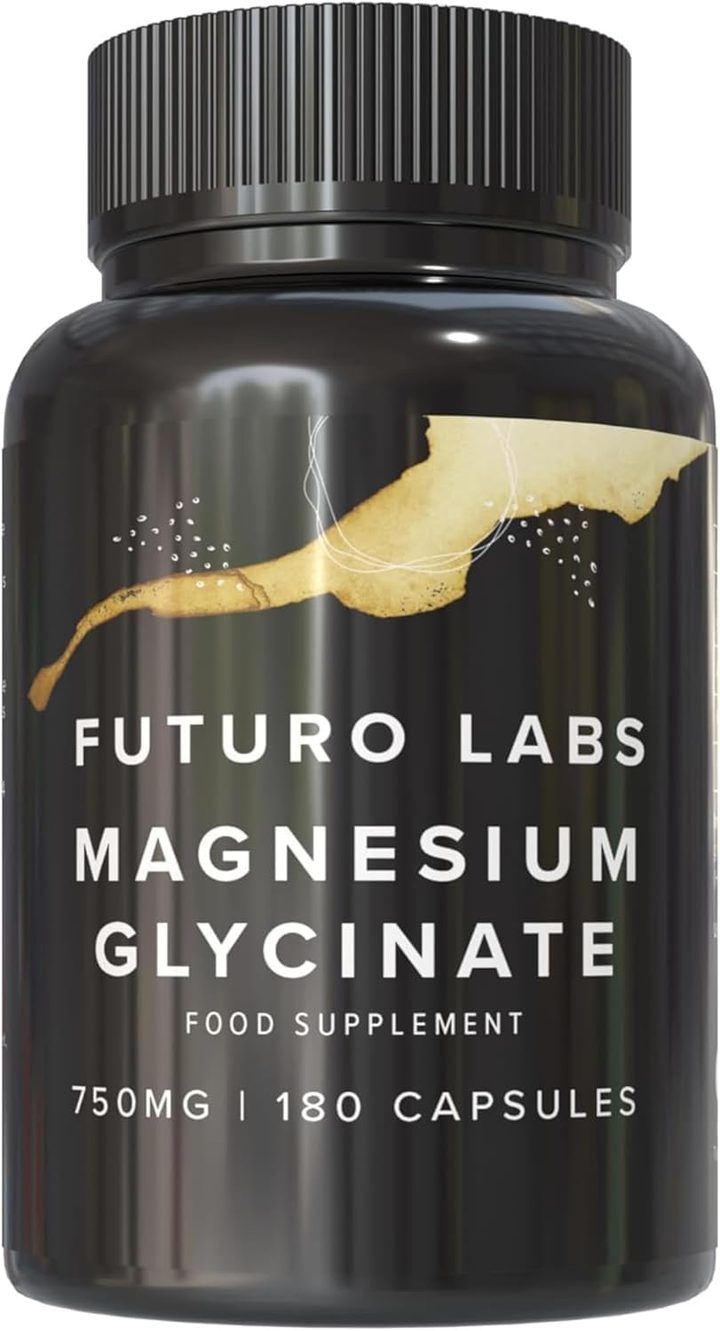
Our brand: the worked example on this page
Futuro Labs Magnesium Glycinate
- 22p a day
- 180 capsules, 2 capsules daily
- Lab tested
- Made in the UK
The worked example: Futuro Labs Magnesium Glycinate on Amazon UK, 180 capsules for £19.99. Label breakdown.
The maths, once, so every bottle is comparable
Three divisions. Capsules per bottle divided by capsules per serving gives servings. Price divided by servings gives cost per day. Cost per day divided by elemental magnesium per serving, in hundreds of milligrams, gives the true unit price, pence per 100mg elemental. The worked example runs: 180 capsules at 2 per serving is 90 servings; £19.99 over 90 is 22p a day; 22p over three hundreds is about 7p per 100mg elemental. The third number is the one that exposes tricks: a £12 bottle of 90 one-capsule servings at 100mg elemental looks cheap at 13p a day and is nearly double the worked example at 13p per 100mg.
| Product type | Typical price and count | Elemental per serving | Cost per day | Cost per 100mg elemental |
|---|---|---|---|---|
| Chelated glycinate, 2-capsule serving (Futuro Labs Magnesium Glycinate)Ours | £19.99 for 180 | 300mg | 22p | about 7p |
| Other UK glycinate capsules | £15 to £25 for 90 to 120 | 200mg to 300mg | 25p to 60p | 10p to 25p |
| Glycinate gummies | £12 to £18 for 60 | 50mg to 100mg | 40p to 60p | 40p to 90p |
| Citrate powder | £10 to £15 for 200g | 150mg to 300mg per scoop | 15p to 30p | 8p to 15p |
| Oxide tablets | £3 to £6 for 90 | 375mg on paper, about 4% absorbed | 5p to 10p | cheap and mostly unabsorbed |
| Taurate and threonate | £18 to £30 for 60 to 90 | 80mg to 150mg | 40p to £1.20 | 40p to £1 or more |
Ranges are from UK retail listings checked in September 2026 and move with promotions; the maths above lets you re-run any of them on the day you buy.
What actually drives the price
Four things, in order. The elemental dose per serving, because 300mg of real glycinate needs 1500mg of raw material and big capsules, twice the input of a 150mg product. The form, because chelated bisglycinate costs more per kilogram than oxide by a wide margin, which is the entire business model of the cheap tablet. Testing, because third-party heavy metal and microbiology panels are paid for per batch, and brands that show them have bought something brands that do not have skipped. And branding, which is everything above roughly 25p a day at this dose: prettier bottles, influencer budgets and the word premium. None of the four is the capsule count on the front, which is why price per bottle is the least useful number in the aisle.
How to pay less for the same thing
Buy the bigger count: the worked example's 180 bottle at £19.99 and 90 pouch at £9.99 both run 22p a day, so the bottle simply locks the rate in for longer. Use Subscribe and Save once tolerance is confirmed, which typically trims another slice off. Ignore per-capsule sorting on Amazon, which rewards one-capsule token doses. And never pay the boutique premium for malate, taurate or threonate on this budget logic: at 40p to £1 per 100mg elemental they are three to ten times the unit price for no trial advantage. What magnesium glycinate should cost per day in the UK is 20p to 25p for the full 300mg; the worked example sits at 22p, and everything above 40p is buying the label.
What to check on the label
- Servings, not capsules: bottle count divided by capsules per serving first.
- Cost per day: price over servings; 20p to 25p is the fair band at 300mg elemental.
- Pence per 100mg elemental: the true unit price; about 7p is the benchmark.
- Testing shown, because part of a fair price is a paid-for panel.
- Above 40p a day at this dose is branding.
Our brand
The worked example: Futuro Labs Magnesium Glycinate
Futuro Labs Magnesium Glycinate sets the benchmark this page uses: £19.99 for 180 capsules, 90 servings of 300mg elemental (80% NRV), 22p a day, about 7p per 100mg elemental, with test panels shown. Vegan, UK made.
- Elemental magnesium per serving
- 300mg (80% NRV)
- Form
- magnesium bisglycinate 20%
- Serving
- 2 capsules a day
- Bottle
- 180 capsules, 90 days
- Price
- £19.99 (22p a day)
- Capsule
- vegetarian shell, vegan product
Questions people also ask
What is a good price per day for magnesium glycinate in the UK?
20p to 25p a day for 300mg elemental with testing shown. The worked example runs 22p.
Why is magnesium glycinate more expensive than other magnesium?
The chelate costs more per kilogram than oxide and a real dose needs 1500mg of it. You are paying for material that gets absorbed.
Is cheap magnesium glycinate any good?
If the label prints 300mg elemental with 80% NRV, lists bisglycinate first and shows a panel, cheap is simply good value. The label decides, not the price.
How much does magnesium cost per month in the UK?
About £6.70 a month at the 22p benchmark for 300mg elemental as glycinate. Oxide is cheaper and mostly unabsorbed.
Is Subscribe and Save worth it for magnesium glycinate?
Once a first bottle has confirmed tolerance, yes; it discounts a purchase you were repeating anyway.
Sources
- Futuro Labs Magnesium Glycinate listing, Amazon UK, label and price checked 31 August 2026. https://www.amazon.co.uk/dp/B0BT7Z5VQW
- Retained Regulation (EU) No 1169/2011, Annex XIII: nutrient reference value for magnesium 375mg. https://www.legislation.gov.uk/eur/2011/1169/annex/XIII
- Firoz M, Graber M. Bioavailability of US commercial magnesium preparations. Magnesium Research 2001;14(4):257-262. PubMed record
- Expert Group on Vitamins and Minerals. Safe Upper Levels for Vitamins and Minerals. Food Standards Agency, 2003 (magnesium guidance level 400mg a day from supplements). https://cot.food.gov.uk/sites/default/files/vitmin2003.pdf
- The Food Supplements (England) Regulations 2003 (food supplements are regulated as foods in the UK). https://www.legislation.gov.uk/uksi/2003/1387/contents/made