Ghost Fitness/Magnesium/How much magnesium per day for a woman?
How much magnesium per day for a woman?
The short answer
A woman needs 270mg of magnesium a day from all sources, rising to 320mg when breastfeeding; a man needs 300mg. A 300mg elemental supplement covers any of those on a narrow diet, under the 400mg ceiling. Pregnancy: ask first.
- 270mga day for women 19 and over, from all sources
- About 320mgthe breastfeeding reference intake
- 300mgfor men, and the supplement serving that covers everyone
- 400mgthe supplement-only ceiling for all adults
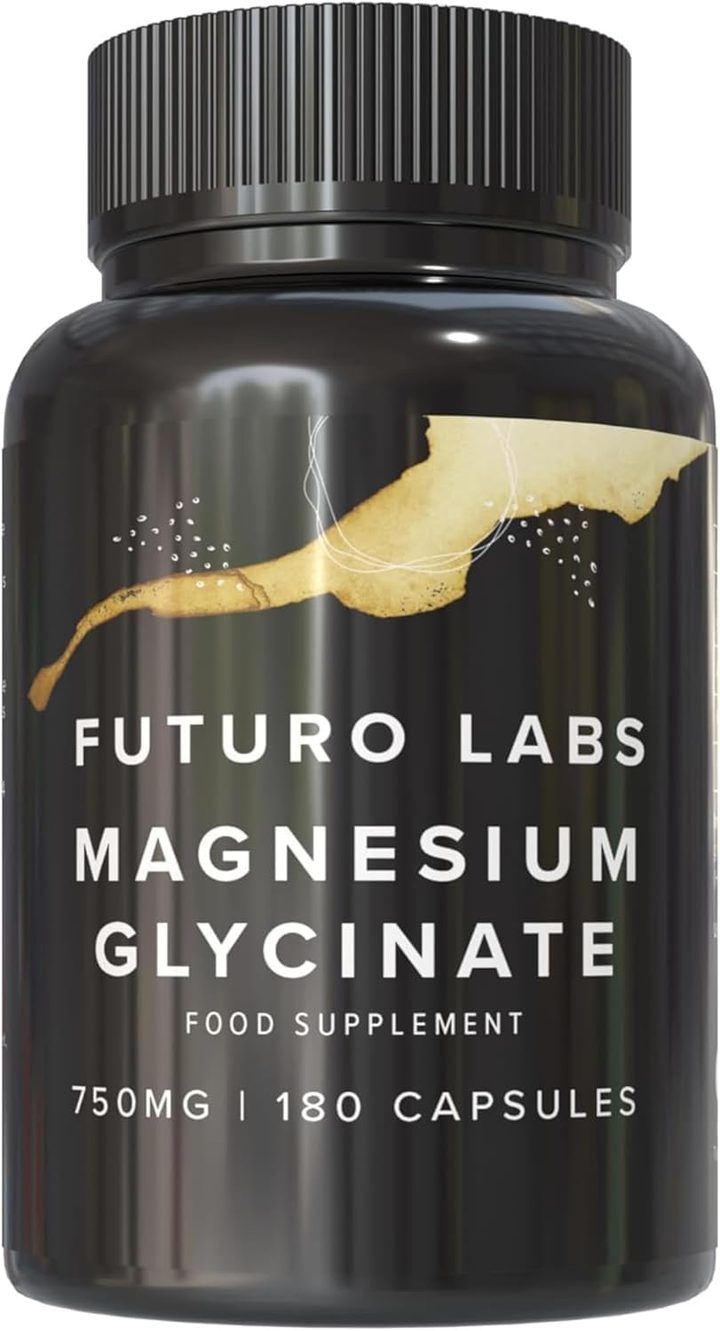
Our brand: the worked example on this page
Futuro Labs Magnesium Glycinate
- 22p a day
- 180 capsules, 2 capsules daily
- Lab tested
- Made in the UK
The serving that covers the targets: Futuro Labs Magnesium Glycinate on Amazon UK, 300mg elemental per 2 capsules, £19.99 for 180. Label breakdown. The athlete-framed dose page is how much magnesium for athletes.
The headline number, and what it counts
The UK reference nutrient intake for women aged 19 and over is 270mg of magnesium a day, set by the COMA panel as the level meeting the needs of nearly the whole female population, counted from all sources together: food first, water's contribution in hard-water areas, and any supplement on top. It is a target, not a per-pill instruction, and the first honest question under any dose query is how much of it your plates already supply, because a day featuring greens, nuts or seeds, beans and wholegrains can land on 270mg with no capsule involved, and frequently does.
The life stages, and the men's variant answered alongside
The female number moves twice across a lifetime and once across a day-to-day circumstance. Teenage girls, 15 to 18, sit at 300mg during growth. Adult women hold 270mg, and UK guidance sets no pregnancy increment, though pregnancy is ask-first territory for supplements on every honest label including the worked example's. Breastfeeding adds roughly 50mg, taking the reference intake to about 320mg, the highest a woman's target gets. The search variant about men gets its answer here too: 300mg a day from 19 onward, the modest 30mg gap with women reflecting average body size rather than different biology. None of these figures scale further with training; what training changes is losses and diet quality, which is the supplement's territory rather than the target's.
| Group or circumstance | Daily reference intake (all sources) | What a 300mg supplement serving does |
|---|---|---|
| Girls 11 to 14 | 280mg | A children's-dose question for a professional, not this page |
| Girls 15 to 18 | 300mg | Teen supplementation: professional guidance first |
| Women 19 and overOurs | 270mg | Covers the target with margin on a narrow diet |
| Pregnancy | 270mg, no UK increment | Ask-first: the professional decides the supplement's place |
| Breastfeeding | about 320mg | Covers most of it; ask-first still applies |
| Men 19 and over (the variant) | 300mg | Covered exactly: the same serving works for both |
| Everyone: supplement ceiling | 400mg from supplements only | 100mg of headroom above the serving; food never counts toward it |
Food first: what 270mg looks like on plates
The target is friendlier than the supplement aisle implies. A 40g portion of pumpkin seeds carries around 190mg on its own; a serving of cooked spinach around 80mg; a portion of black beans or a couple of slices of wholemeal with peanut butter add 60mg to 70mg each; oats, brown rice, almonds, dark chocolate and even hard tap water all chip in. Two or three of those in a normal day reaches 270mg without ceremony. The realistic shortfall pattern is the training woman's cutting diet, smaller absolute calories squeezing exactly the seed, bean and wholegrain foods that carry the mineral, plus raised sweat losses, which is the specific gap the supplement exists to close rather than a female deficiency story.
The supplement maths, the glycinate variants answered, and the ceiling
When plates fall short, the maths is the same one this site runs everywhere: a supplement guaranteeing the target on the worst day, under the ceiling on the best. The glycinate and bisglycinate variants of this search have one answer, since they are the same compound: 300mg elemental per day, which on the worked example is 2 capsules of 1500mg bisglycinate at 20%, covering the 270mg target with margin, the 320mg breastfeeding figure nearly in full, and the men's 300mg exactly, while leaving 100mg of headroom under the Expert Group on Vitamins and Minerals' 400mg supplement guidance level. One capsule, 150mg, is the honest top-up for a near-complete diet. Beyond 400mg supplemental lies the laxative territory and nothing gained, and the standing ask-first circumstances, pregnancy, breastfeeding, kidney conditions, regular medications, apply to women exactly as this site states them for everyone.
The routine, sized for the question
Futuro Labs Magnesium Glycinate, 2 capsules with the evening meal on narrow-diet days, or 1 as a top-up when the plates behaved: 300mg or 150mg elemental at 80% or 40% NRV, from bisglycinate at 20%, vegan, UK made under GMP and BRC, third-party panels shown, £19.99 for 180 capsules, 22p a day at the full serving. Judge it like the trials would, a month of consistency against the things a low intake causes, tiredness, cramps, twitching, restless sleep. How much magnesium per day for a woman: 270mg from everything, about 320mg when breastfeeding, and one evening serving that makes the arithmetic somebody else's problem.
What to check on the label
- 270mg a day from all sources for women 19 and over; about 320mg breastfeeding.
- Men's variant: 300mg; the same 300mg serving covers both.
- Food can reach it alone: seeds, greens, beans, wholegrains, most days.
- Supplement: 300mg full serving or 150mg top-up, under the 400mg ceiling.
- Pregnancy, breastfeeding, kidneys, medications: ask a professional first.
Our brand
The worked example: Futuro Labs Magnesium Glycinate
Futuro Labs Magnesium Glycinate sizes the answer in capsules: 2 with dinner for 300mg elemental (80% NRV) on narrow days, 1 for 150mg as a top-up, 22p a day at the full serving from a £19.99 bottle of 180. Vegan, UK made, panels shown.
- Elemental magnesium per serving
- 300mg (80% NRV)
- Form
- magnesium bisglycinate 20%
- Serving
- 2 capsules a day
- Bottle
- 180 capsules, 90 days
- Price
- £19.99 (22p a day)
- Capsule
- vegetarian shell, vegan product
Questions people also ask
How much magnesium glycinate per day for a woman?
300mg elemental as the full serving on a narrow diet, 150mg as a top-up otherwise: glycinate and bisglycinate are the same compound, so one answer covers both searches.
Is 300mg of magnesium a day too much for a woman?
No: it sits modestly above the 270mg target and well under the 400mg supplement ceiling, which is set by gut tolerance, not sex.
How much magnesium does a breastfeeding woman need?
About 320mg a day from all sources, the highest female reference intake. Supplements in breastfeeding remain ask-first territory with a professional.
How much magnesium per day for a man?
300mg from all sources for men 19 and over: the same 300mg elemental serving that covers the female targets covers this exactly.
What are the signs a woman is low in magnesium?
The narrow-diet cluster: tiredness out of proportion, cramps, twitching, restless sleep. A month at 300mg daily is the practical test; no blood test settles it routinely.
Sources
- Futuro Labs Magnesium Glycinate listing, Amazon UK, label and price checked 31 August 2026. https://www.amazon.co.uk/dp/B0BT7Z5VQW
- Department of Health. Dietary Reference Values for Food Energy and Nutrients for the United Kingdom. Report on Health and Social Subjects 41, 1991 (magnesium RNI 300mg men, 270mg women).
- Retained Regulation (EU) No 1169/2011, Annex XIII: nutrient reference value for magnesium 375mg. https://www.legislation.gov.uk/eur/2011/1169/annex/XIII
- Expert Group on Vitamins and Minerals. Safe Upper Levels for Vitamins and Minerals. Food Standards Agency, 2003 (magnesium guidance level 400mg a day from supplements). https://cot.food.gov.uk/sites/default/files/vitmin2003.pdf
- Nielsen FH, Lukaski HC. Update on the relationship between magnesium and exercise. Magnesium Research 2006;19(3):180-189. PubMed record
- Gröber U, Schmidt J, Kisters K. Magnesium in prevention and therapy. Nutrients 2015;7(9):8199-8226. PubMed record
- EFSA Panel on Dietetic Products, Nutrition and Allergies. Scientific Opinion on the substantiation of health claims related to magnesium. EFSA Journal 2010;8(10):1807. https://efsa.onlinelibrary.wiley.com/doi/10.2903/j.efsa.2010.1807