Ghost Fitness/Magnesium/How much magnesium per day for a woman over 50?
How much magnesium per day for a woman over 50?
The short answer
A woman over 50 needs 270mg of magnesium a day from all sources, the same as at 30 or 60. What changes is context: bone, muscle, medications and kidneys. A 300mg glycinate serving still fits, after a pharmacist check.
- 270mga day from all sources, unchanged from 19 to 64 and beyond
- Contextwhat shifts after 50: bone, muscle, medicines, kidneys
- 300mgthe glycinate serving that still fits, under the 400mg ceiling
- 1 checkthe pharmacist conversation that matters more with age
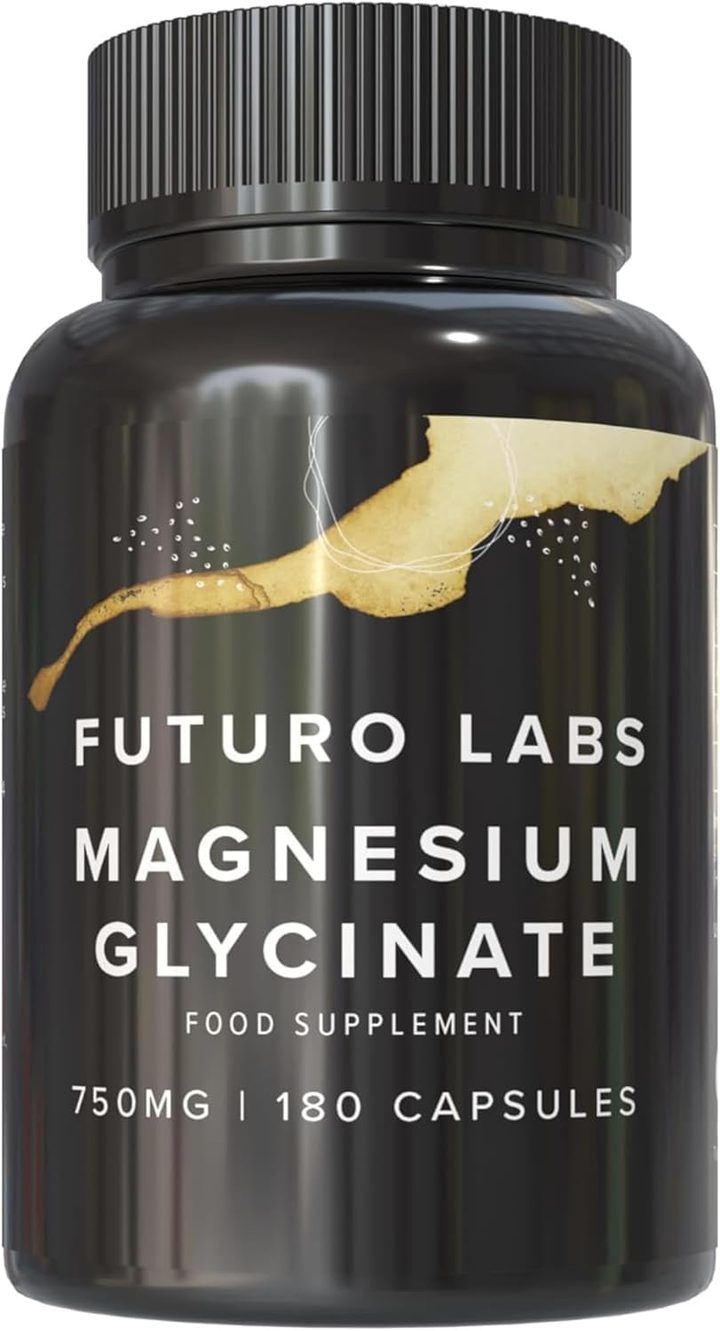
Our brand: the worked example on this page
Futuro Labs Magnesium Glycinate
- 22p a day
- 180 capsules, 2 capsules daily
- Lab tested
- Made in the UK
The serving: Futuro Labs Magnesium Glycinate on Amazon UK, 300mg elemental per 2 capsules, £19.99 for 180. Label breakdown. The all-ages female page is how much magnesium per day for a woman; medications on medications and magnesium.
The number does not move; the reasons to meet it do
The UK reference nutrient intake for women is 270mg of magnesium a day from 19 onward with no upward step at 50, 60 or 70, so the over-50 and over-60 versions of this question share an answer: 270mg from food, water and any supplement combined. What changes after 50 is everything around that number. Menopause accelerates bone loss, and magnesium contributes to the maintenance of normal bones alongside the calcium and vitamin D that get the headlines. Muscle mass declines with age, sarcopenia, and the normal muscle function and protein synthesis claims describe machinery that resistance training and protein need working. Appetite and food volume often fall, squeezing the magnesium-rich foods, which is the same narrow-diet story this site tells lifters, arriving by a different road.
The context that raises the stakes: sleep, medicines, kidneys
Three age-linked realities deserve their own paragraph. Sleep: the small magnesium sleep trials, Abbasi's and Nielsen's, were run in adults over 51 with poor sleep and low intake, which makes this the one group where the modest evidence was actually generated; the honest expectation is still modest, and no sleep claim is authorised. Medicines: the chance of a spacing interaction rises with every prescription, levothyroxine and bisphosphonates being common after 50, and long-term proton pump inhibitors are the subject of a UK regulator warning for lowering magnesium over years, both reasons the pharmacist check moves from optional to routine. Kidneys: function declines gradually with age, and since magnesium clearance depends on it, anyone with reduced kidney function or a chronic kidney diagnosis should not start supplements without their clinician. None of this changes the 270mg; all of it changes how carefully the capsule is chosen.
| Consideration | The facts | What to do |
|---|---|---|
| Reference intake | 270mg a day, all sources, unchanged after 50 and 60 | Aim there from food first |
| Bone health | Magnesium supports normal bones; menopause speeds bone loss | Adequate magnesium alongside calcium, vitamin D and loaded exercise |
| Muscle | Normal muscle function and protein synthesis claims; sarcopenia risk rises | Resistance training and protein do the heavy lifting; magnesium keeps intake adequate |
| Sleep | Trials in over-51s with low intake show modest gains over eight weeks | 300mg with dinner, judged after eight weeks, expectations modest |
| Regularity | Constipation more common with age | A small morning citrate, 100mg to 200mg, alongside evening glycinate if wanted, under 400mg total |
| Medications | More prescriptions, more spacing questions; PPIs lower magnesium | The pharmacist check, every time |
| Kidneys | Function declines with age | No supplements without a clinician if kidney function is reduced |
The serving, and the safeguards that come with it
When food falls short, the serving does not change with the decade: Futuro Labs Magnesium Glycinate, 2 capsules with the evening meal, 300mg elemental at 80% NRV from bisglycinate at 20%, covering the 270mg target with margin and sitting under the 400mg guidance level, vegan, UK made under GMP and BRC, panels shown, £19.99 for 180 capsules, 22p a day. One capsule, 150mg, suits a diet that nearly covers it. The safeguards are the difference between this page and the younger version: the pharmacist spacing check across every current medicine, the kidney conversation where function is reduced, and a preference for the plain single-ingredient product precisely so those conversations stay short. How much magnesium per day for a woman over 50: 270mg, the same as always, met with more care than before.
What to check on the label
- 270mg a day from all sources: unchanged after 50 and after 60.
- Bone and muscle raise the stakes: magnesium supports both, alongside calcium, vitamin D, protein and loaded exercise.
- The sleep evidence was generated in this age group: modest, eight weeks, no claim.
- The pharmacist check becomes routine: levothyroxine, bisphosphonates, PPIs.
- Reduced kidney function: clinician first, before any supplement.
Our brand
The worked example: Futuro Labs Magnesium Glycinate
Futuro Labs Magnesium Glycinate is the serving that still fits after 50: 300mg elemental per 2 capsules (80% NRV) from bisglycinate 20%, single ingredient so the pharmacist check stays short, 22p a day from a £19.99 bottle of 180. Vegan, UK made, panels shown.
- Elemental magnesium per serving
- 300mg (80% NRV)
- Form
- magnesium bisglycinate 20%
- Serving
- 2 capsules a day
- Bottle
- 180 capsules, 90 days
- Price
- £19.99 (22p a day)
- Capsule
- vegetarian shell, vegan product
Questions people also ask
How much magnesium should a 60 year old woman take?
270mg a day from all sources, the same reference intake as at 50. A 300mg glycinate serving covers it on a narrow diet, after a pharmacist check of current medicines.
Does magnesium need go up after menopause?
The UK reference intake does not change. What rises is the importance of meeting it, for bone and muscle, and the care needed around medicines and kidneys.
Is magnesium good for women over 50 for sleep?
The small sleep trials were run in over-51s with poor sleep and low intake and found modest improvements over eight weeks. No claim is authorised; expectations should match.
Which magnesium is best for a woman over 50?
Plain bisglycinate at 300mg elemental with dinner, with a small morning citrate only if regularity is also wanted. Single ingredient keeps interaction checks simple.
What should a woman over 50 check before taking magnesium?
Every current medicine with a pharmacist for spacing, especially thyroid, bone and acid-suppressing drugs, and kidney function with a clinician if it is known to be reduced.
Sources
- Futuro Labs Magnesium Glycinate listing, Amazon UK, label and price checked 31 August 2026. https://www.amazon.co.uk/dp/B0BT7Z5VQW
- Department of Health. Dietary Reference Values for Food Energy and Nutrients for the United Kingdom. Report on Health and Social Subjects 41, 1991 (magnesium RNI 300mg men, 270mg women).
- Expert Group on Vitamins and Minerals. Safe Upper Levels for Vitamins and Minerals. Food Standards Agency, 2003 (magnesium guidance level 400mg a day from supplements). https://cot.food.gov.uk/sites/default/files/vitmin2003.pdf
- Abbasi B, et al. The effect of magnesium supplementation on primary insomnia in elderly: a double-blind placebo-controlled clinical trial. Journal of Research in Medical Sciences 2012;17(12):1161-1169. PubMed record
- Nielsen FH, Johnson LK, Zeng H. Magnesium supplementation improves indicators of low magnesium status and inflammatory stress in adults older than 51 years with poor quality sleep. Magnesium Research 2010;23(4):158-168. PubMed record
- Medicines and Healthcare products Regulatory Agency. Drug Safety Update, April 2012: proton pump inhibitors in long-term use, reports of hypomagnesaemia.
- Gröber U, Schmidt J, Kisters K. Magnesium in prevention and therapy. Nutrients 2015;7(9):8199-8226. PubMed record
- EFSA Panel on Dietetic Products, Nutrition and Allergies. Scientific Opinion on the substantiation of health claims related to magnesium. EFSA Journal 2010;8(10):1807. https://efsa.onlinelibrary.wiley.com/doi/10.2903/j.efsa.2010.1807