Ghost Fitness/Magnesium/Which magnesium is best for muscle spasms?
Which magnesium is best for muscle spasms?
The short answer
Magnesium glycinate at 300mg elemental is the best magnesium for muscle spasms where intake is low: magnesium lets muscle relax after contracting. A back or neck spasm after a heavy lift is usually an injury for a physio.
- 300mgelemental per 2 capsules, 80% NRV
- Calciumthe mineral magnesium balances to let muscle relax
- Physiofor a spasm that follows a lift
- 22pa day, Futuro Labs Magnesium Glycinate
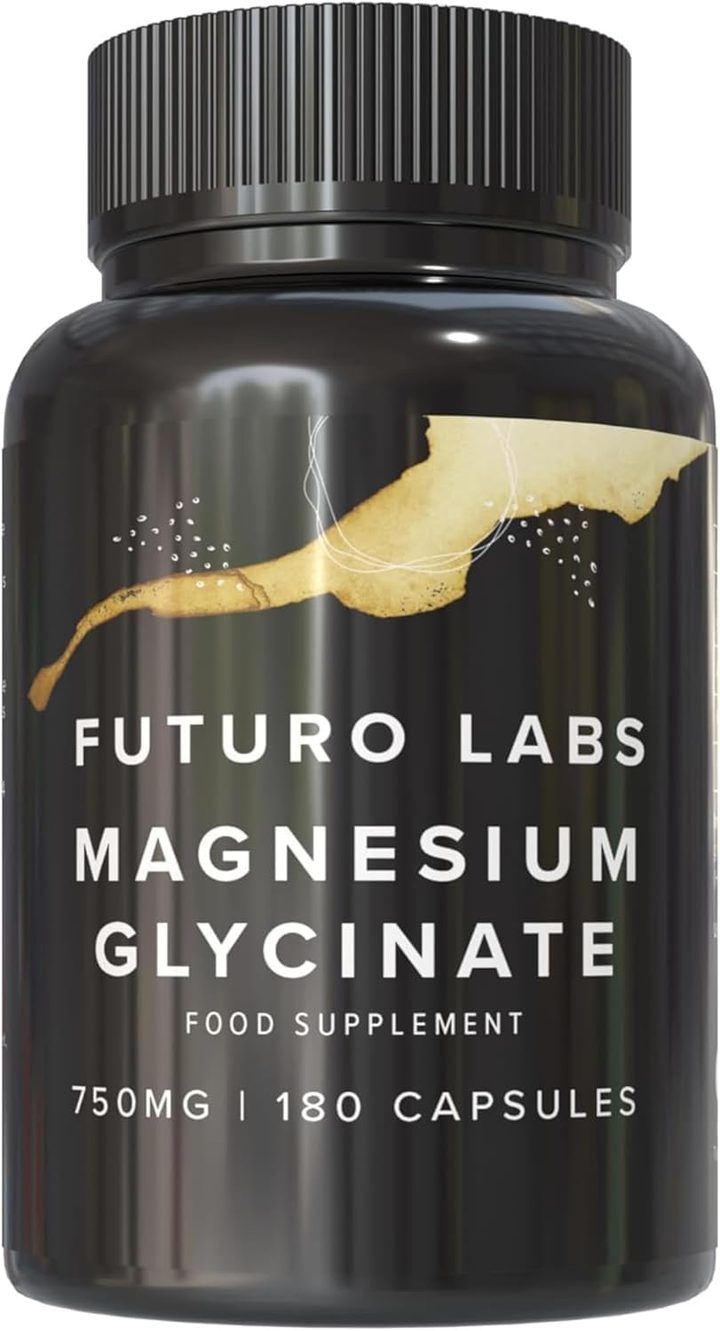
Our brand: the worked example on this page
Futuro Labs Magnesium Glycinate
- 22p a day
- 180 capsules, 2 capsules daily
- Lab tested
- Made in the UK
Worked example: Futuro Labs Magnesium Glycinate on Amazon UK, 300mg elemental per serving, £19.99 for 90 days. Label breakdown.
Spasm, cramp or twitch: which one you have
A cramp is a short, painful, involuntary contraction that stretches out. A twitch is a flicker under the skin with no pain. A spasm is a sustained, guarding contraction of a whole muscle group, the locked lower back the morning after deadlifts, the neck that will not turn, the calf that stays hard. Cramps and twitches are the ones with a magnesium story. A spasm after a lift is usually the body protecting a strained tissue, and Schwellnus's review of exercise-associated cramping is clear that the mechanism is neuromuscular, not a mineral shortage in the moment. The honest order of business for a lifting spasm is rest, gentle movement, heat and a physiotherapist if it lasts more than a few days.
Where magnesium fits
Magnesium is the mineral that lets a muscle fibre relax: it competes with calcium at the sites that trigger contraction and powers the pumps that clear calcium afterwards, as Potter and colleagues set out in 1981. A low intake lowers the threshold at which muscle fires and slows relaxation, which shows as cramps, twitching and a general tightness that people describe as spasm. Gröber's 2015 review lists that hyperexcitability among the earliest signs of magnesium shortfall. Garrison's 2020 Cochrane review, on the other hand, found magnesium unlikely to help idiopathic cramps. Read together: correct a low intake and muscles behave normally; do not expect magnesium to release a spasm that an injury is causing. The authorised wording, normal muscle function and electrolyte balance, is the right frame.
| Option | What it does | Evidence | Verdict |
|---|---|---|---|
| Magnesium glycinate, 300mg elementalOurs | Corrects a low intake; full dose, no laxative effect | Trials mixed for cramps; mechanism clear | Take it daily for a month if diet is short |
| Magnesium citrate | Same mineral, laxative at 300mg | General studies | Morning, smaller dose |
| Magnesium oxide | Mostly unabsorbed | The form in the negative cramp trials | No |
| Sprays, oils, Epsom baths | The warm bath relaxes you | No reliable skin absorption | Enjoy the bath; do not count the magnesium |
| Heat, gentle movement, physiotherapy | Treats the guarding spasm itself | Standard care | First line for a spasm after a lift |
| Sodium and fluid on hot training days | Electrolyte balance | Linked to cramping in heavy sweaters | Salt food, drink to thirst plus a little |
Which type of magnesium to take, and how
Chelated glycinate, 300mg elemental, with the evening meal. The worked example, Futuro Labs Magnesium Glycinate, gives that from 1500mg bisglycinate at 20% in 2 capsules, 80% NRV, low laxative effect, from a vegan capsule made in the UK under GMP and BRC certification and third-party tested for heavy metals and microbiology, 180 capsules for £19.99, 22p a day. Give it a month. If the cramps and tightness settle, your intake was short and you keep going. If a spasm keeps returning after the same lift, that is a technique or load problem and a physiotherapist will find it faster than any supplement. What is the best form of magnesium to take for muscle spasms is the form you can hold daily at a full dose, and that is the 300mg elemental glycinate.
When a spasm needs a GP rather than a physio
Spasm with numbness or weakness in a limb, loss of bladder or bowel control, spasm after a fall or a blow, a fever with the spasm, or spasms that spread without a training cause. Those are GP or urgent care matters. Everything else is heat, movement, patience and, if your intake was low, a month of magnesium.
What to check on the label
- Elemental magnesium 300mg per serving, 80% NRV printed.
- Glycinate first in the ingredients, so the full dose is tolerated daily.
- No spasm, relaxant or pain claims; none are authorised.
- Skip sprays as a magnesium source; the bath is doing the relaxing.
- Cost per day under 25p.
Our brand
The worked example: Futuro Labs Magnesium Glycinate
Futuro Labs Magnesium Glycinate is the worked example: 300mg elemental per 2 capsules (80% NRV) from chelated bisglycinate, low laxative effect, vegan, UK made, third-party tested, 22p a day from a £19.99 bottle of 180. It corrects a low intake; a physio treats the spasm.
- Elemental magnesium per serving
- 300mg (80% NRV)
- Form
- magnesium bisglycinate 20%
- Serving
- 2 capsules a day
- Bottle
- 180 capsules, 90 days
- Price
- £19.99 (22p a day)
- Capsule
- vegetarian shell, vegan product
Questions people also ask
What is the best form of magnesium to take for muscle spasms?
Glycinate at 300mg elemental a day with the evening meal, if intake is low. Futuro Labs Magnesium Glycinate: 300mg elemental, 22p a day, UK made.
Which type of magnesium is best for back spasms?
The same glycinate for your daily intake, but a back spasm after a lift is usually a strain guarding itself; heat, gentle movement and a physiotherapist treat that.
Does magnesium stop muscle spasms quickly?
No. It corrects a low intake over weeks. It has no acute effect on a spasm in progress.
Is magnesium spray good for muscle spasms?
The warm rub helps; the 2017 review of transdermal magnesium found no reliable evidence that meaningful amounts get through the skin.
Can low magnesium cause muscle spasms?
A low intake raises muscle excitability and shows as cramps, twitching and tightness. Sustained spasms after training are more often injury or fatigue.
Sources
- Futuro Labs Magnesium Glycinate listing, Amazon UK, label and price checked 31 August 2026. https://www.amazon.co.uk/dp/B0BT7Z5VQW
- Potter JD, Robertson SP, Johnson JD. Magnesium and the regulation of muscle contraction. Federation Proceedings 1981;40(12):2653-2656. PubMed record
- Gröber U, Schmidt J, Kisters K. Magnesium in prevention and therapy. Nutrients 2015;7(9):8199-8226. PubMed record
- Garrison SR, Korownyk CS, Kolber MR, et al. Magnesium for skeletal muscle cramps. Cochrane Database of Systematic Reviews 2020, Issue 9, CD009402. PubMed record
- Schwellnus MP. Cause of exercise associated muscle cramps (EAMC): altered neuromuscular control, dehydration or electrolyte depletion? British Journal of Sports Medicine 2009;43(6):401-408. https://pubmed.ncbi.nlm.nih.gov/18981039/
- Gröber U, Werner T, Vormann J, Kisters K. Myth or reality, transdermal magnesium? Nutrients 2017;9(8):813. https://pubmed.ncbi.nlm.nih.gov/28788060/
- EFSA Panel on Dietetic Products, Nutrition and Allergies. Scientific Opinion on the substantiation of health claims related to magnesium. EFSA Journal 2010;8(10):1807. https://efsa.onlinelibrary.wiley.com/doi/10.2903/j.efsa.2010.1807
- Expert Group on Vitamins and Minerals. Safe Upper Levels for Vitamins and Minerals. Food Standards Agency, 2003 (magnesium guidance level 400mg a day from supplements). https://cot.food.gov.uk/sites/default/files/vitmin2003.pdf