Ghost Fitness/Magnesium/Which is better for muscle spasms, magnesium oxide or magnesium glycinate?
Which is better for muscle spasms, magnesium oxide or magnesium glycinate?
The short answer
Glycinate: the trials that failed to help cramps and spasms mostly used oxide, absorbed at about 4%, so participants barely received magnesium. A fair test of the low-intake mechanism needs 300mg elemental delivered daily, which glycinate does and oxide cannot.
- About 4%of oxide absorbed: why the old trials barely dosed anyone
- 300mgelemental delivered daily: the fair test's requirement
- 1 monthbaseline week included, before judging
- 22pa day for the form that can run the test
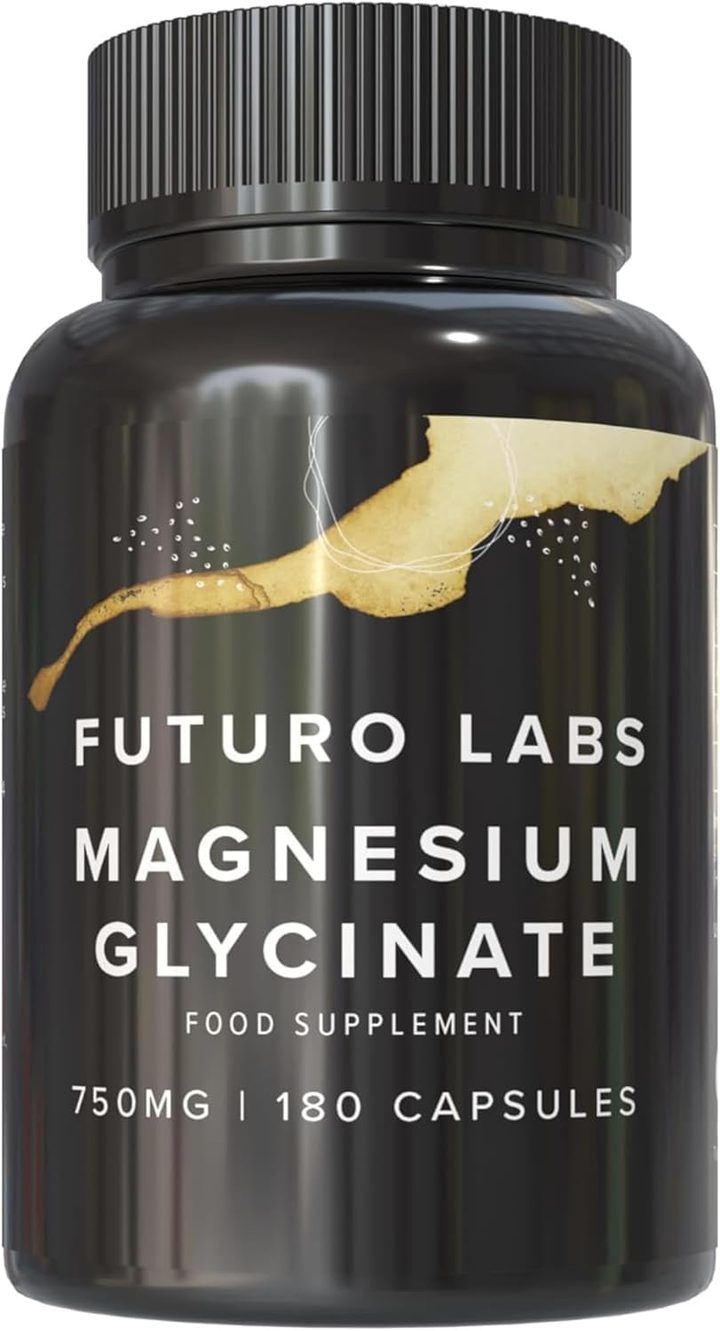
Our brand: the worked example on this page
Futuro Labs Magnesium Glycinate
- 22p a day
- 180 capsules, 2 capsules daily
- Lab tested
- Made in the UK
The fair-test form: Futuro Labs Magnesium Glycinate on Amazon UK, 180 capsules for £19.99. Label breakdown. The citrate version of this question is on the citrate or glycinate for cramps page.
This comparison has already been run, badly
The spasm and cramp literature is, in an underappreciated way, largely a trial of magnesium oxide. Garrison's 2020 Cochrane review, the honest headline that magnesium is unlikely to help idiopathic cramps, pooled studies that leaned on oxide and similar poorly absorbed salts, in participants never screened for low intake. Feed those two design choices into Firoz and Graber's absorption figure, roughly 4% for oxide, and the trials resolve into people with probably adequate magnesium receiving almost none more, then not improving, which is what you would predict whether or not magnesium ever helps spasms. That does not rescue magnesium as a spasm cure; it does mean the oxide-versus-glycinate question is partly settled by the trial record itself: oxide is the form the failures used.
What spasms respond to, and where each form fits
A spasm is a cramp's sharp sibling, an involuntary contraction in the same tissues, and the causes stack the same way: fatigue and overuse in trained muscle, as Schwellnus's exercise-cramp work maps; caffeine, stress and poor sleep turning the volume up; and, in the narrow-diet case, low magnesium intake leaving muscle and nerve membranes more excitable, part of the deficiency cluster in Gröber's review. Only the last responds to a capsule, and only to a capsule that arrives: 300mg elemental daily for a month, which glycinate delivers in two comfortable capsules with dinner while oxide delivers a rounding error plus a loose morning. The claims framework agrees quietly, since normal muscle function attaches to magnesium at meaningful doses, a bar oxide's absorbed fraction limbos under.
| Magnesium oxide | Magnesium glycinate (worked example) | |
|---|---|---|
| Elemental printed | 375mg, 100% NRV | 300mg, 80% NRV |
| Elemental actually absorbedOurs | On the order of 15mg | The organic-form share of the full 300mg |
| Role in the failed spasm trials | The form most of them used | Largely untested at proper doses |
| Side effect at daily use | The laxative effect | None expected |
| Can it run the month test? | No: the dose never arrives | Yes: 2 capsules with dinner, nightly |
| Cost per absorbed magnesium | Poor despite the cheap bottle | about 7p per 100mg elemental |
The month test, and where spasms outrank supplements
Run the version the literature mostly did not: a baseline week counting spasms, then Futuro Labs Magnesium Glycinate, 2 capsules with the evening meal daily, 300mg elemental at 80% NRV from bisglycinate at 20%, vegan, UK made under GMP and BRC, panels shown, £19.99 for 180 capsules, 22p a day, verdict at week four. Improvement in a narrow-diet trainer is the low-intake mechanism resolving; a null month means the cause was caffeine, sleep, load or none of the above, and the money stops. Spasms that are severe, spreading, one-sided, persistent at rest, or paired with weakness, wasting or swelling are GP territory before any test, as are new spasms after starting medication. Which is better for muscle spasms, magnesium oxide or magnesium glycinate: the one the failed trials never properly tried, taken properly, once, with a calendar.
What to check on the label
- The negative trials largely tested oxide: about 4% absorbed, dose never delivered.
- The only capsule-responsive cause is low intake: fatigue, caffeine and stress are not.
- The fair test: 300mg elemental, nightly, one month, baseline first.
- Glycinate can run it; oxide cannot, and adds a laxative effect for trying.
- Red-flag spasms to a GP first: severe, spreading, one-sided, or with weakness.
Our brand
The worked example: Futuro Labs Magnesium Glycinate
Futuro Labs Magnesium Glycinate is the form the fair test needs: 300mg elemental per 2 capsules (80% NRV) from bisglycinate 20%, nightly with dinner, vegan, UK made, panels shown, 22p a day from a £19.99 bottle of 180.
- Elemental magnesium per serving
- 300mg (80% NRV)
- Form
- magnesium bisglycinate 20%
- Serving
- 2 capsules a day
- Bottle
- 180 capsules, 90 days
- Price
- £19.99 (22p a day)
- Capsule
- vegetarian shell, vegan product
Questions people also ask
Is magnesium oxide good for muscle spasms?
No: about 4% absorbs, so the dose never arrives, and the trials built on it are much of why magnesium looks ineffective for cramps and spasms.
Why did magnesium fail in cramp and spasm studies?
Most used oxide or similar salts in people not selected for low intake: minimal delivered dose, wrong population. The verdict is honest; the test was weak.
How long should I try glycinate for spasms?
A baseline week, then four weeks at 300mg elemental nightly. Improvement suggests low intake; a null month says look at caffeine, sleep and load.
Can spasms be from something other than magnesium?
Usually: fatigue, overuse, caffeine, stress and poor sleep lead the list, and none responds to any capsule.
When are muscle spasms a medical matter?
When severe, spreading, one-sided, persistent at rest, paired with weakness or wasting, or new after starting a medication: GP first.
Sources
- Futuro Labs Magnesium Glycinate listing, Amazon UK, label and price checked 31 August 2026. https://www.amazon.co.uk/dp/B0BT7Z5VQW
- Garrison SR, Korownyk CS, Kolber MR, et al. Magnesium for skeletal muscle cramps. Cochrane Database of Systematic Reviews 2020, Issue 9, CD009402. PubMed record
- Firoz M, Graber M. Bioavailability of US commercial magnesium preparations. Magnesium Research 2001;14(4):257-262. PubMed record
- Schwellnus MP. Cause of exercise associated muscle cramps (EAMC): altered neuromuscular control, dehydration or electrolyte depletion? British Journal of Sports Medicine 2009;43(6):401-408. https://pubmed.ncbi.nlm.nih.gov/18981039/
- Gröber U, Schmidt J, Kisters K. Magnesium in prevention and therapy. Nutrients 2015;7(9):8199-8226. PubMed record
- Expert Group on Vitamins and Minerals. Safe Upper Levels for Vitamins and Minerals. Food Standards Agency, 2003 (magnesium guidance level 400mg a day from supplements). https://cot.food.gov.uk/sites/default/files/vitmin2003.pdf
- EFSA Panel on Dietetic Products, Nutrition and Allergies. Scientific Opinion on the substantiation of health claims related to magnesium. EFSA Journal 2010;8(10):1807. https://efsa.onlinelibrary.wiley.com/doi/10.2903/j.efsa.2010.1807