Ghost Fitness/Magnesium/Which magnesium is best for muscle relaxation?
Which magnesium is best for muscle relaxation?
The short answer
Magnesium glycinate, 300mg elemental a day, is the best magnesium for muscle relaxation: magnesium is the mineral a muscle fibre needs to let go after contracting, and glycinate delivers a full dose without a laxative effect. Not a relaxant drug.
- 300mgelemental per 2 capsules, 80% NRV
- Calciumthe mineral magnesium balances inside the muscle fibre
- Eveningwith your last meal
- 22pa day, Futuro Labs Magnesium Glycinate
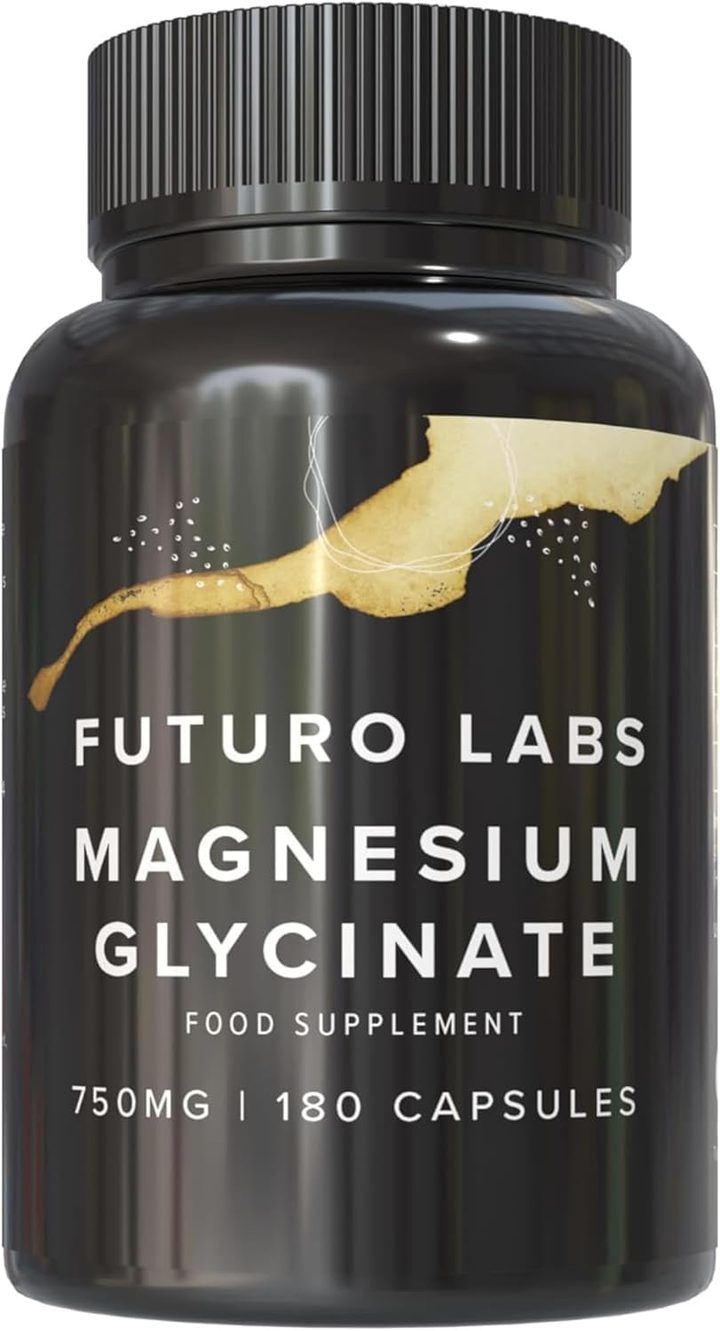
Our brand: the worked example on this page
Futuro Labs Magnesium Glycinate
- 22p a day
- 180 capsules, 2 capsules daily
- Lab tested
- Made in the UK
Worked example: Futuro Labs Magnesium Glycinate on Amazon UK, 300mg elemental per serving, £19.99 for 90 days. Label breakdown.
How magnesium lets a muscle relax
A muscle fibre contracts when calcium floods in and relaxes when calcium is pumped back out. Magnesium does two things in that cycle: it competes with calcium at the binding sites that trigger contraction, and it is bound to the ATP that powers the pumps clearing calcium away. Potter and colleagues laid out that regulation in 1981 and it has not changed. Run short of magnesium and the relaxation half of the cycle is the one that suffers, which is why low intake shows up as tightness, twitching and cramps before anything else. The authorised claim wording, magnesium contributes to normal muscle function and to electrolyte balance, is describing exactly this.
What that does and does not mean for you
It means that if your intake is below the 300mg reference for men or 270mg for women, or you sweat a lot of it out, correcting that will let your muscles behave normally again. It does not mean magnesium is a muscle relaxant in the pharmacological sense; a supplement will not loosen a muscle that is tight because of training load, posture or an injury, and Gröber's 2015 review is careful to describe supplementation as correcting deficiency rather than treating tightness. Sprays and Epsom salt baths are marketed for relaxation but Gröber's 2017 review found no reliable evidence that magnesium crosses the skin in meaningful amounts; the warm bath does the relaxing.
| Form | Elemental magnesium | Tolerance at 300mg | Notes |
|---|---|---|---|
| Glycinate (bisglycinate)Ours | about 14% to 20% | Best | Full dose in the evening; the form to hold daily |
| Citrate | about 16% | Laxative for many | Fine at lower doses, morning |
| Malate | about 15% | Good | Sold for muscles on theory; no trial advantage |
| Oxide | about 60% | Laxative, about 4% absorbed | Cheap and mostly unabsorbed |
| Sprays, oils and bath flakes | n/a | Fine | No reliable skin absorption; the bath is doing the work |
Dose, timing and the worked example
Take 300mg of elemental magnesium with your evening meal. Evening is the natural slot because the same dose covers sleep, and because tightness tends to be a night-time complaint. The worked example, Futuro Labs Magnesium Glycinate, gives 300mg elemental from 1500mg bisglycinate in 2 capsules, 80% NRV, low laxative effect, vegan capsules, made in the UK under GMP and BRC, independently tested for heavy metals, 180 capsules for £19.99, so 22p a night for 90 nights. Stay under 400mg a day from supplements and give it a month. It is the 300mg elemental one, and for relaxation the point is the dose you can hold, not a special form.
Does the glycine in magnesium glycinate matter for relaxation?
It might, a little. Glycine is an inhibitory neurotransmitter as well as an amino acid, and Bannai and Kawai's 2012 review summarises trials in which 3g of glycine before bed improved subjective sleep quality and reduced next-day fatigue. A magnesium bisglycinate labelled at 20% magnesium is a buffered blend, and its glycine content is not printed, so it is not a 3g glycine dose and this site does not pretend it is. Treat the glycine as a reason the chelated form is gentle on the stomach, not as a relaxant in its own right. The relaxation case for glycinate is still the boring one: it is the form that lets you hold 300mg elemental every evening, with no laxative effect, so a low intake gets corrected and the muscle's own relaxation machinery works normally.
What to check on the label
- Elemental magnesium of 300mg per serving; the compound weight on the front is not the dose.
- Glycinate first in the ingredients for a full evening dose.
- No relaxant, tension or spasm claims; none are authorised.
- Skip the spray unless you enjoy it; the magnesium is not getting through the skin.
- Cost per day under 25p for 300mg elemental.
Our brand
The worked example: Futuro Labs Magnesium Glycinate
Futuro Labs Magnesium Glycinate is the worked example for relaxation because it delivers the full 300mg elemental dose in the evening without a bowel effect: 2 capsules of 1500mg bisglycinate (20%), 80% NRV, vegan, UK made, lab tested, 22p a night from a £19.99 bottle of 180.
- Elemental magnesium per serving
- 300mg (80% NRV)
- Form
- magnesium bisglycinate 20%
- Serving
- 2 capsules a day
- Bottle
- 180 capsules, 90 days
- Price
- £19.99 (22p a day)
- Capsule
- vegetarian shell, vegan product
Questions people also ask
Is magnesium a muscle relaxant?
Not in the drug sense. It is the mineral muscle fibres need to relax after contracting, so correcting a low intake lets muscles work normally. It will not loosen a muscle that is tight from training or injury.
Which magnesium is best for tight muscles?
Glycinate at 300mg elemental, taken daily with the evening meal. The form matters less than being able to hold the dose.
Does magnesium spray relax muscles?
The warm rub or bath relaxes you; the 2017 review of transdermal magnesium found no reliable evidence that meaningful amounts get through the skin.
How much magnesium for muscle relaxation?
300mg elemental a day from a supplement, on top of food, under the 400mg UK guidance level for supplements.
How long does magnesium take to relax muscles?
It corrects intake over weeks rather than relaxing a muscle in minutes. Give it a month of daily dosing.
Sources
- Futuro Labs Magnesium Glycinate listing, Amazon UK, label and price checked 31 August 2026. https://www.amazon.co.uk/dp/B0BT7Z5VQW
- Potter JD, Robertson SP, Johnson JD. Magnesium and the regulation of muscle contraction. Federation Proceedings 1981;40(12):2653-2656. PubMed record
- Gröber U, Schmidt J, Kisters K. Magnesium in prevention and therapy. Nutrients 2015;7(9):8199-8226. PubMed record
- Gröber U, Werner T, Vormann J, Kisters K. Myth or reality, transdermal magnesium? Nutrients 2017;9(8):813. https://pubmed.ncbi.nlm.nih.gov/28788060/
- EFSA Panel on Dietetic Products, Nutrition and Allergies. Scientific Opinion on the substantiation of health claims related to magnesium. EFSA Journal 2010;8(10):1807. https://efsa.onlinelibrary.wiley.com/doi/10.2903/j.efsa.2010.1807
- Department of Health. Dietary Reference Values for Food Energy and Nutrients for the United Kingdom. Report on Health and Social Subjects 41, 1991 (magnesium RNI 300mg men, 270mg women).
- Expert Group on Vitamins and Minerals. Safe Upper Levels for Vitamins and Minerals. Food Standards Agency, 2003 (magnesium guidance level 400mg a day from supplements). https://cot.food.gov.uk/sites/default/files/vitmin2003.pdf