Ghost Fitness/Magnesium/Which magnesium is best for muscle pain?
Which magnesium is best for muscle pain?
The short answer
For muscle pain after training, magnesium glycinate at 300mg elemental a day is the form to take: one trial at 350mg reported less soreness, and glycinate holds that dose daily. Not a painkiller; pain not from training needs a GP.
- 300mgelemental per 2 capsules, 80% NRV
- 350mga day in the 2022 soreness trial
- Nota painkiller; it corrects intake
- 22pa day, Futuro Labs Magnesium Glycinate
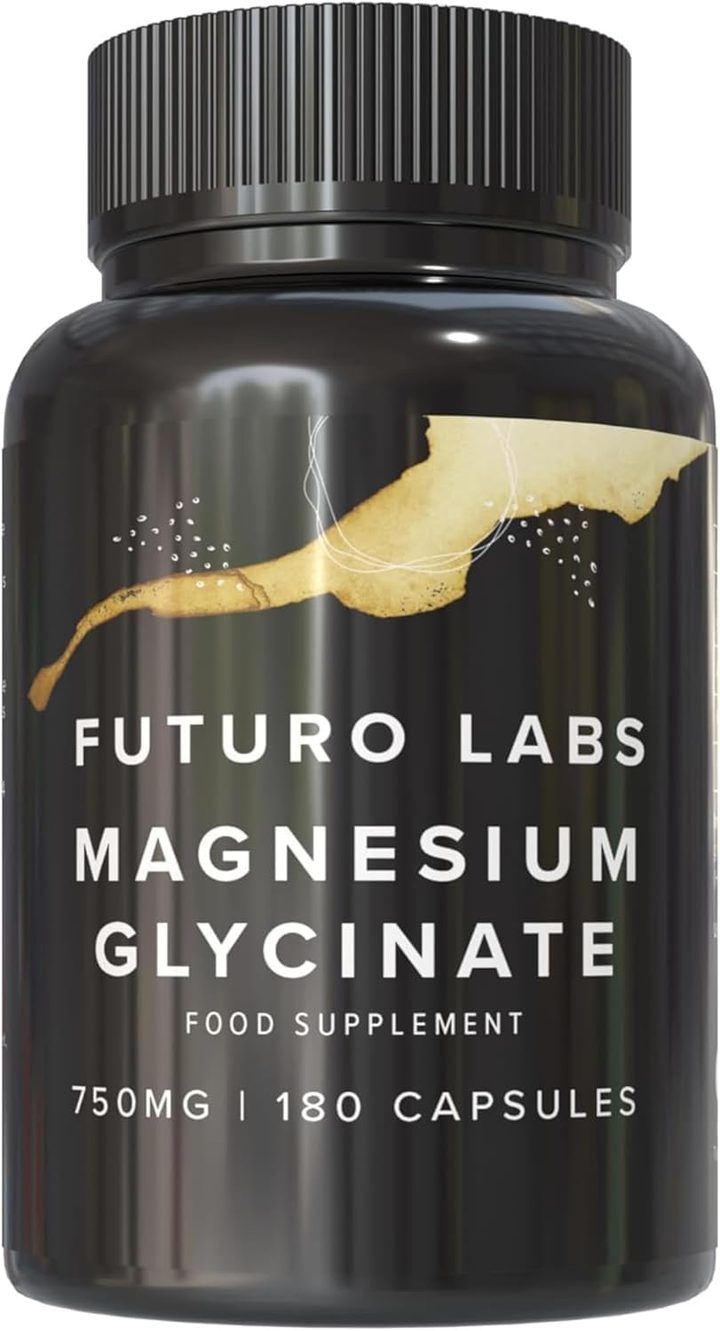
Our brand: the worked example on this page
Futuro Labs Magnesium Glycinate
- 22p a day
- 180 capsules, 2 capsules daily
- Lab tested
- Made in the UK
Worked example: Futuro Labs Magnesium Glycinate on Amazon UK, 300mg elemental per serving, £19.99 for 90 days. Label breakdown.
Training soreness: what the trial found
Reno's 2022 trial gave college athletes 350mg of magnesium a day for ten days around a strenuous session and reported lower muscle soreness and better perceived recovery than placebo. It is one small study, so treat it as promising rather than proven, but it is the only trial that speaks directly to the question, and the dose is close to the 300mg a day that a good supplement gives. Zhang's 2017 review of magnesium and exercise is the wider context: benefits show up when intake was low.
Tightness, cramps and the mechanism
Magnesium is the mineral that lets a muscle fibre relax after it contracts, by balancing calcium at the binding sites and powering the pumps that clear calcium away. Low intake shows as tightness, twitching and cramps, which is the muscle pain most lifters are describing. The authorised claim wording is that magnesium contributes to normal muscle function and to electrolyte balance. It is not a painkiller and does not act on pain signalling, so it will not touch pain from a strain, a tear, a joint or a nerve.
| Pain | Likely cause | Magnesium relevant? | What to do |
|---|---|---|---|
| Dull ache one to three days after training | Delayed onset muscle soreness | Possibly, at 300mg to 350mg a day if intake was low | Sleep, protein, easy movement; keep training |
| Tightness and twitching, worse at night | Fatigue, low magnesium or fluid intake | Yes, if intake was low | 300mg elemental a day with the evening meal; sodium and fluid on hot days |
| Sharp pain during a lift | Strain or tear | No | Stop, rest, see a physiotherapist |
| Pain with swelling, redness or weakness | Injury or something medical | No | GP |
| Widespread pain with poor sleep and fatigue | Medical | No | GP |
Which form, dose and the worked example
Glycinate, at 300mg elemental a day with food, because it is the form you can hold daily without a laxative effect. The worked example, Futuro Labs Magnesium Glycinate, gives 300mg elemental from 1500mg bisglycinate in 2 capsules, 80% NRV, vegan capsules, made in the UK under GMP and BRC, independently tested for heavy metals and microbiology, 180 capsules for £19.99, 22p a day. Give it a month. Sprays and bath flakes marketed for muscle pain have no reliable evidence of skin absorption; the warm bath helps, the magnesium in it does not.
How should you take magnesium for muscle pain around training?
Two capsules of chelated glycinate with the meal after training, or with the evening meal if you train early, because the same 300mg elemental dose covers sleep quality, which is the strongest recovery lever you have for DOMS. Taking it with food improves tolerance; there is no need to time it around a pre-workout or a protein shake and no interaction with either. Do not double the dose on a bad day; the UK guidance level for supplements is 400mg a day and the trial that found less soreness used 350mg. Keep sodium and fluid up on hot days, because tightness and cramping in a long session are usually electrolyte balance rather than magnesium. A vegan capsule, third-party tested and UK made, at 22p a day, is about as low-risk as a recovery supplement gets.
What to check on the label
- Elemental magnesium of 300mg per serving, close to the 350mg in the soreness trial.
- Glycinate first in the ingredients.
- No pain relief claims; magnesium is not a painkiller and no such claim is authorised.
- Skip sprays sold for muscle pain; the magnesium is not getting through.
- Cost per day under 25p.
Our brand
The worked example: Futuro Labs Magnesium Glycinate
Futuro Labs Magnesium Glycinate is the worked example for training soreness: 300mg elemental per 2 capsules (80% NRV) from 1500mg bisglycinate, close to the trial dose, comfortable daily, vegan, UK made, lab tested, 22p a day from a £19.99 bottle of 180.
- Elemental magnesium per serving
- 300mg (80% NRV)
- Form
- magnesium bisglycinate 20%
- Serving
- 2 capsules a day
- Bottle
- 180 capsules, 90 days
- Price
- £19.99 (22p a day)
- Capsule
- vegetarian shell, vegan product
Questions people also ask
Which magnesium is good for muscle pain after the gym?
Glycinate at 300mg elemental a day. Futuro Labs Magnesium Glycinate gives that for 22p a day, UK made and lab tested.
What is the best magnesium for muscle pain and tightness?
The same glycinate, with the evening meal. Tightness is where low intake shows first, and the evening dose also covers sleep.
Does magnesium relieve muscle pain?
It is not a painkiller. One trial reported less training soreness at 350mg a day; it will not help pain from a strain, joint or nerve.
Does magnesium spray help sore muscles?
The 2017 review of transdermal magnesium found no reliable evidence of meaningful absorption through the skin. Take it by mouth.
When should muscle pain go to a GP?
When it is sharp, follows an injury, comes with swelling, redness, weakness or numbness, or is widespread and not linked to training.
Sources
- Futuro Labs Magnesium Glycinate listing, Amazon UK, label and price checked 31 August 2026. https://www.amazon.co.uk/dp/B0BT7Z5VQW
- Reno AM, Green M, Killen LG, O'Neal EK, Pritchett K, Hanson Z. Effects of magnesium supplementation on muscle soreness and performance. Journal of Strength and Conditioning Research 2022;36(8):2198-2203. PubMed record
- Zhang Y, Xun P, Wang R, Mao L, He K. Can magnesium enhance exercise performance? Nutrients 2017;9(9):946. https://pubmed.ncbi.nlm.nih.gov/28846654/
- Potter JD, Robertson SP, Johnson JD. Magnesium and the regulation of muscle contraction. Federation Proceedings 1981;40(12):2653-2656. PubMed record
- Gröber U, Werner T, Vormann J, Kisters K. Myth or reality, transdermal magnesium? Nutrients 2017;9(8):813. https://pubmed.ncbi.nlm.nih.gov/28788060/
- EFSA Panel on Dietetic Products, Nutrition and Allergies. Scientific Opinion on the substantiation of health claims related to magnesium. EFSA Journal 2010;8(10):1807. https://efsa.onlinelibrary.wiley.com/doi/10.2903/j.efsa.2010.1807
- Expert Group on Vitamins and Minerals. Safe Upper Levels for Vitamins and Minerals. Food Standards Agency, 2003 (magnesium guidance level 400mg a day from supplements). https://cot.food.gov.uk/sites/default/files/vitmin2003.pdf