Ghost Fitness/Magnesium/What is the best type of magnesium for runners in the UK?
What is the best type of magnesium for runners in the UK?
The short answer
The best type of magnesium for runners is glycinate at 300mg elemental a day, with the evening meal, never before a run. Runners lose more magnesium in sweat than lifters and cannot afford citrate's laxative effect on a long run.
- 300mgelemental per 2 capsules, 80% NRV
- Eveningnever in the two hours before a run
- Sweatthe loss that puts runners at risk of marginal intake
- 22pa day, 180 capsules for £19.99
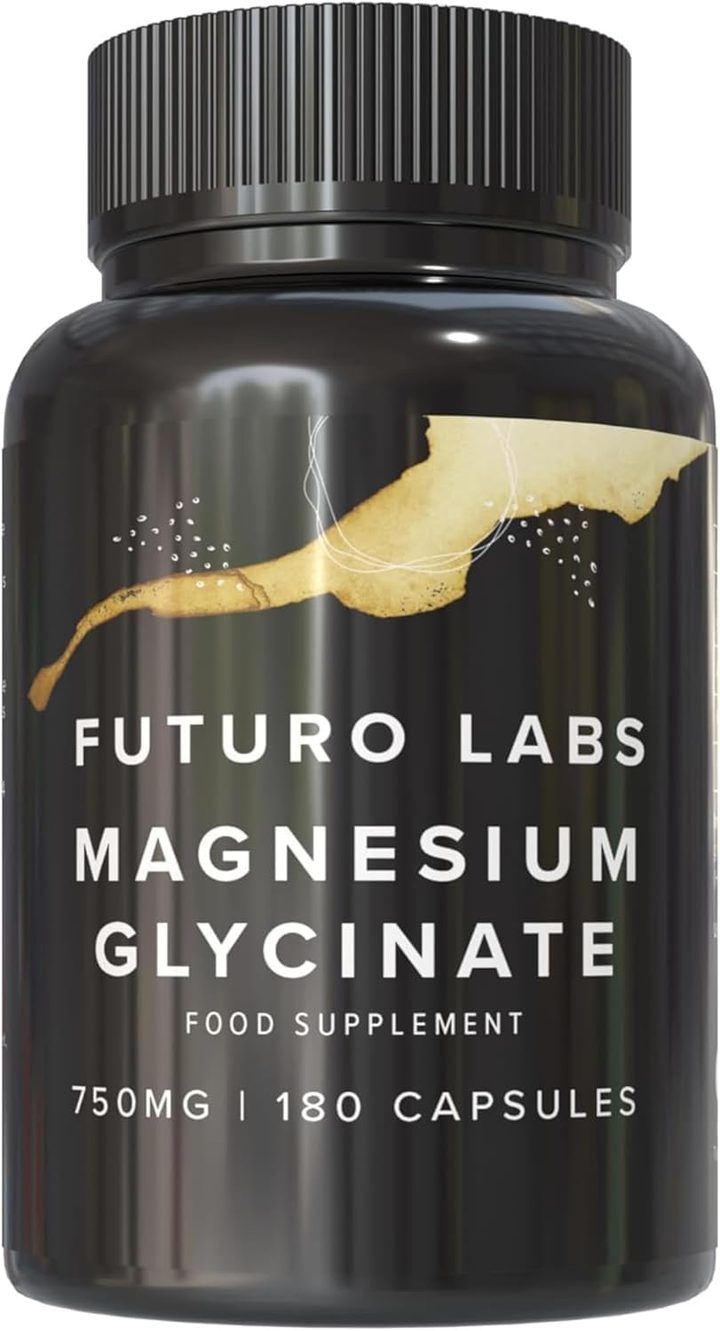
Our brand: the worked example on this page
Futuro Labs Magnesium Glycinate
- 22p a day
- 180 capsules, 2 capsules daily
- Lab tested
- Made in the UK
Worked example: Futuro Labs Magnesium Glycinate on Amazon UK, 180 capsules for £19.99. Full label on the product page.
Why runners are the group most likely to be short of magnesium
Sweat carries magnesium out, and runners sweat for longer than almost anyone else in a gym. Nielsen and Lukaski's review of magnesium and exercise puts endurance athletes at higher risk of marginal status because of sweat and urine losses during long sessions, and Zhang's 2017 review found supplementation helps performance in people whose intake was low to start with. Add a diet that leans on carbohydrate and skips the green vegetables, nuts and seeds that carry magnesium, and a marathon block is a reasonable place to expect a shortfall. The authorised claims describe what that shortfall costs: magnesium contributes to normal muscle function, electrolyte balance, normal energy-yielding metabolism, a reduction of tiredness and fatigue, and the maintenance of normal bones.
Which type, and why the gut decides
A runner's magnesium has to pass one test a lifter's does not: it must never move the bowel on a run. Citrate is an osmotic laxative at useful doses and oxide is worse, which rules both out for anyone who has ever had to find a hedge at mile eight. Glycinate delivers 300mg elemental with a low laxative effect and is the type to buy. The worked example, Futuro Labs Magnesium Glycinate, gives 300mg elemental from 1500mg chelated bisglycinate in 2 capsules, 80% NRV, from a vegan capsule made in the UK under GMP and BRC certification and third-party tested for heavy metals and microbiology, 180 capsules for £19.99, 22p a day.
| Type | Elemental magnesium | Gut tolerance at 300mg | Take before a run? | Verdict |
|---|---|---|---|---|
| Glycinate (bisglycinate)Ours | about 14% to 20% | Best | No need; evening meal | The runner's type |
| Citrate | about 16% | Laxative for many | Never | Morning only, small dose, and not on long-run days |
| Oxide | about 60%, about 4% absorbed | Laxative | Never | Cheap tablets; mostly unabsorbed |
| Malate | about 15% | Good | No need | Sold for endurance on theory; no trial advantage |
| Electrolyte drinks and gels | typically 10mg to 50mg per serving | Fine | Yes, they are designed for it | Top-up during long runs, not a daily source |
| Sprays and bath flakes | n/a | Fine | n/a | No reliable evidence of skin absorption |
How to time it around training and racing
Take the full 300mg with the evening meal, every day of the block, including rest days; magnesium intake is a daily figure, not a run-day figure. Keep it out of the two hours before a run, not because glycinate is a problem but because nothing new belongs in a pre-run stomach. On long runs and races, sodium and fluid matter far more than magnesium in the moment: Maughan and Shirreffs' 2019 review puts sodium and fluid losses, alongside fatigue, at the centre of cramping in long hot efforts. Use an electrolyte drink for that and let the evening glycinate handle the daily intake. Stay under the 400mg a day guidance level for supplements.
The bone claim, and why runners should care
Magnesium contributes to the maintenance of normal bones, one of the authorised claims, and bone is where most of the body's magnesium is stored and drawn from when intake is short. Runners on high mileage and low body weight already carry a bone stress risk; keeping magnesium, calcium and vitamin D intake at the reference levels is the boring part of protecting against it. None of that makes magnesium a treatment for anything; it makes a low intake one fewer thing to worry about. Which type of magnesium is best for runners in the UK comes down to one that a runner will take daily without a gut problem, and that is glycinate, the 300mg elemental one.
What to check on the label
- Elemental magnesium 300mg per serving, 80% NRV printed.
- Glycinate first; no citrate or oxide in a daily product for a runner.
- Sodium per litre on any drink you use during long runs; that is the run-day electrolyte.
- No performance or cramp claims; none are authorised for magnesium.
- Cost per day under 25p across a whole marathon block.
Our brand
The worked example: Futuro Labs Magnesium Glycinate
Futuro Labs Magnesium Glycinate is the worked example for runners: 300mg elemental per 2 capsules (80% NRV) from chelated bisglycinate, low laxative effect so it never interferes with a run, vegan, UK made, third-party tested, 22p a day from a £19.99 bottle of 180.
- Elemental magnesium per serving
- 300mg (80% NRV)
- Form
- magnesium bisglycinate 20%
- Serving
- 2 capsules a day
- Bottle
- 180 capsules, 90 days
- Price
- £19.99 (22p a day)
- Capsule
- vegetarian shell, vegan product
Questions people also ask
Which magnesium is best for runners with a sensitive stomach?
Glycinate, with the evening meal. Futuro Labs Magnesium Glycinate gives 300mg elemental per 2 capsules with a low laxative effect, at 22p a day.
Should runners take magnesium before a run?
No. Take it with the evening meal. During long runs use an electrolyte drink for sodium and fluid, which matter more in the moment.
How much magnesium should a runner take?
300mg elemental a day from a supplement on top of food, under the 400mg UK guidance level. Sweat losses raise requirements but not past that level.
Does magnesium stop cramps on long runs?
The trials say cramps in long efforts are mostly fatigue, sodium and fluid. Magnesium helps where daily intake was low; it will not stop a cramp at mile 20.
Is magnesium citrate good for runners?
It is absorbed well, but its laxative effect makes it a bad daily choice for anyone who runs long. Keep it to small morning doses on rest days if you want it at all.
Sources
- Futuro Labs Magnesium Glycinate listing, Amazon UK, label and price checked 31 August 2026. https://www.amazon.co.uk/dp/B0BT7Z5VQW
- Nielsen FH, Lukaski HC. Update on the relationship between magnesium and exercise. Magnesium Research 2006;19(3):180-189. PubMed record
- Zhang Y, Xun P, Wang R, Mao L, He K. Can magnesium enhance exercise performance? Nutrients 2017;9(9):946. https://pubmed.ncbi.nlm.nih.gov/28846654/
- Maughan RJ, Shirreffs SM. Muscle cramping during exercise: causes, solutions, and questions remaining. Sports Medicine 2019;49(Suppl 2):115-124. PubMed record
- EFSA Panel on Dietetic Products, Nutrition and Allergies. Scientific Opinion on the substantiation of health claims related to magnesium. EFSA Journal 2010;8(10):1807. https://efsa.onlinelibrary.wiley.com/doi/10.2903/j.efsa.2010.1807
- Expert Group on Vitamins and Minerals. Safe Upper Levels for Vitamins and Minerals. Food Standards Agency, 2003 (magnesium guidance level 400mg a day from supplements). https://cot.food.gov.uk/sites/default/files/vitmin2003.pdf
- Gröber U, Werner T, Vormann J, Kisters K. Myth or reality, transdermal magnesium? Nutrients 2017;9(8):813. https://pubmed.ncbi.nlm.nih.gov/28788060/