Ghost Fitness/Lion's mane/Can you take lion's mane with ashwagandha?
Can you take lion's mane with ashwagandha?
The short answer
Yes, no interaction is known. How long to work is a weeks-scale question on both files: ashwagandha's trials reported scale changes over six to twelve weeks, lion's mane's over sixteen, with expectations flat since neither holds a claim.
- The interactionnone known: combine freely, the herb's gate cleared first
- Ashwagandha's timelinesmall trials ran six to twelve weeks; stress-scale changes reported within that
- Lion's mane's timelinesixteen weeks in the long trial; 28 days for the pilot's stress finding
- The honest expectationweeks-scale on both, and possibly nothing noticed on either
Our brand: the worked example on this page
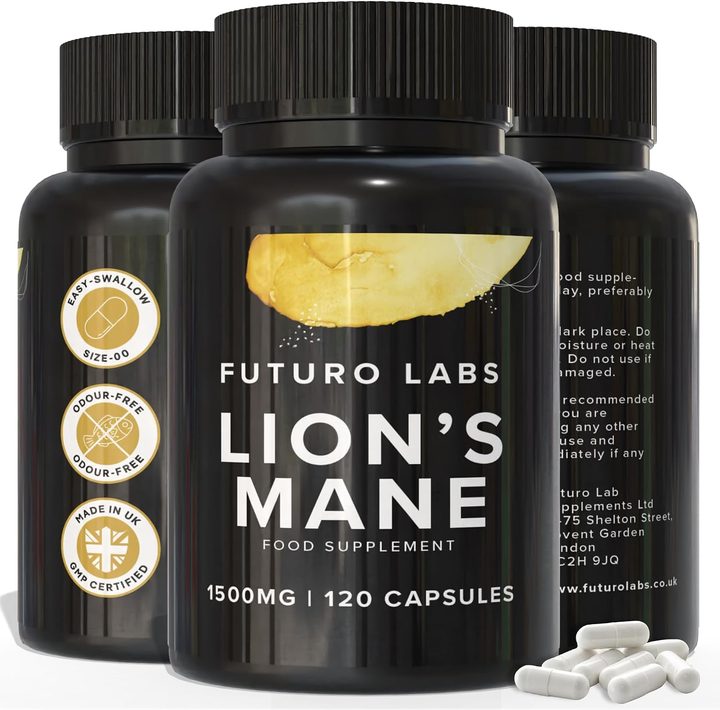
Futuro Labs Lion's Mane
- 13p a day
- 120 capsules, 1 capsule daily
- Lab tested
- Made in the UK
The mushroom half, on its own timeline: Futuro Labs Lion's Mane on Amazon UK, 1 capsule daily, reviewed at sixteen weeks, £15.49 for 120 days at 13p. Full label breakdown. The stacking protocol is on the together page; the lane scorecard on the ashwagandha-or page.
The yes restated briefly, and the how-long question answered from the two trial timelines
Yes, lion's mane and ashwagandha can be taken together, no interaction being known between the herb and the mushroom, each at its own label dose on its own timing, bought as two stated tubs, and the herb cleared with a pharmacist first for its pregnancy, thyroid-medication and rare liver notes, the together page's protocol in one sentence. What this page adds is the variant riding on the query, how long does ashwagandha and lion's mane take to work, and the honest answer comes from the two files' timelines rather than from anyone's testimonial. Ashwagandha's small randomised trials of standardised root extracts ran typically six to twelve weeks, and the modest reductions on self-report stress and anxiety scales they reported were measured at those endpoints, some trials reporting changes by four-to-eight weeks, so the herb's timeline, on the evidence that exists, is weeks-scale, a month or two before the trials saw anything on a questionnaire, with the strength-and-recovery studies in training men running similar eight-to-twelve-week courses. Lion's mane's timeline is the section's standing clock: the Mori trial ran sixteen weeks before its cognitive-score differences were reported, with effects fading after cessation, and the Docherty pilot reported its lower subjective stress at 28 days alongside its single acute task, so the mushroom's honest timeline is longer still, sixteen weeks being the review point this section sets, four months before the only long trial had anything to say.
The two timelines aligned, the expectations attached to both, and the pair filed at its true speed
Align the two timelines and the pair runs on a shared calendar with one clock ahead of the other: the herb's file suggests reviewing at eight-to-twelve weeks and the mushroom's at sixteen, so a reader running both should plan for a three-to-four-month course before judging either, with the diary and n-of-one methods on the fog and sleep pages the only honest way to judge at all, since neither product holds a claim and neither trial's population, stressed adults for the herb and impaired older adults for the mushroom, is a healthy lifter. The expectations attached to both are the same expectations this site attaches to every thin file: modest scale changes in small trials are not felt effects in individuals, the likeliest outcome of the herb's twelve weeks is a small or no change on a questionnaire the reader is not filling in, the likeliest outcome of the mushroom's sixteen is nothing noticed, and the honest question at the end of the calendar is whether two claim-free bets, the herb at its price and the mushroom at 13p, earned their continuation on the reader's own terms rather than on any promise. The pair filed at its true speed: yes, together, freely, after the herb's gate; how long, weeks to months on both files, eight-to-twelve for the herb and sixteen for the mushroom, aligned to a single review at four months; and how much, on either, possibly nothing, which is the flat expectation both deserve and the worked example prices at 13p a day, the mushroom's clock running beside the herb's with nothing unlocked by the pairing and nothing hurried by it.
| The item | Ashwagandha | Lion's mane |
|---|---|---|
| The trials' duration | Six to twelve weeks | Sixteen weeks; 28 days for the pilot |
| When changes were measured | At endpoints, some by four to eight weeks | At sixteen weeks; stress at 28 days |
| The review point | Eight to twelve weeks | Sixteen weeks |
| The shared calendar | A three-to-four-month course before judging either | The same |
| The likeliest outcome | Small or no change on a scale | Nothing noticed |
| The interaction | None known; pharmacist gate first | None known; allergy sense only |
The verdict, together on a four-month calendar
Can you take lion's mane with ashwagandha: yes, no interaction known, two stated tubs at their own doses and timings with the herb's pharmacist gate cleared first, and how long the pair takes to work is a weeks-scale question on both files, the herb's trials reporting scale changes over six to twelve weeks and the mushroom's long trial over sixteen, aligned to a single honest review at three-to-four months with expectations flat, since neither holds a claim and the likeliest outcome on either is nothing noticed. The mushroom's clock, worked: Futuro Labs Lion's Mane, one capsule daily for sixteen weeks, UK made, lab tested, £15.49 for 120 days at 13p a day, running beside the herb's and hurried by nothing.
What to check on the label
- Confirm the yes: no interaction, two tubs, the herb's gate first.
- Read both timelines from the trials: six to twelve weeks, sixteen weeks.
- Align them: one review at three to four months.
- Attach flat expectations to both: scale changes are not felt effects.
- Judge by your own diary: neither trial's population is you.
Our brand
The worked example: Futuro Labs Lion's Mane
Futuro Labs Lion's Mane: 1 capsule daily of 5:1 fruiting body extract, labelled 1500mg mushroom equivalent (about 300mg extract), 120 capsules for £15.49, 120 days at 13p a day. Vegan HPMC shell, UK made under GMP and BRC, independently lab tested, caffeine free. Lion's mane holds no authorised UK health claims; this site describes its small studies as studies.
- Extract
- fruiting body, 5:1
- Per capsule
- 1500mg mushroom equivalent
- Serving
- 1 capsule a day
- Bottle
- 120 capsules, 120 days
- Price
- £15.49 (13p a day)
- Capsule
- HPMC vegan shell, size 00
Questions people also ask
How long does ashwagandha take to work?
On its trials, weeks: small randomised studies of standardised root extracts ran six to twelve weeks and reported modest stress-scale changes at those endpoints, some by four to eight weeks, with no claim resulting.
How long does lion's mane take to work?
Sixteen weeks is the honest clock: the one long trial reported cognitive-score differences at sixteen weeks in impaired older adults, and the pilot reported lower subjective stress at 28 days, with nothing noticed being the likeliest outcome for a healthy adult.
Should I review both at the same time?
Plan a three-to-four-month course before judging either: the herb's review at eight-to-twelve weeks and the mushroom's at sixteen align to a single honest checkpoint with expectations flat.
Is it safe to take them together for that long?
No interaction is known, and the herb's trials ran up to twelve weeks; the herb's own gate, pregnancy, thyroid medication, other medicines and liver history, is the pharmacist conversation to have first.
Will taking both speed anything up?
No: no synergy exists, neither holds a claim, and the pairing unlocks nothing and hurries nothing, the two clocks simply running side by side.
Sources
- The ashwagandha trial literature: small randomised studies of Withania somnifera root extracts on stress and cortisol measures, typically standardised by withanolide content, with no authorised UK claim resulting. PubMed record
- Mori K, Inatomi S, Ouchi K, Azumi Y, Tuchida T. Improving effects of the mushroom Yamabushitake (Hericium erinaceus) on mild cognitive impairment: a double-blind placebo-controlled clinical trial. Phytotherapy Research 2009;23(3):367-372. PubMed record
- Docherty S, Doughty FL, Smith EF. The acute and chronic effects of lion's mane mushroom supplementation on cognitive function, stress and mood in young adults: a double-blind, parallel groups, pilot study. Nutrients 2023;15(22):4842. PubMed record
- The herb-induced liver injury literature: documented case reports of liver injury associated with botanical supplements including ashwagandha and high-dose green tea extract, rare but recognised in hepatology. PubMed record