Ghost Fitness/Lion's mane/Can you mix lion's mane with other vitamins?
Can you mix lion's mane with other vitamins?
The short answer
Yes, freely: fat-soluble vitamins A, D, E and K share its with-a-meal logic, water-soluble B and C go anywhere. The vitamins that matter are the ones a blood test says you lack.
- The interactionnone: vitamins and a fungal extract share a stomach inertly
- Fat-soluble A, D, E, Kwith a fat-containing meal: the same meal suits the mushroom
- Water-soluble B and Canytime, with or without the capsule
- The vitamins that matterthe ones bloods find short: B12 and iron by test, D by season
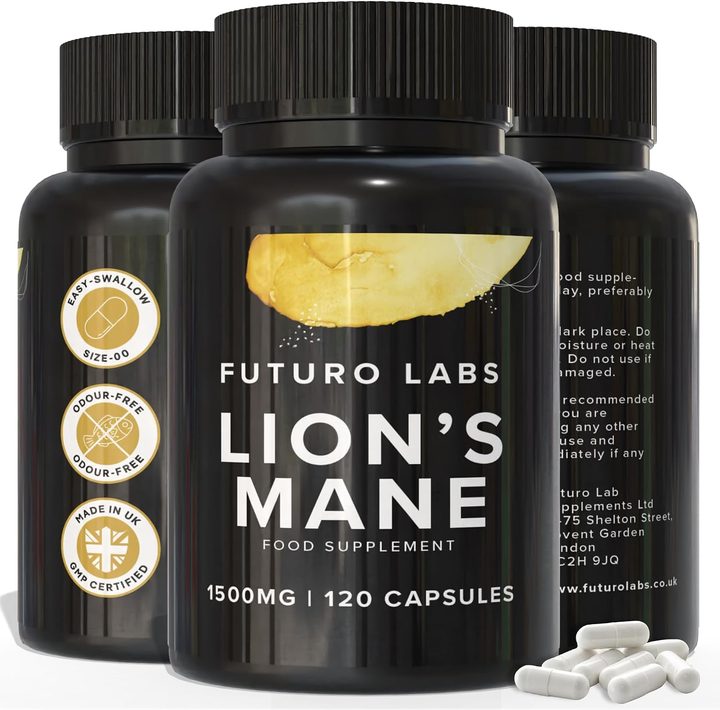
Our brand: the worked example on this page
Futuro Labs Lion's Mane
- 13p a day
- 120 capsules, 1 capsule daily
- Lab tested
- Made in the UK
A capsule that mixes with any vitamin: Futuro Labs Lion's Mane on Amazon UK, 1 capsule with a meal, 5:1 fruiting body extract, £15.49 for 120 days at 13p. Full label breakdown. The vitamin D pairing is on the vitamin D page; the register readout on the vitamins page.
The yes, and the one distinction among vitamins that changes how the mixing is done
Yes, lion's mane mixes with any vitamin, a fungal extract and a vitamin sharing a stomach with nothing to react, no absorption competition, no documented interaction and no spacing rule, so the question is not whether but how, and the one distinction among vitamins that changes the how is solubility. The fat-soluble vitamins, A, D, E and K, absorb measurably better when taken with a meal containing fat, the vitamin D page's real pharmacology, so they belong with breakfast, lunch or dinner rather than a black coffee, and lion's mane's label directs it with a meal for comfort, with a small plausible footnote that its own fat-soluble fraction may absorb marginally better alongside dietary fat, so the fat-soluble vitamins and the mushroom suit the same meal and go down together at whichever fixed one anchors the day, the pairing costing nothing in complexity. The water-soluble vitamins, the B family and vitamin C, absorb with or without food and with or without the capsule, going anywhere in the day, so the mushroom neither helps nor hinders them and the only reason to take them at the same meal is convenience, the pill-organiser logic of one handful. No mineral spacing rule enters, because lion's mane is not a mineral and the calcium-and-iron pattern of spacing minerals from certain medicines belongs to those minerals near those drugs, not to a fungal extract near a multivitamin, so a reader mixing lion's mane with a multivitamin at breakfast has done the whole thing correctly by accident.
Which vitamins actually matter beside the mushroom, and the mixing filed by test and season
Which vitamins matter is the better question, and the honest answer is the ones a blood test or a season says you lack, because vitamins hold maintenance sentences in the register that work where intake falls short and add nothing where it is replete, more B12 in a replete body meaning no more clarity. The cognition-adjacent register entries are the vitamins page's readout, iron, zinc and iodine for cognitive function, the B family for psychological function and the tiredness-and-fatigue sentences, pantothenic acid for mental performance, all maintenance grammar, and the ones that genuinely change a foggy or tired reader's life are the deficiency corrections, B12 and iron found short on a GP panel and corrected, the fog file's one swallowable cure, iron never high-dosed on a guess. Vitamin D matters by season rather than by test for most: the UK's autumn-and-winter guidance of 10 micrograms daily for adults, when skin synthesis fails at this latitude, makes it the vitamin most readers here should be taking beside the mushroom from October to March, at the same fat-containing meal, with the note that a lion's mane capsule supplies no meaningful vitamin D of its own, dark-grown extract carrying negligible D2. The mixing filed: yes, lion's mane mixes with any vitamin, the fat-soluble ones at the same meal it already wants, the water-soluble ones anywhere, no spacing rule applying, and the vitamins worth mixing being D by season and B12 or iron by test, each doing its own maintenance or correction job beside a capsule that does its own separate claim-free one, the worked example directed with a meal and sitting beside the vitamin D at breakfast as the honest junior partner of any vitamin that holds a claim.
| The vitamins | How to mix | Which matter |
|---|---|---|
| Fat-soluble: A, D, E, K | At a fat-containing meal, the same one as the mushroom | D by season: 10 micrograms, autumn and winter |
| Water-soluble: the Bs, C | Anywhere, with or without the capsule | B12 by blood test, corrected where short |
| Minerals in a multivitamin | No spacing rule with a fungal extract | Iron by blood test, never guessed |
| The interaction | None | The mushroom helps or hinders none of them |
| The register | Maintenance sentences where intake falls short | Nothing where replete |
| The mushroom's own vitamin D | Negligible: dark-grown extract | Take vitamin D as vitamin D |
The verdict, mixed by solubility and chosen by test
Can you mix lion's mane with other vitamins: yes, freely, nothing reacting and no spacing rule applying, with the fat-soluble vitamins A, D, E and K taken at the same fat-containing meal the mushroom already wants and the water-soluble B family and C going anywhere, and with the vitamins that actually matter chosen by test and season, B12 and iron where a GP panel finds them short and vitamin D at the UK's 10 microgram autumn-and-winter guidance, the mushroom supplying none of them itself. The capsule at the breakfast that holds the vitamins: Futuro Labs Lion's Mane, one capsule with a meal, 5:1 fruiting body extract, UK made, lab tested, £15.49 for 120 days at 13p a day, mixed with any vitamin and adding to none.
What to check on the label
- Mix freely: nothing reacts, nothing spaces.
- Split by solubility: A, D, E, K with fat; B and C anywhere.
- Share the meal with the fat-soluble ones: the same breakfast suits both.
- Choose vitamins by test and season: B12 and iron by bloods, D in winter.
- Expect no vitamin D from the mushroom: dark-grown extract carries none.
Our brand
The worked example: Futuro Labs Lion's Mane
Futuro Labs Lion's Mane: 1 capsule daily of 5:1 fruiting body extract, labelled 1500mg mushroom equivalent (about 300mg extract), 120 capsules for £15.49, 120 days at 13p a day. Vegan HPMC shell, UK made under GMP and BRC, independently lab tested, caffeine free. Lion's mane holds no authorised UK health claims; this site describes its small studies as studies.
- Extract
- fruiting body, 5:1
- Per capsule
- 1500mg mushroom equivalent
- Serving
- 1 capsule a day
- Bottle
- 120 capsules, 120 days
- Price
- £15.49 (13p a day)
- Capsule
- HPMC vegan shell, size 00
Questions people also ask
Is it safe to take lion's mane with a multivitamin?
Yes: a fungal extract and a multivitamin share a stomach with nothing to react, no absorption competition and no spacing rule, so a breakfast handful of both is correct.
Should I take lion's mane with fat-soluble or water-soluble vitamins?
Both, differently: fat-soluble A, D, E and K belong at a fat-containing meal, which the mushroom's with-a-meal direction already suits, while water-soluble B and C go anywhere in the day.
Does lion's mane affect vitamin absorption?
No: it neither helps nor hinders any vitamin, and the only overlap is convenience, the fat-soluble vitamins and the mushroom happening to suit the same meal.
Which vitamins are actually worth taking with lion's mane?
The ones you lack: vitamin D by season at the UK's 10 microgram autumn-and-winter guidance, and B12 or iron only where a GP blood test finds them short, since register vitamins work where intake falls short and add nothing where replete.
Does lion's mane count as a vitamin D source?
No: mushrooms make vitamin D2 only when UV-exposed, and a dark-grown extract capsule carries a negligible amount, so vitamin D is taken as vitamin D in declared micrograms.
Sources
- The vitamin D absorption literature: vitamin D is fat-soluble and its absorption from supplements is improved when taken with a meal containing fat. PubMed record
- The GB claims register, vitamin D entries: vitamin D contributes to normal bones, teeth, muscle function, immune function and calcium absorption, with UK guidance suggesting 10 micrograms daily in autumn and winter. https://www.gov.uk/government/publications/great-britain-nutrition-and-health-claims-nhc-register
- The deficiency and cognition literature: vitamin B12 and iron deficiency are established, testable causes of fatigue and cognitive symptoms, identified by routine GP blood tests and corrected by treating the deficiency. PubMed record
- The GB nutrition and health claims register, cognitive entries: iron, zinc and iodine hold normal cognitive function; B vitamins hold normal psychological function; pantothenic acid holds normal mental performance; DHA holds maintenance of normal brain function at 250mg. https://www.gov.uk/government/publications/great-britain-nutrition-and-health-claims-nhc-register