Ghost Fitness/Collagen/Can you use collagen and vitamin C together on face?
Can you use collagen and vitamin C together on face?
The short answer
The 500 dalton rule decides: molecules much above it do not passively penetrate skin, and collagen, a large protein, stays on the surface as a humectant. Vitamin C at 10 to 20 percent in a low-pH serum penetrates and has trials on photodamage and pigmentation. Together on the face is fine, one working and one moisturising, serum first. Inside the body the pairing is the cofactor relationship the collagen formation sentence describes.
- The rulearound 500 daltons is the ceiling for meaningful passive penetration of intact skin
- Collagen on the facea large protein far above the ceiling: a surface humectant, no dermis reached
- Vitamin C on the faceascorbic acid at 10 to 20 percent in a low-pH serum: penetrates; trials on photodamage and pigmentation; degrades with air and light
- Together insidevitamin C as the cofactor for collagen cross-linking: the register's collagen formation sentence; collagen holds none
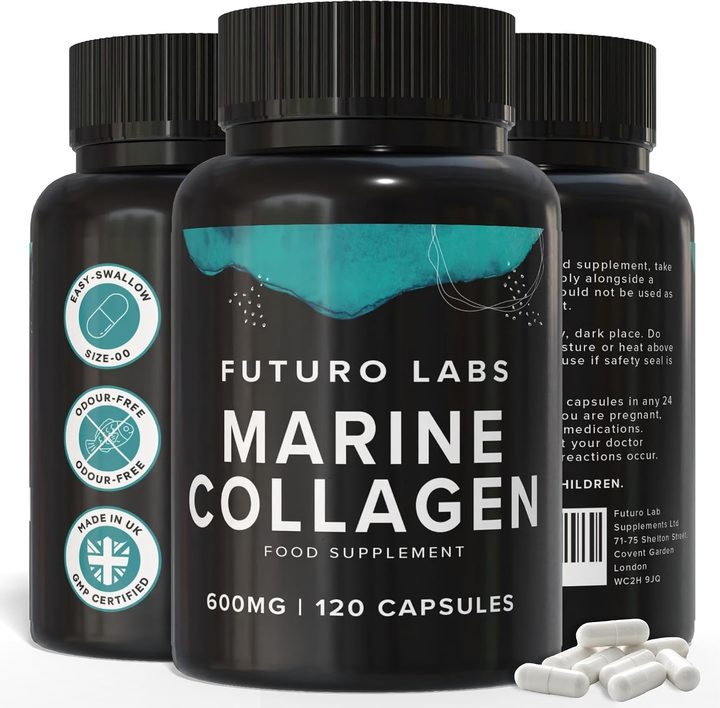
Our brand: the worked example on this page
Futuro Labs Marine Collagen
- 28p a day
- 120 capsules, 2 capsules daily
- Lab tested
- Made in the UK
The inside pairing, built into a capsule: Futuro Labs Marine Collagen on Amazon UK, 2 capsules, 1200mg hydrolysed type 1 marine collagen with 12mg vitamin C at 15% NRV plus zinc, 120 for £16.99, 28p a day. Full label breakdown. Vitamin C and collagen serums together is on the serum page; the three senses of taking them together on the together page.
The 500 dalton rule, and what it does to collagen on the face and vitamin C on the face
Can you use collagen and vitamin C together on the face is a question the skin answers with a rule of thumb, and the honest page applies it to each of the two before saying anything about the pair. The rule: intact skin is a barrier, and the skin penetration literature's 500 dalton rule describes the approximate molecular weight ceiling above which a molecule applied to the surface does not passively penetrate in meaningful amounts, the reason topical drugs are small molecules and the reason most large ingredients in a cream stay where they are put. Collagen on the face: collagen is a protein of around three hundred thousand daltons in its native form, and even hydrolysed collagen peptides in a cosmetic run to thousands, far above the ceiling, so a collagen cream, serum or mask does not reach the dermis where the skin's own collagen lives and cannot add to it, what it does being real and modest, sitting on the surface as a humectant that holds water in the outer layer and leaves the skin feeling smoother and plumper for as long as it stays on, which is a moisturiser's job done well and not a collagen supplement's, the 500 dalton literature's exclusion of large proteins. Vitamin C on the face: ascorbic acid is a small molecule, around 176 daltons, and at 10 to 20 percent in a serum at a low pH it penetrates the skin, where it has randomised trials on photodamage, pigmentation and fine lines and a mechanism in the dermis as the cofactor for the skin's own collagen synthesis, the topical vitamin C literature's file, with the caveat that ascorbic acid degrades with air, light and time, so an opaque, airless container and a serum that has not turned orange decide whether the percentage on the label is the percentage on the skin, the vitamin C stability literature's clock, and with some skin finding the low pH irritating and starting at the lower end.
Using the two together on the face, what happens when you take them together inside, the two pairings kept apart, and the rule filed
Using the two together on the face is fine and unremarkable, because one works and one moisturises and they do not interfere. The order is the serum's: vitamin C serum goes first on clean, dry skin, a few drops left to absorb, and a collagen cream or any moisturiser goes over it, since a humectant cream applied first would sit between the serum and the skin, and a sunscreen goes over both in the morning, the vitamin C serum's photodamage file being a reason to use it in the morning under a sunscreen rather than a substitute for one. There is no interaction between the two products beyond that layering, the collagen cream not degrading the vitamin C and the vitamin C not changing the cream, and a reader who likes the feel of a collagen cream keeps it as their moisturiser and stops expecting it to be more. What happens when you take vitamin C and collagen together, the variant's inside question, is a different pairing with a different rule: swallowed, collagen is digested into peptides and amino acids and absorbed within the hour, vitamin C is absorbed by its own transporters, nothing happens between them in the gut, and the relationship is the cofactor one, vitamin C enabling the enzymes that hydroxylate and cross-link the body's own collagen inside cells hours later, the scurvy literature's lesson and the reason the register authorises vitamin C contributes to normal collagen formation for the normal function of skin while collagen holds no sentence at all, the claims register's allocation, so taking them together inside is the design the pre-loading research used and the same-day intake the body needs, the together page's three senses. The two pairings kept apart: on the face, the vitamin C serum has the file and the collagen cream is a moisturiser; inside, the vitamin C is the cofactor and the collagen is the substrate the research studies, with the skin trials of oral collagen being small, industry funded and claim-free, so a reader who wants a topical route buys a stable vitamin C serum and a sunscreen and a reader who wants the oral route takes collagen with the day's vitamin C, and neither route makes the collagen cream more than a cream. The rule filed: 500 daltons as the ceiling, collagen on the face as a humectant that reaches no dermis, vitamin C serum as the one that penetrates with a photodamage file and a stability clock, serum first and cream over, the inside pairing as the cofactor relationship the register's sentence describes, and the two pairings kept apart, with the worked example being the inside pairing built into a capsule, £16.99 for 120 at 28p a day.
| The route | Collagen | Vitamin C |
|---|---|---|
| On the face: the rule | A large protein far above 500 daltons: no penetration | Around 176 daltons at 10 to 20 percent in a low-pH serum: penetrates |
| On the face: what it does | A surface humectant; smoother, plumper while it stays on | Trials on photodamage and pigmentation; a dermal cofactor |
| On the face: the caveats | A moisturiser's job, not a supplement's | Degrades with air and light; an opaque airless container; some irritation at high percentages |
| On the face: together | Cream over the serum | Serum first on clean dry skin; sunscreen over both in the morning |
| Inside: what happens | Digested and absorbed within the hour; the substrate the research studies | Absorbed by its own transporters; the cofactor for collagen cross-linking |
| Inside: the register | No claim | Contributes to normal collagen formation for the normal function of skin |
The verdict, one gets through the skin and one does not, and inside the body the pairing is the cofactor the register names
Can you use collagen and vitamin C together on the face: yes, and the 500 dalton rule decides what each does, molecules much above that ceiling not passively penetrating intact skin, so that collagen, a large protein far above it, sits on the surface as a humectant and reaches no dermis while a vitamin C serum at 10 to 20 percent in a low-pH base penetrates and has trials on photodamage and pigmentation, degrading with air and light so that packaging decides its potency, the two coexisting with the serum first on clean skin and the cream over it under a morning sunscreen, and what happens when you take vitamin C and collagen together inside is the cofactor relationship, vitamin C enabling the enzymes that cross-link the body's own collagen, which is the register's collagen formation sentence while collagen holds none. The inside pairing built into a capsule: Futuro Labs Marine Collagen, 1200mg type 1 with 12mg vitamin C, 120 for £16.99 at 28p a day.
What to check on the label
- Apply the 500 dalton rule: collagen stays on the surface, vitamin C gets through.
- Use the collagen cream as a moisturiser: and expect a moisturiser's result.
- Buy a stable vitamin C serum: opaque, airless, not orange.
- Layer serum first, cream over, sunscreen on top: in the morning.
- Keep the inside pairing separate: the cofactor relationship, taken in the day.
Our brand
The worked example: Futuro Labs Marine Collagen
Futuro Labs Marine Collagen: 2 capsules daily, 1200mg hydrolysed type 1 marine collagen with 12mg vitamin C and 1.5mg zinc (15% NRV each), 120 capsules for £16.99, 60 days at 28p a day, lab-tested, UK GMP made. Slim veggie-shell capsules, odour free. Fish derived: pescatarian, not vegetarian or vegan.
- Collagen per serving
- 1200mg hydrolysed type 1 marine (fish)
- Co-factors
- vitamin C 12mg (15% NRV), zinc 1.5mg (15% NRV)
- Serving
- 2 capsules a day
- Bottle
- 120 capsules, 60 days
- Price
- £16.99 (28p a day)
- Capsule
- slim size 00, veggie shell, odour free
Questions people also ask
Does collagen cream actually work on the face?
As a moisturiser, yes, and as a collagen supplement, no: collagen is a protein far above the roughly 500 dalton ceiling for passive penetration of intact skin, so a cream, serum or mask stays on the surface as a humectant that holds water in the outer layer and leaves the skin feeling smoother while it stays on, reaching no dermis and adding to no collagen.
Does vitamin C serum work on the face?
It has a file: ascorbic acid at 10 to 20 percent in a low-pH serum penetrates the skin and has randomised trials on photodamage, pigmentation and fine lines, with the caveats that it degrades with air and light so an opaque airless container and a serum that has not turned orange matter, and that some skin finds the low pH irritating and starts at the lower end.
In what order do I apply vitamin C serum and collagen cream?
Serum first on clean, dry skin, a few drops left to absorb, then the collagen cream or any moisturiser over it, then sunscreen over both in the morning, since a humectant cream applied first would sit between the serum and the skin and the vitamin C's photodamage file is a reason to wear it under a sunscreen rather than instead of one.
What happens when you take vitamin C and collagen together?
Inside the body, nothing happens between them in the gut, collagen being digested and absorbed within the hour and vitamin C by its own transporters, and the relationship is the cofactor one, vitamin C enabling the enzymes that hydroxylate and cross-link the body's own collagen hours later, which is why the register authorises vitamin C contributes to normal collagen formation for the normal function of skin and collagen holds no sentence.
Is oral or topical better for skin collagen?
They are different routes with different evidence: topical vitamin C serum has trials on photodamage and a dermal cofactor mechanism, topical collagen is a moisturiser, oral collagen has small, industry-funded, claim-free trials on elasticity at 2.5 to 10 grams over weeks, and oral vitamin C at the reference value is the cofactor the body needs daily, so a reader may run both routes and expects a moisturiser's result from the collagen cream either way.
Sources
- The skin penetration literature: the 500 dalton rule describes the approximate molecular weight ceiling for meaningful passive penetration of intact skin, excluding large proteins from transdermal delivery. PubMed record
- The topical vitamin C literature: ascorbic acid at around 10 to 20 percent in a low-pH serum penetrates the skin and has trials on photodamage and pigmentation, degrading with air and light so that stability and packaging decide potency, while topical collagen, a large protein, does not penetrate intact skin and acts as a surface humectant. PubMed record
- The vitamin C stability literature: ascorbic acid degrades with heat, moisture, light and time, making vitamin potency the practical shelf-life clock in fortified products. PubMed record
- The scurvy literature: vitamin C deficiency impairs collagen synthesis through failed proline and lysine hydroxylation, producing the classic connective-tissue signs that resolve with vitamin C repletion. PubMed record