Ghost Fitness/Collagen/Can you take collagen and vitamin C together?
Can you take collagen and vitamin C together?
The short answer
Yes, in three senses. The same swallow: convenient and not required, since nothing happens between them in the gut. The same hour: the pre-loading research paired roughly 50mg of vitamin C with the collagen before a session. The same day: the sense the body needs, since vitamin C is a cofactor inside cells hours after the amino acids arrive, and an adequate daily intake has it waiting whenever the collagen comes.
- The same swallowconvenient, not required: no gut interaction either way
- The same hourthe pre-loading protocol: roughly 50mg of vitamin C with around 15g of collagen an hour before loading
- The same daythe sense the body needs: a cofactor inside cells; the 80mg reference value daily has it waiting
- The claimvitamin C contributes to normal collagen formation; 12mg at 15% NRV lets a product print it; collagen holds none
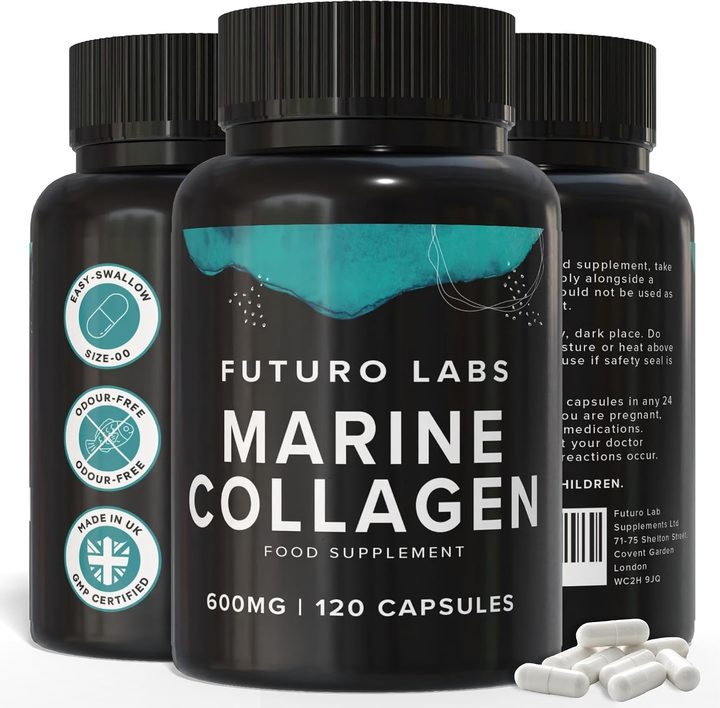
Our brand: the worked example on this page
Futuro Labs Marine Collagen
- 28p a day
- 120 capsules, 2 capsules daily
- Lab tested
- Made in the UK
The same swallow, built in: Futuro Labs Marine Collagen on Amazon UK, 2 capsules, 1200mg hydrolysed type 1 marine collagen with 12mg vitamin C at 15% NRV plus zinc, 120 for £16.99, 28p a day. Full label breakdown. The side effects of the pairing on vitamin C's ladder are on the side effects page; how much vitamin C to take with collagen on the dose page.
Together in the first two senses, the same swallow and the same hour
Can you take collagen and vitamin C together is a question whose word together means three different things, and the honest page takes each, because the biology answers them differently and the shelf answers only the first. The same swallow: a capsule that builds collagen and vitamin C into one dose, or a vitamin C tablet swallowed with a collagen powder, is the sense the shelf sells, and it is convenient and not required, since nothing happens between the two in the gut, collagen being digested into peptides and amino acids and absorbed like any protein and vitamin C being absorbed by its own transporters, with neither helping the other across the gut wall, the amino acid kinetics literature's account of collagen arriving in the blood within the hour whether or not vitamin C is beside it, so the same swallow is a matter of one bottle instead of two and not of biology. The same hour: this is the sense the tendon research used. The pre-loading studies gave around 15g of gelatin or hydrolysed collagen with roughly 50mg of vitamin C about an hour before a loading session, on the logic that the exercise window raises collagen synthesis in the loaded tendon and the amino acids and the cofactor should both be present when it does, the gelatin and vitamin C literature's protocol, small marker-based studies with no claim, so a reader running that protocol with a physiotherapist takes the two together in the same hour by design, a powder and a tablet an hour before the session, and that is the one sense of together that the research specified.
Together in the third sense, the same day, which is the one the body needs, the claim, and the senses filed
The same day is the sense the body needs, and it explains why the first sense is optional. Vitamin C's job in collagen is not in the gut and not at the moment of absorption but inside cells, hours and days later: the enzymes that hydroxylate proline and lysine on a newly made collagen chain, without which the chain cannot fold and cross-link into a stable fibre, use vitamin C as a cofactor, the scurvy literature's lesson, scurvy being the disease of a body that has run out of the cofactor over weeks and cannot maintain its collagen, its gums, vessels and wounds failing, and it is cured by restoring the daily intake and not by timing a dose to a meal. So a body with an adequate daily vitamin C intake, the 80mg nutrient reference value that a portion of fruit and vegetables, a fortified drink or a cheap tablet supplies and that absorption saturates a few hundred milligrams above, the vitamin C safety assessment's kinetics, has the cofactor waiting in its tissues whenever the collagen's amino acids arrive, at breakfast, at dinner or an hour before a session, and a body without one has a shortage that a collagen scoop cannot fix and a same-swallow tablet fixes only by supplying the day's vitamin C. The claim sits on the same logic: collagen holds no authorised sentence in the UK, and vitamin C contributes to normal collagen formation for the normal function of skin, cartilage, bones, blood vessels, gums and teeth, the claims register's allocation, printable on a product carrying at least 15 percent of the reference value, 12mg, which is why a capsule that pairs the two may print the sentence and a plain powder may not, the sentence being about the day's vitamin C and not about a swallow. So yes, together in any of the three senses, the same swallow for one bottle, the same hour for the protocol, and the same day for the body, with the day being the one that matters and the other two being convenience and design. The senses filed: the same swallow convenient and not required, the same hour the research's protocol, the same day the biology's requirement met by the reference value, and the vitamin C claim printable at 12mg, with the worked example being the same swallow built in, £16.99 for 120 at 28p a day.
| The sense | Does the biology need it? | The note |
|---|---|---|
| The same swallow | No: nothing happens between them in the gut | Convenient: one bottle instead of two |
| The same hour | The pre-loading research used it: roughly 50mg with around 15g of collagen an hour before loading | By design for a physiotherapist's protocol |
| The same day | Yes: a cofactor inside cells, hours after the amino acids arrive | The 80mg reference value from fruit, vegetables or a tablet has it waiting |
| Neither | A body short of vitamin C cannot maintain its collagen: scurvy | A daily-intake disease, not a same-swallow one |
| The claim | Vitamin C contributes to normal collagen formation; collagen holds none | Printable at 12mg, 15% of the reference value |
| The capsule benchmarkOurs | Both built in: 1200mg type 1 with 12mg vitamin C | The same swallow, the same day |
The verdict, together in any sense you like, with the day being the sense the body actually needs
Can you take collagen and vitamin C together: yes, and in three senses, the same swallow being convenient and not required since nothing happens between them in the gut, the same hour being the pre-loading research's own design at roughly 50mg of vitamin C with around 15g of collagen an hour before a loading session, and the same day being the sense the body needs, since vitamin C works as a cofactor for the enzymes that hydroxylate and cross-link collagen inside cells hours after the amino acids arrive and a body with an adequate daily intake, the 80mg reference value, has the cofactor waiting whenever the collagen comes, scurvy being a daily-intake disease rather than a same-swallow one, with vitamin C holding the register's only collagen sentence and collagen holding none. The same swallow built in: Futuro Labs Marine Collagen, 1200mg type 1 with 12mg vitamin C, 120 for £16.99 at 28p a day.
What to check on the label
- Take them in the same swallow if it is convenient: one bottle.
- Take them in the same hour for the protocol: roughly 50mg an hour before loading.
- Get the vitamin C every day: the sense the body needs.
- Meet the reference value: 80mg from fruit, vegetables or a tablet.
- Read the claim as vitamin C's: printable at 12mg; collagen holds none.
Our brand
The worked example: Futuro Labs Marine Collagen
Futuro Labs Marine Collagen: 2 capsules daily, 1200mg hydrolysed type 1 marine collagen with 12mg vitamin C and 1.5mg zinc (15% NRV each), 120 capsules for £16.99, 60 days at 28p a day, lab-tested, UK GMP made. Slim veggie-shell capsules, odour free. Fish derived: pescatarian, not vegetarian or vegan.
- Collagen per serving
- 1200mg hydrolysed type 1 marine (fish)
- Co-factors
- vitamin C 12mg (15% NRV), zinc 1.5mg (15% NRV)
- Serving
- 2 capsules a day
- Bottle
- 120 capsules, 60 days
- Price
- £16.99 (28p a day)
- Capsule
- slim size 00, veggie shell, odour free
Questions people also ask
Do you have to take vitamin C at the same time as collagen?
No: nothing happens between them in the gut, collagen being absorbed as peptides and amino acids and vitamin C by its own transporters, and vitamin C's job is as a cofactor inside cells hours later, so a body with an adequate daily intake has it waiting whenever the collagen arrives, and the same swallow is convenience rather than biology.
Why is vitamin C paired with collagen in the tendon research?
Because the pre-loading protocol gave around 15g of gelatin or collagen with roughly 50mg of vitamin C about an hour before a loading session, on the logic that the exercise window raises collagen synthesis and the amino acids and the cofactor should both be present, small marker-based studies with no claim that a physiotherapist's programme may include.
What happens if you take collagen without vitamin C?
The collagen is absorbed as normal, and whether the body can use it to make its own collagen depends on the day's vitamin C: a reader eating fruit and vegetables or taking a tablet has the cofactor in their tissues already, while a reader with a chronically low intake cannot maintain collagen properly, which is scurvy and is a daily-intake problem rather than a timing one.
How much vitamin C do you need daily for collagen?
The 80mg nutrient reference value, from a portion of fruit and vegetables, a fortified drink or a cheap tablet, with absorption saturating a few hundred milligrams above it and the excess excreted, and 12mg being the 15 percent threshold that lets a product print the register's sentence that vitamin C contributes to normal collagen formation.
Is a collagen capsule with vitamin C built in better than a powder?
It is more convenient and may print the vitamin C sentence, and it carries a smaller collagen dose than a powder, so a reader who wants the claim and a modest dose in one swallow takes the capsule, and a reader who wants the research band's grams takes a powder with a vitamin C tablet or a glass of orange juice, the day being the sense that matters.
Sources
- The scurvy literature: vitamin C deficiency impairs collagen synthesis through failed proline and lysine hydroxylation, producing the classic connective-tissue signs that resolve with vitamin C repletion. PubMed record
- The gelatin and vitamin C pre-exercise research (Shaw, Baar and colleagues): 15g gelatin with vitamin C taken about an hour before loading, studied for markers of collagen synthesis, the protocol behind the tendon-training conversation. PubMed record
- The amino acid kinetics literature: plasma amino acid and peptide levels rise within about 30 minutes of ingesting hydrolysed collagen or gelatine and peak around the hour, the pharmacokinetic basis for pre-loading timing. PubMed record
- The vitamin C safety assessment: the nutrient reference value is 80mg a day, absorption saturates at a few hundred milligrams with the excess excreted, doses above around one to two grams a day cause loose stools and gastrointestinal upset, the safe level for supplements is set around a gram a day in UK guidance, and high doses raise urinary oxalate in people prone to kidney stones and increase iron absorption, a note for iron overload conditions. https://www.gov.uk/government/publications/vitamin-c-safe-upper-levels