Ghost Fitness/Collagen/What happens if I take collagen for a year?
What happens if I take collagen for a year?
The short answer
Money: £102 in capsules, £300 to £400 in powder. Trials: skin instruments read by month three, joint scores by month six, one bone trial at twelve. Safety: a food protein, no accumulation. Without a sheet, a year is a habit.
- The money£102 a year at 28p in capsules; £300 to £400 in powder at the 10g trial dose
- The trials' calendarskin by month three at 2.5 to 10g; joints by month six at ~10g; bone density at month twelve at 5g, one trial
- The safetyno upper level, no accumulation, no tolerance; oxalate and fish allergy footnotes; nothing else at 15g for twelve months
- The measurementa year without a sheet is a habit and a cost, not a result
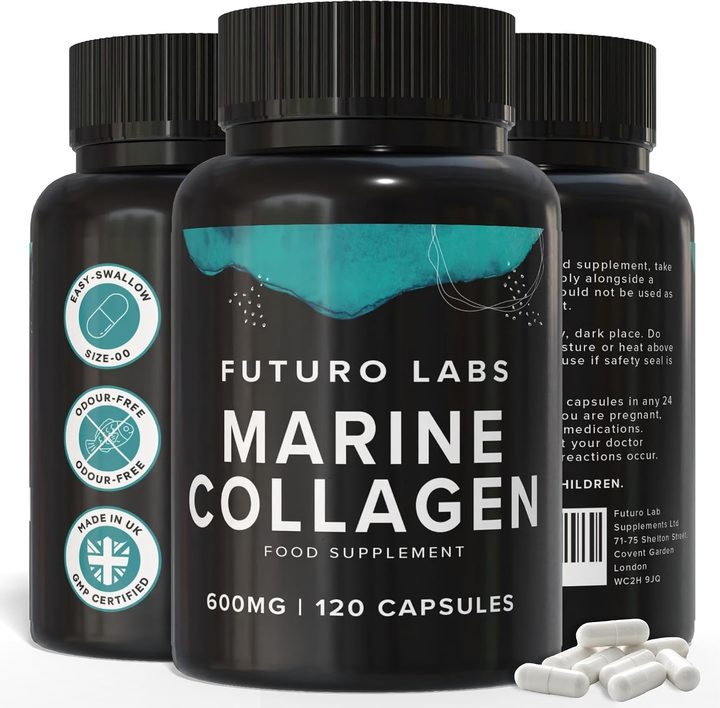
Our brand: the worked example on this page
Futuro Labs Marine Collagen
- 28p a day
- 120 capsules, 2 capsules daily
- Lab tested
- Made in the UK
The £102 year on its true terms: Futuro Labs Marine Collagen on Amazon UK, 2 capsules, 1200mg hydrolysed type 1 marine collagen with 12mg vitamin C at 15% NRV plus zinc, 120 for £16.99, 28p a day, six tubs a year, lab tested and UK made, below the trial doses and taken for vitamin C's collagen formation sentence and a habit that holds. Full label breakdown. Whether there is anything to notice is on the how long to notice a difference page; the joint timetable on the collagen and joints timetable page.
The money and the trials' calendar across the twelve months
What happens if I take collagen for a year is a question best answered as a ledger, twelve months down one side and what the year bought down the other, because a year is long enough for every collagen trial's reading point to have passed and long enough for a reader to have spent real money, and the honest page totals both. The money first, since it is the one line certain to appear. Two capsules a day at 28p is £8.50 a month and around £102 a year, six tubs of 120, a sum most readers carry without noticing for a modest dose taken for the vitamin C line and the habit. Ten grams of powder a day, the joint trial dose, is roughly a pound a day at typical shelf prices, £300 to £400 a year depending on the brand and the animal, a sum that is a decision, and at fifteen grams for a tendon protocol most days of the week, more again. Every year of collagen has that line, and the rest of the ledger decides whether it was a purchase or a habit. The trials' calendar second, laid across the twelve months. By month three, the skin trials had taken their readings: at 2.5 to 10 grams a day, elasticity by cutometer and hydration by corneometer up a few percent against placebo, dermal density by ultrasound in some, and eye wrinkle depth by profilometry in one eight-week trial, all in small and mostly industry-funded trials, so a reader on trial doses who measured by instrument had their skin answer by the end of the first quarter and a reader on capsules had no skin trial to have an answer from. By month six, the joint trials had taken their second and clearer reading: at around ten grams a day, activity-related pain modestly down on questionnaire scales at twelve and twenty-four weeks, with no change in cartilage on any imaging, so a reader who scored one provoking movement weekly had their joint answer at the half-year, in either direction. By month twelve, one trial had measured something no shorter trial could: five grams a day of a specific collagen peptide for twelve months in postmenopausal women with reduced bone density reported small increases in bone mineral density at the spine and hip against placebo, a single manufacturer-linked trial of one peptide in one population with no claim behind it, and the only collagen result that needed a full year to appear. No collagen trial ran longer than twelve months with any outcome, so the second year is off the evidence map entirely, and a reader who continues into it is continuing a habit, which is a fine thing to do knowingly and a poor thing to mistake for a trial.
The safety line, the habit line, and the year without a sheet
The safety line across the year is short because there is little to write. Collagen is a food protein with no upper level set by any authority, no accumulation in the body, since it is digested and used or burned like any protein, no tolerance that builds and no dependence, and the trials that ran twelve months at up to fifteen grams a day recorded nothing above placebo in their adverse event tables beyond the fullness and mild bloating of scoop doses in the early weeks, which the gut adapts to. The two standing footnotes hold across the year as across the day: hydroxyproline is metabolised partly to oxalate, a note for calcium oxalate stone formers who keep collagen modest and ask, and marine collagen is fish protein, an allergy question answered on day one and not one that develops with time. A year of collagen, then, is a year of a small protein serving, and the liver and kidney read it as such. The habit line is the one a year buys that a month cannot. Every collagen trial controlled one variable above all, consistency, dosing every day and measuring at the end, and the habit literature is plain that a daily dose anchored to a fixed point survives while a dose floating on memory lapses by week three, so a reader who reaches month twelve has done the one thing the trials required and most readers do not, and whatever else the year did, it built a habit that holds, which is worth something in itself and is the honest reason many readers continue past the evidence. The last line is the one the ledger exists for: what is a year without a measurement? It is a habit and a cost, and it is not a result, in either direction. A reader who took collagen for a year and feels their skin is better has a feeling, which lighting, season, sleep and a year of ageing all move more than a few percent on a cutometer; a reader who took it for a year and feels nothing has a feeling too, and may have had the trials' few percent without a mirror able to see it. Neither can honestly say collagen did or did not work, because neither measured, and the fix is retrospective only in the sense that the next year can start with a sheet: one skin photograph in fixed light or one joint movement scored out of ten, before the first dose, and read at the trials' reading points. The worked example is the £102 year on its true terms: two capsules, 1200mg hydrolysed type 1 marine collagen with 12mg vitamin C plus zinc, 120 for £16.99 at 28p a day, six tubs a year, lab tested and UK made, below the trial doses, taken daily at an anchor for vitamin C's collagen formation sentence, a habit that holds and a cost a reader knows. What happens if I take collagen for a year: £102 or £400 leaves, the trials' readings pass at three, six and twelve months for the reader who took their doses and kept a sheet, nothing accumulates, a habit forms, and a reader without a sheet ends the year exactly as informed as they began it.
| The line | The entry | The note |
|---|---|---|
| The money | £102 in capsules at 28p a day; £300 to £400 in powder at 10g | Certain to appear; the rest decides what it bought |
| Month three | Skin trials' readings: a few percent by instrument at 2.5 to 10g | The skin answer for a reader on trial doses who measured |
| Month six | Joint trials' second reading: modest pain score gains at ~10g; no cartilage change | The joint answer for a reader who scored a movement weekly |
| Month twelve | One bone density trial at 5g in postmenopausal women with low density: small gains | The only result that needed a year; one trial, no claim |
| Beyond twelve | No trial ran longer | A second year is a habit, knowingly |
| Safety | No upper level, no accumulation, no tolerance; oxalate and fish allergy footnotes | A small protein serving all year |
| The habit | Daily at an anchor survives; floating lapses by week three | What a year buys that a month cannot |
| Without a sheet | A habit and a cost | Not a result in either direction |
| The worked exampleOurs | Two capsules, 1200mg marine collagen with 12mg vitamin C plus zinc, 28p a day, six tubs a year | The £102 year on its true terms |
What to check on the label
- Total the money first: £102 or £400.
- Mark the trials' readings: three, six and twelve months.
- Expect nothing to accumulate: a protein, used or burned.
- Credit the habit: it is what a year builds.
- Start the next year with a sheet: a photograph in fixed light or a scored movement.
Our brand
The worked example: Futuro Labs Marine Collagen
Futuro Labs Marine Collagen: 2 capsules daily, 1200mg hydrolysed type 1 marine collagen with 12mg vitamin C and 1.5mg zinc (15% NRV each), 120 capsules for £16.99, 60 days at 28p a day, lab-tested, UK GMP made. Slim veggie-shell capsules, odour free. Fish derived: pescatarian, not vegetarian or vegan.
- Collagen per serving
- 1200mg hydrolysed type 1 marine (fish)
- Co-factors
- vitamin C 12mg (15% NRV), zinc 1.5mg (15% NRV)
- Serving
- 2 capsules a day
- Bottle
- 120 capsules, 60 days
- Price
- £16.99 (28p a day)
- Capsule
- slim size 00, veggie shell, odour free
Questions people also ask
Is it safe to take collagen for a year?
Yes for a healthy adult: collagen is a food protein with no upper level, no accumulation, no tolerance and no dependence, the trials that ran twelve months at up to fifteen grams a day recorded nothing above placebo beyond early fullness at scoop doses, and the standing footnotes are oxalate for calcium stone formers and fish allergy for marine, neither of which develops with time.
What results should I expect after a year of collagen?
The trials' readings, if you took trial doses and measured: skin elasticity and hydration up a few percent by instrument by month three at 2.5 to 10 grams, activity-related joint pain modestly down on questionnaires by month six at around ten grams, and small bone density gains at month twelve in one trial of postmenopausal women at five grams, none of it visible in a mirror or on a scan.
How much does a year of collagen cost?
Around £102 in capsules at 28p a day, six tubs of 120, or roughly £300 to £400 in powder at the ten-gram joint trial dose, and more at fifteen grams for a tendon protocol most days, the line that is certain to appear on any year's ledger.
Should I keep taking collagen after a year?
Knowingly, as a habit: no collagen trial ran longer than twelve months with any outcome, so a second year is off the evidence map, a fine thing to continue for the vitamin C line and a habit that holds, and a poor thing to mistake for a trial that was never run.
I took collagen for a year and noticed nothing, did it fail?
You cannot say, and neither can the reader who noticed something: a few percent on a cutometer is below what a mirror shows, a year of season, sleep and ageing moves skin more than the trials did, and without a measurement taken before the first dose neither result is a result, so the next year starts with a photograph in fixed light or a scored movement.
Sources
- The collagen peptide and bone density trial: a twelve-month randomised placebo-controlled trial giving five grams of specific collagen peptides a day to postmenopausal women with reduced bone density reported small increases in bone mineral density at the spine and hip against placebo, with changes in bone turnover markers, a single trial from one manufacturer's peptide and not the basis of any authorised claim. PubMed record
- The collagen and skin trial literature: randomised studies of oral collagen peptides on skin elasticity and hydration, mostly small, short and industry funded, with no authorised claim resulting. PubMed record
- The collagen peptide trial literature: randomised controlled studies of hydrolysed collagen supplementation across skin, joint and connective-tissue outcomes, typically at 2.5g to 15g daily, with small effects and frequent industry funding. PubMed record
- The habit formation literature: anchoring a new behaviour to an existing daily routine is the best-documented adherence strategy, with consistency outperforming timing choices. PubMed record