Ghost Fitness/Collagen/Should you take collagen 60 minutes before training?
Should you take collagen 60 minutes before training?
The short answer
Only if you run the protocol: the 60 minutes exists because swallowed amino levels peak roughly half an hour to an hour after a serving, putting peak supply over the loading stimulus. It is a convention, not a cliff.
- Who the hour is forprotocol lifters only: habit users need no clock at all
- The pharmacokineticsamino levels rise within ~30 minutes and peak around the hour
- The design logicpeak supply timed over the mechanical stimulus
- The precisiona convention, not a cliff: 30-90 minutes serves the same idea
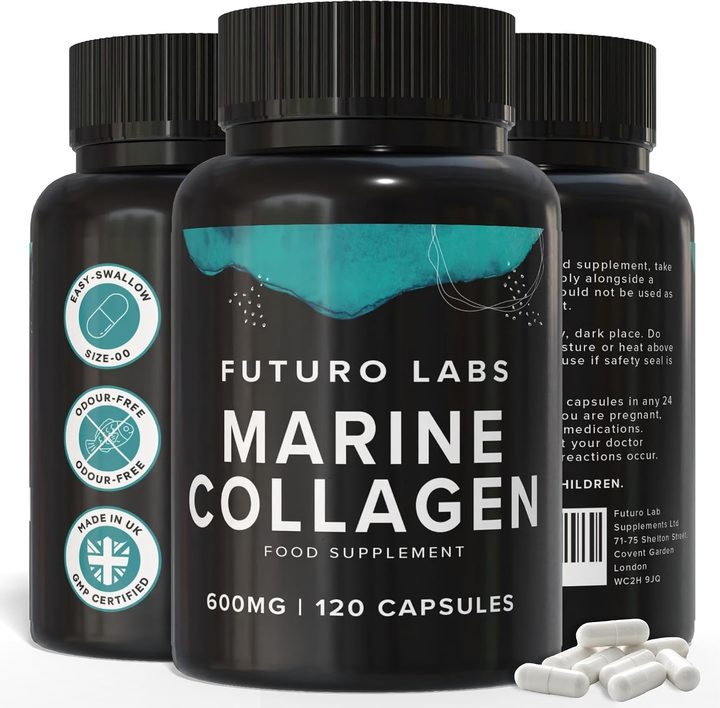
Our brand: the worked example on this page
Futuro Labs Marine Collagen
- 28p a day
- 120 capsules, 2 capsules daily
- Lab tested
- Made in the UK
For the clockless lane this page excuses: Futuro Labs Marine Collagen on Amazon UK, 1200mg hydrolysed type 1 in two capsules at any hour, vitamin C and zinc at 15% NRV, £16.99 for 60 days at 28p. Full label breakdown. The protocol's basket is on the gelatin-and-C page; the borrowed-window audit on the before-or-after page.
The origin of the hour, taught from the study design and the pharmacokinetics up
The 60 minutes is the one number in collagen timing with an actual pedigree, so teach where it comes from rather than just repeating it. The origin is the pre-loading research design, Shaw, Baar and colleagues feeding vitamin C-enriched gelatine to participants one hour before short bouts of loading activity and measuring blood markers of collagen synthesis, and the hour was not mysticism but pharmacokinetics: swallowed gelatine and hydrolysed collagen digest quickly, plasma amino acid and peptide levels rising within roughly thirty minutes of a serving and peaking around the hour mark before declining over the following couple of hours, so dosing sixty minutes out places that peak of circulating raw material across the training stimulus itself, the window when loaded connective tissue is signalling, the whole stimulus-plus-supply hypothesis in one scheduling decision, and subsequent protocol literature simply kept the convention its founding design set. Two honest riders travel with the pedigree. First, the grade: this remains the stop-two lane, markers and bench models moved, patient outcomes unproven, the hour being the studied convention of promising research rather than the operating instruction of a proven therapy. Second, the precision: nothing in the pharmacokinetics makes sixty a cliff, the amino curve being a broad hill rather than a spike, so a serving taken forty minutes out or ninety minutes out rides substantially the same elevation, missed-by-twenty being nobody's failure, the hour worn as a habit-forming anchor, not a stopwatch discipline, and the with-food question answered by the same curve, a light meal shifting timing modestly and mattering little against a hill that wide.
Who the clock belongs to, who it excuses, and the practice card for the one reader keeping it
Now assign the clock, because the query's should-you depends entirely on which reader is asking. The clock belongs to one reader: the protocol lifter, running roughly 15g of gelatine or hydrolysed collagen with vitamin C before tendon-loading sessions, usually inside a physio-framed rehab or a deliberate connective-tissue block, on loading days rather than daily by most designs, and for that reader the answer is yes, keep the hour, lightly, as the convention your lane's own studies set. The clock excuses everyone else, and saying so plainly is this page's other job: the habit user's 1-to-2g cofactor serving carries vitamin C and zinc's sentences identically at any hour, no window, no queue, no pre-training logic applying to a dose whose lawful work is maintenance grammar, so a habit capsule swallowed sixty minutes before training is neither better nor worse than one at breakfast, and marketing that drapes the protocol's clock over habit-scale products is borrowing a study's schedule without its dose, the scale-honesty check catching it in one glance at the grams. The practice card for the keeper: level-scoop the 15g into 150-to-250ml, water or juice, the C aboard from the product or a glass of orange; set the serving against your session start, an hour as the anchor, thirty-to-ninety as the working band; keep it to loading days unless your programme says otherwise; skip the guilt when life reorders an afternoon, the hill forgiving what the stopwatch would not; and hold the frame that outranks the clock entirely, the progressive loading itself, professionally built where rehab is in play, remains the demonstrated actor, the scoop an adjunct whose finest scheduling cannot promote it above the training it precedes.
| The item | The finding | The action |
|---|---|---|
| The origin | The pre-loading study design: gelatine plus C, one hour out | A pedigree, not a mysticism |
| The pharmacokinetics | Aminos rise by ~30 minutes, peak around the hour | Peak supply placed over the stimulus |
| The precision | A broad hill, not a spike | 30-90 minutes rides the same elevation |
| Who keeps it | Protocol lifters: 15g with C, loading days | The category's one honest clock |
| Who it excuses | Every habit user, at any hour | No window applies to maintenance grammar |
| The frame | Loading programmes do the demonstrated work | The scoop stays the adjunct |
The verdict, kept lightly by the one reader it serves
Should you take collagen 60 minutes before training: yes if you run the protocol, the hour descending from its founding study design and the pharmacokinetics beneath it, amino levels peaking around sixty minutes and the serving timed to place that peak over the loading stimulus, kept as a convention rather than a cliff with thirty-to-ninety minutes serving the same broad hill; and no clock at all for everyone else, the habit's cofactor sentences arriving identically at any hour. The worked example serves the excused majority by design: Futuro Labs Marine Collagen, 1200mg hydrolysed type 1 in two capsules with 12mg vitamin C and 1.5mg zinc at 15% NRV, lab tested, UK made, £16.99 for 60 days at 28p a day, honest about being habit-scale and therefore honest about needing no stopwatch at all.
What to check on the label
- The hour has a pedigree: the founding study dosed one hour out.
- Pharmacokinetics explain it: aminos peak around sixty minutes.
- It is a hill, not a cliff: thirty-to-ninety serves the same idea.
- Protocol lifters keep it: 15g with C, loading days, lightly.
- Everyone else is excused: habit doses carry no clock.
Our brand
The worked example: Futuro Labs Marine Collagen
Futuro Labs Marine Collagen: 2 capsules daily, 1200mg hydrolysed type 1 marine collagen with 12mg vitamin C and 1.5mg zinc (15% NRV each), 120 capsules for £16.99, 60 days at 28p a day, lab-tested, UK GMP made. Slim veggie-shell capsules, odour free. Fish derived: pescatarian, not vegetarian or vegan.
- Collagen per serving
- 1200mg hydrolysed type 1 marine (fish)
- Co-factors
- vitamin C 12mg (15% NRV), zinc 1.5mg (15% NRV)
- Serving
- 2 capsules a day
- Bottle
- 120 capsules, 60 days
- Price
- £16.99 (28p a day)
- Capsule
- slim size 00, veggie shell, odour free
Questions people also ask
Why 60 minutes before training specifically?
The founding pre-loading studies dosed gelatine with vitamin C one hour out because swallowed amino levels peak around then, placing peak supply over the loading stimulus.
Does it matter if I take it 30 or 90 minutes before?
Little: the amino curve is a broad hill, not a spike, so anywhere in the 30-to-90-minute band rides substantially the same elevation, the hour being a convention rather than a cliff.
Should I time my ordinary collagen capsules before the gym?
No: habit-scale doses carry vitamin C and zinc's maintenance sentences identically at any hour, and draping the protocol's clock over 1-to-2g products borrows a schedule without its dose.
Do I take the protocol serving every day?
Most designs run it on loading days: roughly 15g with C before the tendon-loading sessions themselves, inside a physio-framed programme where rehab applies.
Does eating around the serving break the timing?
No: a light meal shifts the curve modestly against a hill that wide, and the progressive loading, not the stopwatch, remains the demonstrated actor either way.
Sources
- The amino acid kinetics literature: plasma amino acid and peptide levels rise within about 30 minutes of ingesting hydrolysed collagen or gelatine and peak around the hour, the pharmacokinetic basis for pre-loading timing. PubMed record
- Shaw G, Lee-Barthel A, Ross ML, Wang B, Baar K. Vitamin C-enriched gelatin supplementation before intermittent activity augments collagen synthesis. American Journal of Clinical Nutrition 2017;105(1):136-143. PubMed record
- The gelatin and vitamin C pre-exercise research (Shaw, Baar and colleagues): 15g gelatin with vitamin C taken about an hour before loading, studied for markers of collagen synthesis, the protocol behind the tendon-training conversation. PubMed record
- Futuro Labs Marine Collagen listing and label: 1200mg hydrolysed type 1 marine collagen per 2-capsule serving with 12mg vitamin C and 1.5mg zinc at 15% NRV each, 120 capsules, independently lab tested, UK made. https://www.amazon.co.uk/dp/B0C2J7N364