Ghost Fitness/Collagen/What are the signs of low collagen in women, and are they a concern?
What are the signs of low collagen in women, and are they a concern?
The short answer
No test measures collagen, so sort the signs: fine lines and thinner skin are ageing; faster change around fifty is menopause; bleeding gums, bruising and slow healing are vitamin C deficiency, the one measurable shortfall; swollen joints: a doctor.
- Column one, ageingfine lines, thinner and drier skin, slower recovery, morning stiffness: synthesis falling across decades, no deficiency
- Column two, menopausedermal collagen down around a third in the first five years: real, hormonal, a doctor's conversation about menopause
- Column three, the cofactorbleeding gums, easy bruising, slow wound healing: vitamin C deficiency, measurable, diet-corrected
- Column four, not collagenswollen joints, stiffness over an hour, hair loss with fatigue, skin changes with other symptoms: a doctor's
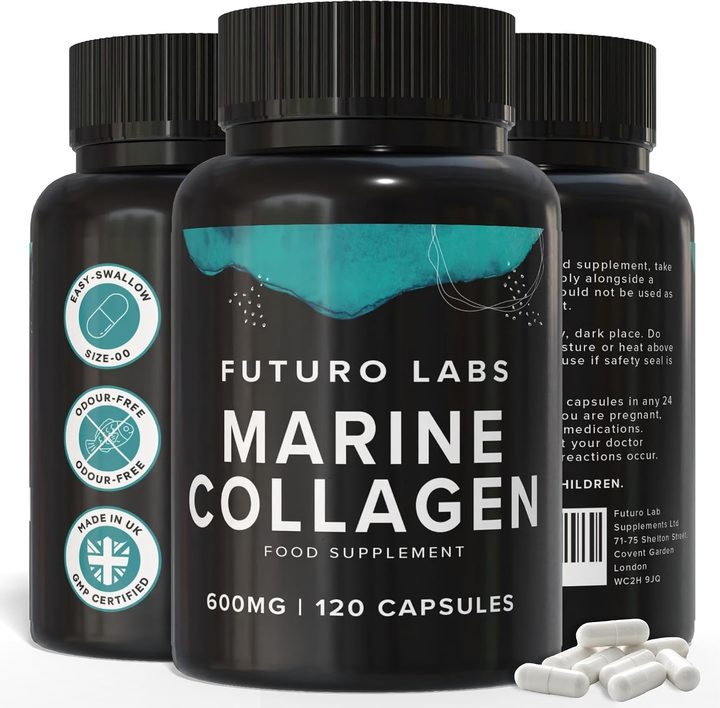
Our brand: the worked example on this page
Futuro Labs Marine Collagen
- 28p a day
- 120 capsules, 2 capsules daily
- Lab tested
- Made in the UK
The cofactor and the habit, on their true terms: Futuro Labs Marine Collagen on Amazon UK, 2 capsules, 1200mg hydrolysed type 1 marine collagen with 12mg vitamin C at 15% NRV plus zinc, 120 for £16.99, 28p a day, lab tested and UK made, the vitamin C contributing to normal collagen formation and the collagen below the research band. Full label breakdown. Why you cannot measure body collagen is on the not enough collagen page; the three places the research on women comes from on the collagen for women page; what depletes collagen most on the depletes collagen page.
Why there is no such test, and the first two columns: ageing and menopause
What are the signs of low collagen in women and are they a concern is a question built on a phrase that does not exist in medicine, because there is no blood test, scan or clinic measure of a person's collagen, no reference range for it and no diagnosis of low collagen, so the lists of signs that circulate are assembled from other things, mostly the signs of getting older, and the honest page sorts every sign on those lists into the column it actually belongs to, which turns out to be one of four. Column one is normal ageing. Fine lines and wrinkles, thinner and drier skin that recovers more slowly from a pinch, slower recovery from training, joints that are stiff for a few minutes in the morning and tendons that adapt more slowly than they did at twenty-five are all consequences of collagen synthesis falling across the decades, fibroblast output declining, dermal collagen turning over more slowly, tendon stiffening, and none of them is a deficiency in any sense a test could confirm or a tub could reverse; they are the expected state of a fifty-year-old dermis and a fifty-year-old Achilles, and the honest word for them is ageing rather than low collagen, which reframes the same facts as a shortfall in order to sell a top-up. Column two is menopause, and it is the one column in which the word women earns its place in the question. Dermal collagen content falls by around a third in the first five years after menopause by the classic biopsy studies and more slowly afterwards, tracking the fall in oestrogen, which is why skin thins, loses elasticity and holds less water fastest in the years around fifty and why the oral collagen skin trials recruited women of that age, the group in whom a small instrument change would be measurable. That is real, it is hormonal, and it is the reason a woman noticing rapid skin change in her late forties or fifties is right that something has shifted; what has shifted is oestrogen, and the conversation about it, symptoms, options and what suits her, is with a doctor about menopause, not with a tub about collagen, whose skin trials in that population produced a few percent by instrument at 2.5 to 10 grams over eight to twelve weeks and no claim.
The third column, the only measurable low collagen, the fourth, the red flags, and the concern answered
Column three is the one place low collagen has a real medical meaning, and it is not a collagen shortfall but a cofactor one. Collagen synthesis requires vitamin C for the enzymes that hydroxylate the collagen chain, and when vitamin C is deficient the body cannot make sound collagen, which shows in a recognisable way: gums that bleed and swell, easy bruising and small bleeds around hair follicles, wounds that heal slowly, old scars that soften or reopen, and fatigue, the historical disease scurvy in its early form, rare on an ordinary UK diet but not unheard of in someone eating almost no fruit or vegetables for months. This is the only low collagen a doctor can measure, by a blood vitamin C level and by the signs, and the only one a supplement corrects, by vitamin C from fruit and vegetables or a tablet rather than by collagen powder, which does nothing for a body that cannot process the collagen it already has, so a woman with bleeding gums and bruising has a vitamin C question and a doctor's visit, not a collagen one. Column four is the red flags, signs the internet's low collagen lists include that belong to something else entirely and should not be filed under collagen for a day longer than it takes to read this: joints that swell, or that are stiff for more than an hour each morning and symmetric, the pattern of inflammatory arthritis; hair loss with fatigue, weight change, feeling cold or heavy periods, the pattern of iron or thyroid problems; skin changes accompanied by other symptoms, rashes, itching, colour change; and brittle nails with any of the above. Each is a doctor's assessment for a condition that has a test, and the harm of the low collagen framing is that it can delay that assessment by months while a tub is tried. Are the signs of low collagen in women a concern, then: columns one and two are life, ageing and menopause, not concerns in the medical sense and not reversible by any capsule, with the menopause column a conversation worth having with a doctor for its own sake; column three is a real deficiency, of vitamin C, measurable and corrected by diet; and column four is a doctor's, for something that is not collagen at all. Collagen holds no claim for any of the four, and the register's collagen sentence belongs to the cofactor in column three. The worked example carries that cofactor and the habit on its true terms: two capsules, 1200mg hydrolysed type 1 marine collagen with 12mg vitamin C plus zinc, 120 for £16.99 at 28p a day, lab tested and UK made, the vitamin C contributing to normal collagen formation for the normal function of skin, the collagen below the research band, and neither a treatment for any column. What are the signs of low collagen in women: the signs of ageing, of menopause, of vitamin C deficiency and of other conditions, sorted, with only the third being low collagen in any measurable sense.
| The sign | The column | What it actually is | What to do |
|---|---|---|---|
| Fine lines, thinner and drier skin | Normal ageing | Fibroblast output falling across decades | Sunscreen, sleep; no test, no deficiency |
| Slower recovery, morning stiffness for minutes | Normal ageing | Connective tissue adapting more slowly | Load progressively; nothing to top up |
| Rapid skin change in the late forties and fifties | Menopause | Dermal collagen down around a third in five years as oestrogen falls | A doctor's conversation about menopause |
| Bleeding gums, easy bruising, slow wound healing | The cofactor's real deficiency | Vitamin C deficiency impairing collagen synthesis | A doctor; fruit and vegetables or a vitamin C tablet |
| Swollen joints; stiffness over an hour, symmetric | Not collagen | Inflammatory arthritis pattern | A doctor |
| Hair loss with fatigue, weight change, feeling cold | Not collagen | Iron or thyroid pattern | A doctor and a blood test |
| Skin changes with other symptoms | Not collagen | Something with a test | A doctor |
| The worked exampleOurs | The cofactor and the habit | Two capsules, 1200mg marine collagen with 12mg vitamin C plus zinc, 28p a day | Vitamin C's sentence; a treatment for no column |
What to check on the label
- Stop looking for a test: none measures collagen.
- File lines and stiffness under ageing: not deficiency.
- Take rapid change around fifty to a menopause conversation: with a doctor.
- Treat bleeding gums and bruising as vitamin C: the one real shortfall.
- Take swollen joints or hair loss with fatigue to a doctor: not collagen.
Our brand
The worked example: Futuro Labs Marine Collagen
Futuro Labs Marine Collagen: 2 capsules daily, 1200mg hydrolysed type 1 marine collagen with 12mg vitamin C and 1.5mg zinc (15% NRV each), 120 capsules for £16.99, 60 days at 28p a day, lab-tested, UK GMP made. Slim veggie-shell capsules, odour free. Fish derived: pescatarian, not vegetarian or vegan.
- Collagen per serving
- 1200mg hydrolysed type 1 marine (fish)
- Co-factors
- vitamin C 12mg (15% NRV), zinc 1.5mg (15% NRV)
- Serving
- 2 capsules a day
- Bottle
- 120 capsules, 60 days
- Price
- £16.99 (28p a day)
- Capsule
- slim size 00, veggie shell, odour free
Questions people also ask
How do you know if you have low collagen?
You cannot, because no blood test, scan or clinical measure exists for body collagen, so the sign lists are the signs of ageing and menopause rebranded, with the one exception being vitamin C deficiency, which impairs collagen synthesis, shows as bleeding gums, bruising and slow wound healing, and is measurable and diet-corrected.
Why does skin change so fast around menopause?
Because dermal collagen falls by around a third in the first five years after menopause by the biopsy studies, tracking the fall in oestrogen, which thins the skin and reduces its elasticity and water content fastest in that decade, a hormonal change that is a conversation with a doctor about menopause rather than a collagen shortfall a tub reverses.
Are brittle nails and thinning hair signs of low collagen?
Hair is keratin and nails are keratin, not collagen, so neither is a collagen sign; brittle nails are mostly wetting and drying, and hair thinning with fatigue, weight change or feeling cold points to iron or thyroid and is a doctor's blood test, while the register's hair and nail sentences belong to zinc, selenium and biotin.
Can a collagen supplement fix signs of low collagen?
It cannot fix ageing or menopause, whose skin trials in women produced a few percent by instrument at 2.5 to 10 grams over eight to twelve weeks with no claim, and it cannot fix vitamin C deficiency, the one measurable collagen shortfall, which needs vitamin C rather than collagen powder, so the honest supplement for column three is the cofactor.
When should I see a doctor about these signs?
For rapid skin change around menopause, to talk about menopause itself; for bleeding gums, easy bruising or slow wound healing, to check vitamin C; and promptly for joints that swell or are stiff for over an hour each morning, hair loss with fatigue or weight change, or skin changes with other symptoms, none of which is collagen and each of which has a test.
Sources
- The skin collagen and menopause literature: dermal collagen content falls sharply in the years after menopause, by around a third in the first five years by the classic biopsy studies and more slowly afterwards, tracking the fall in oestrogen, which is why the oral collagen skin trials recruited mostly women in their forties, fifties and sixties. PubMed record
- The vitamin C deficiency literature: severe deficiency impairs collagen synthesis and produces connective tissue failure, the historical disease scurvy, essentially absent on ordinary modern diets. PubMed record
- The skin biology literature: the epidermis turns over in around four weeks while dermal collagen, the layer supplements target, turns over far more slowly, so the oral collagen skin trials measured elasticity and hydration after eight to twelve weeks of daily intake with no timing of day specified, consistency across weeks rather than time of day being the variable the trials controlled. PubMed record
- The hair growth cycle: scalp hair grows about a centimetre a month, each follicle cycling through a growth phase of years, a brief regression and a resting phase of around three months before shedding, so any change in shedding or density from any cause takes three to six months to become visible. PubMed record