Ghost Fitness/Collagen/How do you know if you don't have enough collagen in your body?
How do you know if you don't have enough collagen in your body?
The short answer
You can't measure it: no routine test gauges body collagen, and the symptom checklists are ageing rebranded. The two real shortfalls that exist are vitamin C and protein, both diet-answerable, scurvy being the one true collagen-failure disease.
- The gauge that doesn't existno routine blood test or scan reads body collagen levels
- The checklist decodedwrinkles, sagging, aches, brittle nails: ageing rebranded as deficiency
- The one true failure diseasescurvy: vitamin C deficiency halting collagen synthesis
- The two real shortfallsvitamin C and protein: both checkable, both diet-answerable
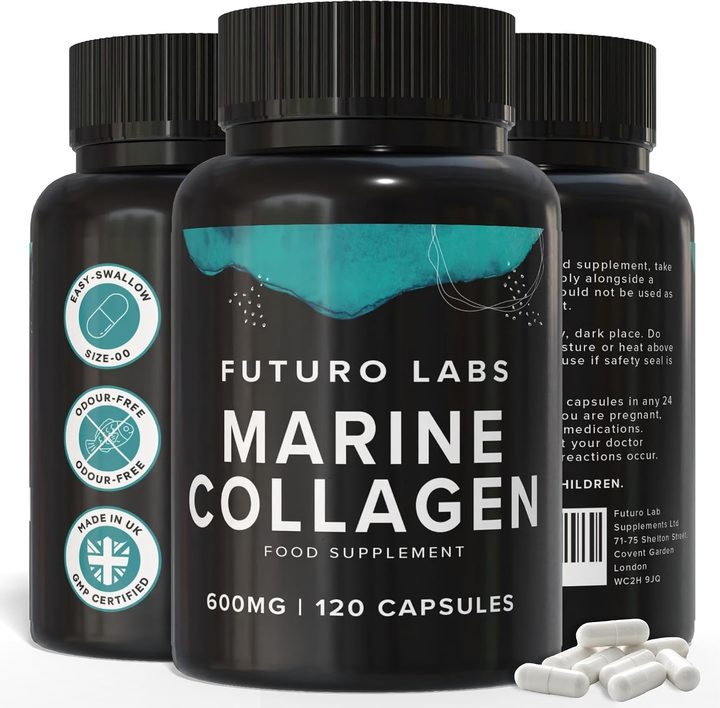
Our brand: the worked example on this page
Futuro Labs Marine Collagen
- 28p a day
- 120 capsules, 2 capsules daily
- Lab tested
- Made in the UK
The synthesis inputs, covered at threshold: Futuro Labs Marine Collagen on Amazon UK, 1200mg hydrolysed type 1 with vitamin C at 15% NRV, the cofactor the one real deficiency story turns on, £16.99 for 60 days at 28p. Full label breakdown. The nothing-to-notice clock is on the timeline page; the C contract on the C-for-skin page.
The gauge that does not exist, and the marketed checklist decoded item by item
Start with the measurement honesty the question deserves: there is no dipstick, no routine blood test, scan or clinic panel that reads out your body's collagen level, collagen not being a circulating nutrient with a reference range but a structural protein woven through skin, bone, tendon and vessel walls, synthesised continuously by your own cells from ordinary dietary amino acids, so the premise of knowing whether you have enough is unmeasurable in any everyday sense, and every article offering to help you check is working from a symptom checklist instead, which deserves its decode. Run the standard list: wrinkles and fine lines, thinning or sagging skin, joint aches and stiffness, brittle nails, slower-healing scrapes, weaker-feeling tendons, and notice what the items have in common, they are the ordinary signature of ageing, collagen synthesis genuinely declining with the decades and sun exposure accelerating the skin's share, which makes the checklist technically adjacent to truth and commercially misleading in the same breath, because it rebrands a universal, gradual process as a personal deficiency with a purchasable fix, and the fix on offer cannot refill the gauge, swallowed peptides pooling into the amino supply like any protein rather than restocking a depot, no claim existing that any product raises body collagen, the timeline pages adding that most users notice nothing because nothing noticeable was ever promised. The checklist, decoded, is ageing wearing a lab coat.
The two real shortfalls that do exist, the one true failure disease, and the honest self-check
Two genuine shortfalls live behind this question, and both are checkable and answerable, which is more than the marketing version offers. Shortfall one, vitamin C, and it owns the only true collagen-failure disease in medicine: scurvy, where absent vitamin C halts the hydroxylation steps that stabilise the collagen triple helix, synthesis failing body-wide, the classic signs, bleeding gums, poor healing, corkscrew hairs, following within months, rare in the UK and real at the extremes of restricted diets, and the instructive point for this page is its direction, the deficiency that breaks collagen is a vitamin C story, cured by repletion at ordinary dietary doses, fruit and vegetables covering it easily, the 15% NRV threshold on honest labels sitting far below any therapeutic drama precisely because maintenance was always the lawful register. Shortfall two, protein itself: a diet chronically short of protein shorts every synthesis programme including collagen's, the answer being the complete-protein adequacy this site's training pages already demand, 1.2g-plus per kilogram for the lifting readership, food doing the work. The honest self-check therefore has three questions and no product: am I eating fruit and vegetables most days, is my complete protein at target, and are any of the checklist's symptoms actually new, rapid or odd rather than gradual, the last routing to a GP, since genuine connective-tissue disorders, unexplained bruising or bleeding gums are medical conversations, not aisle ones. Pass the first two and your collagen synthesis has everything it ever asks for; the habit tub's honest role beside that is its usual one, the cofactor sentences at 28p, carried as maintenance, never as a refill for a gauge that was never there.
| The item | The finding | The action |
|---|---|---|
| The gauge | No routine test reads body collagen | Distrust any check-your-levels pitch |
| The checklist | Ageing's ordinary signature, rebranded | Sun and decades, not a deficiency you can refill |
| Scurvy | The one true collagen-failure disease | A vitamin C story, cured by ordinary repletion |
| Protein shortfall | Shorts every synthesis programme | Complete protein at target: food's job |
| The self-check | Fruit and veg, protein, anything odd? | Two yeses and a no: synthesis is supplied |
| The red flags | New, rapid or odd symptoms | Bruising, bleeding gums, poor healing: GP, not aisle |
The verdict, read off a gauge that never existed
How do you know if you don't have enough collagen: you can't, no routine measure existing for a structural protein your cells synthesise continuously, the marketed symptom checklist decoding to ageing rebranded, and the two real shortfalls behind the question being vitamin C, whose absence causes scurvy, the one true collagen-failure disease, and protein itself, both answered by ordinary diet and checked in a sentence each, with new or odd symptoms routed to a GP rather than a shelf. The worked example serves the maintenance register honestly: Futuro Labs Marine Collagen, 1200mg hydrolysed type 1 with 12mg vitamin C at 15% NRV covering the cofactor the real story turns on, 1.5mg zinc alongside, lab tested, UK made, £16.99 for 60 days at 28p a day, sold as the sentences it holds and never as the refill for a gauge this page just showed you was never installed.
What to check on the label
- No gauge exists: body collagen has no routine test.
- The checklist is ageing: wrinkles and aches rebranded as deficit.
- Scurvy is the real disease: and it is a vitamin C story.
- Protein adequacy is the other half: complete grams at target.
- Odd symptoms see a GP: bruising and bleeding gums are medical.
Our brand
The worked example: Futuro Labs Marine Collagen
Futuro Labs Marine Collagen: 2 capsules daily, 1200mg hydrolysed type 1 marine collagen with 12mg vitamin C and 1.5mg zinc (15% NRV each), 120 capsules for £16.99, 60 days at 28p a day, lab-tested, UK GMP made. Slim veggie-shell capsules, odour free. Fish derived: pescatarian, not vegetarian or vegan.
- Collagen per serving
- 1200mg hydrolysed type 1 marine (fish)
- Co-factors
- vitamin C 12mg (15% NRV), zinc 1.5mg (15% NRV)
- Serving
- 2 capsules a day
- Bottle
- 120 capsules, 60 days
- Price
- £16.99 (28p a day)
- Capsule
- slim size 00, veggie shell, odour free
Questions people also ask
Is there a test for low collagen levels?
Not in routine care: collagen is a structural protein your cells synthesise continuously, not a circulating nutrient with a reference range, so no everyday blood test or scan reads it.
Are wrinkles and joint aches signs of collagen deficiency?
They are signs of ageing: synthesis declines gradually with decades and sun exposure, a universal process the marketing rebrands as a personal deficit with a purchasable refill.
What actually causes a true collagen failure?
Vitamin C deficiency: scurvy halts the hydroxylation that stabilises collagen, producing bleeding gums and poor healing, and it is cured by ordinary dietary repletion, not peptides.
Can taking collagen top my levels back up?
No claim or mechanism supports a refill: swallowed peptides pool into the amino supply like any protein, which is why most users honestly notice nothing.
When should collagen-type symptoms see a doctor?
When they are new, rapid or odd: unexplained bruising, bleeding gums or poor wound healing are medical conversations for a GP, never aisle ones.
Sources
- The scurvy literature: vitamin C deficiency impairs collagen synthesis through failed proline and lysine hydroxylation, producing the classic connective-tissue signs that resolve with vitamin C repletion. PubMed record
- Futuro Labs Marine Collagen listing and label: 1200mg hydrolysed type 1 marine collagen per 2-capsule serving with 12mg vitamin C and 1.5mg zinc at 15% NRV each, 120 capsules, independently lab tested, UK made. https://www.amazon.co.uk/dp/B0C2J7N364
- The collagen and skin trial literature: randomised studies of oral collagen peptides on skin elasticity and hydration, mostly small, short and industry funded, with no authorised claim resulting. PubMed record
- EFSA Panel on Dietetic Products, Nutrition and Allergies. Scientific Opinion on the substantiation of health claims related to magnesium. EFSA Journal 2010;8(10):1807. https://efsa.onlinelibrary.wiley.com/doi/10.2903/j.efsa.2010.1807