Ghost Fitness/Collagen/Do the benefits of collagen help women?
Do the benefits of collagen help women?
The short answer
The research on women comes from three places: skin trials run mostly in women aged 35 to 65, measured by instrument; one bone density trial in postmenopausal women; and tendon and joint work identical for men.
- Place one, the skin trialsmostly women aged 35 to 65; 2.5 to 10g for 8 to 12 weeks; instrument-measured, small, industry-funded
- Why womendermal collagen falls by around a third in the five years after menopause
- Place two, one bone trial5g of a specific peptide, 12 months, postmenopausal women: small BMD gains, one trial, no claim
- Place three, tendons and joints~15g with vitamin C before loading; ~10g over months: the same molecule, the same result for men
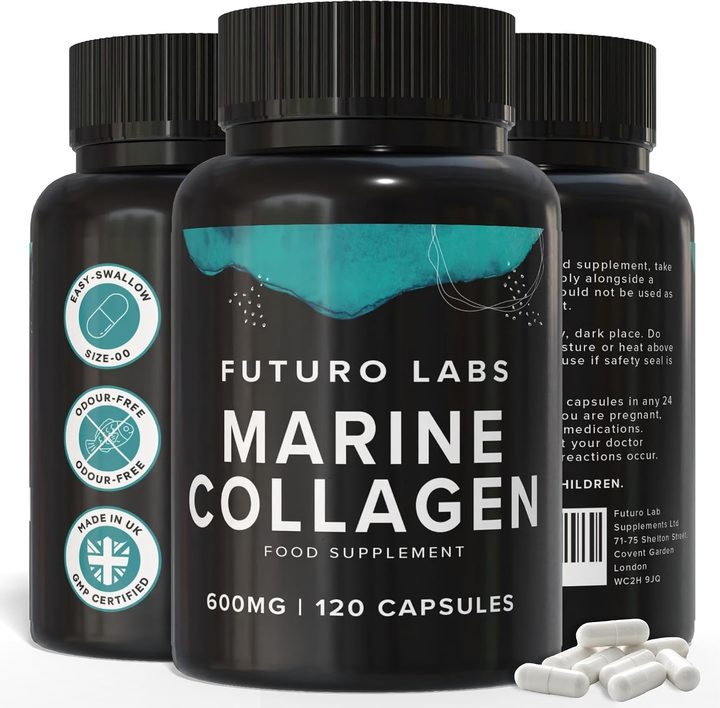
Our brand: the worked example on this page
Futuro Labs Marine Collagen
- 28p a day
- 120 capsules, 2 capsules daily
- Lab tested
- Made in the UK
The worked example on its true terms: Futuro Labs Marine Collagen on Amazon UK, 2 capsules, 1200mg hydrolysed type 1 marine collagen with 12mg vitamin C at 15% NRV plus zinc, 120 for £16.99, 28p a day, lab tested and UK made, a dose below the 2.5 to 10g the skin trials gave, taken for vitamin C's collagen formation sentence and zinc's normal skin line. Full label breakdown. The timing question for women is on the when should women take collagen page; the female athlete's version on the female athletes page.
Place one, the skin trials, and why they were run in women
Do the benefits of collagen help women is a question the marketing answers with a photograph and the research answers with a recruitment table, and the honest page reads the table, because the research on collagen in women comes from three identifiable places and each says something different. Place one is the skin trials, and the reason they matter to women is a number from the dermatology literature rather than the supplement aisle: dermal collagen content, measured in the classic skin biopsy studies, falls by around a third in the first five years after menopause and more slowly afterwards, tracking the fall in oestrogen, which is why skin thins, loses elasticity and holds less water in the years around fifty, and why the oral collagen skin trials recruited mostly women aged thirty-five to sixty-five, the group in whom a small change would be measurable. Those trials gave 2.5 to 10 grams of hydrolysed collagen a day for eight to twelve weeks and measured by instrument, elasticity by cutometer suction, hydration by corneometer capacitance, and reported small gains against placebo, a few percent, in trials that were small, mostly funded by the peptide's manufacturer and measured by devices rather than mirrors, the skin measurement literature's caution that an instrument detects what a person does not see. So the benefit for women in place one is a real instrument result at 2.5 to 10 grams over two to three months, in the population where dermal collagen is falling fastest, with the size of the effect and the funding of the trials both printed beside it, and with the register's line beneath: collagen holds no UK claim for skin or anything else, and the only collagen sentence a label may carry is vitamin C's, that it contributes to normal collagen formation for the normal function of skin, with zinc, biotin and vitamin A holding the maintenance of normal skin, which is why the honest capsule pairs collagen with vitamin C and zinc and lets those ingredients carry the words.
Places two and three, the bone trial and the tendon and joint work, and the same molecule in men
Place two is a single trial and the honest page treats it as one: twelve months of five grams a day of a specific collagen peptide in postmenopausal women with reduced bone density reported small increases in bone mineral density at the spine and hip against placebo, with movement in the bone turnover markers, a result from one trial of one manufacturer's peptide that has not been reproduced independently and is the basis of no authorised claim, so it belongs on the page as research a postmenopausal reader might find interesting and not as a reason, the reasons for bone in that decade being resistance training, adequate protein, calcium and vitamin D, whose claims for bone exist and are worded. Place three is the tendon and joint work, and here the word women stops mattering, because the pre-loading protocol, around fifteen grams of gelatin or hydrolysed collagen with roughly 50mg of vitamin C an hour before loading, raised collagen synthesis markers in a small trial in a way that has nothing to do with sex, and the joint comfort trials at around ten grams over months recruited both, so a woman lifting with a complaining Achilles or knee has exactly the entry a man has, as research and with the loading programme doing the work. The secondary question the search brings, marine collagen benefits for men, is answered by the same three places with the weighting changed: the skin trials mostly did not recruit men and the bone trial recruited none, so a man's evidence is place three plus a general extrapolation from place one, and the molecule in the capsule is identical, hydrolysed type 1 collagen behaving the same way in either digestive tract. A note on the female lifter's protein ledger, since it is where the collagen habit does harm: a woman eating toward 1.6 grams per kilo who counts a collagen scoop as protein has counted protein with no tryptophan and little leucine, so the scoop is booked separately and the complete protein eaten as usual, the anabolic resistance literature making that point sharpest after fifty, when the muscle needs more leucine per meal, not less. The worked example on its true terms: two capsules, 1200mg hydrolysed type 1 marine collagen with 12mg vitamin C plus zinc, 120 for £16.99 at 28p a day, lab tested and UK made, a dose below the 2.5 to 10 grams the skin trials gave, taken for vitamin C's collagen formation sentence and zinc's normal skin line, the two sentences the register lets a woman's label say. Three places: skin, real by instrument at trial doses in the decade dermal collagen falls; bone, one trial and no reason; tendons and joints, the same as for men.
| The place | Who and what | What it found | The register's line |
|---|---|---|---|
| Skin trials | Mostly women 35 to 65; 2.5 to 10g for 8 to 12 weeks | Small instrument gains in elasticity and hydration; small, industry-funded trials | No collagen claim; vitamin C's collagen formation sentence |
| Why women | Dermal collagen falls ~a third in five years after menopause | The population where a change is measurable | None |
| One bone trial | 5g specific peptide, 12 months, postmenopausal women | Small BMD gains at spine and hip; one trial, one peptide | No claim; calcium, vitamin D and protein hold the bone claims |
| Tendons and joints | ~15g with vitamin C before loading; ~10g over months | Markers up; modest joint comfort; identical for men | None |
| The protein ledger | A woman tracking 1.6g per kilo | A scoop does not count toward muscle | Book it separately |
| The worked exampleOurs | Two capsules, 1200mg marine collagen with 12mg vitamin C plus zinc, 28p a day | Below the skin trial doses; the vitamin C and zinc lines | On its true terms |
What to check on the label
- Read the recruitment table: the skin trials were run in women 35 to 65.
- Expect an instrument result: a few percent, not a mirror.
- Treat the bone trial as one trial: calcium, vitamin D and protein hold the claims.
- Use the tendon and joint work as a man would: the same molecule.
- Book the scoop separately: it is not the day's protein, least of all after fifty.
Our brand
The worked example: Futuro Labs Marine Collagen
Futuro Labs Marine Collagen: 2 capsules daily, 1200mg hydrolysed type 1 marine collagen with 12mg vitamin C and 1.5mg zinc (15% NRV each), 120 capsules for £16.99, 60 days at 28p a day, lab-tested, UK GMP made. Slim veggie-shell capsules, odour free. Fish derived: pescatarian, not vegetarian or vegan.
- Collagen per serving
- 1200mg hydrolysed type 1 marine (fish)
- Co-factors
- vitamin C 12mg (15% NRV), zinc 1.5mg (15% NRV)
- Serving
- 2 capsules a day
- Bottle
- 120 capsules, 60 days
- Price
- £16.99 (28p a day)
- Capsule
- slim size 00, veggie shell, odour free
Questions people also ask
Why is collagen marketed to women in particular?
Because the skin trials were run in them: dermal collagen falls by around a third in the five years after menopause by the biopsy studies, so the oral collagen skin trials recruited mostly women aged thirty-five to sixty-five and measured small instrument gains at 2.5 to 10 grams over eight to twelve weeks, a real result that the marketing enlarges into a photograph.
Does collagen help women's bones after menopause?
One trial says a little: five grams of a specific collagen peptide for twelve months in postmenopausal women with reduced bone density reported small gains at spine and hip, a single manufacturer-linked trial with no authorised claim, while resistance training, protein, calcium and vitamin D hold the bone evidence and the bone claims.
Is marine collagen good for men too?
The same molecule and the same three places with the weighting changed: the skin trials mostly did not recruit men and the bone trial recruited none, so a man's evidence is the tendon protocol and joint comfort trials plus an extrapolation from the skin work, and hydrolysed type 1 collagen behaves identically in either.
How much collagen did the women's skin trials use?
Between 2.5 and 10 grams a day for eight to twelve weeks, measured by cutometer and corneometer rather than by eye, so a two-capsule dose of 1200mg sits below the trial doses and is taken on its true terms for the vitamin C and zinc lines rather than for the trial result.
Should women count collagen toward their protein?
Not toward the muscle target: collagen lacks tryptophan and carries little leucine, and after fifty the muscle needs more leucine per meal rather than less, so a woman eating toward 1.6 grams per kilo books the scoop separately and reaches the target with complete proteins.
Sources
- The skin collagen and menopause literature: dermal collagen content falls sharply in the years after menopause, by around a third in the first five years by the classic biopsy studies and more slowly afterwards, tracking the fall in oestrogen, which is why the oral collagen skin trials recruited mostly women in their forties, fifties and sixties. PubMed record
- The collagen and skin trial literature: randomised studies of oral collagen peptides on skin elasticity and hydration, mostly small, short and industry funded, with no authorised claim resulting. PubMed record
- The collagen peptide and bone density trial: a twelve-month randomised placebo-controlled trial giving five grams of specific collagen peptides a day to postmenopausal women with reduced bone density reported small increases in bone mineral density at the spine and hip against placebo, with changes in bone turnover markers, a single trial from one manufacturer's peptide and not the basis of any authorised claim. PubMed record
- The anabolic resistance literature: muscle in adults over around sixty responds less to a given dose of protein and to training than younger muscle, the age-related blunting that contributes to sarcopenia, and the omega-3 trials in older adults, at around three grams a day for six months in people aged sixty to eighty-five, report a modest increase in thigh muscle volume and strength and a partial restoration of the protein-synthetic response, effects not seen in trained younger adults. PubMed record