Ghost Fitness/Collagen/What does low collagen do to the face?
What does low collagen do to the face?
The short answer
The face ages in five layers and collagen is one. Skin thins and creases as collagen and elastin fall; fat pads shrink into hollows; retaining ligaments loosen; bone recedes at eyes and jaw. Sagging is mostly fat and bone.
- Layer one, the skincollagen and elastin fall with age, sun and smoking: fine lines, crepe, less recoil; the layer the trials measured, a few percent by instrument
- Layer two, the fatpads shrink and descend: hollow temples and under-eyes, jowls at the jaw; blamed on skin, caused by volume
- Layers three and fourretaining ligaments loosen; the facial skeleton recedes at the orbits, midface and jaw
- Layer five and the verdictsurface hydration changes daily; sagging is mostly fat and bone, addressed by practitioners not tubs
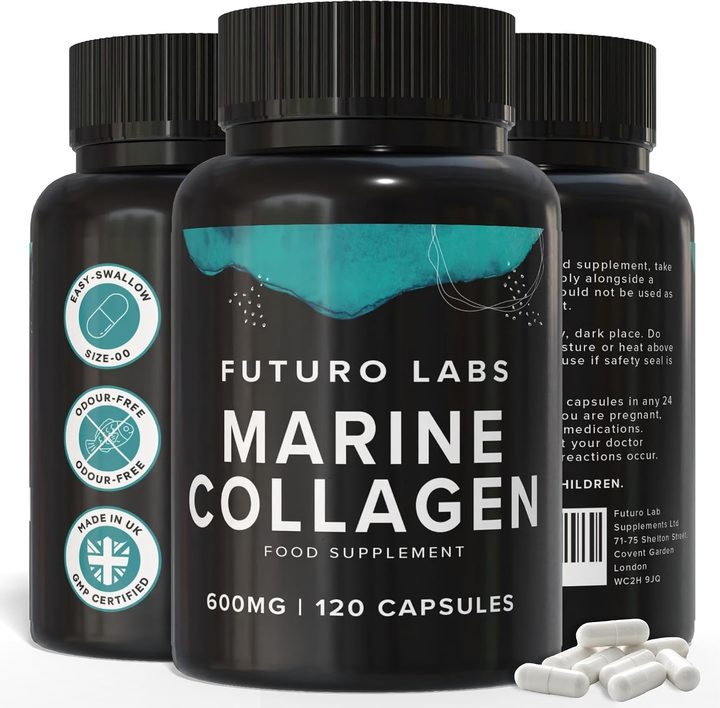
Our brand: the worked example on this page
Futuro Labs Marine Collagen
- 28p a day
- 120 capsules, 2 capsules daily
- Lab tested
- Made in the UK
For the skin layer only, on its true terms: Futuro Labs Marine Collagen on Amazon UK, 2 capsules, 1200mg hydrolysed type 1 marine collagen with 12mg vitamin C at 15% NRV plus zinc, 120 for £16.99, 28p a day, lab tested and UK made, below the skin trial doses, taken for vitamin C's collagen formation sentence for skin and zinc's normal skin line, touching no layer beneath. Full label breakdown. What firms a face is on the firming skin page; the three faces of too much on the too much collagen in the face page; the tightening toolbox on the tighten skin page.
Layers one and two: the skin, which collagen touches, and the fat, which it does not
What does low collagen do to the face is a question that assumes a face is skin, and the honest page begins by taking the face apart, because a face ages in five layers, collagen belongs to one of them, and most of what a person sees in the mirror and blames on collagen is happening in the other four. Layer one is the skin, and it is the layer low collagen actually affects. Dermal collagen and elastin decline with age, falling steadily in men and sharply after menopause in women, and faster still with sun exposure and smoking, which degrade the fibres directly; the dermis thins, loses its recoil and holds less water, and the face shows it as fine lines around the eyes and mouth, a crepe texture on the cheeks and neck, a less even tone and skin that takes longer to spring back from a pinch. This is the layer the oral collagen skin trials measured, by cutometer suction for elasticity and corneometer for hydration, and moved by a few percent at 2.5 to 10 grams a day over eight to twelve weeks, in small, mostly industry-funded trials, changes a device detects and a mirror generally does not, so low collagen in the face means a thinner, less elastic, finer-lined skin layer, and a supplement that addresses it addresses that layer alone and modestly. Layer two is the fat, and it is where most of the mirror's complaint actually lives. The face carries superficial and deep fat compartments, in the temples, under the eyes, in the cheeks and along the jaw, that give a young face its smooth convexity, and across the decades those pads shrink and descend, the temples and under-eye areas hollowing as fat is lost, the cheek pads sliding down to gather along the jaw as jowls and beside the mouth as the nasolabial folds deepen, so that the sagging, hollowing and heaviness a person reads as a tired or aged face is largely a redistribution of volume beneath a skin that is simply following it. No skin treatment, no cream and no swallowed collagen reaches the fat compartments, because they are not skin and their change is not a collagen change, which is why the interventions aimed at this layer are a practitioner's, fillers restoring volume where it was lost, and why a reader who takes collagen for jowls is treating the wrong layer.
Layers three, four and five: the ligaments, the bone and the surface, and what low collagen in the face honestly means
Layer three is the muscles and retaining ligaments, the fibrous bands that tether the facial skin and fat to the bone beneath at fixed points, along the cheekbone, the jaw and the eye socket; with age these bands loosen and lengthen, so the softened fat pads above them slide further and the folds between tethered and untethered zones deepen, the mechanism behind the deepening fold from nose to mouth and the marionette lines below it, a connective tissue change that is collagen in the broad sense and is not reached by any supplement, since it is a mechanical loosening of ligaments under decades of gravity and movement. Layer four is the bone, and it is the layer almost no one thinks of: the facial skeleton remodels with age, the eye sockets widening so the eyes look more deep-set and the brows descend, the midface losing projection so the cheeks flatten, the jaw receding and its angle softening so the lower face loses its line, all of it bone resorbing beneath everything above, so that the scaffold the skin and fat sit on is itself shrinking, and no layer above can look as it did when the layer beneath has changed shape. Layer five is the surface, the stratum corneum, whose hydration changes by the day with weather, heating, cleanser and the water a reader drinks, the layer a moisturiser and a glass of water move within hours and the one a reader feels in the first week of any new habit. Take the five together and what low collagen does to the face has an exact answer: it thins and creases the skin layer, the one layer collagen belongs to, by the slow decline of dermal collagen and elastin, while the sagging, hollowing and jowling that dominate the mirror are mostly fat and bone, layers two and four, loosened by layer three, and are addressed, where anyone addresses them, by practitioners with fillers, lifts and energy devices, not by tubs. The skin layer's own levers are sunscreen first, a retinoid second, not smoking third, and oral collagen last and modestly, with the register's skin sentences on any tub belonging to vitamin C and zinc. The worked example is for the skin layer only, on its true terms: two capsules, 1200mg hydrolysed type 1 marine collagen with 12mg vitamin C plus zinc, 120 for £16.99 at 28p a day, lab tested and UK made, below the 2.5 to 10 grams the skin trials gave, taken for vitamin C's collagen formation sentence for skin and zinc's normal skin line, touching no layer beneath the dermis. What does low collagen do to the face: it thins the top layer of five, and the face that sags is sagging in the other four.
| The layer | What changes with age | What it looks like | What reaches it |
|---|---|---|---|
| One: skin | Dermal collagen and elastin fall; thinning; less recoil; less water | Fine lines, crepe texture, uneven tone | Sunscreen, a retinoid, not smoking; oral collagen a few percent by instrument at trial doses |
| Two: fat | Superficial and deep fat pads shrink and descend | Hollow temples and under-eyes; jowls; deepening folds | Fillers, by a practitioner; no supplement or cream |
| Three: muscles and retaining ligaments | The tethering bands loosen and lengthen | Folds deepen where fat slides past a tether | Surgical lifts; nothing swallowed |
| Four: bone | Orbits widen, midface loses projection, jaw recedes | Deeper-set eyes, flatter cheeks, a softer jawline | Volume replacement by a practitioner; nothing else |
| Five: surface | Hydration changes by the day | Dullness or glow; the first-week feeling | A moisturiser; a glass of water |
| The verdict | Collagen belongs to layer one | Sagging is mostly layers two and four | Treat the layer that changed |
| The worked exampleOurs | Two capsules, 1200mg marine collagen with 12mg vitamin C plus zinc, 28p a day | Layer one only, below the trial doses | Vitamin C's and zinc's skin sentences |
What to check on the label
- Take the face apart: five layers, collagen in one.
- Read sagging as fat and bone: not skin collagen.
- Protect the skin layer: sunscreen, a retinoid, no smoking.
- Expect collagen's few percent on layer one: by instrument, at trial doses.
- Take layers two to four to a practitioner: if you take them anywhere.
Our brand
The worked example: Futuro Labs Marine Collagen
Futuro Labs Marine Collagen: 2 capsules daily, 1200mg hydrolysed type 1 marine collagen with 12mg vitamin C and 1.5mg zinc (15% NRV each), 120 capsules for £16.99, 60 days at 28p a day, lab-tested, UK GMP made. Slim veggie-shell capsules, odour free. Fish derived: pescatarian, not vegetarian or vegan.
- Collagen per serving
- 1200mg hydrolysed type 1 marine (fish)
- Co-factors
- vitamin C 12mg (15% NRV), zinc 1.5mg (15% NRV)
- Serving
- 2 capsules a day
- Bottle
- 120 capsules, 60 days
- Price
- £16.99 (28p a day)
- Capsule
- slim size 00, veggie shell, odour free
Questions people also ask
Does low collagen cause a saggy face?
Mostly not: sagging, hollowing and jowling arise mainly from the facial fat pads shrinking and descending, the retaining ligaments loosening and the facial bone receding at the eye sockets, midface and jaw, with the skin following those layers, while low dermal collagen thins and creases the skin layer itself, producing fine lines and crepe rather than sag.
Can collagen supplements lift the face?
No: oral collagen's trials measured the skin layer by instrument and moved elasticity and hydration a few percent at 2.5 to 10 grams over eight to twelve weeks, and the lift a face loses is volume and bone beneath the skin, which no swallowed substance reaches and which practitioners address with fillers, lifts and energy devices.
What are the signs of collagen loss in the face?
In the skin layer, fine lines around the eyes and mouth, a crepe texture on the cheeks and neck, less even tone and skin that springs back more slowly from a pinch, all from dermal collagen and elastin declining with age, sun and smoking; the hollows, folds and jowls that accompany them belong to fat, ligaments and bone rather than to skin collagen.
Why do my cheeks look hollow as I get older?
Fat and bone: the deep cheek fat pads shrink and descend across the decades and the midface bone loses projection, so the cheek flattens and the fat gathers lower as jowls, a volume and skeletal change that no skin treatment or supplement reverses and that practitioners address with volume replacement.
What actually helps an ageing face?
By layer: daily sunscreen, a retinoid from a doctor and not smoking for the skin layer, with oral collagen last and modest; fillers, lifts and energy devices from a qualified practitioner for the fat, ligament and bone layers, where the sagging lives; and a moisturiser and a glass of water for the surface, which changes by the day.
Sources
- The facial ageing literature: the face ages in layers, the skin thinning and losing collagen and elastin, the superficial and deep fat pads shrinking and descending, the retaining ligaments loosening, and the facial skeleton remodelling with loss of bone at the orbital rims, midface and jaw, so that sagging, hollowing and jowling arise mostly from volume and bone change beneath the skin rather than from the skin's collagen alone. PubMed record
- The collagen and skin trial literature: randomised studies of oral collagen peptides on skin elasticity and hydration, mostly small, short and industry funded, with no authorised claim resulting. PubMed record
- The skin collagen and menopause literature: dermal collagen content falls sharply in the years after menopause, by around a third in the first five years by the classic biopsy studies and more slowly afterwards, tracking the fall in oestrogen, which is why the oral collagen skin trials recruited mostly women in their forties, fifties and sixties. PubMed record
- The dermal filler literature: injectable fillers, historically bovine collagen and now mostly hyaluronic acid, add volume beneath the skin as a medical procedure with documented complications including overfilling, migration, lumps and vascular occlusion, performed by trained practitioners and outside the scope of any oral supplement. PubMed record