Ghost Fitness/Collagen/How much collagen powder should I take?
How much collagen powder should I take?
The short answer
In spoons against the 2.5 to 15 gram band. A level teaspoon, around two and a half grams: the floor and the skin trials' lowest dose. A heaped dessertspoon, around ten: the middle and the usual skin and joint trial dose. A level scoop, around fifteen: the tendon protocol's dose with vitamin C before loading. A full scoop, around twenty: over the top, with nothing showing more does more. The reason picks the spoon.
- A level teaspoonaround two and a half grams: the floor of the band; the skin trials' lowest dose
- A heaped dessertspoonaround ten grams: the middle; most skin and joint trials
- A level scooparound fifteen grams: the top of the band; the tendon protocol with vitamin C an hour before loading
- A full heaped scooparound twenty grams: over the top; nothing in the research suggests more does more
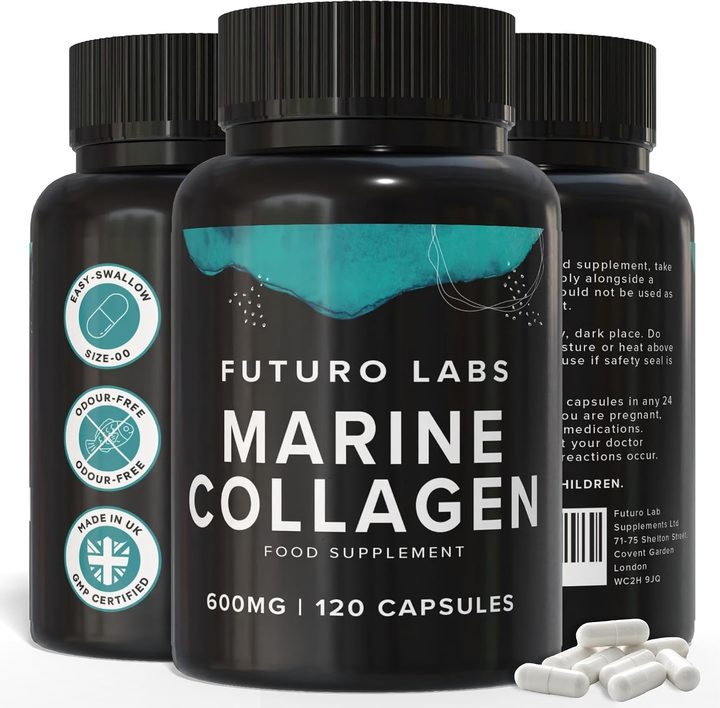
Our brand: the worked example on this page
Futuro Labs Marine Collagen
- 28p a day
- 120 capsules, 2 capsules daily
- Lab tested
- Made in the UK
For the reader who wants the vitamin C line and a modest dose without a spoon: Futuro Labs Marine Collagen on Amazon UK, 2 capsules, 1200mg hydrolysed type 1 marine collagen with 12mg vitamin C at 15% NRV plus zinc, 120 for £16.99, 28p a day, below the band. Full label breakdown. Milligrams per day in general are on the milligrams page; the dose for tendons and joints on the tendons and joints dose page.
The band and the spoons, from the teaspoon to the scoop
How much collagen powder should I take is a question whose answer is a number of grams that nobody weighs, so the honest page translates the research band into the spoons a kitchen has, because a reader who can see the dose in a spoon takes the right one. The band: the randomised trials of hydrolysed collagen run from 2.5 to 15 grams a day, the collagen trial literature's range, with the skin trials clustering at the low and middle of it, the joint trials at the middle and the tendon and connective tissue work at the top, and nothing in the literature suggesting that a dose above fifteen grams does more than fifteen, the top of the band being a ceiling of evidence rather than of safety, collagen being a food protein with a fullness limit and no toxicity. The spoons, using a plain unflavoured hydrolysed collagen powder, which is light and fine and weighs less per spoon than sugar: a level teaspoon is around two and a half grams, the floor of the band and the lowest dose the skin trials used, the dose a reader stirs into a coffee; a heaped dessertspoon is around ten grams, the middle of the band, the dose most of the skin and joint trials used and the dose a reader stirs into a yoghurt or a shake; a level scoop from most tubs is around fifteen grams, the top of the band and the dose the tendon pre-loading protocol used, around 15g of gelatin or hydrolysed collagen with roughly 50mg of vitamin C about an hour before a loading session, the gelatin and vitamin C literature's protocol; and a full heaped scoop, which is what a tub's serving suggestion usually means, is around twenty grams, over the top of the band, with the tub's scoop being a serving size chosen to sell the tub in a month and not a dose chosen from the research. Powders vary in density, so a reader who wants to be exact weighs a scoop once on a kitchen scale and knows their spoons from then on.
The reason that picks the spoon, the reader below the band, what the spoon does not decide, and the spoons filed
The reason picks the spoon, and there are three reasons with three spoons. Skin: the oral collagen skin trials ran at 2.5 to 10 grams a day for eight to twelve weeks and measured elasticity and hydration, small, short and mostly industry funded with no claim, the skin trial literature's shape, so a reader taking collagen for skin takes a teaspoon to a dessertspoon a day and holds a modest expectation over weeks. Joints: the joint trials clustered around ten grams a day over months, with small effects and no claim, so a reader with a joint reason takes a heaped dessertspoon and reads the joint pages' honest verdict that a loaded joint is fixed by load and osteoarthritis guidance puts exercise first. A tendon programme: a reader whose physiotherapist has agreed the research adjunct takes a level scoop, around fifteen grams, with a vitamin C tablet or a glass of orange juice, about an hour before the loading session, the protocol's own timing, which is the one spoon on the page with a clock attached. The reader below the band is the capsule reader: two capsules carrying 1200mg is half a teaspoon's worth, below the floor of the band, and is taken for a different reason, the register's vitamin C sentence built in beside a modest collagen dose, stated plainly as below the research band, the capsule product's true terms. What the spoon does not decide: the collagen counts on the label and not toward the muscle target, whatever the spoon, the counting pages' two columns, so a scoop is not a protein serving; the time of day does not matter except for the tendon protocol's hour, the skin clock running on weeks; and a bigger spoon than the reason needs buys fullness and calories, forty per ten grams, and nothing more, the research having no result above fifteen grams to point to. The spoons filed: a level teaspoon at the floor for skin, a heaped dessertspoon at the middle for skin and joints, a level scoop at the top for the tendon protocol with vitamin C an hour before loading, a full scoop over the top with nothing to show for it, and the capsule reader below the band for the vitamin C line, with the worked example being that capsule, £16.99 for 120 at 28p a day.
| The spoon | The grams | The reason |
|---|---|---|
| A level teaspoon | Around two and a half | The floor of the band; the skin trials' lowest dose |
| A heaped dessertspoon | Around ten | The middle; most skin and joint trials |
| A level scoop | Around fifteen | The top; the tendon protocol with vitamin C an hour before loading |
| A full heaped scoop | Around twenty | Over the top; a serving size, not a research dose |
| Two capsulesOurs | 1.2 grams: half a teaspoon's worth | Below the band; the vitamin C line built in |
| The scale | Weigh a scoop once | Powders vary in density; know your spoons after that |
The verdict, a teaspoon for the floor, a dessertspoon for the middle, a level scoop for the protocol, and a tub's scoop that is a serving size and not a dose
How much collagen powder should I take: in spoons against the 2.5 to 15 gram research band, a level teaspoon of around two and a half grams for the floor and the skin trials' lowest dose, a heaped dessertspoon of around ten grams for the middle and the usual skin and joint trial dose, a level scoop of around fifteen grams for the top and the tendon pre-loading protocol taken with vitamin C about an hour before loading, and a full heaped scoop of around twenty grams over the top with nothing in the research suggesting more does more, so that the reason picks the spoon, the tub's own scoop is a serving size rather than a research dose, a scoop weighed once on a kitchen scale calibrates the spoons, and the capsule reader sits below the band for the vitamin C line. That capsule: Futuro Labs Marine Collagen, 1200mg type 1 with 12mg vitamin C, 120 for £16.99 at 28p a day.
What to check on the label
- Learn the band: 2.5 to 15 grams, with nothing above it.
- Map it to spoons: teaspoon, dessertspoon, level scoop.
- Pick by the reason: skin low, joints middle, a tendon protocol at the top.
- Weigh a scoop once: powders vary.
- Ignore the tub's serving size: a full scoop is a month's tub, not a dose.
Our brand
The worked example: Futuro Labs Marine Collagen
Futuro Labs Marine Collagen: 2 capsules daily, 1200mg hydrolysed type 1 marine collagen with 12mg vitamin C and 1.5mg zinc (15% NRV each), 120 capsules for £16.99, 60 days at 28p a day, lab-tested, UK GMP made. Slim veggie-shell capsules, odour free. Fish derived: pescatarian, not vegetarian or vegan.
- Collagen per serving
- 1200mg hydrolysed type 1 marine (fish)
- Co-factors
- vitamin C 12mg (15% NRV), zinc 1.5mg (15% NRV)
- Serving
- 2 capsules a day
- Bottle
- 120 capsules, 60 days
- Price
- £16.99 (28p a day)
- Capsule
- slim size 00, veggie shell, odour free
Questions people also ask
How many grams of collagen powder per day?
Between 2.5 and 15 grams by the research band: around two and a half for the floor and the skin trials' lowest dose, around ten for the middle and the usual skin and joint trial dose, and around fifteen for the tendon pre-loading protocol with vitamin C an hour before loading, with nothing in the research showing that more than fifteen does more.
Is one scoop of collagen too much?
A full heaped scoop from most tubs is around twenty grams, over the top of the research band, so it is more than any trial used rather than harmful, collagen being a food protein with a fullness limit and no toxicity, and a level scoop of around fifteen grams or a heaped dessertspoon of around ten is the dose the reason usually needs.
How much collagen for skin?
A level teaspoon to a heaped dessertspoon, around 2.5 to 10 grams a day, the range the oral collagen skin trials used for eight to twelve weeks to measure elasticity and hydration, in studies that are small, short and mostly industry funded with no claim, so with a modest expectation over weeks.
How much collagen for tendons?
A level scoop of around fifteen grams with roughly 50mg of vitamin C about an hour before a loading session, the tendon pre-loading protocol from small marker-based studies, agreed with the physiotherapist running the programme rather than taken instead of one, and the one collagen dose with a clock attached.
Can I measure collagen powder with a kitchen spoon?
Yes, once calibrated: plain hydrolysed collagen is light and fine and weighs less per spoon than sugar, roughly two and a half grams a level teaspoon, ten a heaped dessertspoon and fifteen a level scoop, and a reader who weighs one scoop on a kitchen scale knows their own spoons from then on since powders vary in density.
Sources
- The collagen peptide trial literature: randomised controlled studies of hydrolysed collagen supplementation across skin, joint and connective-tissue outcomes, typically at 2.5g to 15g daily, with small effects and frequent industry funding. PubMed record
- The gelatin and vitamin C pre-exercise research (Shaw, Baar and colleagues): 15g gelatin with vitamin C taken about an hour before loading, studied for markers of collagen synthesis, the protocol behind the tendon-training conversation. PubMed record
- The collagen and skin trial literature: randomised studies of oral collagen peptides on skin elasticity and hydration, mostly small, short and industry funded, with no authorised claim resulting. PubMed record
- Futuro Labs Marine Collagen listing and label: 1200mg hydrolysed type 1 marine collagen per 2-capsule serving with 12mg vitamin C and 1.5mg zinc at 15% NRV each, 120 capsules, independently lab tested, UK made. https://www.amazon.co.uk/dp/B0C2J7N364