Ghost Fitness/Collagen/How to take collagen powder with water?
How to take collagen powder with water?
The short answer
Pour 150 to 250ml of water first, then add the powder while stirring, or shake: powder into water beats water onto powder for clumps. Cold or warm both work; level the scoop.
- The pour orderwater first, powder second, stirring as it lands
- The volume150 to 250ml per serving: enough to disperse, little enough to finish
- The temperaturecold or warm both dissolve hydrolysate: pick by preference
- The taste fixplain water is the harshest carrier: a citrus squeeze covers it
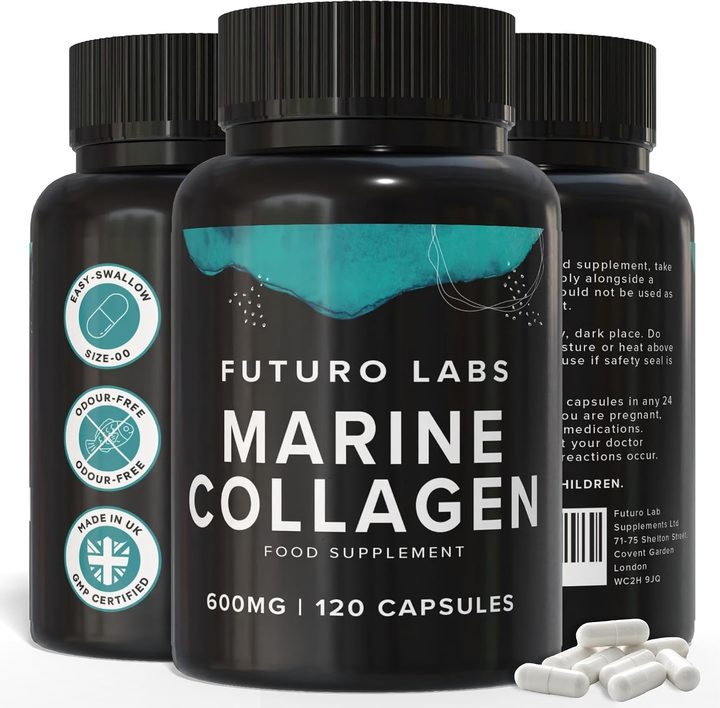
Our brand: the worked example on this page
Futuro Labs Marine Collagen
- 28p a day
- 120 capsules, 2 capsules daily
- Lab tested
- Made in the UK
The no-glass alternative: Futuro Labs Marine Collagen on Amazon UK, 1200mg hydrolysed type 1 in two capsules, water optional, vitamin C and zinc at 15% NRV, £16.99 for 60 days at 28p. Full label breakdown. The kitchen-bench taste review is on the powder page; the jelly test on the gelatine page.
The barista card: pour order, volume, temperature and motion, step by step
Nobody writes the actual instructions, so here is the technique card in full, learned from the physics of a fine hydrolysed powder meeting water. Step one, pour order, the card's one genuine trick: water first, powder second, because powder added to moving water disperses grain by grain while water poured onto a bed of powder wets the top layer into a skin that traps dry pockets beneath, the classic clump, so fill the glass, start a stir, and rain the powder in, or skip the ceremony entirely with a shaker, lid on, ten seconds, done, the shaker forgiving every ordering sin. Step two, volume: 150-to-250ml per serving is the working window, enough liquid for a habit scoop or the protocol's bigger one to disperse without paste, little enough that finishing the glass is no project, with the protocol's 15g preferring the top of that range and an extra ten seconds of stirring. Step three, temperature, and the myth retired in passing: cold and warm both dissolve hydrolysate happily, cold being the format's party trick, the cut chains needing no heat, and warm merely working faster, the hot-drinks-destroy-it fear having been answered by the factory decades before your kettle, so choose by preference alone, the one true exception being gelatine, the uncut cousin that demands hot water and sets cold, the jelly test's whole subject and not this page's powder. Step four, the scoop: level it, especially at protocol scale, a heaped 15g measure overshooting by half, the habit scale forgiving imprecision and the 15g lane deserving honest arithmetic.
The taste honesty, the fix ladder for plain water, and the routines the card slots into
The taste paragraph this page owes, because plain water is the harshest carrier in the category: a well-made unflavoured hydrolysate in water reads near-neutral with a faint savoury edge some palates catch, marine's version occasionally carrying a whisper more per the flavour-chemistry pages, and the honest expectation is not delicious but ignorable, a two-gulp glass rather than a sipping drink. The fix ladder for anyone whose palate objects: a squeeze of lemon or lime, the citrus trick that reads against savoury notes for pennies; colder water, chill quieting volatiles; a splash of squash or juice, technically leaving plain water but barely; and the standing exits, the flavour-carrying vehicles the carrier-calendar page schedules, coffee, smoothies, soup, or the capsule lane that retires the glass entirely, two swallows, no taste, no technique. The routines the card slots into, so the instructions land somewhere real: the morning-glass habit, water poured while the kettle boils, powder rained in, drunk before the coffee, the anchor-and-done pattern the adherence pages endorse; the gym-bag version, powder pre-measured into the shaker dry, water added at the tap, shaken and drunk, with the same-day rule mattering only when creatine shares the bottle, collagen itself being unbothered by hours in water; and the protocol slot, the 15g scoop into 250ml about an hour before loading sessions, vitamin C alongside from any source, level-scooped, stirred a moment longer, the one glass in the category with an appointment. Technique complete: water first, powder raining, ten seconds of motion, and the rest is just deciding which of your day's glasses this one is.
| The step | The technique | Why |
|---|---|---|
| Pour order | Water first, powder rained in while stirring | Dispersing grains beat a wetted skin over dry pockets |
| Or the shaker | Lid on, ten seconds | Forgives every ordering sin |
| Volume | 150-250ml; the protocol's 15g at the top of it | Disperses without paste, finishes without effort |
| Temperature | Cold or warm, by preference | Hydrolysate needs no heat; only gelatine does |
| The scoop | Level, always at 15g | A heaped protocol measure overshoots by half |
| The taste | Ignorable, not delicious; citrus covers it | Plain water is the category's harshest carrier |
The verdict, stirred and finished
How to take collagen powder with water: 150-to-250ml poured first, the powder rained in against a moving stir or shaken ten seconds, cold or warm by preference since the factory already did the dissolving work, the scoop levelled where the grams matter, and the faint savoury edge of the plainest carrier covered by citrus or escaped entirely through the flavoured vehicles and the capsule lane. The worked example is the card's no-glass footnote: Futuro Labs Marine Collagen, 1200mg hydrolysed type 1 in two capsules with 12mg vitamin C and 1.5mg zinc at 15% NRV, water optional, technique unnecessary, lab tested, UK made, £16.99 for 60 days at 28p a day, for every reader who got to the end of a mixing tutorial and realised they would rather not mix.
What to check on the label
- Water first, powder second: rain it into a moving stir.
- 150-250ml is the window: disperses clean, finishes fast.
- Temperature is preference: the factory already did the dissolving.
- Level the protocol scoop: heaped 15g overshoots by half.
- Citrus fixes plain water: or take the capsule exit.
Our brand
The worked example: Futuro Labs Marine Collagen
Futuro Labs Marine Collagen: 2 capsules daily, 1200mg hydrolysed type 1 marine collagen with 12mg vitamin C and 1.5mg zinc (15% NRV each), 120 capsules for £16.99, 60 days at 28p a day, lab-tested, UK GMP made. Slim veggie-shell capsules, odour free. Fish derived: pescatarian, not vegetarian or vegan.
- Collagen per serving
- 1200mg hydrolysed type 1 marine (fish)
- Co-factors
- vitamin C 12mg (15% NRV), zinc 1.5mg (15% NRV)
- Serving
- 2 capsules a day
- Bottle
- 120 capsules, 60 days
- Price
- £16.99 (28p a day)
- Capsule
- slim size 00, veggie shell, odour free
Questions people also ask
What is the best way to mix collagen powder in water?
Water first, 150 to 250ml, then rain the powder in while stirring, or use a shaker for ten seconds: powder added to moving water disperses where water poured onto powder makes clumps.
Should the water be cold or warm?
Either: hydrolysed collagen dissolves cold, its party trick, and warm merely works faster. Only gelatine, the uncut cousin, actually needs heat.
Why does my collagen clump in water?
Almost always pour order: water landing on a bed of powder wets a skin over dry pockets. Reverse the order or switch to a shaker and the clumps disappear.
What does collagen taste like in plain water?
Near-neutral with a faint savoury edge, ignorable rather than pleasant: a citrus squeeze covers it, colder water quiets it, and flavoured carriers or capsules retire it.
Can I mix a glass in advance?
Collagen itself sits happily in water for hours: the same-day rule only matters when creatine shares the bottle, that ingredient alone degrading slowly in liquid.
Sources
- The collagen peptide trial literature: randomised controlled studies of hydrolysed collagen supplementation across skin, joint and connective-tissue outcomes, typically at 2.5g to 15g daily, with small effects and frequent industry funding. PubMed record
- Futuro Labs Marine Collagen listing and label: 1200mg hydrolysed type 1 marine collagen per 2-capsule serving with 12mg vitamin C and 1.5mg zinc at 15% NRV each, 120 capsules, independently lab tested, UK made. https://www.amazon.co.uk/dp/B0C2J7N364
- The gelatin and vitamin C pre-exercise research (Shaw, Baar and colleagues): 15g gelatin with vitamin C taken about an hour before loading, studied for markers of collagen synthesis, the protocol behind the tendon-training conversation. PubMed record
- EFSA Panel on Dietetic Products, Nutrition and Allergies. Scientific Opinion on the substantiation of health claims related to magnesium. EFSA Journal 2010;8(10):1807. https://efsa.onlinelibrary.wiley.com/doi/10.2903/j.efsa.2010.1807