Ghost Fitness/Collagen/Holland and Barrett joint supplements review: is it worth it for lifters?
Holland and Barrett joint supplements review: is it worth it for lifters?
The short answer
Walk the shelf against the register. Glucosamine and chondroitin: no claim, and a null independent trial record. Turmeric, rosehip, MSM: no claim. Cod liver oil: heart and vitamin claims, no joint one. Collagen: no claim. The two with a sentence naming a joint tissue are vitamin C for normal collagen formation for cartilage and bones, and vitamin D for normal bones and muscle function. A lifter's loaded joint is answered by load, not the shelf.
- No claim, null recordglucosamine and chondroitin: large independent osteoarthritis trials failed to support the category
- No claimturmeric and curcumin, rosehip, MSM, collagen in any format
- A claim, but not a joint onecod liver oil: heart function at 250mg of EPA and DHA; vitamins A and D
- A sentence naming a joint tissuevitamin C: normal collagen formation for cartilage and bones; vitamin D: normal bones and muscle function
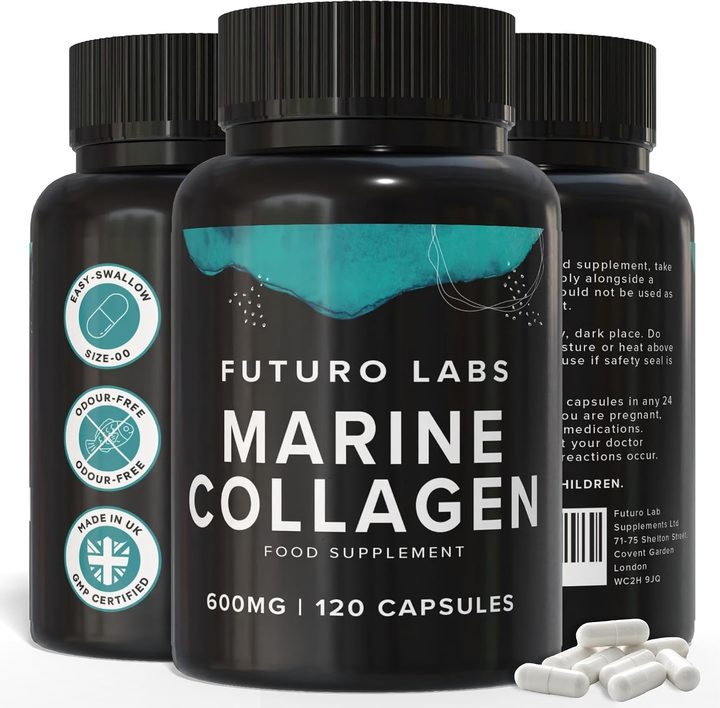
Our brand: the worked example on this page
Futuro Labs Marine Collagen
- 28p a day
- 120 capsules, 2 capsules daily
- Lab tested
- Made in the UK
The one collagen product this site names, on its true terms, for the vitamin C sentence: Futuro Labs Marine Collagen on Amazon UK, 2 capsules, 1200mg hydrolysed type 1 marine collagen with 12mg vitamin C at 15% NRV plus zinc, 120 for £16.99, 28p a day, no joint claim. Full label breakdown. Supplements for joints in lifters are on the joints page; the pharmacy joint aisle on the pharmacy joint page.
Why this review is a walk, and the first half of the shelf, the products with no claim
A health-food retailer's joint supplement shelf is the longest supplement shelf a lifter will stand in front of, and the honest way to review it is to walk down it with the register open, because the shelf is organised by promise and the register by permission, and the two rarely agree. Glucosamine and chondroitin, the shelf's oldest and largest section: neither holds an authorised health claim in the UK, and the large independent randomised trials in osteoarthritis, run without industry funding, returned results that failed to support the category's promises, the glucosamine and chondroitin trial record's cautionary benchmark, so a tub that says joint care on the front says nothing on the register and a reader who has taken it for years has taken it on a hope the trials did not confirm. Turmeric and curcumin, the shelf's fastest-growing section: no authorised claim, the claims that were applied for having been rejected, and the trials small and mixed, so the same. Rosehip, MSM, green-lipped mussel, boswellia, devil's claw and the rest of the botanical row: no authorised claim for any of them, and small or absent trial records. Collagen, in capsules, powders and the joint-branded blends: no authorised claim in any type or format, the collagen pages' first fact, with the undenatured type II variant at 40mg having small trials and no claim either. So the first half of the walk, which is most of the shelf, passes products that may say joint on the front and may not say anything about a joint on the register, and a lifter reads the front as a category and the back as the facts.
The second half of the shelf, the products with a claim, the two that name a joint tissue, the lifter's loaded joint, and the walk filed
The second half of the walk passes products with a claim, and the reading is which claim. Cod liver oil, sold on this shelf as a joint product by tradition: it holds real authorised claims, EPA and DHA for the normal function of the heart at 250mg a day and vitamins A and D for their own sentences, and no joint claim, since no omega-3 claim mentions a joint, the one omega-3 joint file being inflammatory arthritis at grams for months and not a shelf dose, and the vitamin A being a note rather than a joint benefit, so cod liver oil is a heart and vitamin product wearing a joint label. Vitamin C, usually on the next shelf but sometimes in a joint blend: it contributes to normal collagen formation for the normal function of cartilage and bones, the register's only sentence that mentions collagen and one of two on the whole aisle that names a joint tissue, met by a portion of fruit or vegetables or a tablet costing pennies. Vitamin D, likewise: it contributes to the maintenance of normal bones and normal muscle function, the second sentence naming a joint tissue, met by the ten-microgram winter supplement the national guidance already recommends. Calcium, magnesium and vitamin K carry bone sentences of their own, real and cheap. So best supplements for joints at a health-food retailer, honestly answered, is two vitamins that cost pennies and that most lifters already take or eat, standing beside a long shelf of products with no joint claim and, for the largest of them, a null independent trial record. The lifter's loaded joint is the reason a lifter is on the aisle, and it is answered off it: a knee, shoulder or elbow sore from load is a tendon or cuff whose load has outrun its adaptation, fixed by progressive loading, technique and volume with a physiotherapist and outperforming rest and passive treatments in the trials, the tendinopathy literature's programme, and osteoarthritis guidance puts exercise, weight management and education first with supplements absent from the pathway, the osteoarthritis guidance's core, so the aisle's honest instruction for a lifter is the vitamin D tablet in winter, the fruit for the vitamin C, and a loading programme for the joint. The walk filed: glucosamine and chondroitin with no claim and a null record, the botanicals and collagen with no claim, cod liver oil with heart and vitamin claims and no joint one, vitamin C and vitamin D as the two sentences naming a joint tissue, and the loaded joint answered by load, with the one collagen product this site names stated on its true terms, Futuro Labs Marine Collagen, 1200mg of type 1 with 12mg of vitamin C for the vitamin C sentence and no joint claim, 120 for £16.99 at 28p a day.
| The product | The register | The record |
|---|---|---|
| Glucosamine and chondroitin | No authorised claim | Large independent osteoarthritis trials failed to support the category |
| Turmeric, rosehip, MSM, green-lipped mussel, boswellia | No authorised claim | Small or absent trial records |
| Collagen, any format; undenatured type II | No authorised claim | Small trials; no claim resulting |
| Cod liver oil | Heart function at 250mg of EPA and DHA; vitamins A and D | No joint claim; a heart and vitamin product in a joint label |
| Vitamin C | Normal collagen formation for the normal function of cartilage and bones | One of two sentences naming a joint tissue; pennies |
| Vitamin D | Maintenance of normal bones and normal muscle function | The other; the ten-microgram winter tablet |
The verdict, a long shelf with two cheap vitamins that may name a joint tissue and a loaded joint that the shelf does not fix
Are a health-food retailer's joint supplements worth it for lifters: walked down against the register, the shelf's largest section, glucosamine and chondroitin, holds no authorised claim and a null independent trial record, turmeric, rosehip, MSM and the botanicals hold no claim, collagen holds no claim in any format, and cod liver oil holds heart and vitamin claims and no joint one, leaving vitamin C, for normal collagen formation for the normal function of cartilage and bones, and vitamin D, for the maintenance of normal bones and normal muscle function, as the two products on the aisle with a sentence naming a joint tissue, both costing pennies and both usually already on a lifter's plate or in a winter tablet, while the loaded joint that brought the lifter to the aisle is answered by progressive loading and a physiotherapist and by osteoarthritis guidance that puts exercise first and supplements nowhere. The one collagen product this site names, for the vitamin C sentence: Futuro Labs Marine Collagen, 1200mg type 1 with 12mg vitamin C, no joint claim, 120 for £16.99 at 28p a day.
What to check on the label
- Walk the shelf with the register open: the front is a category, the back is the facts.
- Read glucosamine's record: no claim, null independent trials.
- Read cod liver oil's claims: heart and vitamins, not a joint.
- Buy the two sentences cheaply: vitamin C from fruit, vitamin D in winter.
- Fix the joint with load: a physiotherapist, not the aisle.
Our brand
The worked example: Futuro Labs Marine Collagen
Futuro Labs Marine Collagen: 2 capsules daily, 1200mg hydrolysed type 1 marine collagen with 12mg vitamin C and 1.5mg zinc (15% NRV each), 120 capsules for £16.99, 60 days at 28p a day, lab-tested, UK GMP made. Slim veggie-shell capsules, odour free. Fish derived: pescatarian, not vegetarian or vegan.
- Collagen per serving
- 1200mg hydrolysed type 1 marine (fish)
- Co-factors
- vitamin C 12mg (15% NRV), zinc 1.5mg (15% NRV)
- Serving
- 2 capsules a day
- Bottle
- 120 capsules, 60 days
- Price
- £16.99 (28p a day)
- Capsule
- slim size 00, veggie shell, odour free
Questions people also ask
What are the best supplements for joints at a health-food retailer?
The two with a register sentence naming a joint tissue, vitamin C for normal collagen formation for the normal function of cartilage and bones and vitamin D for the maintenance of normal bones and normal muscle function, both costing pennies, standing beside a shelf of glucosamine, chondroitin, turmeric, rosehip, MSM and collagen products with no joint claim.
Does glucosamine work for joints?
The large independent randomised trials in osteoarthritis, run without industry funding, failed to support the category's promises, and glucosamine and chondroitin hold no authorised health claim in the UK, so a joint care tub says nothing on the register and osteoarthritis guidance puts exercise, weight management and education first with supplements absent.
Is cod liver oil good for joints?
It holds real claims that are not joint claims: EPA and DHA for the normal function of the heart at 250mg a day and vitamins A and D for their own sentences, with no omega-3 claim mentioning a joint and the one omega-3 joint file being inflammatory arthritis at grams for months, so it is a heart and vitamin product sold in a joint label.
Does turmeric help joint pain?
It holds no authorised health claim in the UK, the claims applied for having been rejected, and the trials are small and mixed, so a turmeric or curcumin tub on a joint shelf says nothing on the register, and a lifter's loaded joint is a load-management problem for a physiotherapist rather than a botanical's.
What should a lifter actually do for sore joints?
Load them progressively: a knee, shoulder or elbow sore from lifting is a tendon or cuff whose load has outrun its adaptation, fixed by progressive loading, technique and volume with a physiotherapist and outperforming rest and passive treatments in the trials, with vitamin D in winter and vitamin C from fruit as the two cheap sentences and nothing else on the aisle needed.
Sources
- The glucosamine and chondroitin trial record: large independent randomised trials in osteoarthritis returned results that failed to support the category's promises, a cautionary benchmark for the whole joint shelf. PubMed record
- Clinical guidance on osteoarthritis management: exercise, weight management and education form the core first-line care, with supplements absent from the recommended pathway. PubMed record
- Retained Regulation (EC) No 1924/2006 on nutrition and health claims made on foods, and the Great Britain nutrition and health claims register. https://www.gov.uk/government/publications/great-britain-nutrition-and-health-claims-nhc-register
- SACN report on vitamin D and health: the basis of UK government advice that adults consider a 10 microgram vitamin D supplement, particularly through autumn and winter. https://www.gov.uk/government/publications/sacn-vitamin-d-and-health-report