Ghost Fitness/Collagen/Best collagen supplement for sagging skin holland and Barrett review: is it worth it for lifters?
Best collagen supplement for sagging skin holland and Barrett review: is it worth it for lifters?
The short answer
Sagging skin is a claim nobody holds: no supplement may claim to tighten, firm or lift skin, so a shelf labelled for it prints sentences that belong to vitamin C, zinc, biotin and vitamin A for the maintenance of normal skin, with collagen holding none. The oral collagen skin trials are small, short and industry funded and measure elasticity, not sagging. A lifter's loose skin after a cut depends on age, amount, speed and genetics, not a supplement.
- The claim nobody holdstighten, firm, lift, reduce sagging: not an authorised sentence for any supplement
- The sentences a skin product may printvitamin C: normal collagen formation for skin; zinc, biotin, vitamin A: maintenance of normal skin; collagen: none
- The skin trialselasticity and hydration over eight to twelve weeks at 2.5 to 10 grams; small, short, industry funded; sagging not measured
- The lifter's loose skinage, amount and speed of loss, genetics; adapts over months to a year; medical or surgical when significant
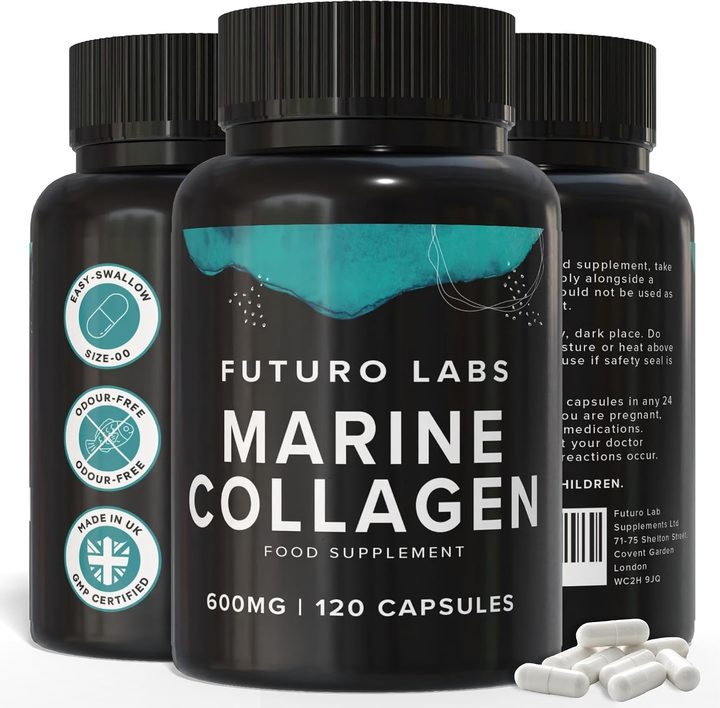
Our brand: the worked example on this page
Futuro Labs Marine Collagen
- 28p a day
- 120 capsules, 2 capsules daily
- Lab tested
- Made in the UK
A capsule with the vitamin C and zinc skin sentences and no sagging claim, on its true terms: Futuro Labs Marine Collagen on Amazon UK, 2 capsules, 1200mg hydrolysed type 1 marine collagen with 12mg vitamin C and 1.5mg zinc at 15% NRV each, 120 for £16.99, 28p a day. Full label breakdown. The sagging skin question in full is on the sagging skin page; retinol against collagen on the retinol page.
The claim nobody holds, the sentences a skin shelf may print, and what the skin trials measured
A health-food retailer's shelf of collagen for sagging skin is a shelf built around a claim nobody holds, and the honest review starts there, because a lifter standing in front of it is being sold a sentence the register does not allow anyone to say. The claim nobody holds: no supplement in the UK may claim to tighten, firm, lift, plump or reduce sagging skin, those being improvement and appearance claims that the register does not authorise for any nutrient or ingredient, the claims register's rules, so a product labelled for sagging skin is labelled by category and not by permission, and the words on the front are the retailer's shelf-edge and the brand's marketing rather than anything the label may substantiate. The sentences a skin product may print are the maintenance ones, and they belong to the vitamins: vitamin C contributes to normal collagen formation for the normal function of skin, the one sentence that mentions collagen on the whole register; zinc contributes to the maintenance of normal skin, as do biotin, niacin, riboflavin, iodine and vitamin A; and collagen itself, in every type and format, holds no authorised sentence at all, the collagen pages' first fact, so a skin capsule with vitamin C and zinc may print two true maintenance sentences and a plain collagen powder may print none, which is the label-check page's read applied to a beauty shelf. What the skin trials measured: the randomised trials of oral collagen peptides on skin ran for eight to twelve weeks at 2.5 to 10 grams a day and measured skin elasticity and hydration by instrument, reporting small improvements, in trials that are small, short and mostly industry funded with no authorised claim resulting, the skin trial literature's shape, and none of them measured sagging, laxity after weight loss or the appearance a lifter means, so the shelf's evidence is for a different outcome than its label.
The sagging a lifter means, loose skin after a cut and what decides it, the five reads for the shelf anyway, and the claim filed
The sagging a lifter means is usually not the beauty aisle's: it is the loose skin that follows a large or a fast cut, the skin of the abdomen, chest and arms that stretched to hold the weight and has not yet followed it down, and what decides whether it tightens is known and is not a supplement. Age, since younger skin adapts better; the amount lost, twenty kilos being a different question from five; the speed of loss, a cut at half a kilo a week giving the skin months to follow and a crash cut giving it none; how long the weight was carried; and genetics, which decide the elastin and the collagen the skin had to begin with, the excess skin literature's factors, with skin continuing to adapt for months to a year after the loss and significant excess skin being managed medically or surgically rather than nutritionally. So a lifter with loose skin after a cut has the levers that exist, a slower cut next time, patience for the year of adaptation, the muscle built underneath that fills the envelope, sun protection and not smoking for the skin's own collagen, and a GP's conversation about the surgical route if the excess is significant and stable, with a collagen product being at best a modest elasticity effect in the small trials and at worst a beauty-aisle price for a claim nobody holds. The five reads for the shelf anyway, since a reader may still want a product: grams of hydrolysed collagen per serving against the 2.5 to 10 grams the skin trials used, the marine or bovine source for diet, the pence per gram at which beauty liquids are the shelf's dearest, the vitamin C and zinc line for the two printable sentences, and the reason, checked before the till, with a reader who wants the skin trials' dose served by a powder at pennies and a reader who wants the vitamin sentences served by a capsule. The claim filed: sagging skin as a sentence nobody may print, vitamin C, zinc, biotin and vitamin A as the maintenance sentences a skin product may carry, the skin trials as small and industry funded and measuring elasticity rather than sagging, the lifter's loose skin as a matter of age, amount, speed and genetics, and the five reads for a reader who buys anyway, with the capsule this site names stated on its true terms, Futuro Labs Marine Collagen, 1200mg of type 1 with 12mg of vitamin C and 1.5mg of zinc for the two skin sentences and no sagging claim, 120 for £16.99 at 28p a day.
| The item | The register | The evidence |
|---|---|---|
| Tighten, firm, lift, reduce sagging | Not an authorised sentence for any supplement | A shelf-edge category, not a permission |
| Vitamin C | Normal collagen formation for the normal function of skin | The one sentence that mentions collagen |
| Zinc, biotin, vitamin A, niacin, riboflavin | Maintenance of normal skin | Printable maintenance sentences |
| Collagen, any format | No claim | Skin trials: elasticity and hydration at 2.5 to 10 grams over eight to twelve weeks; small, industry funded; sagging not measured |
| A lifter's loose skin after a cut | Not a nutrition matter | Age, amount, speed, genetics; adapts over months to a year; medical or surgical when significant |
| The capsule on its true termsOurs | Vitamin C and zinc skin sentences; no sagging claim | 1200mg type 1 marine, 28p a day |
The verdict, a shelf built on a claim nobody may print, vitamins that hold the printable sentences, and loose skin that follows a cut on its own clock
Is a health-food retailer's best collagen for sagging skin worth it for lifters: sagging skin is a claim nobody holds, no supplement being allowed to say it tightens, firms or lifts skin, so the shelf's printable sentences belong to vitamin C for normal collagen formation for skin and to zinc, biotin and vitamin A for the maintenance of normal skin, with collagen holding none and the oral collagen skin trials being small, short, industry funded and measuring elasticity rather than sagging, while the sagging a lifter means, the loose skin after a large or fast cut, depends on age, the amount and speed of loss and genetics, adapts over months to a year and is managed medically or surgically when significant, so the shelf is reviewed by the five reads for a reader who buys anyway and the reason is checked before the till. A capsule with the vitamin C and zinc skin sentences and no sagging claim: Futuro Labs Marine Collagen, 1200mg type 1 with 12mg vitamin C and 1.5mg zinc, 120 for £16.99 at 28p a day.
What to check on the label
- Know the claim nobody holds: tighten, firm, lift.
- Read the vitamins as the claimants: vitamin C, zinc, biotin, vitamin A.
- Read the skin trials for what they measured: elasticity, not sagging.
- Manage loose skin after a cut with its levers: a slower cut, patience, muscle, a GP if significant.
- Buy by the five reads if you buy: grams, source, pence per gram, the vitamin line, the reason.
Our brand
The worked example: Futuro Labs Marine Collagen
Futuro Labs Marine Collagen: 2 capsules daily, 1200mg hydrolysed type 1 marine collagen with 12mg vitamin C and 1.5mg zinc (15% NRV each), 120 capsules for £16.99, 60 days at 28p a day, lab-tested, UK GMP made. Slim veggie-shell capsules, odour free. Fish derived: pescatarian, not vegetarian or vegan.
- Collagen per serving
- 1200mg hydrolysed type 1 marine (fish)
- Co-factors
- vitamin C 12mg (15% NRV), zinc 1.5mg (15% NRV)
- Serving
- 2 capsules a day
- Bottle
- 120 capsules, 60 days
- Price
- £16.99 (28p a day)
- Capsule
- slim size 00, veggie shell, odour free
Questions people also ask
Can collagen supplements tighten sagging skin?
No supplement may claim to, tightening, firming and lifting being improvement claims the register does not authorise, and the oral collagen skin trials measured elasticity and hydration over eight to twelve weeks at 2.5 to 10 grams in small, short, mostly industry-funded studies, none of which measured sagging or laxity after weight loss.
What supplement is best for sagging skin?
None holds a sentence for it: the printable skin sentences belong to vitamin C for normal collagen formation for skin and to zinc, biotin, vitamin A, niacin and riboflavin for the maintenance of normal skin, all maintenance claims met by an ordinary plate, while sagging itself is a matter of age, genetics and, after weight loss, the amount and speed of the loss.
Will my loose skin after a cut go away?
It adapts for months to a year after the loss, better in the young, after smaller and slower losses and with the genetics the skin started with, and significant excess skin that is stable after a year is managed medically or surgically rather than nutritionally, so the levers are a slower cut next time, patience, the muscle built underneath and a GP's conversation if the excess is significant.
Does collagen help skin elasticity?
Modestly in small trials: oral collagen peptides at 2.5 to 10 grams a day for eight to twelve weeks improved instrument-measured elasticity and hydration in studies that are small, short and mostly industry funded, with no authorised claim resulting, so a reader taking it for elasticity holds a modest expectation and a powder reaches the dose for pennies.
Why will this site not give a verdict on the named retailer's shelf?
Because shelves reformulate, products come and go and the label's printable sentences are decided by the register rather than the retailer, so the honest review is the claim nobody holds, the vitamins that hold the printable ones, the trials' real outcome and the five reads applied by the reader to the product in their hand.
Sources
- The collagen and skin trial literature: randomised studies of oral collagen peptides on skin elasticity and hydration, mostly small, short and industry funded, with no authorised claim resulting. PubMed record
- The literature on excess skin after major weight loss: skin adaptation varies with age, amount and speed of loss and genetics, and significant excess skin is managed medically and surgically, not nutritionally. PubMed record
- Retained Regulation (EC) No 1924/2006 on nutrition and health claims made on foods, and the Great Britain nutrition and health claims register. https://www.gov.uk/government/publications/great-britain-nutrition-and-health-claims-nhc-register
- The collagen peptide trial literature: randomised controlled studies of hydrolysed collagen supplementation across skin, joint and connective-tissue outcomes, typically at 2.5g to 15g daily, with small effects and frequent industry funding. PubMed record