Ghost Fitness/Collagen/Collagen vs whey protein: which is better for skin?
Collagen vs whey protein: which is better for skin?
The short answer
Both tubs are in the wrong aisle: collagen's skin file is modest surrogate trials with no claims, whey never ran one. Skin's lawful supplement words belong to micronutrients, and the real levers are sunscreen, retinoids and diet.
- Collagen's skin filemodest instrument-measured trials, sponsor-heavy, zero claims
- Whey's skin fileessentially empty: the trials were never run
- Who holds the wordsmicronutrients: vitamin C, zinc, and company
- The real leverssunscreen daily, retinoids by evidence, diet and sleep
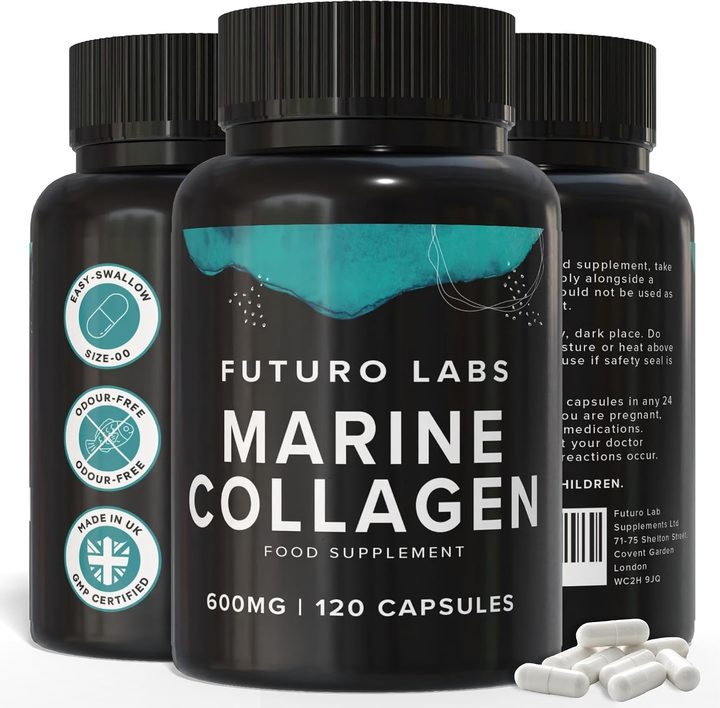
Our brand: the worked example on this page
Futuro Labs Marine Collagen
- 28p a day
- 120 capsules, 2 capsules daily
- Lab tested
- Made in the UK
The claim-holders that make a skin habit lawful: Futuro Labs Marine Collagen on Amazon UK, 1200mg hydrolysed type 1 with 12mg vitamin C and 1.5mg zinc at 15% NRV, the skin sentences riding the cofactors, £16.99 for 60 days at 28p. Full label breakdown. The skin trial grades are on the sagging page; the retinoid league on the retinol page.
The two files opened, and the aisle both tubs are standing in by mistake
Open both skin files honestly and the contest dissolves faster than any whey comparison on this site. Collagen's file the section knows by heart: the modest stack, small, short, sponsor-heavy trials at 2.5 to 10g daily moving instrument-measured elasticity and hydration by amounts a mirror struggles to see, surrogate endpoints throughout, no head-to-heads, and, decisively, zero authorised claims, no collagen of any source or form permitted a single skin sentence. Whey's file is thinner still, and thinner in an instructive way: it is essentially empty, whey's research money having gone where its strengths lie, muscle, satiety, body composition, with skin outcomes never seriously trialled, its skin literature amounting to scattered dermatology discussion of dairy in the diet rather than any benefit case, so whey does not even bring a modest stack to the table, it brings no stack at all. Which reveals what the question got wrong before either tub was weighed: skin is the wrong aisle for both of them, protein adequacy mattering to skin the way it matters to every tissue, as a baseline the table already funds, and neither scoop carrying anything the baseline lacks. Two files, one thin and one empty, both filed in the wrong cabinet.
The shelf that holds the words, the levers that hold the outcomes, and the relocated verdict
Where the question should have been standing is two aisles over, and the page walks there. The supplement shelf that lawfully speaks about skin is the micronutrient one: vitamin C contributes to normal collagen formation for the normal function of skin, zinc to the maintenance of normal skin, hair and nails, riboflavin, niacin, biotin and vitamin A each holding their own normal-skin sentences, all at modest thresholds an ordinary diet frequently meets, which is why this site's skin-adjacent products carry their C and zinc at 15% NRV and let the peptides stay silent, the sentences riding the cofactors because nowhere else may they ride. And above the whole supplement conversation sit the levers that actually move visible skin, ranked as every face page ranks them: daily broad-spectrum sunscreen, the single intervention with the strongest ageing evidence in existence, photodamage being the bulk of what mirrors call ageing; topical retinoids, the dermatology literature's decades-deep file the retinol page reads in full; and the unglamorous base, sleep, not smoking, and a diet adequate in the protein and micronutrients above. The relocated verdict, then: between the two tubs as skin purchases, neither, whey holding no file and collagen a modest one with no claims; between them as purchases at all, the standing answer, whey for the protein job it owns; and for the reader genuinely shopping for skin, the sequence runs sunscreen, then the retinoid conversation, then a diet check, then, if a supplement habit appeals anyway, one whose label carries the micronutrient sentences lawfully, at which point the collagen tub with C and zinc aboard becomes an honest vehicle for words it never owned itself.
| The shelf | What it holds | The verdict |
|---|---|---|
| Collagen's file | Modest surrogate trials, sponsor-heavy, no claims | Thin, and legally silent |
| Whey's file | Essentially empty: trials never run | No case was ever filed |
| The micronutrient shelf | C, zinc, riboflavin, niacin: the lawful skin sentences | The only supplement words skin lawfully gets |
| The top lever | Daily broad-spectrum sunscreen | The strongest ageing evidence in existence |
| The second lever | Topical retinoids, clinician-guided where prescription | The decades-deep dermatology file |
| The base | Sleep, not smoking, adequate diet | The unglamorous floor under everything |
The verdict, delivered from the correct aisle
Collagen vs whey protein for skin: a contest between a thin file and an empty one, held in the wrong aisle, and the honest answer relocates rather than adjudicates, the lawful supplement words for skin belonging to micronutrients, the visible outcomes belonging to sunscreen, retinoids and the unglamorous base, and neither tub earning skin money on its own name. The worked example is built for exactly that relocated logic: Futuro Labs Marine Collagen, 1200mg hydrolysed type 1 carrying 12mg vitamin C and 1.5mg zinc at 15% NRV, the skin and collagen-formation sentences riding the cofactors lawfully, lab tested, UK made, £16.99 for 60 days at 28p a day, a tub honest about which of its ingredients the words belong to.
What to check on the label
- Both files disappoint: collagen's thin, whey's empty.
- Skin's supplement words are micronutrient words: C, zinc and company.
- Sunscreen is the top lever: photodamage is most of visible ageing.
- Retinoids hold the deep file: the league comparison has its own page.
- Buy the sentences, not the story: cofactors at 15% NRV make a habit lawful.
Our brand
The worked example: Futuro Labs Marine Collagen
Futuro Labs Marine Collagen: 2 capsules daily, 1200mg hydrolysed type 1 marine collagen with 12mg vitamin C and 1.5mg zinc (15% NRV each), 120 capsules for £16.99, 60 days at 28p a day, lab-tested, UK GMP made. Slim veggie-shell capsules, odour free. Fish derived: pescatarian, not vegetarian or vegan.
- Collagen per serving
- 1200mg hydrolysed type 1 marine (fish)
- Co-factors
- vitamin C 12mg (15% NRV), zinc 1.5mg (15% NRV)
- Serving
- 2 capsules a day
- Bottle
- 120 capsules, 60 days
- Price
- £16.99 (28p a day)
- Capsule
- slim size 00, veggie shell, odour free
Questions people also ask
Is collagen or whey better for your skin?
Neither earns the purchase: collagen's file is modest surrogate trials with no claims, whey's is essentially empty, and skin's lawful supplement sentences belong to micronutrients like vitamin C and zinc.
Does whey protein do anything for skin?
Nothing trialled: its research went to muscle and body composition, and its skin literature is scattered dietary discussion rather than any benefit case.
What actually improves skin, then?
The ranked levers: daily broad-spectrum sunscreen first, the retinoid conversation second, and the base of sleep, not smoking and an adequate diet underneath.
Why does this site's collagen mention skin at all?
Through its cofactors: vitamin C holds the collagen-formation-for-skin sentence and zinc the normal-skin one, both at 15% NRV, the only lawful route any label has.
Should skin change my whey-versus-collagen decision?
No: the protein decision stays the standing one, whey for the protein job, and skin money goes to sunscreen before any tub.
Sources
- The collagen and skin trial literature: randomised studies of oral collagen peptides on skin elasticity and hydration, mostly small, short and industry funded, with no authorised claim resulting. PubMed record
- The topical retinoid evidence base: randomised trials support retinoids as the best-evidenced topical category for photoaged skin, prescription strengths sitting with GPs and dermatologists. PubMed record
- Futuro Labs Marine Collagen listing and label: 1200mg hydrolysed type 1 marine collagen per 2-capsule serving with 12mg vitamin C and 1.5mg zinc at 15% NRV each, 120 capsules, independently lab tested, UK made. https://www.amazon.co.uk/dp/B0C2J7N364
- EFSA Panel on Dietetic Products, Nutrition and Allergies. Scientific Opinion on the substantiation of health claims related to magnesium. EFSA Journal 2010;8(10):1807. https://efsa.onlinelibrary.wiley.com/doi/10.2903/j.efsa.2010.1807