Ghost Fitness/Collagen/Collagen vs whey protein absorption: which is better?
Collagen vs whey protein absorption: which is better?
The short answer
Both absorb excellently, whey among the fastest proteins and hydrolysed collagen readily taken up, so the race measures the wrong thing: bioavailability is the truck's speed, composition is the cargo, and whey's cargo wins every protein job.
- Whey's speedamong the fastest-digesting proteins: the classic rapid choice
- Collagen's speedhydrolysed peptides readily absorbed: the factory pre-cut them
- The wrong metricspeed of delivery says nothing about what is delivered
- The cargo auditwhey delivers completeness and leucine; collagen does not
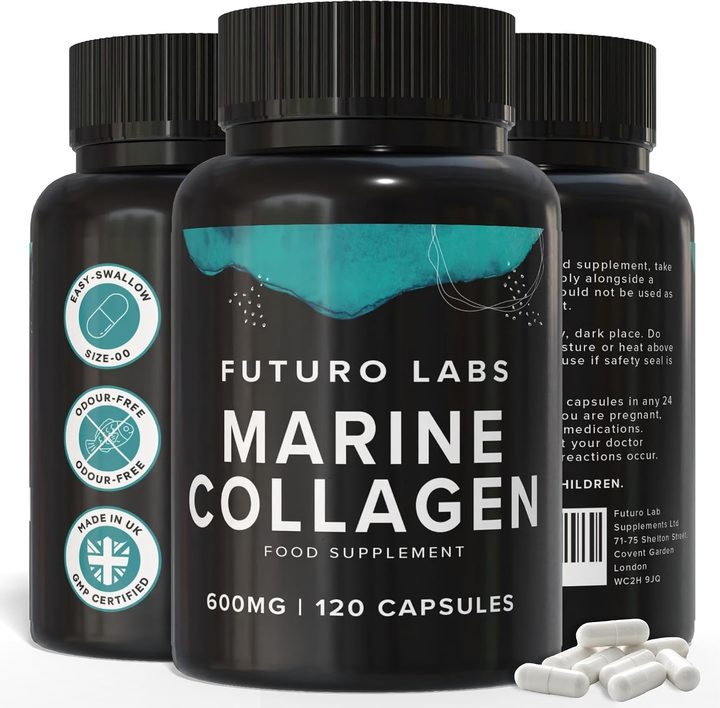
Our brand: the worked example on this page
Futuro Labs Marine Collagen
- 28p a day
- 120 capsules, 2 capsules daily
- Lab tested
- Made in the UK
A fast truck honest about its cargo: Futuro Labs Marine Collagen on Amazon UK, 1200mg hydrolysed type 1 with vitamin C and zinc at 15% NRV, £16.99 for 60 days at 28p, absorbed easily and never sold on the fact. Full label breakdown. The forms absorption teach is on the absorption page; the amino tables on the profile page.
Both trucks clocked honestly: two fast absorbers, neither with an excuse
Clock both trucks fairly first, because the honest answer to the literal question is a tie at high speed. Whey is famously rapid, the classic fast protein of sports nutrition, soluble, quickly emptied from the stomach, its amino acids appearing in the blood sooner than casein's or most whole foods', the very property that built its around-training reputation. Hydrolysed collagen is no laggard either: the factory's enzymatic hydrolysis pre-cut the protein into small peptides, the gut's peptide transporters take them up readily, and absorption studies duly find collagen peptides appearing in circulation efficiently, the finding every marine-collagen advert quotes at daltons of detail. So the race, run straight, produces no useful winner: two well-absorbed proteins, digestion doing its job on both, neither leaving meaningful amounts unclaimed, and bioavailability, the word doing the heavy lifting in this query, turning out to be a solved problem on both sides of the versus. Which is precisely why the metric deserves the suspicion this section applies to it everywhere: when both contestants pass a test easily, the test has stopped discriminating, and marketing that keeps citing it is directing your attention to the one gauge where its product cannot lose.
The speed-versus-cargo decode, and where the question should have looked
The decode that settles the page: absorption is the truck's speed, composition is the cargo, and a delivery is judged by what arrives, not how fast the vehicle drove. Whey's truck, fast, carries the full manifest, all nine essential amino acids with leucine stacked high, roughly 2.5g per serving, the load that fires muscle protein synthesis and counts toward the daily target, which is why its speed is genuinely worth something, rapid delivery of a complete load around training being the whole basis of its use case. Collagen's truck, also fast, carries the manifest the amino-profile page reads in full, glycine, proline and hydroxyproline in abundance, tryptophan absent, leucine light, a cargo that arrives promptly and then cannot do the protein jobs, the synthesis trigger unfired, the grams outside the target, near zero on the quality scales, so its excellent absorption delivers efficiently something the muscle had limited use for, the fast truck with the wrong load. Every bioavailability pitch in the category decodes against this frame in seconds: superior absorption, rapidly absorbed peptides, clinically shown uptake, all speedometer readings, all true, all silent on cargo, and the two-second counter-question, absorbed and then what, exposing each one. The verdict the question was reaching for: for any protein purpose, whey, because its speed delivers a load worth delivering; for collagen's own two lanes, the cofactor habit and the pre-loading protocol, absorption was never in doubt and never the point; and for the shopper, a permanent rule, ignore the speedometer, read the manifest.
| The gauge | Whey | Collagen |
|---|---|---|
| Absorption speed | Among the fastest proteins | Readily absorbed: pre-cut peptides |
| The verdict on speed | A genuine tie | A genuine tie |
| The cargo | Complete, leucine at ~2.5g per serving | Glycine-proline heavy, no tryptophan, light leucine |
| What the delivery achieves | Fires synthesis, counts toward the target | Arrives promptly, serves no protein job |
| The marketing decode | Speed cited where it matters: around training | Speed cited because cargo cannot be |
| The shopper's rule | Read the manifest, not the speedometer | Absorbed and then what: the two-second question |
The verdict, judged at the loading dock
Collagen vs whey protein absorption: a race both trucks finish fast, whey among the quickest proteins and hydrolysed collagen readily taken up, so the tie sends the judgement to the loading dock where it always belonged, and there whey wins every protein purpose on cargo, the complete leucine-rich load its speed makes genuinely useful, while collagen's prompt delivery of an incomplete manifest changes no verdict on any page of this site. The worked example is a fast truck that never sells the fact: Futuro Labs Marine Collagen, 1200mg hydrolysed type 1 absorbed exactly as easily as every hydrolysate, carrying 12mg vitamin C and 1.5mg zinc at 15% NRV as the cargo actually worth naming, lab tested, UK made, £16.99 for 60 days at 28p a day, judged, like everything here, by the manifest.
What to check on the label
- Both absorb excellently: the literal race ties at speed.
- A test both pass stops discriminating: distrust the metric marketing loves.
- Speed is the truck, composition the cargo: judge what arrives.
- Whey's speed carries a full manifest: leucine and completeness delivered.
- Ask absorbed-and-then-what: the two-second decode for every pitch.
Our brand
The worked example: Futuro Labs Marine Collagen
Futuro Labs Marine Collagen: 2 capsules daily, 1200mg hydrolysed type 1 marine collagen with 12mg vitamin C and 1.5mg zinc (15% NRV each), 120 capsules for £16.99, 60 days at 28p a day, lab-tested, UK GMP made. Slim veggie-shell capsules, odour free. Fish derived: pescatarian, not vegetarian or vegan.
- Collagen per serving
- 1200mg hydrolysed type 1 marine (fish)
- Co-factors
- vitamin C 12mg (15% NRV), zinc 1.5mg (15% NRV)
- Serving
- 2 capsules a day
- Bottle
- 120 capsules, 60 days
- Price
- £16.99 (28p a day)
- Capsule
- slim size 00, veggie shell, odour free
Questions people also ask
Is collagen or whey absorbed better?
Both absorb excellently, whey among the fastest proteins and hydrolysed collagen readily taken up by the gut's peptide transporters: the race ties, which is why it answers nothing.
Does better bioavailability make collagen effective?
No: absorption is delivery speed, not cargo. Collagen arrives promptly carrying no tryptophan and little leucine, so the efficient delivery serves no protein job.
Why do collagen brands talk about absorption so much?
Because it is the one gauge where they cannot lose: hydrolysis solved uptake at the factory for everyone, so the speedometer reading is true, universal and silent about the manifest.
When does whey's fast absorption actually matter?
Around training and protein-light meals: rapid delivery of a complete, leucine-rich load is the working basis of its use case, speed made useful by cargo.
What should I check instead of bioavailability claims?
The manifest: the amino acid profile for completeness and leucine, and, on a collagen label, the cofactors, vitamin C and zinc at 15% NRV, that carry the lawful sentences.
Sources
- The milk protein literature: whey is the soluble protein fraction separated during cheesemaking, its composition of beta-lactoglobulin, alpha-lactalbumin and related proteins containing essentially no collagen. PubMed record
- Comparative protein research: the leucine content of a protein drives its muscle protein synthesis response, with whey outperforming collagen in direct comparisons. PubMed record
- The collagen peptide trial literature: randomised controlled studies of hydrolysed collagen supplementation across skin, joint and connective-tissue outcomes, typically at 2.5g to 15g daily, with small effects and frequent industry funding. PubMed record
- The protein quality literature: scoring systems such as PDCAAS and DIAAS rate proteins by essential amino acid completeness and digestibility, with collagen scoring at or near zero for lacking tryptophan. PubMed record