Ghost Fitness/Omega-3/Who should not consume fish oil?
Who should not consume fish oil?
The short answer
Consume covers the fish and the oil, and the lists differ. Pregnancy: oily fish two portions a week, no cod liver oil for its vitamin A, a body fish oil unrestricted. Gout: purine-rich fish limited, the oil purine-free. Fish allergy: the fish excluded, refined oil usually tolerated with an allergist's guidance. Children: the fish yes, no supplement guidance here. An anticoagulant: the fish unaffected, gram doses of oil a clinician's question.
- Pregnancyfish: two oily portions a week, no shark, swordfish or marlin, limited tuna; oil: no cod liver oil for vitamin A, a body oil unrestricted
- Goutfish: sardines, anchovies, mackerel limited for purines; oil: purine-free
- Fish allergy and childrenallergy: fish excluded, refined oil usually tolerated with an allergist; children: fish yes, no supplement guidance here
- An anticoagulant and a clinician's stopfish unaffected; gram doses of oil a question; a stop applies to the oil
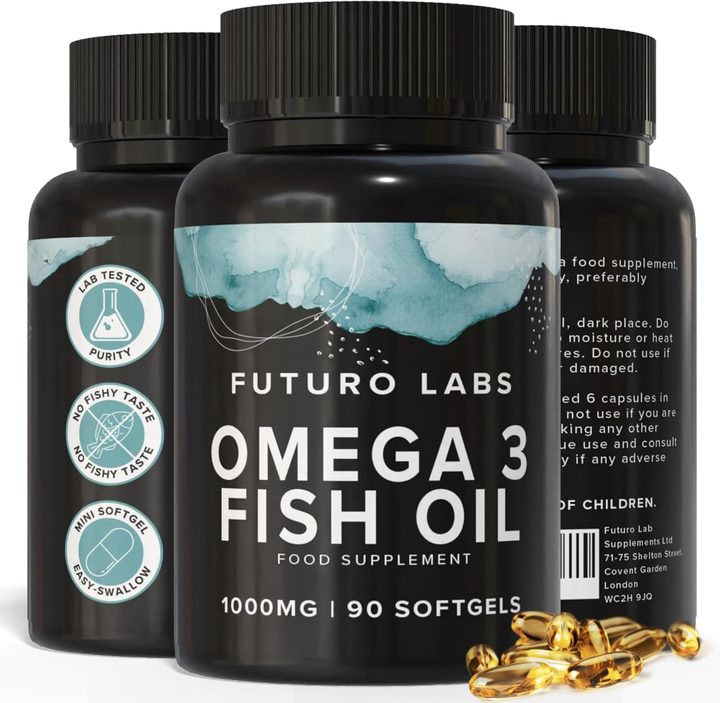
Our brand: the worked example on this page
Futuro Labs Omega 3 Fish Oil
- 17p a day
- 90 softgels, 1 softgel daily
- Lab tested
- Made in the UK
A body fish oil with no vitamin A, no purines and little protein: Futuro Labs Omega 3 Fish Oil on Amazon UK, 1 softgel with food, 180mg EPA and 120mg DHA, lab-tested purity, 90 for £14.99 at 17p. Full label breakdown. Who should not take EPA and DHA as a supplement is on the three-verbs page; who should avoid omega-3 on the avoid page.
Consume covers the fish and the oil, and the first three groups where the two lists diverge
Who should not consume fish oil is a question whose verb, consume, covers both the fish on the plate and the oil in the softgel, and the honest page keeps the two apart, because for every group that asks, the list for the fish and the list for the oil are different, and a reader who has been told to limit one has usually extended the limit to the other by mistake. Pregnancy is the clearest case. The fish: UK guidance limits oily fish to two portions a week in pregnancy because of the pollutants that accumulate in fatty fish, bans shark, swordfish and marlin for mercury, and limits tuna, the pregnancy fish guidance's list, so the fish is restricted. The oil: cod liver oil is out, because it carries vitamin A at levels that matter for a developing baby, and so is any supplement containing vitamin A, but a body fish oil, pressed from the flesh rather than the liver, carries no vitamin A and is not restricted, and the register's maternal claim, that DHA intake contributes to the normal brain development of the foetus at 200mg of DHA a day on top of the adult 250mg, is the reason a pregnant reader considers one, with the midwife knowing. Gout is the second case. The fish: sardines, anchovies, mackerel and herring are high in purines as flesh and a reader on a low-purine diet limits them, the gout and fish literature's list. The oil: a refined fish oil is stripped of the protein and nucleic acid that carry purines and adds none, so the limit stays on the fish and the softgel is taken by the audit, which is the gout pages' standing distinction. Fish allergy is the third. The fish: excluded, obviously. The oil: fish allergy is to fish proteins, and a refined fish oil contains little or no protein, so most fish-allergic people tolerate fish oil supplements, with an allergist's guidance rather than a shelf's, the fish allergy and fish oil literature's finding, and a severe allergy asks the allergist first and has algal EPA and DHA as the alternative that carries no fish at all.
Children, anticoagulants, a clinician's stop and the everyone-else audit, why the split matters, and the lists filed
Children are the fourth case, and the split runs the other way. The fish: children eat oily fish, the dietary guidance encouraging it, with the same two-portion limit for girls for the same pollutant reason. The oil: this site gives no supplement guidance for under-eighteens, whose omega-3 comes from the plate and whose parents talk to a GP or a dietitian about anything else, so the fish is yes and the supplement is not a question this site answers. An anticoagulant is the fifth. The fish: unaffected, two portions of oily fish a week being an ordinary diet that no anticoagulant clinic restricts. The oil: EPA and DHA at gram doses lengthen bleeding time slightly, minor in the trials and never an organ bleed, so a reader on warfarin, a newer anticoagulant or dual antiplatelet therapy tells the clinician and lets them decide, a standard softgel usually being fine and a gram or more being the question, the medications pages' finding that the interaction lives at the high rungs. A clinician's stop is the sixth, and applies to the oil: a cardiologist, surgeon or GP who has said stop fish oil means the supplement, and the instruction stands, with the plate unaffected unless they say otherwise. Everyone else is the audit: one standard softgel a day for a plate low in oily fish, none for two oily-fish portions a week, with food and without a high dose. Why the split matters is that each mistake runs a different way: a pregnant reader who avoids all fish oil because she must limit fish has dropped a DHA claim written for her baby, a gout reader who avoids the softgel because he limits sardines has avoided nothing that raises uric acid, a fish-allergic reader who assumes the oil is off the table has not asked the allergist who would likely say otherwise, and a reader on an anticoagulant who stops eating mackerel has changed the wrong thing. The lists filed: pregnancy with the fish limited and the body oil free and cod liver oil out, gout with the fish limited and the oil purine-free, allergy with the fish out and the refined oil usually tolerated with an allergist, children with the fish in and no supplement guidance here, an anticoagulant with the fish untouched and gram doses of oil a question, a clinician's stop applying to the oil, and the audit for everyone else, with the worked example being a body fish oil with no vitamin A, no purines and little protein, £14.99 for 90 at 17p.
| The group | The fish | The oil |
|---|---|---|
| Pregnancy | Two oily portions a week; no shark, swordfish or marlin; limited tuna | No cod liver oil or vitamin A; a body fish oil unrestricted; DHA at 200mg more for the foetal brain |
| Gout | Sardines, anchovies, mackerel, herring limited for purines | Purine-free; taken by the audit |
| Fish allergy | Excluded | Refined oil usually tolerated with an allergist's guidance; algal oil as the alternative |
| Children | Eaten and encouraged, with the girls' two-portion limit | No supplement guidance on this site for under-eighteens |
| An anticoagulant | Unaffected | A standard softgel usually fine; gram doses a clinician's question |
| A clinician's stop | Unaffected unless they say so | The instruction stands |
The verdict, six groups with two lists each, and the mistake of extending one list to the other
Who should not consume fish oil: with consume covering the fish and the oil and the lists differing for each, pregnancy limits oily fish to two portions a week and bans cod liver oil for its vitamin A while a body fish oil with none is unrestricted and the DHA claim for the foetal brain is a reason to consider it, gout limits the purine-rich fish while the refined oil carries no purines, a fish allergy excludes the fish while the refined oil is usually tolerated with an allergist's guidance and algal oil is the alternative, children eat the fish and get no supplement guidance on this site, an anticoagulant leaves the fish alone and makes gram doses of the oil a clinician's question, and a clinician's stop applies to the oil, with everyone else deciding by the oily-fish audit. A body fish oil with no vitamin A, no purines and little protein: Futuro Labs Omega 3 Fish Oil, one with food, 180mg EPA and 120mg DHA, lab-tested purity, 90 for £14.99 at 17p a day.
What to check on the label
- Separate the fish from the oil: each group has two lists.
- In pregnancy, limit the fish and skip cod liver oil: a body oil is unrestricted.
- With gout, limit the sardines and keep the softgel: no purines in the oil.
- With a fish allergy, ask the allergist about the oil: usually tolerated; algal oil otherwise.
- On an anticoagulant, eat the mackerel and ask about gram doses: the oil is the question.
Our brand
The worked example: Futuro Labs Omega 3 Fish Oil
Futuro Labs Omega 3 Fish Oil: 1 softgel daily with food, 1000mg fish oil providing 180mg EPA and 120mg DHA (300mg combined), 90 softgels for £14.99, 17p a day, lab-tested purity, UK GMP made. Gelatin shell, so not vegetarian.
- Fish oil per softgel
- 1000mg
- EPA / DHA per softgel
- 180mg / 120mg (300mg combined)
- Serving
- 1 softgel a day
- Bottle
- 90 softgels, 90 days
- Price
- £14.99 (17p a day)
- Softgel
- mini softgel, no fishy taste
Questions people also ask
Can pregnant women take fish oil?
A body fish oil with no vitamin A, yes, with the midwife knowing, the register's claim being that DHA intake contributes to the normal brain development of the foetus at 200mg of DHA a day on top of 250mg, while cod liver oil and any supplement containing vitamin A are out, and oily fish itself is limited to two portions a week with no shark, swordfish or marlin.
Can you take fish oil if you have gout?
Yes: the purines that raise uric acid live in the flesh of sardines, anchovies, mackerel and herring, and a refined fish oil is stripped of the protein and nucleic acid that carry them, so the low-purine limit stays on the fish and the softgel is taken by the oily-fish audit.
Can someone with a fish allergy take fish oil?
Usually, with an allergist's guidance: fish allergy is to fish proteins and a refined fish oil contains little or none, so most fish-allergic people tolerate supplements, while a severe allergy asks the allergist before any fish-derived oil and algal EPA and DHA carries no fish at all.
Can children take fish oil?
Children eat oily fish, which dietary guidance encourages with the same two-portion limit for girls, and this site gives no supplement guidance for anyone under eighteen, whose omega-3 comes from the plate and whose parents talk to a GP or a dietitian about anything else.
Can you eat oily fish on blood thinners?
Yes: two portions of oily fish a week is an ordinary diet that no anticoagulant clinic restricts, and the question is the oil at gram doses, which lengthens bleeding time slightly and is told to the clinician, a standard softgel usually being fine and a gram or more being theirs to decide.
Sources
- UK pregnancy guidance on fish: up to two portions of oily fish a week because of pollutants that accumulate in fatty fish, no shark, swordfish or marlin and limited tuna because of mercury, and no cod liver oil or other supplements containing vitamin A, while a fish oil supplement without vitamin A is not restricted and DHA for the developing brain is the reason to consider one. PubMed record
- The cod liver oil and vitamin A literature: cod liver oil carries preformed vitamin A at hundreds of micrograms per teaspoon or capsule, the adult upper level for preformed vitamin A being 3000 micrograms a day and pregnancy advice being to avoid liver oils, so a cod liver oil stacked with a multivitamin or a vitamin A supplement is the one combination in which a fish oil can push a vitamin over its limit. https://www.gov.uk/government/publications/sacn-vitamin-a-and-health
- The purine and gout literature: oily fish is high in purines and raises gout risk when eaten in quantity, while refined fish oil supplements contain no purines, and omega-3 has been studied as a possible help in gout rather than a trigger. PubMed record
- The fish allergy and fish oil literature: fish allergy is to fish proteins, and refined fish oil contains little or no protein, so most fish-allergic people tolerate fish oil supplements, but the allergy guidance is to discuss it with an allergist and to prefer an algal oil where doubt exists. PubMed record