Ghost Fitness/Omega-3/Can I take turmeric and fish oil together?
Can I take turmeric and fish oil together?
The short answer
Yes, and the pairing is worth auditing because the two are sold together for joints. Omega-3 has a modest file on inflammatory joint pain at several grams a day and no UK joint claim. Curcumin has a modest file on knee osteoarthritis pain with a high risk of bias and no UK claim at all. Both are fat-soluble and go with the same fatty meal. Anticoagulant users and anyone facing surgery ask first.
- Omega-3's joint filereduced pain and morning stiffness in inflammatory arthritis at several grams a day, in a meta-analysis; no UK joint claim
- Curcumin's joint filemodest reductions in knee osteoarthritis pain in short trials with a high risk of bias; no UK claim at all
- The same mealboth fat-soluble: the fattiest meal of the day
- The reader who asks firston an anticoagulant or facing surgery: both have antiplatelet activity
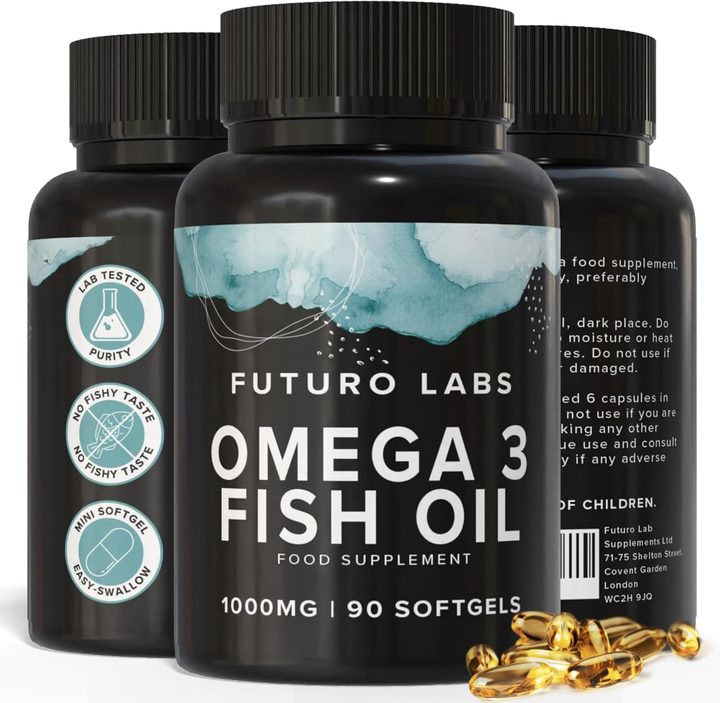
Our brand: the worked example on this page
Futuro Labs Omega 3 Fish Oil
- 17p a day
- 90 softgels, 1 softgel daily
- Lab tested
- Made in the UK
The half of the pairing with a claim, taken for that claim: Futuro Labs Omega 3 Fish Oil on Amazon UK, 1 softgel with food, 180mg EPA and 120mg DHA, 90 for £14.99 at 17p. Full label breakdown. The two side-effect files are on the turmeric side-effects page; the fat-soluble rule on the timing page.
Yes, and the joint pairing audited, omega-3's file first
Can I take turmeric and fish oil together is answered yes, no interaction existing between the two, and the pairing deserves an audit rather than a yes alone, because turmeric and fish oil are sold side by side and often in one product for a single reason, joints, and the honest reader should know what each file holds. Omega-3's joint file: a meta-analysis of randomised trials in inflammatory arthritis, mostly rheumatoid, found reduced joint pain, morning stiffness and the number of tender joints with omega-3 supplementation, at doses of several grams of EPA and DHA a day over months, a modest effect in a specific condition at a research dose, and no finding in the ordinary joint aches of a lifter, whose knees, elbows and shoulders hurt from load, tendons and osteoarthritis rather than from an inflammatory disease, and no UK joint claim, the register's omega-3 sentences being heart, brain, vision, triglycerides and blood pressure and nothing about joints, so a fish oil label may not print a joint sentence and a fish oil sold for joints has stepped outside the register. A lifter with a hot, swollen or morning-stiff joint has an inflammatory question for a GP rather than a fish oil question.
Curcumin's file, the register's silence, the same fatty meal, the reader who asks first, and the pairing filed
Curcumin's joint file: meta-analyses of short randomised trials in knee osteoarthritis report modest reductions in pain with curcumin extracts against placebo, over weeks, in trials that are small, use heterogeneous formulations and carry a high risk of bias, a suggestive file in one condition and nothing in a lifter's load-related joint pain, and no UK health claim of any kind, botanical claims for turmeric and curcumin remaining on hold, so a turmeric product may print no joint sentence, no inflammation sentence and no sentence at all, whatever its research, and a product combining the two for joints combines a modest file with no claim and a modest file with no claim into a marketing story with none. The same fatty meal: both are fat-soluble, curcumin being famously poorly absorbed without fat or a formulation designed to help it, fish oil absorbing better with fat and burping less with food, so the pairing goes with the fattiest meal of the day if it is taken at all, the fat-soluble shelf's rule, with the note that the high-bioavailability curcumin formulations, especially those with piperine, are the ones the liver-injury case reports cluster around and are taken with that in mind. The reader who asks first: both have antiplatelet activity, fish oil modestly and curcumin in vitro, so a reader on warfarin, a direct oral anticoagulant, aspirin or clopidogrel, or facing surgery, asks the prescriber or surgical team before stacking them, the one way the pairing adds a consideration neither has alone. What helps a lifter's joints is the joint pages' list: load management, a physiotherapist for tendons, strength work and weight for osteoarthritis, and a GP for inflammatory signs, none of it a capsule. The pairing filed: turmeric and fish oil can be taken together, at the same fatty meal, with omega-3's joint file modest and claimless and curcumin's modest and claimless, anticoagulant users and pre-surgery readers asking first, and the worked example being the half of the pairing with a claim, taken for that claim and not for joints, one softgel at 17p, £14.99 for 90.
| The item | Omega-3 | Turmeric or curcumin |
|---|---|---|
| The joint file | Reduced pain and stiffness in inflammatory arthritis at several grams a day | Modest knee osteoarthritis pain reduction in short biased trials |
| A lifter's joint pain | No finding in load, tendon or osteoarthritis pain | No finding in load or tendon pain |
| The UK claim | Heart, brain, vision, triglycerides, blood pressure; nothing on joints | None at all; botanicals on hold |
| The meal | Fat helps; food reduces burps | Fat helps; poorly absorbed without it |
| The caution | A modest antiplatelet effect | Antiplatelet activity; liver case reports on high-absorption formulations |
| Who asks first | On an anticoagulant or before surgery | The same |
The verdict, fine together, and a joint story that neither file supports
Can I take turmeric and fish oil together: yes, at the same fatty meal, no interaction existing, with the joint pairing they are sold as audited to two modest files and no claim, omega-3's reduced pain and stiffness in inflammatory arthritis at several grams a day with nothing for a lifter's load-related joints and no UK joint claim, and curcumin's modest knee osteoarthritis reductions in short biased trials with no UK claim at all, both fat-soluble and both antiplatelet so that a reader on an anticoagulant or facing surgery asks first, and a lifter's joints helped by load management, a physiotherapist and a GP rather than a capsule. The half of the pairing with a claim, taken for that claim: Futuro Labs Omega 3 Fish Oil, one softgel with food, 180mg EPA and 120mg DHA, 90 for £14.99 at 17p a day.
What to check on the label
- Take them together if you want: no interaction, the same fatty meal.
- Read omega-3's joint file as modest and claimless: inflammatory arthritis at grams.
- Read curcumin's as modest and claimless: knee osteoarthritis, biased trials.
- Ask first on an anticoagulant or before surgery: both are antiplatelet.
- Fix a lifter's joints where they live: load, a physio, a GP.
Our brand
The worked example: Futuro Labs Omega 3 Fish Oil
Futuro Labs Omega 3 Fish Oil: 1 softgel daily with food, 1000mg fish oil providing 180mg EPA and 120mg DHA (300mg combined), 90 softgels for £14.99, 17p a day, lab-tested purity, UK GMP made. Gelatin shell, so not vegetarian.
- Fish oil per softgel
- 1000mg
- EPA / DHA per softgel
- 180mg / 120mg (300mg combined)
- Serving
- 1 softgel a day
- Bottle
- 90 softgels, 90 days
- Price
- £14.99 (17p a day)
- Softgel
- mini softgel, no fishy taste
Questions people also ask
Is turmeric and fish oil good for joints?
Modestly and only in specific conditions: omega-3 reduced pain and stiffness in inflammatory arthritis at several grams a day in a meta-analysis, and curcumin modestly reduced knee osteoarthritis pain in short trials with a high risk of bias, with neither holding a UK joint claim and neither having a finding in a lifter's load-related joint pain.
Can I take turmeric and omega-3 at the same time?
Yes, at the same fatty meal: both are fat-soluble, curcumin being poorly absorbed without fat and fish oil absorbing better with it, and no interaction between them exists.
Why can't turmeric supplements claim to help joints?
Because botanical health claims including turmeric and curcumin remain on hold and unauthorised in the UK, so a turmeric product may print no joint, inflammation or other sentence on its label whatever the ingredient's research.
Who should be careful combining turmeric and fish oil?
Anyone on warfarin, a direct oral anticoagulant, aspirin or clopidogrel, and anyone facing surgery, since both have antiplatelet activity, and anyone taking a high-bioavailability curcumin formulation, especially with piperine, since the liver-injury case reports cluster there.
What actually helps a lifter's sore joints?
Load management and a deload, a physiotherapist for tendon pain, strength work and weight for osteoarthritis, and a GP for a hot, swollen or morning-stiff joint, none of which is a capsule.
Sources
- Goldberg RJ, Katz J. A meta-analysis of the analgesic effects of omega-3 polyunsaturated fatty acid supplementation for inflammatory joint pain. Pain 2007;129(1-2):210-223. PubMed record
- The curcumin and osteoarthritis literature: meta-analyses of short randomised trials report modest reductions in knee osteoarthritis pain with curcumin extracts against placebo, with heterogeneous formulations, small samples and a high risk of bias, and no UK authorised health claim for turmeric or curcumin. PubMed record
- The UK and EU position on botanical health claims: claims for botanicals including turmeric and curcumin remain on hold and unauthorised, so no turmeric product may make a health claim on a UK label, whatever the ingredient's research. https://www.gov.uk/government/publications/great-britain-nutrition-and-health-claims-nhc-register
- The curcumin supplement safety literature: curcumin is poorly absorbed and generally well tolerated at ordinary doses, with gastrointestinal upset the commonest effect, in-vitro antiplatelet activity that prompts caution with anticoagulants and before surgery, and a series of liver-injury case reports linked to high-bioavailability formulations, particularly with piperine. PubMed record