Ghost Fitness/Omega-3/Can I take ginkgo biloba and fish oil together?
Can I take ginkgo biloba and fish oil together?
The short answer
Yes for most people, no direct interaction existing, and the pairing is two antiplatelets: ginkgo has case reports of bleeding alongside anticoagulants, and fish oil modestly reduces platelet stickiness, so anticoagulant users and anyone facing surgery ask first. Ginkgo's own file is thin: the large randomised trial found no effect on cognitive decline, and no UK claim is authorised, while fish oil holds the DHA brain sentence.
- The interactionnone direct; two antiplatelets stacked
- Who asks firstwarfarin, direct oral anticoagulants, aspirin, clopidogrel; and before surgery
- Ginkgo's filea large randomised trial: no effect on cognitive decline or dementia; bleeding case reports; no UK claim
- Fish oil's brain sentenceDHA contributes to the maintenance of normal brain function at 250mg of DHA a day
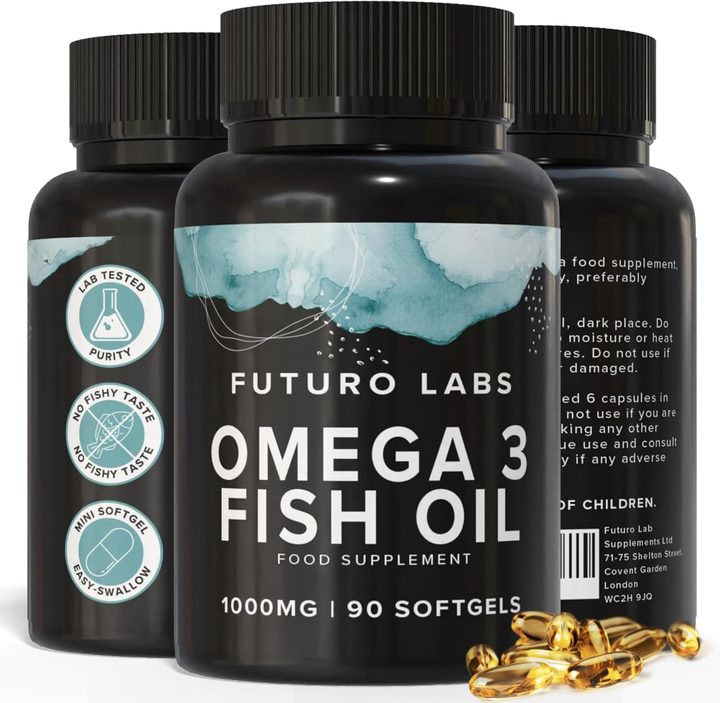
Our brand: the worked example on this page
Futuro Labs Omega 3 Fish Oil
- 17p a day
- 90 softgels, 1 softgel daily
- Lab tested
- Made in the UK
The half of the pair with a brain sentence: Futuro Labs Omega 3 Fish Oil on Amazon UK, 1 softgel with food, 180mg EPA and 120mg DHA, 90 for £14.99 at 17p, the DHA claim at two or three. Full label breakdown. The turmeric pairing is on the turmeric and fish oil page; the pharmacist's three questions on the what-not-to-take page.
Yes for most people, and the pairing named for what it is, two antiplatelets
Can I take ginkgo biloba and fish oil together is answered yes for most people, no direct interaction between a ginkgo extract and a fish oil having been described, and then by naming the pairing for what it is, because the two are sold together for the brain and share a property that has nothing to do with the brain. Ginkgo's property: ginkgo extracts inhibit platelet-activating factor and have antiplatelet activity, and the case-report literature describes bleeding events, spontaneous and surgical, in people taking ginkgo alongside warfarin, aspirin and other antiplatelets, enough of them that ginkgo is on every pharmacist's list of botanicals to ask about before surgery, the ginkgo literature's consistent caution. Fish oil's property: EPA and DHA modestly reduce platelet stickiness, an effect small at supplement doses, accounted for in the regulator's five-gram safe level, not associated with clinically important bleeding in trials up to that dose in healthy adults, and carrying a note for anticoagulant users on the pharmaceutical omega-3 preparations at gram-and-above doses. Two antiplatelets stacked are, for a healthy adult on no medicine and facing no surgery, a pairing with no described harm, and for a reader on warfarin, a direct oral anticoagulant, aspirin or clopidogrel, or facing an operation, a question for the prescriber or the surgical team before rather than after, the same overlap the turmeric pairing page names and the one way the ginkgo-and-fish-oil pairing adds a consideration neither has alone.
Ginkgo's own file, which is a large null trial and no claim, fish oil's brain sentence, and the pair filed
Ginkgo's own file deserves the second half, because the pairing is sold for memory and ginkgo's memory evidence is the thinnest kind. The large trial: a multi-year randomised placebo-controlled trial in several thousand older adults, run to test whether ginkgo extract prevents dementia or slows cognitive decline, found no effect on either, the best-designed test of the claim ginkgo is bought for and a null result, with smaller and older trials being mixed and the reviews concluding that ginkgo has no reliable effect on memory or cognition in healthy adults. The claim: none in the UK, botanical health claims including ginkgo remaining on hold and unauthorised, so a ginkgo product may print no memory, brain, circulation or other sentence on a UK label, whatever the folklore, the same silence that covers turmeric. Fish oil's brain sentence, by contrast, is on the register: DHA contributes to the maintenance of normal brain function, at 250mg of DHA a day, a maintenance claim that a standard 120mg-DHA softgel reaches at two or three and a DHA-heavy oil at one, so of the two tubs sold together for the brain, one may print a brain sentence and one may not, and the sentence it prints is maintenance rather than memory. What a lifter takes for the brain, then, is the DHA claim's 250mg by the oily-fish audit and nothing from the ginkgo shelf, and what a reader with a memory worry does is see a GP, memory complaints having causes from sleep and mood to thyroid and medicines that a supplement page cannot sort. The pair filed: ginkgo and fish oil together is fine for most people, is two antiplatelets stacked, so anticoagulant users and pre-surgery readers ask first, and pairs a botanical with a large null trial and no claim beside an oil with a DHA brain sentence at 250mg, with the worked example being the half with the sentence, one softgel at 17p, £14.99 for 90.
| The item | Ginkgo | Fish oil |
|---|---|---|
| The platelet property | Antiplatelet activity; bleeding case reports beside anticoagulants | A modest antiplatelet effect; a note at gram-and-above doses |
| Who asks first | On an anticoagulant or antiplatelet; before surgery | The same |
| The brain file | A large randomised trial: no effect on cognitive decline or dementia | DHA in brain membranes; a maintenance claim |
| The UK claim | None; botanicals on hold | DHA contributes to normal brain function at 250mg of DHA |
| The direct interaction | None | None |
| The memory worry | A GP, not a shelf | The same |
The verdict, fine for most, a question for some, and one brain sentence between the two
Can I take ginkgo biloba and fish oil together: yes for most people, no direct interaction existing, with the pairing being two antiplatelets stacked, ginkgo's bleeding case reports beside anticoagulants and fish oil's modest antiplatelet effect, so that a reader on warfarin, a direct oral anticoagulant, aspirin or clopidogrel, or facing surgery, asks the prescriber or surgical team first, and with ginkgo's own file being a large randomised trial that found no effect on cognitive decline and no UK claim, while fish oil holds the register's DHA brain sentence at 250mg of DHA a day, a maintenance claim and not a memory one. The half with the sentence: Futuro Labs Omega 3 Fish Oil, one softgel with food, 180mg EPA and 120mg DHA, 90 for £14.99 at 17p a day.
What to check on the label
- Take them together if healthy and unmedicated: no direct interaction.
- Ask first on an anticoagulant or before surgery: two antiplatelets.
- Read ginkgo's file: a large null trial, no UK claim.
- Read fish oil's brain sentence: maintenance at 250mg of DHA.
- Take a memory worry to a GP: not to either shelf.
Our brand
The worked example: Futuro Labs Omega 3 Fish Oil
Futuro Labs Omega 3 Fish Oil: 1 softgel daily with food, 1000mg fish oil providing 180mg EPA and 120mg DHA (300mg combined), 90 softgels for £14.99, 17p a day, lab-tested purity, UK GMP made. Gelatin shell, so not vegetarian.
- Fish oil per softgel
- 1000mg
- EPA / DHA per softgel
- 180mg / 120mg (300mg combined)
- Serving
- 1 softgel a day
- Bottle
- 90 softgels, 90 days
- Price
- £14.99 (17p a day)
- Softgel
- mini softgel, no fishy taste
Questions people also ask
Is it safe to take ginkgo and fish oil together?
For most people, yes, no direct interaction existing; the pairing stacks two antiplatelets, ginkgo with bleeding case reports beside anticoagulants and fish oil with a modest platelet effect, so a reader on warfarin, a direct oral anticoagulant, aspirin or clopidogrel, or facing surgery, asks the prescriber or surgical team first.
Does ginkgo biloba improve memory?
Not on the best evidence: a multi-year randomised trial in several thousand older adults found no effect on cognitive decline or dementia, reviews find no reliable effect on memory in healthy adults, and no UK health claim is authorised for ginkgo, botanical claims being on hold.
Can fish oil claim to help the brain?
Yes, as maintenance: DHA contributes to the maintenance of normal brain function at 250mg of DHA a day, an authorised sentence a standard 120mg-DHA softgel reaches at two or three and a DHA-heavy oil at one, and not a memory or cognitive-improvement claim.
Why do pharmacists ask about ginkgo before surgery?
Because ginkgo extracts have antiplatelet activity and the case-report literature describes spontaneous and surgical bleeding in people taking it alongside anticoagulants and antiplatelets, so it is on the list of botanicals stopped before an operation.
Which should I take for brain health, ginkgo or fish oil?
Fish oil by the oily-fish audit, for the DHA maintenance sentence it holds, and nothing from the ginkgo shelf, whose large trial was null; a reader with a memory worry sees a GP, since sleep, mood, thyroid and medicines are among the causes a supplement page cannot sort.
Sources
- The ginkgo biloba literature: a large randomised trial found no effect on cognitive decline or dementia in older adults, case reports describe bleeding with ginkgo alongside anticoagulants and antiplatelets, and no UK health claim is authorised, botanical claims remaining on hold. PubMed record
- EFSA Panel on Dietetic Products. Scientific opinion on the tolerable upper intake level of EPA, DHA and DPA: supplemental intakes of EPA and DHA combined up to about 5g/day do not raise safety concerns for adults. EFSA Journal 2012;10(7):2815. https://www.efsa.europa.eu/en/efsajournal/pub/2815
- EFSA Panel on Dietetic Products. Scientific opinion on health claims related to DHA: maintenance of normal brain function and normal vision (250mg DHA daily condition of use). EFSA Journal 2010;8(10):1734. https://www.efsa.europa.eu/en/efsajournal/pub/1734
- The UK and EU position on botanical health claims: claims for botanicals including turmeric and curcumin remain on hold and unauthorised, so no turmeric product may make a health claim on a UK label, whatever the ingredient's research. https://www.gov.uk/government/publications/great-britain-nutrition-and-health-claims-nhc-register