Ghost Fitness/Omega-3/Should I take fish oil everyday?
Should I take fish oil everyday?
The short answer
Yes if the oily-fish audit says so, a reader eating fewer than two fish portions a week needing the 250mg heart claim a softgel supplies. And the schedule is honestly flexible: EPA and DHA build into membranes over months and the index responds to average intake, so one softgel every day, two every other day, and two oily fish meals a week all fill the same pool. Every day wins on habit rather than physiology.
- The auditfewer than two fish portions a week with one oily: a softgel; two or more: none needed
- The poolmembranes over three to four months: the index responds to average intake, not the day's
- The equivalentsone softgel every day; two every other day; two oily fish meals a week at 450mg a day on average
- Why every day anywayhabit: a daily anchor is the schedule a reader keeps; a fatty meal the only timing rule
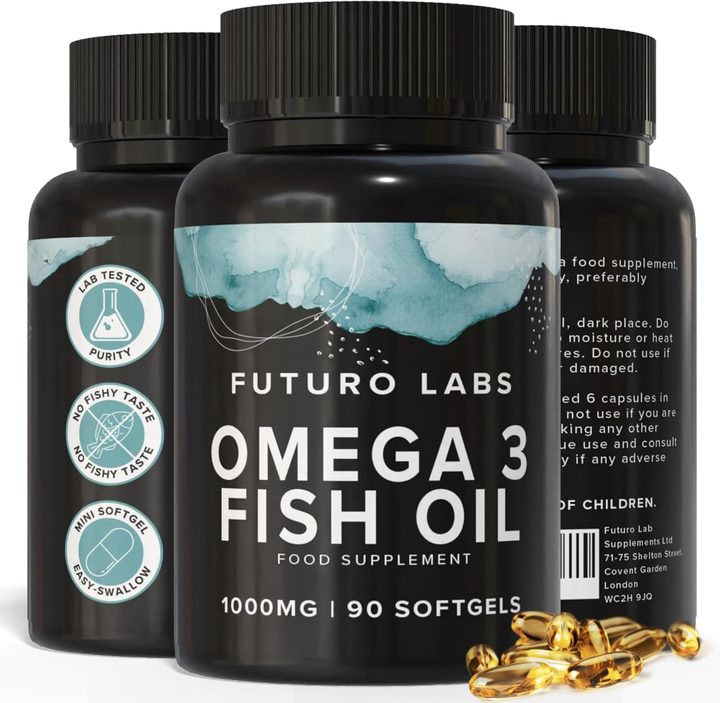
Our brand: the worked example on this page
Futuro Labs Omega 3 Fish Oil
- 17p a day
- 90 softgels, 1 softgel daily
- Lab tested
- Made in the UK
The daily softgel, for the habit rather than the physiology: Futuro Labs Omega 3 Fish Oil on Amazon UK, 1 softgel with food, 180mg EPA and 120mg DHA, 90 for £14.99 at 17p. Full label breakdown. The safety of every day for years is on the safety page; the no-fish reader's arithmetic on the no-fish page.
Yes by the audit, and the average-intake teach, because a pool that changes over months does not care which day the fat arrived
Should I take fish oil every day has two parts, whether to take it and whether every day matters, and the second part has an answer most supplement pages get wrong for omega-3 specifically. Whether: by the oily-fish audit, a reader who eats fewer than the two portions of fish a week UK advice sets, one of them oily, and so misses the 250mg of EPA and DHA a day the register's heart-function claim needs, takes a softgel, and a reader who eats oily fish twice a week has the claim met on the plate and takes none, the audit that opens every omega-3 page here. Whether every day matters is where omega-3 differs from most of the shelf: EPA and DHA build into cell membranes over three to four months of intake and the omega-3 index, the marker the research uses, responds to average intake over that period rather than to any single day's dose, the index kinetics literature's finding, so that one softgel every day, two softgels every other day and two oily fish meals a week that supply around 450mg a day on average all fill the same membrane pool to about the same level over the same months, the pool not caring whether the fat arrived daily, on alternate days or in two Sunday-and-Wednesday salmon fillets. That is why UK advice is written in portions a week rather than milligrams a day, why the observational studies of fish eaters, who eat fish on some days and not others, find the index they find, and why a reader who forgets a softgel loses nothing and a reader who takes two the next day has simply averaged, the every-other-day schedule being physiologically equivalent to the daily one in a way that would not be true of a water-soluble vitamin excreted within hours or a mineral with a saturable transport.
Why every day wins anyway, on habit and on absorption, the two schedules that do not work, and the question filed
Every day wins anyway, for two reasons that are not physiological. Habit: a supplement taken daily at a fixed meal is the one still being taken in month three, the habit pages' finding, and an every-other-day schedule requires remembering which day it is, the schedule that survives least, so a reader who chooses alternate days for economy finds within a month that they are taking it twice a week and then not at all, while the daily softgel beside dinner runs on its own. Absorption: two softgels at one meal absorb slightly less well per softgel than one at each of two meals, fat absorption being efficient but not unlimited at a sitting and an ethyl ester needing the meal's fat, so the daily single softgel is also the marginally better-absorbed schedule, a small point beside the habit one. Two schedules that do not work: a week's worth of softgels on a Sunday, which produces the gut's response to a large dose of oil and absorbs poorly, the one-off page's loose stools for no benefit; and a softgel only on training days, which halves the average intake for no reason, the membrane pool being indifferent to the gym. The only timing rule is the fatty meal, the softgel taken mid-meal at the day's fattiest plate, and the only schedule rule is the one a reader keeps, which for nearly everyone is daily. A reader who eats oily fish some weeks and not others averages too, taking the softgel on the weeks without fish and skipping it on the weeks with, the audit run weekly rather than once. The question filed: yes by the audit, the schedule honestly flexible because a months-long pool responds to average intake, daily and alternate-day and twice-weekly fish all filling it, every day winning on habit and slightly on absorption, a Sunday handful and a training-days-only schedule not working, with the worked example being the daily softgel for the habit rather than the physiology, one at 17p, £14.99 for 90.
| The schedule | The average intake | The verdict |
|---|---|---|
| One softgel every day | 300mg a day | The habit that keeps; marginally better absorbed |
| Two softgels every other day | 300mg a day on average | Physiologically equivalent; the habit that fails |
| Two oily fish meals a week | About 450mg a day on average | UK advice; no softgel needed |
| A week's softgels on a Sunday | The same average | Loose stools and poor absorption; does not work |
| Softgels on training days only | Half the average | Halves the pool for no reason |
| The only timing rule | A fatty meal, mid-meal | Whatever the schedule |
The verdict, yes by the audit, every day by habit, and a pool that would not have minded alternate days
Should I take fish oil every day: yes if the oily-fish audit says so, a reader eating fewer than two fish portions a week with one oily needing the 250mg heart claim a softgel supplies, and every day for the habit rather than the physiology, since omega-3 is the one supplement whose schedule is honestly flexible, EPA and DHA building into membranes over three to four months and the index responding to average intake so that a daily softgel, two on alternate days and two oily fish meals a week all fill the same pool, with every day winning because a daily anchor is the schedule a reader keeps and a single softgel absorbs marginally better than a pair, a Sunday handful and a training-days-only schedule being the two that do not work. The daily softgel: Futuro Labs Omega 3 Fish Oil, one with food, 180mg EPA and 120mg DHA, 90 for £14.99 at 17p a day.
What to check on the label
- Run the oily-fish audit: two portions a week, or a softgel.
- Know the pool averages: daily, alternate days and twice-weekly fish fill it alike.
- Take it daily anyway: the habit that keeps.
- Never bank a week on a Sunday: loose stools, poor absorption.
- Ignore training days: the membrane does not know about the gym.
Our brand
The worked example: Futuro Labs Omega 3 Fish Oil
Futuro Labs Omega 3 Fish Oil: 1 softgel daily with food, 1000mg fish oil providing 180mg EPA and 120mg DHA (300mg combined), 90 softgels for £14.99, 17p a day, lab-tested purity, UK GMP made. Gelatin shell, so not vegetarian.
- Fish oil per softgel
- 1000mg
- EPA / DHA per softgel
- 180mg / 120mg (300mg combined)
- Serving
- 1 softgel a day
- Bottle
- 90 softgels, 90 days
- Price
- £14.99 (17p a day)
- Softgel
- mini softgel, no fishy taste
Questions people also ask
Is it necessary to take fish oil every day?
Physiologically, no: EPA and DHA build into membranes over months and the omega-3 index responds to average intake, so two softgels every other day or two oily fish meals a week fill the same pool; practically, yes, because a daily softgel at a fixed meal is the schedule a reader keeps and an alternate-day one is the schedule that fails.
What happens if I skip a day of fish oil?
Nothing: a pool that changes over three to four months does not notice a missed day, the next day's softgel averages it, and there is no need to double up, though a reader who doubles has simply averaged too.
Can I take fish oil every other day?
Yes, at double the dose, and it fills the membrane pool as well as daily intake because the index responds to average intake, but the habit rarely survives, and two softgels at one meal absorb marginally less well than one at each of two, so daily is the better schedule for reasons other than physiology.
Do I need fish oil if I eat fish twice a week?
No: two portions of fish a week with one oily supplies around 450mg of EPA and DHA a day on average, above the 250mg heart claim, and the pool does not care that the fat arrived in two meals rather than seven softgels, so the audit says no softgel on those weeks.
Should I take fish oil only on training days?
No: the membrane pool is indifferent to the gym, a training-days-only schedule halves the average intake for no reason, and omega-3 has no acute effect on a session, so the softgel goes with a fatty meal every day or, for a reader who eats oily fish some weeks, on the weeks without.
Sources
- The omega-3 index kinetics literature: red-cell EPA and DHA rise over three to four months of daily intake and fall over a similar period after stopping, the index changing on a clock of months rather than days, with no acute effect of a single dose. PubMed record
- Harris WS, von Schacky C. The omega-3 index: red blood cell EPA and DHA as a measurable marker of omega-3 status, the research standard for judging how effectively intake raises tissue levels. PubMed record
- Scientific Advisory Committee on Nutrition and Committee on Toxicity. Advice on fish consumption: benefits and risks (two portions of fish a week, one oily). TSO, 2004. https://www.gov.uk/government/publications/sacn-advice-on-fish-consumption-benefits-and-risks
- The habit formation literature: anchoring a new behaviour to an existing daily routine is the best-documented adherence strategy, with consistency outperforming timing choices. PubMed record