Ghost Fitness/Omega-3/Should I take omega-3 if I don t eat fish?
Should I take omega-3 if I don t eat fish?
The short answer
Yes: a reader who does not eat fish is the reader the oily-fish audit was written for, sitting at a low omega-3 status with the 250mg heart claim unmet. The arithmetic: UK advice's two fish portions a week supply around 450mg a day on average, matched by two standard softgels or one concentrate, with one standard softgel reaching the 250mg claim. Plant omega-3 does not convert. A vegan takes an algal oil.
- The statusno fish and no supplement: an omega-3 index below about four percent, the state most of the UK is in
- The arithmeticUK advice's 450mg a day from two fish portions: two standard softgels or one concentrate; the 250mg claim: one softgel; the index's gram: three
- The plant routeALA from flax, chia and walnuts converts to EPA at a few percent and to DHA at under one: it does not fill the gap
- The vegan routean algal oil, DHA-first and sometimes with EPA, for the DHA claims and, with EPA, the heart claim
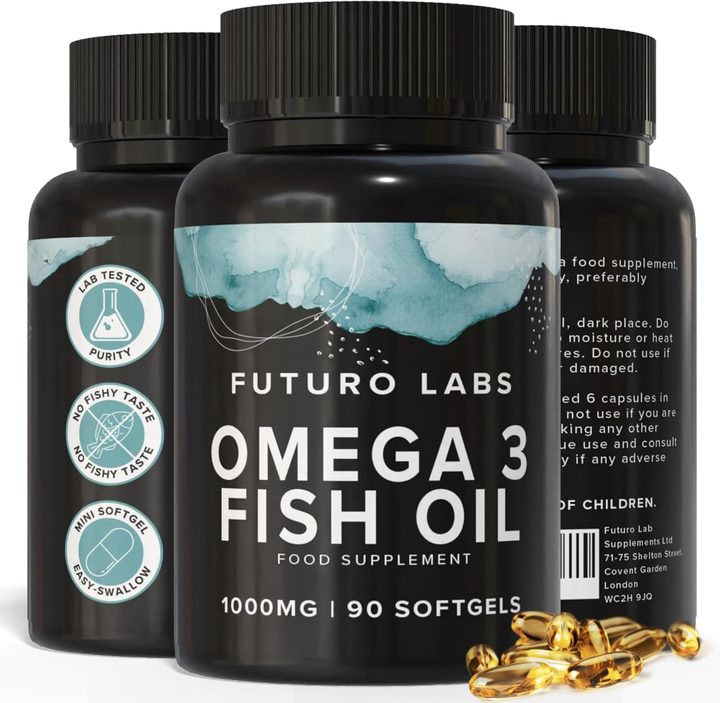
Our brand: the worked example on this page
Futuro Labs Omega 3 Fish Oil
- 17p a day
- 90 softgels, 1 softgel daily
- Lab tested
- Made in the UK
The non-fish-eater's softgel, one for the claim or two to match the fish advice: Futuro Labs Omega 3 Fish Oil on Amazon UK, 1 softgel with food, 180mg EPA and 120mg DHA, 90 for £14.99 at 17p. Full label breakdown. The vegan source is on the vegan omega-3 page; the family tree with the conversion rates on the omega-3, EPA and DHA page.
Yes, because this is the reader the audit was written for, and the arithmetic that matches the fish advice
Should I take omega-3 if I do not eat fish is answered yes without the hedging most omega-3 questions get, because the reader who does not eat fish is the reader the oily-fish audit on every page of this section was written for. The status: UK advice sets two portions of fish a week with one oily, which delivers around 450mg of EPA and DHA a day on average, and most of the population eats far less, so a reader who eats no fish at all and takes no supplement sits at a low omega-3 status, an omega-3 index below about four percent, symptomless and common, the deficiency page's low status and the state the observational studies associate with higher long-term risk, with the register's heart-function claim at 250mg of EPA and DHA unmet on the plate every day of the year. The arithmetic, matched to the advice: one standard softgel at 300mg of EPA and DHA reaches the 250mg heart claim and sits a little below the fish advice's average; two standard softgels, or one concentrate at 600mg or more, match the 450mg a day that two fish portions supply, the exact substitution for a reader who wants what the advice gives; and three standard softgels or a gram-per-softgel concentrate reach the omega-3 index research target, the top of the practical range, for a reader who wants the status the fish eaters in the cohorts have. The DHA claims, brain and vision at 250mg of DHA, are reached at two or three standard softgels or one DHA-heavy capsule, and a pregnant reader who does not eat fish has the maternal claim's 200mg of DHA more to add and a midwife to confirm the amount.
The plant route that does not work, the vegan route that does, the reader who dislikes fish, and the question filed
The plant route is the one a non-fish-eater is usually offered and it does not fill the gap: flax, chia, hemp, walnuts and rapeseed oil supply ALA, the plant omega-3, and the body converts ALA to EPA at a few percent and to DHA at well under one percent in most adults, less on a high omega-6 diet, so a tablespoon of ground flax delivers grams of ALA and a few milligrams of EPA and almost no DHA, the conversion literature's finding and the family tree page's account, which means a reader who eats flax and walnuts instead of fish has a good source of ALA, which holds its own cholesterol sentence at two grams a day, and a low EPA and DHA status all the same. The vegan route works because it skips the conversion: marine algae make EPA and DHA in the first place, and an algal oil supplies DHA directly, 200 to 400mg a capsule and DHA-first with little EPA in most, carrying the brain and vision sentences at 250mg of DHA in one capsule and the heart sentence only if the product also delivers EPA to 250mg combined, the vegan omega-3 page's read, at a higher price per milligram than fish oil and in a vegetable shell, the only source for a vegan or a reader with a fish allergy that an allergist has confirmed. The reader who dislikes fish, rather than avoiding it on principle, has the same pool to fill as the reader who cannot eat it, and a softgel swallowed mid-meal delivers the fish's oil without the fish's taste, the burps pages' free rungs keeping it that way, so the dislike is not a reason to go without and a softgel is the answer to it; a reader who could eat fish and might is reminded that two portions a week, one oily, are cheaper than any softgel and carry protein, iodine, selenium and vitamin D besides. The question filed: yes for the non-fish-eater above all, one softgel for the claim, two to match the fish advice and three for the index, plant omega-3 not converting, an algal oil for a vegan, and a dislike of fish being a reason for a softgel rather than for nothing, with the worked example being the non-fish-eater's softgel, one or two at 17p each, £14.99 for 90.
| The item | The finding | The instruction |
|---|---|---|
| The status without fish or a softgel | An omega-3 index below about four percent; the heart claim unmet | The reader the audit was written for |
| One standard softgel | 300mg: the 250mg heart claim reached | The minimum |
| Two standard softgels or one concentrate | About 450mg to 600mg: the fish advice matched | The exact substitution |
| Three softgels or a gram concentrate | A gram: the index research target | The status the fish eaters have |
| Flax, chia, walnuts | ALA converts to EPA at a few percent, to DHA at under one | A cholesterol sentence, not an EPA and DHA source |
| An algal oil | DHA-first, sometimes with EPA; a vegetable shell | The vegan's and the fish-allergic reader's source |
The verdict, the clearest yes in the section, with the arithmetic to match the advice
Should I take omega-3 if I do not eat fish: yes, the clearest yes in this section, since a reader who eats no fish and takes no supplement sits at a low omega-3 status with the 250mg heart claim unmet every day, and the arithmetic is simple, one standard softgel reaching the claim, two standard softgels or one concentrate matching the 450mg a day that UK advice's two fish portions supply, and three or a gram concentrate reaching the index research target, with plant omega-3 from flax and walnuts not converting to fill the gap, an algal oil serving a vegan or a confirmed fish allergy, and a dislike of fish being a reason for a softgel swallowed mid-meal rather than for nothing. The non-fish-eater's softgel: Futuro Labs Omega 3 Fish Oil, one with food for the claim or two to match the fish advice, 180mg EPA and 120mg DHA each, 90 for £14.99 at 17p a day.
What to check on the label
- Take the yes: you are the reader the audit was written for.
- Do the arithmetic: one for the claim, two to match the advice, three for the index.
- Stop counting flax as omega-3 for this purpose: ALA barely converts.
- Choose algal oil if vegan or fish-allergic: DHA-first, EPA if wanted.
- Swallow it mid-meal if you dislike fish: the oil without the taste.
Our brand
The worked example: Futuro Labs Omega 3 Fish Oil
Futuro Labs Omega 3 Fish Oil: 1 softgel daily with food, 1000mg fish oil providing 180mg EPA and 120mg DHA (300mg combined), 90 softgels for £14.99, 17p a day, lab-tested purity, UK GMP made. Gelatin shell, so not vegetarian.
- Fish oil per softgel
- 1000mg
- EPA / DHA per softgel
- 180mg / 120mg (300mg combined)
- Serving
- 1 softgel a day
- Bottle
- 90 softgels, 90 days
- Price
- £14.99 (17p a day)
- Softgel
- mini softgel, no fishy taste
Questions people also ask
How much omega-3 should I take if I don't eat fish?
One standard softgel reaches the 250mg heart claim, two standard softgels or one concentrate match the 450mg a day that UK advice's two fish portions supply on average, and three or a gram concentrate reach the omega-3 index research target, taken mid-meal at the day's fattiest plate.
Can I get enough omega-3 from flaxseed and walnuts instead of fish?
Not the omega-3 that matters: flax, chia and walnuts supply ALA, converted to EPA at a few percent and to DHA at well under one percent, so a plant-rich, fish-free diet leaves EPA and DHA status low however much flax is eaten, with ALA holding only its own cholesterol sentence at two grams a day.
What omega-3 should a vegan take?
An algal oil, which supplies DHA directly from the algae that make it, 200 to 400mg a capsule and DHA-first, carrying the brain and vision sentences at 250mg of DHA and the heart sentence only if it also delivers EPA to 250mg combined, in a vegetable shell at a higher price per milligram than fish oil.
I hate fish, is a supplement as good?
For EPA and DHA, yes: a softgel swallowed mid-meal delivers the fish's oil without the fish's taste, and the membrane pool does not know whether the fat arrived in a fillet or a capsule, though fish also carries protein, iodine, selenium and vitamin D that a softgel does not.
What happens if I never eat fish and never supplement?
A low omega-3 status, an index below about four percent, common and symptomless, with the register's 250mg heart claim unmet and the observational studies associating that status with higher long-term risk, which is why the non-fish-eater is the reader every omega-3 audit here sends to a softgel.
Sources
- Scientific Advisory Committee on Nutrition and Committee on Toxicity. Advice on fish consumption: benefits and risks (two portions of fish a week, one oily). TSO, 2004. https://www.gov.uk/government/publications/sacn-advice-on-fish-consumption-benefits-and-risks
- The alpha-linolenic acid conversion literature: the plant omega-3 ALA from flax, chia, walnuts and rapeseed is converted to EPA at a few percent and to DHA at well under one percent in most adults, higher in women of childbearing age and lower on a high omega-6 diet, so plant sources do not reliably supply EPA and DHA. PubMed record
- EFSA Panel on Dietetic Products. Scientific opinion on the substantiation of health claims related to EPA and DHA and normal function of the heart (250mg daily condition of use). EFSA Journal 2010;8(10):1796. https://www.efsa.europa.eu/en/efsajournal/pub/1796
- The essential fatty acid deficiency literature: true deficiency, with scaly dermatitis, poor wound healing and growth failure, is rare and seen almost only in fat-free feeding or severe malabsorption, while a low omega-3 status, an omega-3 index below about four percent, is common on a low-fish diet and has no symptoms of its own. PubMed record