Ghost Fitness/Omega-3/Do you need omega-3 if you eat fish twice a week?
Do you need omega-3 if you eat fish twice a week?
The short answer
Three conditions the sentence hides. Which fish: two portions of oily fish average around 450mg of EPA and DHA a day and clear the claims; two of cod, tilapia or tuna in brine average a few tens and count for nothing. Which portion: around 140g cooked, a proper fillet or a full tin; a small tin or a thin fillet is half. Which week: every week, not most. Pass all three and no softgel is needed; fail any and one is.
- Which fishoily: salmon, mackerel, sardines, herring, trout, fresh tuna, one and a half to two grams a portion; white and tuna in brine: a few tens of milligrams
- Which portionaround 140g cooked: a proper fillet or a full tin; a small tin or a thin fillet is half
- Which weekevery week is the average; two portions most weeks is one averaged
- The arithmetictwo oily portions a week: around 450mg a day, above the 250mg claims; no softgel
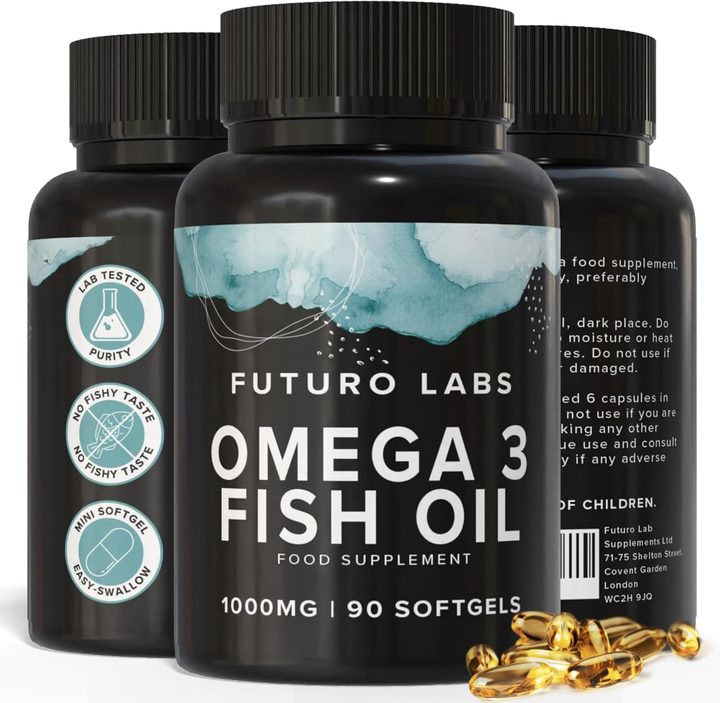
Our brand: the worked example on this page
Futuro Labs Omega 3 Fish Oil
- 17p a day
- 90 softgels, 1 softgel daily
- Lab tested
- Made in the UK
For the reader who fails any of the three conditions: Futuro Labs Omega 3 Fish Oil on Amazon UK, 1 softgel with food, 180mg EPA and 120mg DHA, 90 for £14.99 at 17p. Full label breakdown. The bodybuilder's fish audit is on the fish audit page; how to know if the body needs omega-3 on the how-to-know page.
The first condition, which fish, and the arithmetic that two oily portions produce
Do you need omega-3 if you eat fish twice a week is the question the whole oily-fish audit turns on, and its answer is no with three conditions hidden in the word fish, the word twice and the word week, so the honest page states the conditions and lets the reader check them. The first condition, which fish: the sentence assumes oily fish, and most readers who say they eat fish twice a week are counting the wrong ones. Oily fish, salmon, mackerel, sardines, pilchards, herring, kippers, trout, fresh tuna and tuna canned in oil, carry around one and a half to two grams of EPA and DHA a portion, the omega-3 living in the fish's fat, so two portions a week supply around three to four grams a week, which averaged across seven days is around 450mg a day, comfortably above the 250mg of EPA and DHA the register's heart claim is written for and above the 250mg of DHA the brain function and vision claims ask, the national dietary guidance's reason for recommending two portions with one oily, and above the 300mg a standard softgel carries, so a reader at two proper oily portions has the claims met by the plate and a softgel on top adds nothing but a gram of fat and 17p. White fish, cod, haddock, tilapia, pollock, basa, plaice and the light tuna canned in brine or water that lives in most gym cupboards, carry a few tens of milligrams of EPA and DHA a portion, up to a hundred or so for the tuna, the lean-fish composition data's gap of ten to fifty times, so two portions of those a week supply a few hundred milligrams a week, a few tens a day, and count for nothing against the claims, the bodybuilder's fish audit's finding that a lifter can eat fish twice a day and still carry a low-fish plate. The first condition, then, is that both portions are oily, and a reader with one oily and one white is at one oily portion, around 200mg a day, just under the claims, and takes the softgel.
The second and third conditions, which portion and which week, the reader who passes and the reader who fails, and the conditions filed
The second condition, which portion: the guidance's portion is around 140g cooked, a proper fillet of salmon or mackerel the size of a hand, a full tin of mackerel or sardines, a whole kipper, and the portions readers count are often smaller, a small tin of tuna at around 100g drained, a thin salmon fillet from a supermarket pack at 100g, three or four slices of smoked salmon at 60g or so, a handful of sardines on toast, each of them half a portion or less by the guidance's measure, so a reader who eats a small tin of oil-packed tuna and a few slices of smoked salmon a week is at around one portion rather than two and sits at the claims' edge rather than above them, the portion arithmetic mattering because the average is built from grams and not from occasions. The third condition, which week: the 450mg a day is an average across every week, and a plate that carries two oily portions most weeks, with a week away, a busy week and a week of takeaways in between, averages one and a half or one across the season, the membrane pool that omega-3 builds over three to four months being an average of those months rather than a record of the good weeks, so every week means every week, and a reader whose oily fish is a habit that lapses is a reader whose plate is a softgel short across the season. The reader who passes all three, two proper portions of oily fish every week, salmon on Sunday and a full tin of mackerel on Wednesday, needs no omega-3 supplement at all, the claims met, an index built on the plate to somewhere near the research range over time, and a softgel on top being harmless and pointless, the bad-daily page's one bad daily; and the reader who fails any one, the wrong fish, a small portion or a lapsing week, takes one standard softgel a day for the 250mg claim at 17p and keeps eating the fish for the rest of what a fish brings, protein, vitamin D, iodine and selenium, that a softgel does not. The two notes the conditions need: a pregnant reader keeps the two-portion limit on oily fish for pollutants and takes DHA from a body oil for the maternal claim with the midwife knowing; and a reader who wants the omega-3 index research range rather than the claims, around eight percent, reaches it on the plate over a longer horizon or adds the gram-a-day rung for a season. The conditions filed: both portions oily, each around 140g, every week, with a pass meaning no softgel and a fail on any one meaning one, and the worked example being the softgel for the reader who fails, £14.99 for 90 at 17p.
| The condition | Passes | Fails |
|---|---|---|
| Which fish | Salmon, mackerel, sardines, herring, trout, fresh or oil-packed tuna: one and a half to two grams a portion | Cod, haddock, tilapia, pollock, light tuna in brine: a few tens of milligrams |
| Which portion | Around 140g cooked: a proper fillet, a full tin, a whole kipper | A small tin, a thin fillet, a few slices of smoked salmon: half or less |
| Which week | Every week, across the season | Most weeks, with gaps: one averaged |
| The arithmetic on a pass | Around 450mg a day: above the 250mg claims and a standard softgel | No softgel needed |
| The arithmetic on a fail | One oily portion: around 200mg a day, just under; white fish: nothing | One standard softgel a day |
| What the fish gives that the softgel does not | Protein, vitamin D, iodine, selenium | Keep eating the fish either way |
The verdict, no softgel on a pass of all three conditions, and one on a fail of any
Do you need omega-3 if you eat fish twice a week: no, on three conditions the sentence hides, which fish, both portions being oily, salmon, mackerel, sardines, herring, trout or fresh tuna at one and a half to two grams of EPA and DHA a portion, averaging around 450mg a day and clearing the 250mg claims, while cod, tilapia and light tuna in brine carry a few tens of milligrams and count for nothing, which portion, each being around 140g cooked, a proper fillet or a full tin, rather than a small tin or a few slices, and which week, every week across the season rather than most weeks with gaps, since the membrane pool averages the months, so that a reader who passes all three needs no softgel and a reader who fails any one takes one standard softgel a day for the claim and keeps eating the fish for what a softgel does not bring. For the reader who fails any of the three: Futuro Labs Omega 3 Fish Oil, one with food, 180mg EPA and 120mg DHA, 90 for £14.99 at 17p a day.
What to check on the label
- Check the fish: oily, not white, and not tuna in brine.
- Check the portion: around 140g cooked, a proper fillet or a full tin.
- Check the week: every week, not most.
- Pass all three and skip the softgel: the plate meets the claims.
- Fail any and take one: and keep the fish for the protein, iodine and selenium.
Our brand
The worked example: Futuro Labs Omega 3 Fish Oil
Futuro Labs Omega 3 Fish Oil: 1 softgel daily with food, 1000mg fish oil providing 180mg EPA and 120mg DHA (300mg combined), 90 softgels for £14.99, 17p a day, lab-tested purity, UK GMP made. Gelatin shell, so not vegetarian.
- Fish oil per softgel
- 1000mg
- EPA / DHA per softgel
- 180mg / 120mg (300mg combined)
- Serving
- 1 softgel a day
- Bottle
- 90 softgels, 90 days
- Price
- £14.99 (17p a day)
- Softgel
- mini softgel, no fishy taste
Questions people also ask
How much omega-3 is in two portions of oily fish a week?
Around three to four grams of EPA and DHA a week from two proper 140g portions of salmon, mackerel, sardines, herring or trout, which averaged across seven days is around 450mg a day, above the 250mg the heart, brain function and vision claims are written for and above the 300mg a standard softgel carries.
Does cod or tuna count as oily fish?
No: cod, haddock, tilapia, pollock and light tuna canned in brine or water are lean fish carrying a few tens of milligrams of EPA and DHA a portion, up to a hundred or so for the tuna, against one and a half to two grams in oily fish, so two portions of them a week count for nothing against the claims, while fresh tuna steak and tuna canned in oil do count.
What is a portion of oily fish?
Around 140g cooked by the guidance's measure, a proper fillet of salmon or mackerel the size of a hand, a full tin of mackerel or sardines or a whole kipper, so that a small tin of tuna at around 100g drained, a thin 100g supermarket fillet or a few slices of smoked salmon is half a portion or less.
I eat oily fish most weeks, do I need a supplement?
Probably one softgel: the 450mg a day is an average across every week, and a plate with two oily portions most weeks and gaps in between averages one and a half or one across the season the membrane pool records, so a lapsing habit leaves the plate a softgel short and a standard softgel a day covers the gaps.
Is it better to eat fish or take fish oil?
Eat the fish if you can: two proper oily portions a week meet the claims and bring protein, vitamin D, iodine and selenium that a softgel does not, and the softgel is for the reader whose fish is the wrong kind, the wrong size or an unreliable habit, with a pregnant reader keeping the two-portion limit on oily fish and taking DHA from a body oil for the maternal claim.
Sources
- Scientific Advisory Committee on Nutrition and Committee on Toxicity. Advice on fish consumption: benefits and risks (two portions of fish a week, one oily). TSO, 2004. https://www.gov.uk/government/publications/sacn-advice-on-fish-consumption-benefits-and-risks
- The food composition data for fish: white and lean fish, cod, haddock, tilapia, pollock and canned light tuna, carry a few tens to a couple of hundred milligrams of EPA and DHA a portion, against around one and a half to two grams in salmon, mackerel, sardines and herring, so a diet of lean fish does not supply the omega-3 that oily fish does. PubMed record
- McCance and Widdowson's Composition of Foods integrated dataset (CoFID): the UK reference figures for nutrient content of foods, including EPA and DHA in fish. https://www.gov.uk/government/publications/composition-of-foods-integrated-dataset-cofid
- EFSA Panel on Dietetic Products. Scientific opinion on the substantiation of health claims related to EPA and DHA and normal function of the heart (250mg daily condition of use). EFSA Journal 2010;8(10):1796. https://www.efsa.europa.eu/en/efsajournal/pub/1796