Ghost Fitness/Omega-3/Does omega-3 affect muscle growth?
Does omega-3 affect muscle growth?
The short answer
Ask it in both directions. Help: the trials in trained adults find no consistent gain in size or strength and no claim exists. Hinder: a fair question for a fat with resolving effects, since high-dose anti-inflammatory drugs and antioxidants have blunted adaptation in some trials, and here the answer is also no, omega-3 not having been shown to blunt gains. No in both directions, so a lifter takes it for the audit without fear.
- Helpno consistent gain in size or strength in trained adults; possible protection in older adults; no claim
- Hinder, the fair questionhigh-dose anti-inflammatory drugs and antioxidants have blunted adaptation in some trials
- Hinder, the answeromega-3 not shown to blunt strength or size gains in the trials that added it to training
- The consequenceno in both directions: taken for the audit, without fear of losing gains
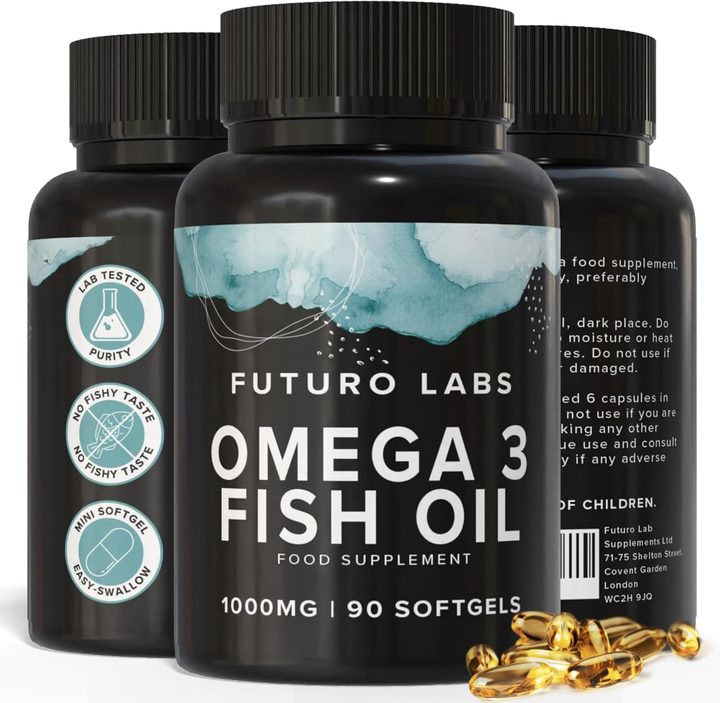
Our brand: the worked example on this page
Futuro Labs Omega 3 Fish Oil
- 17p a day
- 90 softgels, 1 softgel daily
- Lab tested
- Made in the UK
A fat that neither builds nor blunts, taken for its own sentences: Futuro Labs Omega 3 Fish Oil on Amazon UK, 1 softgel with food, 180mg EPA and 120mg DHA, 90 for £14.99 at 17p. Full label breakdown. Inside a fibre is on the why-good-for-muscle page; resolve versus suppress on the take-away-inflammation page.
Affect in the first direction, help, where the trials in the trained say no and the register agrees
Does omega-3 affect muscle growth is a question whose verb includes both directions, help and hinder, and the honest page asks both, because the first has been asked on every muscle page and the second is the one a thoughtful lifter should ask and rarely does. The first direction, help: the randomised trials that added omega-3 to a resistance training programme in trained young adults, at doses from a gram to several grams a day over eight to sixteen weeks, and measured lean mass and strength against placebo, found no consistent gain, the reviews settling the shape as a possible protection of muscle mass and function in older adults at gram doses over months and nothing in the trained, the muscle-claim-by-year page's fourth era and the inside-a-fibre page's sum, with the 2011 synthesis trial that started the story having measured a mechanism in a laboratory and no size at all, so omega-3 does not help muscle growth in the population that asks, and no growth, strength or muscle claim exists on the register, whose omega-3 sentences are heart, brain, vision, triglycerides and blood pressure, the protein claims belonging to protein and the performance claim to creatine. That is the answer every muscle page gives, and it is half of this one.
Affect in the second direction, hinder, why it is a fair question, why the answer is no, and both directions filed
The second direction, hinder, and why it is a fair question: the inflammation after a hard session is the first stage of repair and adaptation, the signal that recruits the cells and the synthesis that rebuild a trained muscle bigger, and the training adaptation literature has found that blunting that signal can blunt the adaptation, high doses of non-steroidal anti-inflammatory drugs taken around training having reduced muscle hypertrophy in some trials, and high doses of antioxidant vitamins C and E around training having blunted the adaptive response to endurance and resistance work in others, so a lifter who has read that omega-3 has anti-inflammatory or resolving effects asks a sensible question: if it damps the post-session response, does it cost gains? Why the answer is no: the same trials that answer the first direction answer the second, since a fat that blunted adaptation would have shown less gain than placebo in the trials that added it to training, and it did not, omega-3 not having been shown to blunt strength or size gains in trained adults in any of them, the adaptation literature's finding for omega-3 against the drugs and the antioxidants, and the mechanism explains why, the take-away-inflammation page's distinction, an anti-inflammatory drug suppressing the response from the start by blocking the enzymes that make its mediators, while omega-3 supplies the mediators that help a response end properly once it has done its work, resolution rather than suppression, so the signal that recruits the repair still fires and the repair still runs, with a little less soreness at gram doses over months as the felt trace of a response resolving a shade better rather than being switched off. So affect in both directions is no, omega-3 neither building muscle in the trained nor costing them gains, and the practical consequence is the one a lifter wants: fish oil is taken for the oily-fish audit's reasons, the 250mg heart claim and the index, without any fear that it blunts the adaptation the training is for, a fear that the drugs and the megadose antioxidants have earned and the fat has not. Both directions filed: help, no gain in the trained and no claim; hinder, a fair question with a no, omega-3 not blunting gains where high-dose anti-inflammatories and antioxidants have in some trials, by a mechanism of resolution rather than suppression, and the worked example being a fat that neither builds nor blunts, £14.99 for 90 at 17p.
| The direction | The evidence | The answer |
|---|---|---|
| Help | No consistent gain in size or strength in trained adults; possible protection in older adults | No; no growth claim |
| Hinder, the fair question | High-dose anti-inflammatory drugs and antioxidants have blunted adaptation in some trials | Worth asking of any fat with resolving effects |
| Hinder, the answer | Omega-3 not shown to blunt strength or size gains in the trials that added it to training | No |
| Why | Resolution, helping a response end, rather than suppression, stopping it starting | The repair signal still fires |
| The felt trace | A point or so less soreness at grams over months | A response resolving a shade better, not switched off |
| The consequence | Taken for the audit without fear of losing gains | The drugs and the megadoses earned the fear; the fat has not |
The verdict, no in both directions, and a fat a lifter can take without fear for their gains
Does omega-3 affect muscle growth: no in both directions, the help direction answered by the randomised trials that added omega-3 to resistance training in trained adults and found no consistent gain in size or strength, with possible protection in older adults and no growth claim on the register, and the hinder direction, a fair question for a fat with resolving effects since high-dose anti-inflammatory drugs and antioxidant vitamins around training have blunted adaptation in some trials, answered by the same trials, omega-3 not having been shown to blunt gains, because it helps a response resolve once it has done its work rather than suppressing it from the start, so that a lifter takes fish oil for the oily-fish audit's heart claim and index without fear for the adaptation the training is for. A fat that neither builds nor blunts: Futuro Labs Omega 3 Fish Oil, one softgel with food, 180mg EPA and 120mg DHA, 90 for £14.99 at 17p a day.
What to check on the label
- Ask both directions: help and hinder.
- Close help: no gain in the trained, no claim.
- Take hinder seriously: drugs and megadose antioxidants have blunted adaptation.
- Close hinder too: omega-3 has not blunted gains in any trial.
- Take it for the audit without fear: resolution is not suppression.
Our brand
The worked example: Futuro Labs Omega 3 Fish Oil
Futuro Labs Omega 3 Fish Oil: 1 softgel daily with food, 1000mg fish oil providing 180mg EPA and 120mg DHA (300mg combined), 90 softgels for £14.99, 17p a day, lab-tested purity, UK GMP made. Gelatin shell, so not vegetarian.
- Fish oil per softgel
- 1000mg
- EPA / DHA per softgel
- 180mg / 120mg (300mg combined)
- Serving
- 1 softgel a day
- Bottle
- 90 softgels, 90 days
- Price
- £14.99 (17p a day)
- Softgel
- mini softgel, no fishy taste
Questions people also ask
Can fish oil stop you building muscle?
No: the trials that added omega-3 to resistance training in trained adults found no less gain than placebo in size or strength, so it has not been shown to blunt adaptation, unlike high doses of anti-inflammatory drugs and antioxidant vitamins C and E around training, which have blunted hypertrophy or adaptation in some trials.
Why might an anti-inflammatory supplement hurt muscle growth?
Because the inflammation after a hard session is the first stage of repair and adaptation, and blunting that signal can blunt the adaptation, which is what high-dose anti-inflammatory drugs and high-dose antioxidants around training have done in some trials; omega-3 helps a response resolve once it has done its work rather than suppressing it from the start, so the repair signal still fires.
Does omega-3 build muscle in trained lifters?
No: the randomised trials in trained young adults at a gram to several grams a day over eight to sixteen weeks found no consistent gain in lean mass or strength over placebo, the reviews settling the shape as possible protection in older adults and nothing in the trained, with no growth claim on the register.
Should I avoid fish oil around training to protect my gains?
No: there is no trial evidence that omega-3 blunts gains at any timing or dose, and the mechanism, resolution rather than suppression, leaves the post-session repair signal intact, so it is taken with a meal by the oily-fish audit for the heart claim and the index, with training timing irrelevant to it.
What is the difference between omega-3 and ibuprofen for muscle adaptation?
Ibuprofen and its relatives suppress the post-session response from the start by blocking the enzymes that make its mediators, and at high doses around training have reduced hypertrophy in some trials, while omega-3 supplies the mediators that help the response end properly after months of membrane building, leaving the signal that recruits repair to fire and the trials showing no cost to gains.
Sources
- The training adaptation literature: high doses of non-steroidal anti-inflammatory drugs and of antioxidant vitamins C and E taken around training have blunted muscle hypertrophy or adaptation in some trials, while omega-3 supplementation has not been shown to blunt strength or size gains in trained adults in the trials that added it to resistance training. PubMed record
- McGlory C, Calder PC, Nunes EA. The influence of omega-3 fatty acids on skeletal muscle protein turnover in health, disuse, and disease. Frontiers in Nutrition 2019;6:144. PubMed record
- The specialised pro-resolving mediator literature: EPA and DHA in cell membranes are converted to resolvins, protectins and maresins that help inflammation resolve, a mechanism demonstrated in cell and animal models and in human blood after supplementation, without an authorised inflammation claim for omega-3 in the UK. PubMed record
- The omega-3 and muscle-preservation literature: trials in older adults report preserved or modestly increased muscle mass and function with omega-3 at two to four grams a day over months, and trials in immobilised limbs report reduced muscle loss, a protective rather than a building effect, absent in trained young adults. PubMed record