Ghost Fitness/Omega-3/What happens if not enough omega-3?
What happens if not enough omega-3?
The short answer
Silently, mostly: EPA and DHA shortfall produces no reliable symptoms, just an unmaintained status, a low omega-3 index and unclaimed maintenance territory. True clinical deficiency is rare. The fix is a fish portion or 17p a day.
- Essential fatsthe body cannot make the family from scratch: intake is the source
- The common casesub-optimal status: silent, symptomless, measurable
- The rare casetrue clinical deficiency: uncommon in developed diets
- The fixone oily portion a week, or a 300mg softgel at 17p
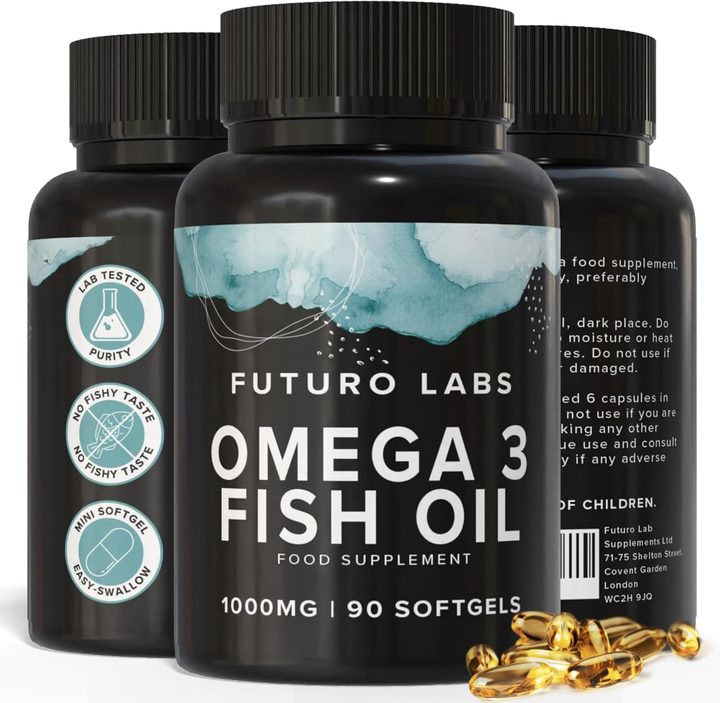
Our brand: the worked example on this page
Futuro Labs Omega 3 Fish Oil
- 17p a day
- 90 softgels, 1 softgel daily
- Lab tested
- Made in the UK
The 17p end of the fix: Futuro Labs Omega 3 Fish Oil on Amazon UK, 300mg EPA+DHA daily, £14.99 for 90 days. Label breakdown. How to find out where you stand is on the getting-enough page; the food route on the richest sources table.
The three layers: essential, sub-optimal, and truly deficient
The honest answer has three layers that the internet's version flattens into one. Layer one, the biology: omega-3s are essential fats, the body unable to synthesise the family from scratch, which makes intake the only source and gives the question real stakes rather than rhetorical ones, EPA and DHA being structural residents of cell membranes, the brain and the retina, with conversion from plant ALA too inefficient to rely on. Layer two, the common reality: what a low-fish, no-capsule diet actually produces is not a disease but a status, tissue levels at the low end, an omega-3 index well under the research literature's favourable zone, intake below the 250mg claim floor, and the maintenance territories the register describes standing unclaimed, all of it silent, symptomless and invisible until counted or tested, which is precisely why the getting-enough page teaches counting and testing rather than feeling. Layer three, the rare case: true clinical essential-fatty-acid deficiency, with documented signs, exists in medicine and belongs almost entirely to exceptional situations, severe malabsorption, certain clinical feeding contexts, not to ordinary developed-world diets however fish-free, a distinction that keeps the word deficiency from being borrowed for marketing.
What does not happen, what the evidence adds, and the cheap repair
The folklore layer needs clearing by name: the internet's symptom list for low omega-3, dry skin, brittle hair, brain fog, low mood, poor concentration, is a set of complaints so common and so many-caused that none of them diagnoses anything, and running life below the claim floor does not announce itself through any of them, sufficiency and shortfall alike feeling of nothing, the maintenance design working in both directions. What the evidence honestly adds around the silence: population studies associate low fish and omega-3 intake with less favourable long-run cardiovascular profiles, observational findings that motivate the food-first advice without converting into personal predictions, and the UK framework's two-portions-one-oily guidance is that evidence translated into dinner. Which leaves the repair, and its cheapness is the page's real conclusion: a shortfall assembled over years of fish-free eating is closed prospectively by one to two oily portions a week, or by 250-to-300mg of the pair daily at 17p where the plate declines, with the tissue clock rebuilding status over the three-to-four months the how-long page maps and the omega-3 index available to anyone who wants the before-and-after in numbers. Nothing dramatic happened; nothing dramatic is needed; the gap simply waits, and closes for pence.
| The layer | What actually happens | The response |
|---|---|---|
| Essentiality | Intake is the only source: the stakes are real | Why the question deserves a straight answer |
| Sub-optimal status (the common case) | Silent: low index, unclaimed maintenance territory | Count the week, or test the index |
| True clinical deficiency (the rare case) | Documented, uncommon, clinical contexts | Medicine's territory, not the aisle's |
| The folklore symptoms | Dry skin, brain fog, low mood: diagnose nothing | Retired: shortfall is symptomless |
| The population evidence | Observational associations behind food-first advice | Motivation, not personal prediction |
| The repair | Oily portions, or 300mg daily | Months of consistency; 17p a day |
The verdict, and the silence taken seriously
What happens if not enough omega-3: mostly nothing you can feel, which is the finding worth taking seriously rather than shrugging at, a shortfall in an essential fat accruing silently as low tissue status and unclaimed maintenance territory, with true clinical deficiency a rare, medical affair and the internet's symptom checklist diagnosing only its own popularity. Silence is why the counting and testing pages exist, and cheapness is why the gap never needs to persist: fish when the plate cooperates, the softgel when it does not. The worked example is the 17p end of that repair: Futuro Labs Omega 3 Fish Oil, 300mg of EPA and DHA per mini softgel with dinner, £14.99 for 90 days, lab-tested, UK made, the difference between an unclaimed maintenance territory and a claimed one, priced at less than the morning paper.
What to check on the label
- Essential means intake-only: the body cannot build the family itself.
- The common shortfall is silent: a status, not a symptom set.
- True deficiency is rare and clinical: not a marketing word.
- The folklore symptoms diagnose nothing: count or test instead.
- The repair costs a portion or 17p: months of consistency close the gap.
Our brand
The worked example: Futuro Labs Omega 3 Fish Oil
Futuro Labs Omega 3 Fish Oil: 1 softgel daily with food, 1000mg fish oil providing 180mg EPA and 120mg DHA (300mg combined), 90 softgels for £14.99, 17p a day, lab-tested purity, UK GMP made. Gelatin shell, so not vegetarian.
- Fish oil per softgel
- 1000mg
- EPA / DHA per softgel
- 180mg / 120mg (300mg combined)
- Serving
- 1 softgel a day
- Bottle
- 90 softgels, 90 days
- Price
- £14.99 (17p a day)
- Softgel
- mini softgel, no fishy taste
Questions people also ask
What are the symptoms of omega-3 deficiency?
Reliably, none: the internet's list is too common and too many-caused to diagnose anything. Shortfall is silent, which is why counting intake or testing the index is the only honest check.
Can you actually become deficient in omega-3?
True clinical deficiency exists and is rare, belonging to exceptional medical contexts: the ordinary fish-free diet produces sub-optimal status, a quieter and far more common thing.
Does low omega-3 affect the brain or heart?
The register's maintenance claims describe what adequate intake maintains, and population studies associate low intake with less favourable long-run profiles: motivation for the food-first advice, not a personal prediction.
How long does it take to fix a shortfall?
The tissue clock runs on months: three to four of consistent portions or capsules rebuilds status, visible to anyone who runs an omega-3 index test before and after.
What is the cheapest way to never worry about this?
One to two oily portions a week, or one 300mg softgel with dinner at 17p: the gap closes for pence and stays closed on consistency.
Sources
- EFSA Panel on Dietetic Products. Scientific opinion on Dietary Reference Values for fats: Adequate Intake of 250mg combined EPA and DHA per day for adults. EFSA Journal 2010;8(3):1461. https://www.efsa.europa.eu/en/efsajournal/pub/1461
- Harris WS, von Schacky C. The omega-3 index: red blood cell EPA and DHA as a measurable marker of omega-3 status, the research standard for judging how effectively intake raises tissue levels. PubMed record
- Scientific Advisory Committee on Nutrition and Committee on Toxicity. Advice on fish consumption: benefits and risks (two portions of fish a week, one oily). TSO, 2004. https://www.gov.uk/government/publications/sacn-advice-on-fish-consumption-benefits-and-risks
- EFSA Panel on Dietetic Products. Scientific opinion on the substantiation of health claims related to EPA and DHA and normal function of the heart (250mg daily condition of use). EFSA Journal 2010;8(10):1796. https://www.efsa.europa.eu/en/efsajournal/pub/1796
- Futuro Labs Omega 3 Fish Oil listing: 1000mg fish oil per softgel providing 180mg EPA and 120mg DHA, 90 softgels. Amazon UK, accessed 31 August 2026. https://www.amazon.co.uk/dp/B0CP9T3BTN