Ghost Fitness/Omega-3/What should you not mix omega-3 with?
What should you not mix omega-3 with?
The short answer
Almost nothing. Omega-3 is a fat absorbed with the meal's fats, so no vitamin, mineral or supplement binds or blocks it, and the only entry in the ask column is anticoagulant and antiplatelet medicines, where fish oil's modest antiplatelet effect is a prescriber's conversation at high doses. The folklore conflicts are retired. The real enemies are heat, light and air, which oxidise the oil in the tub.
- Ask firstwarfarin, direct oral anticoagulants, aspirin, clopidogrel: a modest antiplatelet effect, a prescriber's conversation at grams a day
- Binds or blocks itnothing: a fat absorbed with the meal's fats
- Folklore conflicts retiredvitamin E, added to fish oil as an antioxidant; iron; calcium; caffeine
- The real enemiesheat, light and air: oxidation in the tub, the fridge and a closed lid the fix
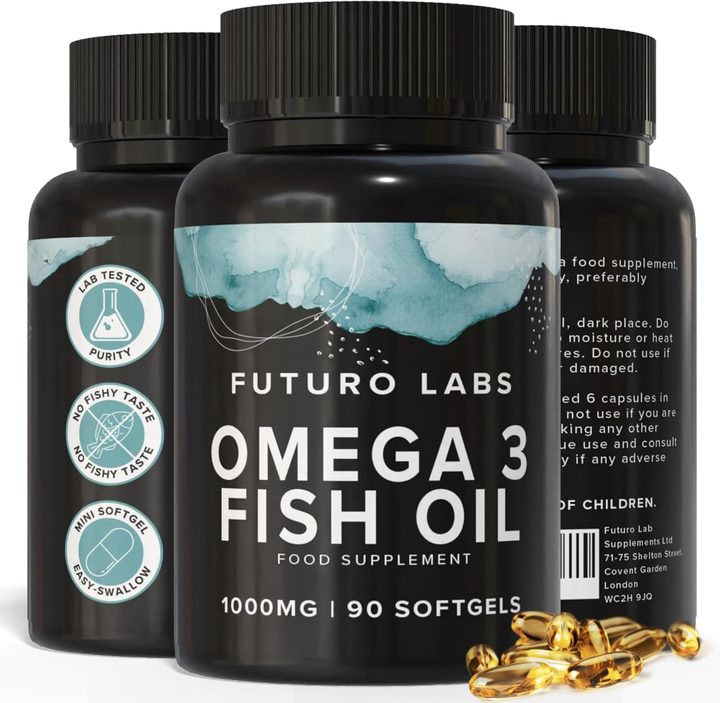
Our brand: the worked example on this page
Futuro Labs Omega 3 Fish Oil
- 17p a day
- 90 softgels, 1 softgel daily
- Lab tested
- Made in the UK
A fish oil with nothing to keep it away from but the sun: Futuro Labs Omega 3 Fish Oil on Amazon UK, 1 softgel with food, 180mg EPA and 120mg DHA, lab-tested purity, 90 for £14.99 at 17p. Full label breakdown. Storage is on the storage page; the vitamin question on the fish oil and vitamins page.
The matrix, the one ask column entry, and why nothing in the cupboard binds a fat
What should you not mix omega-3 with is answered by a compatibility matrix whose bad column is almost empty, because omega-3 is a fat and fats are not bound, chelated or blocked by the things that bind minerals. The one entry in the ask column: anticoagulant and antiplatelet medicines, warfarin, the direct oral anticoagulants, aspirin and clopidogrel, since EPA and DHA modestly reduce platelet stickiness, an effect that is small at supplement doses, that the regulator's five-gram safe level took into account, that the trials at doses up to five grams did not find materially raised bleeding from, and that the pharmaceutical omega-3 preparations carry a note about, so a reader on any of those medicines mentions a fish oil to the prescriber, especially at the gram-and-above doses of the research rungs, and a reader facing surgery mentions it to the surgical team, the turmeric side-effects page's overlap. That is the whole ask column. Nothing binds or blocks it: the tetracyclines, fluoroquinolones, bisphosphonates and levothyroxine that chelate with minerals do nothing to a fat; phytate, calcium and zinc, the mineral competitors, are irrelevant to an oil; protein, creatine, magnesium, vitamin D and the rest of the cupboard sit beside a softgel without conflict, the compatibility pages' gets-on-with column applied to a fat, which absorbs into the lymph with the meal's other fats by a route no supplement competes for. The one substance that changes how much omega-3 is absorbed is the meal's fat itself, which helps, an ethyl ester oil absorbing several-fold better with a high-fat meal and a triglyceride oil a little better, so the honest mixing instruction is to mix it with dinner.
Three folklore conflicts retired, the three real enemies, and the matrix filed
Three folklore conflicts are retired. Vitamin E: the story that vitamin E should not be taken with fish oil is the reverse of the practice, since vitamin E is added to most fish oils as an antioxidant to slow their oxidation, appears on the ingredients list as tocopherols, and is taken with the softgel by everyone who takes one, the fat-soluble shelf's rule putting both at the same fatty meal. Iron and calcium: minerals that compete with other minerals and do nothing to a fat, the iron-and-fish-oil and calcium-and-fish-oil worries having no mechanism and no trial. Caffeine: a coffee beside a softgel affects nothing, caffeine binding no fat. And a fourth, alcohol, drains nothing from a fish oil in the gut, moderate alcohol being irrelevant to omega-3 absorption, though heavy drinking is its own subject. The three real enemies of omega-3 are not in the cupboard but in the tub: heat, light and air oxidise EPA and DHA, the double bonds that make them useful being the bonds that oxygen attacks, so a fish oil left on a sunny windowsill, in a hot car or in a tub opened and closed for months with a broken seal goes rancid, its peroxide and anisidine values rising past the monograph's limits and its taste turning to paint or old nuts, the freshness read that matters more than any stacking question, with the fixes being a cool dark cupboard or the fridge, a lid closed properly, a tub sized to be finished within a couple of months of opening, and a bitten softgel now and then as a test. The matrix filed: ask about anticoagulants and antiplatelets, mix it with nothing to avoid because nothing binds a fat, retire the vitamin E, iron, calcium and caffeine stories, and keep the oil from heat, light and air, the worked example being a fish oil with nothing to keep it away from but the sun, one softgel with food at 17p, £14.99 for 90.
| The column | The entries | The rule |
|---|---|---|
| Ask first | Warfarin, direct oral anticoagulants, aspirin, clopidogrel | Mention it to the prescriber, especially at grams a day; and before surgery |
| Binds or blocks it | Nothing | A fat absorbed with the meal's fats |
| Gets on with | Protein, creatine, magnesium, vitamin D, the whole cupboard | Take them together at a fatty meal |
| Folklore retired | Vitamin E, iron, calcium, caffeine | Vitamin E is added to fish oil as an antioxidant |
| Helps it | The meal's fat | An ethyl ester absorbs several-fold better with fat |
| The real enemies | Heat, light, air | A cool dark cupboard or the fridge; the lid closed; finished within months |
The verdict, one medicine class to ask about, and a tub to keep out of the sun
What should you not mix omega-3 with: almost nothing, omega-3 being a fat absorbed with the meal's other fats that no vitamin, mineral or supplement binds or blocks, the only ask-column entry being anticoagulant and antiplatelet medicines, where fish oil's modest antiplatelet effect is a prescriber's conversation at gram-and-above doses and before surgery, with the vitamin E, iron, calcium and caffeine stories retired, vitamin E being added to fish oil as its antioxidant, and the real enemies of a fish oil being heat, light and air in the tub, which oxidise the oil and are answered by storage rather than stacking. A fish oil with nothing to keep it away from but the sun: Futuro Labs Omega 3 Fish Oil, one softgel with food, 180mg EPA and 120mg DHA, 90 for £14.99 at 17p a day.
What to check on the label
- Ask about anticoagulants and antiplatelets: the one entry, at grams a day.
- Mix it with anything else: nothing binds a fat.
- Retire the vitamin E story: it is in the softgel already.
- Mix it with the meal's fat: the one thing that helps.
- Keep it from heat, light and air: the real enemies.
Our brand
The worked example: Futuro Labs Omega 3 Fish Oil
Futuro Labs Omega 3 Fish Oil: 1 softgel daily with food, 1000mg fish oil providing 180mg EPA and 120mg DHA (300mg combined), 90 softgels for £14.99, 17p a day, lab-tested purity, UK GMP made. Gelatin shell, so not vegetarian.
- Fish oil per softgel
- 1000mg
- EPA / DHA per softgel
- 180mg / 120mg (300mg combined)
- Serving
- 1 softgel a day
- Bottle
- 90 softgels, 90 days
- Price
- £14.99 (17p a day)
- Softgel
- mini softgel, no fishy taste
Questions people also ask
What should not be taken with fish oil supplements?
Almost nothing: no vitamin, mineral or supplement binds or blocks a fat, so the only thing to ask about is anticoagulant and antiplatelet medicines, warfarin, direct oral anticoagulants, aspirin and clopidogrel, where fish oil's modest antiplatelet effect is a prescriber's conversation, especially at gram-and-above doses and before surgery.
Can you take vitamin E with fish oil?
Yes, and you already do: vitamin E is added to most fish oils as an antioxidant to slow oxidation, listed as tocopherols in the ingredients, so the folklore that the two should be separated is the reverse of the practice.
Does anything reduce fish oil absorption?
Only the absence of fat: an ethyl ester oil absorbs several-fold better with a high-fat meal than fasted and a triglyceride oil a little better, so the mixing instruction that matters is to take the softgel with dinner rather than on an empty stomach.
Can I take fish oil with iron or calcium?
Yes: iron and calcium compete with other minerals for absorption and do nothing to a fat, the worries having no mechanism and no trial, so a softgel sits beside an iron tablet or a yoghurt without conflict.
What actually ruins omega-3?
Heat, light and air: oxygen attacks the double bonds that make EPA and DHA useful, so a tub on a sunny windowsill, in a hot car or open for months goes rancid, its peroxide and anisidine values rising and its taste turning to paint, fixed by a cool dark cupboard or the fridge, a closed lid and a tub finished within a couple of months.
Sources
- EFSA Panel on Dietetic Products. Scientific opinion on the tolerable upper intake level of EPA, DHA and DPA: supplemental intakes of EPA and DHA combined up to about 5g/day do not raise safety concerns for adults. EFSA Journal 2012;10(7):2815. https://www.efsa.europa.eu/en/efsajournal/pub/2815
- Electronic medicines compendium (emc): Summaries of Product Characteristics for omega-3-acid ethyl esters 1000mg capsules (Omacor and generics) and icosapent ethyl (Vazkepa). https://www.medicines.org.uk/emc/search?q=omega-3-acid+ethyl+esters
- Classic absorption work on fish oil ethyl esters: uptake is markedly higher when ethyl ester omega-3 is taken with a high-fat meal, narrowing the gap to triglyceride forms. PubMed record
- The fish oil oxidation literature: oxidation is measured by peroxide value, anisidine value and their combination as TOTOX, with the industry monograph setting limits of 5, 20 and 26 respectively, and surveys of retail fish oils finding a meaningful share above those limits, freshness being a quality dimension a label rarely shows and a certificate does. PubMed record