Ghost Fitness/Omega-3/Does fish oil help tendon health?
Does fish oil help tendon health?
The short answer
The tendon's shopping list. A tendon is collagen built and rebuilt in response to progressive load, so the list is the load, which outperforms rest in every trial, protein for the collagen's amino acids, vitamin C for the register's normal collagen formation claim, and the gelatin-and-vitamin-C pre-loading protocol as a research adjunct. Fish oil is not on the list: no trial for tendons and no mechanism placing it there.
- The loadprogressive tendon loading: drives adaptation; the core of rehabilitation; outperforms rest and passive treatments
- Protein and vitamin Caround 1.6 grams per kilogram for the amino acids; vitamin C holds the normal collagen formation claim for cartilage and bones
- The research adjunctaround 15g of gelatin or hydrolysed collagen with vitamin C an hour before loading: synthesis markers; a physiotherapist's conversation
- Fish oilnot on the list: no tendon trial, no mechanism; a softgel for the plate
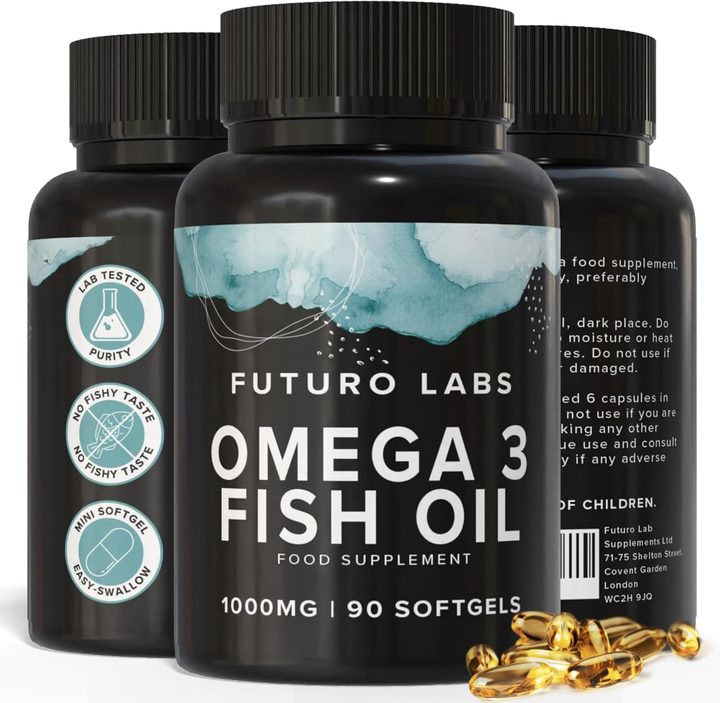
Our brand: the worked example on this page
Futuro Labs Omega 3 Fish Oil
- 17p a day
- 90 softgels, 1 softgel daily
- Lab tested
- Made in the UK
A softgel for the plate, off the tendon's list: Futuro Labs Omega 3 Fish Oil on Amazon UK, 1 softgel with food, 180mg EPA and 120mg DHA, 90 for £14.99 at 17p. Full label breakdown. The pre-loading protocol kept honest is on the collagen for lifters page; the heavy lifter's pain map on the heavy lifting page.
What a tendon is and how it changes, and the first item on its list, the load
Does fish oil help tendon health is a question best answered by a shopping list, the tendon's own, because a tendon is a specific tissue with specific needs and the list is short enough to check a supplement against. What a tendon is: a rope of type 1 collagen fibres, laid down in parallel by the tendon's cells, that transmits a muscle's pull to a bone, with a slow metabolism and a slow turnover, the collagen of an adult tendon being replaced over years rather than months, the connective tissue literature's account, and what changes it is load, progressive mechanical loading over months stiffening and thickening the tendon as its cells lay down more collagen and align it, the barbell adaptation literature's finding, so a tendon is built by the training it is exposed to and by nothing else, which is the first and largest item on the list. The load in rehabilitation: when a tendon's load outruns its adaptation and it becomes painful, a tendinopathy, the core of treatment is progressive loading again, slow heavy isometrics that settle the pain and then heavy slow eccentrics and concentrics that rebuild the capacity, guided by a physiotherapist and adjusted by the pain response, the tendinopathy literature's programme, with complete rest, passive treatments and injections performing worse than loading in the trials, so the load is both the tendon's builder and its repairer, and a lifter with a sore patellar or Achilles tendon has a loading programme before any purchase.
The rest of the list, protein, vitamin C and the research adjunct, why fish oil is not on it, and the list filed
The second item, protein: collagen is protein, built from amino acids, glycine, proline and hydroxyproline above all, that the diet supplies, so a tendon adapting to load needs the protein a lifter already eats for muscle, at around 1.6 grams per kilogram a day, holding the register's sentences for muscle and, through its amino acids, supplying the raw material of every tendon fibre, the protein claims' authorisation. The third item, vitamin C: the enzymes that cross-link and stabilise new collagen need vitamin C as a cofactor, without which collagen cannot be made properly, the scurvy of sailors being a collagen failure, and the register authorises vitamin C contributes to normal collagen formation for the normal function of cartilage, bones, skin, blood vessels, gums and teeth, the one authorised sentence on the list that mentions collagen at all, met by a portion of fruit or vegetables a day or by a cheap tablet. The fourth item, the research adjunct: a small literature has studied around 15g of gelatin or hydrolysed collagen taken with vitamin C about an hour before a loading session, on the logic that the exercise window raises collagen synthesis and the nutrients supply substrate and cofactor, with early studies reporting changes in collagen synthesis markers, work designed around rehabilitation contexts, small, marker-based and claim-free, the gelatin and vitamin C literature's protocol, which is an adjunct to raise with the physiotherapist running a programme and not a purchase to make instead of one, the collagen pages' honest description. Why fish oil is not on the list: a tendon's cells have membranes like any cell and take up EPA and DHA like any tissue, and that is where the story ends, since no trial has tested omega-3 for tendon adaptation, tendon healing, tendinopathy pain or tendon stiffness in humans, no mechanism places a resolving lipid mediator in the collagen-laying process that load drives, and the tendon literature does not mention it, so the softgel is taken for the plate's heart claim and expected to do nothing for a tendon, the one joint file omega-3 has being inflammatory arthritis, an immune disease of the joint lining and not a tendon matter. The list filed: the load as builder and repairer, protein as the amino acids, vitamin C as the cofactor with the register's claim, the gelatin-and-vitamin-C protocol as a research adjunct for a physiotherapist's conversation, and fish oil absent with no trial and no mechanism, with the worked example being a softgel for the plate, £14.99 for 90 at 17p.
| The item | What it does for a tendon | The evidence |
|---|---|---|
| Progressive load | Builds and repairs: stiffens and thickens the tendon; the core of tendinopathy rehabilitation | Outperforms rest and passive treatments in the trials |
| Protein | The amino acids the collagen is built from, at around 1.6 grams per kilogram | The register's muscle sentences; the raw material |
| Vitamin C | The cofactor for collagen cross-linking | The register's normal collagen formation claim for cartilage and bones |
| Gelatin or hydrolysed collagen with vitamin C before loading | Substrate and cofactor in the exercise window | Small marker-based studies; a research adjunct; no claim |
| Fish oil | Nothing specific to a tendon | No trial for adaptation, healing or pain; no mechanism |
| The one omega-3 joint file | Inflammatory arthritis of the joint lining | Not a tendon matter |
The verdict, a short list with load at the top and fish oil nowhere on it
Does fish oil help tendon health: no, on the tendon's own shopping list, a tendon being collagen built and rebuilt slowly in response to progressive load, so that the list is the load itself, which drives adaptation and is the core of tendinopathy rehabilitation and outperforms rest and passive treatments in every trial, protein at around 1.6 grams per kilogram for the amino acids the collagen is built from, vitamin C as the cofactor holding the register's claim for normal collagen formation for the normal function of cartilage and bones, and the gelatin-and-vitamin-C pre-loading protocol as a small, marker-based research adjunct for a physiotherapist's conversation, with fish oil absent from the list because no trial has tested it for tendon adaptation, healing or pain and no mechanism places it there. A softgel for the plate, off the tendon's list: Futuro Labs Omega 3 Fish Oil, one with food, 180mg EPA and 120mg DHA, 90 for £14.99 at 17p a day.
What to check on the label
- Load the tendon progressively: the builder and the repairer.
- Eat the protein: 1.6 grams per kilogram supplies the collagen's amino acids.
- Get the vitamin C: the cofactor with the only collagen claim.
- Raise the gelatin protocol with a physiotherapist: a research adjunct, not a purchase.
- Leave fish oil off the list: no trial, no mechanism; take it for the plate.
Our brand
The worked example: Futuro Labs Omega 3 Fish Oil
Futuro Labs Omega 3 Fish Oil: 1 softgel daily with food, 1000mg fish oil providing 180mg EPA and 120mg DHA (300mg combined), 90 softgels for £14.99, 17p a day, lab-tested purity, UK GMP made. Gelatin shell, so not vegetarian.
- Fish oil per softgel
- 1000mg
- EPA / DHA per softgel
- 180mg / 120mg (300mg combined)
- Serving
- 1 softgel a day
- Bottle
- 90 softgels, 90 days
- Price
- £14.99 (17p a day)
- Softgel
- mini softgel, no fishy taste
Questions people also ask
What supplements help tendons?
Protein at around 1.6 grams per kilogram for the amino acids collagen is built from, vitamin C as the cofactor holding the register's claim for normal collagen formation for cartilage and bones, and, as a research adjunct to raise with a physiotherapist, around 15g of gelatin or hydrolysed collagen with vitamin C an hour before loading, with progressive load doing the work and fish oil not on the list.
Does omega-3 help tendonitis or tendinopathy?
No: no trial has tested omega-3 for tendinopathy pain, healing or adaptation, no mechanism places it in the collagen-laying process that load drives, and the core of tendinopathy treatment is progressive loading guided by a physiotherapist, which outperforms rest, passive treatments and injections in the trials.
Does fish oil strengthen tendons and ligaments?
No: tendons and ligaments stiffen and thicken in response to progressive mechanical load over months, supported by protein and vitamin C, and no trial has found omega-3 altering tendon or ligament adaptation, the one omega-3 joint file being inflammatory arthritis of the joint lining rather than a tendon matter.
What is the collagen and vitamin C protocol for tendons?
A small research literature studying around 15g of gelatin or hydrolysed collagen taken with vitamin C about an hour before a loading session, on the logic that the exercise window raises collagen synthesis and the nutrients supply substrate and cofactor, with early studies reporting changes in synthesis markers, a marker-based, claim-free adjunct to discuss with the physiotherapist running a programme.
How long does a tendon take to adapt to training?
Months: a tendon's collagen turns over slowly, over years in an adult, and progressive loading stiffens and thickens it over months rather than weeks, which is why tendinopathy rehabilitation is a programme of months and why a tendon that hurts under a new load needs the load managed rather than a supplement bought.
Sources
- The tendinopathy and loaded-joint pain literature: pain at the patellar, Achilles, rotator cuff and elbow tendons in lifters is a load-management problem, treated by progressive tendon loading, technique and volume adjustment, with rest alone and passive treatments performing poorly, and no supplement, omega-3 included, altering the course in the trials. PubMed record
- The connective tissue and bone loading literature: tendons, ligaments and bone adapt to progressive loading over months, tendons stiffening and bone mineral density rising with resistance training, with the adaptation driven by the load itself and protein, calcium and vitamin D as the nutritional supports, and no evidence that omega-3 alters tendon, ligament or bone adaptation to training. PubMed record
- The gelatin and vitamin C pre-exercise research (Shaw, Baar and colleagues): 15g gelatin with vitamin C taken about an hour before loading, studied for markers of collagen synthesis, the protocol behind the tendon-training conversation. PubMed record
- Review literature on tendinopathy management: progressive, load-based rehabilitation is the established core of treatment, typically guided by a physiotherapist, with passive approaches and complete rest performing worse. PubMed record