Ghost Fitness/Omega-3/What is bettervits omega-3?
What is bettervits omega-3?
The short answer
It is whatever its label says, read by the five reads: the EPA and DHA per softgel, since a standard fish oil delivers around 300mg per 1000mg and a concentrate more; the form, triglyceride or ethyl ester; the softgels to your target; the pence per hundred milligrams against 5.7p; and the testing certificate. Online brands rarely state the form or the TOTOX number, which a buyer asks for before buying.
- Read onethe EPA and DHA per softgel: around 300mg in a standard 1000mg fish oil, more in a concentrate
- Read twothe form: triglyceride stated, or unstated and read as ethyl ester
- Reads three and fourthe softgels to your target; the pence per hundred milligrams against 5.7p
- Read fivethe certificate: oxidation and contaminants by batch; ask if the page does not show it
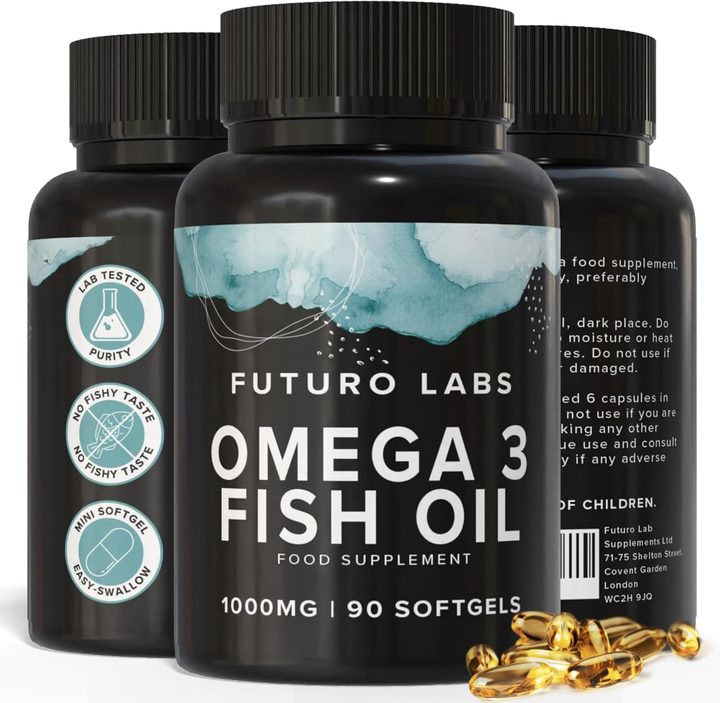
Our brand: the worked example on this page
Futuro Labs Omega 3 Fish Oil
- 17p a day
- 90 softgels, 1 softgel daily
- Lab tested
- Made in the UK
The benchmark with the five reads on its label: Futuro Labs Omega 3 Fish Oil on Amazon UK, 1000mg fish oil providing 180mg EPA and 120mg DHA, lab-tested purity, UK GMP made, 90 for £14.99 at 17p. Full label breakdown. The label-check page is here; the store checks on the store guide.
What it is, which is whatever the label says, and the five reads that turn a label into an answer
What an online UK vitamin brand's omega-3 is has an answer that sounds evasive and is precise: it is whatever its label says it is, and this site teaches a reader to read that label rather than reviewing a brand whose range, softgel counts and prices change with each listing, so this page is the five reads applied to an online brand's product page. Read one, the EPA and DHA per softgel: the product page and the nutrient table say a fish oil weight, 1000mg being typical, and an EPA and DHA line, around 300mg combined in a standard oil at 30% and 500mg or more in a concentrate, and only the second number is what a reader buys, an online listing that leads with omega-3 or fish oil totals having led with the carrier, the 1000mg pages' decode. Read two, the form: triglyceride or re-esterified triglyceride, stated on a product page that has one, or nothing, in which case the oil is read as ethyl ester and taken with the fattiest meal, since an ethyl ester absorbs several-fold better with fat, the absorption literature's finding, and online brands' pages often describe the source in loving detail and the form not at all. Read three, the softgels to the reader's own target, 250mg for the register's heart claim and 250mg of DHA for the brain and vision claims, around a gram for the omega-3 index research, two and three grams for the triglyceride and blood pressure claims, a standard oil reaching the first in one softgel and the index in three. Read four, the pence per hundred milligrams of EPA and DHA, the price divided by the softgels times the actives per softgel in hundreds, compared against the benchmark's 5.7p, a subscription discount rerun into the sum if the brand offers one.
Read five, the certificate, the two things an online page rarely states, the purity phrase decoded, and the checklist filed
Read five, the certificate: fish oil's quality dimensions, actives accuracy, oxidation, contaminants, form and source, are evidenced by a certificate of analysis for the batch, showing peroxide, anisidine and TOTOX values against the monograph's limits of 5, 20 and 26 and heavy metals, dioxins and PCBs against the contaminant regulation, and an online brand either publishes it, links to it or supplies it on request, the reply being the quality answer. The two things an online brand's page rarely states are the form and the oxidation numbers, and both are asked for before buying: a customer service message asking which form the oil is and what the current batch's TOTOX value is takes a minute, and a brand that answers both with a certificate has evidenced its product while a brand that answers with a purity phrase has not. The purity phrase, since online listings lean on it: sustainably sourced, molecularly distilled, purity tested and pharmaceutical grade describe processes and intentions rather than results, molecular distillation being the standard contaminant-removal step every reputable fish oil uses and pharmaceutical grade having no legal meaning for a supplement, so the phrases are read as neutral and the certificate as the evidence. The UK compliance line applies as to any product sold here, a UK business name and address, the words food supplement, a batch number and best-before, and only the register's omega-3 sentences, any anti-inflammatory, joint, weight or immune sentence disqualifying the listing whatever its ratings. The checklist filed: an online brand's omega-3 is whatever its label says, read by the EPA and DHA per softgel, the form, the softgels to the target, the pence per hundred milligrams and the certificate, with the form and the TOTOX asked for before buying and the purity phrases read as neutral, and the worked example being the benchmark with the five reads on its label, one softgel at 17p, £14.99 for 90.
| The read | Where on the page | What passes |
|---|---|---|
| EPA and DHA per softgelOurs | The nutrient table, not the headline | Around 300mg in a standard oil; more in a concentrate |
| The form | Stated, or absent | Triglyceride stated; ethyl ester fed |
| Softgels to the target | The reader's rung | One to 250mg; three to a gram |
| Pence per hundred milligrams | Price over softgels times actives | Against 5.7p; subscription rerun |
| The certificate | Published, linked, or on request | TOTOX under 26; contaminants within the regulation |
| The two things to ask | The form and the current batch's TOTOX | A certificate answers; a purity phrase does not |
The verdict, whatever the label says, read properly, with two questions sent before the order
What is an online UK vitamin brand's omega-3: whatever its label says it is, read by the five reads, the EPA and DHA per softgel rather than the fish oil or omega-3 total, the form stated or read as ethyl ester and fed, the softgels needed to reach the reader's own target, the pence per hundred milligrams against the 5.7p benchmark with any subscription discount rerun, and the certificate of analysis for oxidation and contaminants, with the two things an online page rarely states, the form and the current batch's TOTOX, asked of customer service before the order and the purity phrases read as neutral. The benchmark with the five reads on its label: Futuro Labs Omega 3 Fish Oil, 1000mg fish oil providing 180mg EPA and 120mg DHA, lab-tested purity, UK GMP made, 90 for £14.99 at 17p a day.
What to check on the label
- Read the nutrient table, not the headline: EPA and DHA per softgel.
- Find the form or assume ethyl ester: and take it with fat.
- Count the softgels to your rung: 250mg or a gram.
- Divide by hundreds of milligrams: against 5.7p, subscription included.
- Ask for the form and the TOTOX before ordering: a certificate, not a phrase.
Our brand
The worked example: Futuro Labs Omega 3 Fish Oil
Futuro Labs Omega 3 Fish Oil: 1 softgel daily with food, 1000mg fish oil providing 180mg EPA and 120mg DHA (300mg combined), 90 softgels for £14.99, 17p a day, lab-tested purity, UK GMP made. Gelatin shell, so not vegetarian.
- Fish oil per softgel
- 1000mg
- EPA / DHA per softgel
- 180mg / 120mg (300mg combined)
- Serving
- 1 softgel a day
- Bottle
- 90 softgels, 90 days
- Price
- £14.99 (17p a day)
- Softgel
- mini softgel, no fishy taste
Questions people also ask
How do I know what an online brand's omega-3 actually contains?
From its nutrient table rather than its headline: the EPA and DHA per softgel is the number, around 300mg in a standard 1000mg fish oil and more in a concentrate, and the fish oil or omega-3 total is the carrier the headline leads with.
What should I ask an online supplement brand before buying fish oil?
Two things their page rarely states: which form the oil is, triglyceride or ethyl ester, and what the current batch's TOTOX value is, with a certificate of analysis as the answer and a purity phrase as a non-answer.
Does molecularly distilled mean a fish oil is high quality?
It means the standard contaminant-removal step every reputable fish oil uses was used, a process rather than a result, so it is read as neutral and the certificate showing contaminants within the regulation and oxidation within the monograph is read as the evidence.
How do I compare an online brand's price with the benchmark?
Divide the price by the softgels times the EPA and DHA per softgel in hundreds of milligrams, rerunning the sum with any subscription discount, and compare with the benchmark's 5.7p per hundred milligrams.
Why won't this site review the named brand?
Because online ranges change softgel counts, formulations and prices with each listing, so a verdict describes a product that may have changed; the five reads let the reader review the actual listing against a stated benchmark.
Sources
- The fish oil oxidation literature: oxidation is measured by peroxide value, anisidine value and their combination as TOTOX, with the industry monograph setting limits of 5, 20 and 26 respectively, and surveys of retail fish oils finding a meaningful share above those limits, freshness being a quality dimension a label rarely shows and a certificate does. PubMed record
- Classic absorption work on fish oil ethyl esters: uptake is markedly higher when ethyl ester omega-3 is taken with a high-fat meal, narrowing the gap to triglyceride forms. PubMed record
- Assimilated Regulation (EC) No 1881/2006 setting maximum levels for certain contaminants in foodstuffs, including mercury in fishery products: the contaminant-limits framework retained in UK food law. https://eur-lex.europa.eu/legal-content/EN/TXT/?uri=CELEX%3A32006R1881
- The Food Supplements (England) Regulations 2003 (food supplements are regulated as foods in the UK). https://www.legislation.gov.uk/uksi/2003/1387/contents/made