Ghost Fitness/Magnesium/Can I take magnesium with creatine?
Can I take magnesium with creatine?
The short answer
Yes. Magnesium and creatine can be taken together; they do not interact and each does its own job. Creatine 3g to 5g daily in a shake, any time; magnesium 300mg elemental with the evening meal. Buy them separately.
- 0 interactionsbetween magnesium and creatine at supplement doses
- 3g to 5gcreatine monohydrate daily, the proven range
- 300mgelemental magnesium daily, the reference-intake guarantee
- About 30pa day for both, bought separately
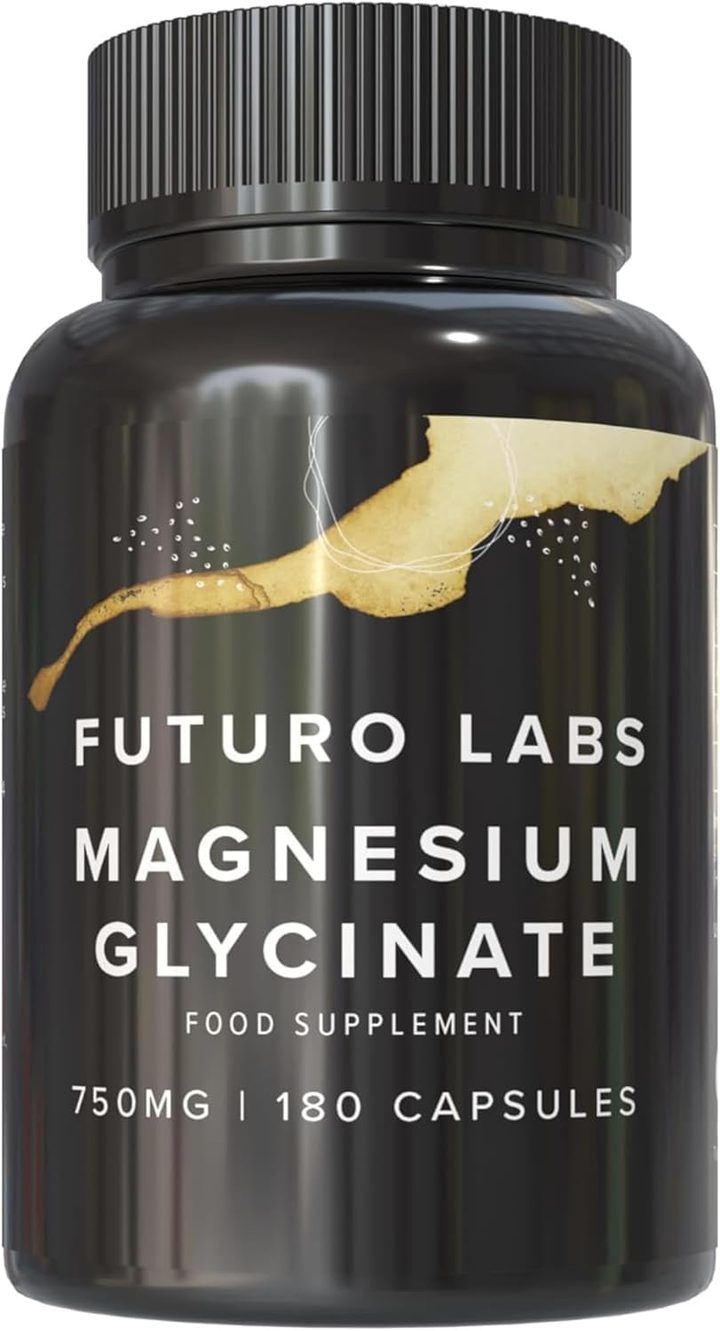
Our brand: the worked example on this page
Futuro Labs Magnesium Glycinate
- 22p a day
- 180 capsules, 2 capsules daily
- Lab tested
- Made in the UK
The magnesium half: Futuro Labs Magnesium Glycinate on Amazon UK, 180 capsules for £19.99. Label breakdown. The buy-page version is best creatine and magnesium supplement; the chelate product is decoded on the magnesium creatine chelate page.
The compatibility answer, and why it is so clean
Creatine is an amino acid derivative stored in muscle as phosphocreatine to regenerate ATP during short maximal efforts; magnesium is a mineral cofactor in hundreds of enzymes, including the ATP-handling ones, which is where the two share a neighbourhood without competing for anything. Neither affects the other's absorption, neither shares a transporter the other saturates, and there is no ceiling interaction, since creatine has no UK guidance level and magnesium's 400mg supplement level is unaffected by anything in a scoop. Kreider's 2017 position stand on creatine describes decades of safe daily use in healthy adults, and nothing in that record involves a mineral conflict. Compatible is an understatement; they are simply unrelated ingredients that happen to be bought by the same people.
The benefits of each, stated at authorised size
Creatine's case is the strongest in sports nutrition: hundreds of trials, and an authorised UK claim that daily consumption of 3g increases physical performance in successive bursts of short-term, high-intensity exercise, which is a lifting session described in regulatory prose. Magnesium's case is quieter and different in kind: no performance boost, but the authorised contributions to normal muscle function, protein synthesis, energy metabolism and reduced tiredness at adequate intake, and the athlete trials, Setaro's performance study and Reno's soreness study, that found benefits where intake had been low. Creatine adds capacity; magnesium removes the drag a narrow diet installs. The stack's honest promise is those two sentences, and the creatine-and-magnesium benefits search variant deserves exactly that answer rather than a synergy story.
| Creatine monohydrate | Magnesium glycinate | |
|---|---|---|
| Daily dose | 3g to 5g | 300mg elemental |
| TimingOurs | Any time; consistency matters, the clock does not | Evening meal; same rule |
| Vehicle | Water, shake or coffee | 2 capsules with food |
| Loading or cycling | Optional loading; no cycling needed | Neither |
| Authorised claim | Physical performance in repeated high-intensity bursts, at 3g | Muscle function, protein synthesis, energy metabolism, tiredness |
| Cost per day | 8p to 15p | 22p |
| Buy as one product? | No: chelate products underdose both | No: keep each honestly dosed |
The routine, and the one product to skip
The combined routine writes itself: 3g to 5g of plain creatine monohydrate in any drink at any hour, daily, and Futuro Labs Magnesium Glycinate, 2 capsules with the evening meal, 300mg elemental at 80% NRV from bisglycinate at 20%, daily including rest days, vegan, UK made under GMP and BRC, panels shown, £19.99 for 180 capsules, 22p a day; both from the first day of a block, both judged over weeks, about 30p a day combined. The one product to skip is the branded magnesium creatine chelate, which the small Brilla and Selsby studies never showed beating monohydrate and which routinely underdoses both actives at a premium. Can I take magnesium with creatine: yes, at dinner or any other hour, as two cheap honest products doing two different jobs.
What to check on the label
- No interaction at any supplement dose: unrelated ingredients, shared customers.
- Creatine 3g to 5g daily, any time: the authorised performance claim starts at 3g.
- Magnesium 300mg elemental with dinner: the reference-intake guarantee.
- Creatine adds capacity, magnesium removes drag: no synergy story required.
- Buy separately: chelate combos underdose both.
Our brand
The worked example: Futuro Labs Magnesium Glycinate
Futuro Labs Magnesium Glycinate is the magnesium half of the stack: 300mg elemental per 2 capsules (80% NRV) from bisglycinate 20%, with dinner daily beside 3g to 5g of monohydrate at any hour, 22p a day from a £19.99 bottle of 180. Vegan, UK made, panels shown.
- Elemental magnesium per serving
- 300mg (80% NRV)
- Form
- magnesium bisglycinate 20%
- Serving
- 2 capsules a day
- Bottle
- 180 capsules, 90 days
- Price
- £19.99 (22p a day)
- Capsule
- vegetarian shell, vegan product
Questions people also ask
Can I take creatine and magnesium at the same time?
Yes, in the same drink or meal if you like. Nothing about either affects the other's absorption or safety.
What are the benefits of creatine with magnesium?
Creatine improves repeated high-intensity performance at 3g daily; magnesium maintains normal muscle and energy metabolism where intake was low. Two separate benefits, no synergy claim.
Do I need extra magnesium if I take creatine?
No: creatine does not deplete magnesium. Take magnesium for the narrow-diet and training-loss reasons that apply with or without creatine.
Should I buy a creatine and magnesium combined product?
No. Chelate combos typically deliver 1g to 2.5g creatine and unprinted magnesium; the two plain products cost about 30p a day and dose both properly.
When should I take magnesium and creatine on training days?
Creatine any time, magnesium with the evening meal, same as rest days. Neither has an acute effect worth timing around a session.
Sources
- Futuro Labs Magnesium Glycinate listing, Amazon UK, label and price checked 31 August 2026. https://www.amazon.co.uk/dp/B0BT7Z5VQW
- Kreider RB, et al. International Society of Sports Nutrition position stand: safety and efficacy of creatine supplementation in exercise, sport, and medicine. Journal of the International Society of Sports Nutrition 2017;14:18. PubMed record
- EFSA Panel on Dietetic Products, Nutrition and Allergies. Scientific Opinion on the substantiation of health claims related to creatine and increase in physical performance during short-term, high intensity, repeated exercise bouts. EFSA Journal 2011;9(7):2303. https://efsa.onlinelibrary.wiley.com/doi/10.2903/j.efsa.2011.2303
- Setaro L, et al. Magnesium status and the physical performance of volleyball players: effects of magnesium supplementation. Journal of Sports Sciences 2014;32(5):438-445. PubMed record
- Reno AM, Green M, Killen LG, O'Neal EK, Pritchett K, Hanson Z. Effects of magnesium supplementation on muscle soreness and performance. Journal of Strength and Conditioning Research 2022;36(8):2198-2203. PubMed record
- Brilla LR, Giroux MS, Taylor A, Knutzen KM. Magnesium-creatine supplementation effects on body water. Metabolism 2003;52(9):1136-1140. PubMed record
- Expert Group on Vitamins and Minerals. Safe Upper Levels for Vitamins and Minerals. Food Standards Agency, 2003 (magnesium guidance level 400mg a day from supplements). https://cot.food.gov.uk/sites/default/files/vitmin2003.pdf
- EFSA Panel on Dietetic Products, Nutrition and Allergies. Scientific Opinion on the substantiation of health claims related to magnesium. EFSA Journal 2010;8(10):1807. https://efsa.onlinelibrary.wiley.com/doi/10.2903/j.efsa.2010.1807