Ghost Fitness/Magnesium/What should you look for in magnesium creatine chelate?
What should you look for in magnesium creatine chelate?
The short answer
In magnesium creatine chelate, look for both doses printed: grams of creatine and milligrams of elemental magnesium per serving. Most products underdose both against the proven 3g to 5g creatine and 300mg magnesium, so buying the two separately usually wins.
- 2 dosesto find on the label: creatine grams and elemental magnesium
- 3 to 5gthe proven daily creatine range
- 300mgthe elemental magnesium target
- About 30pa day for the two bought separately
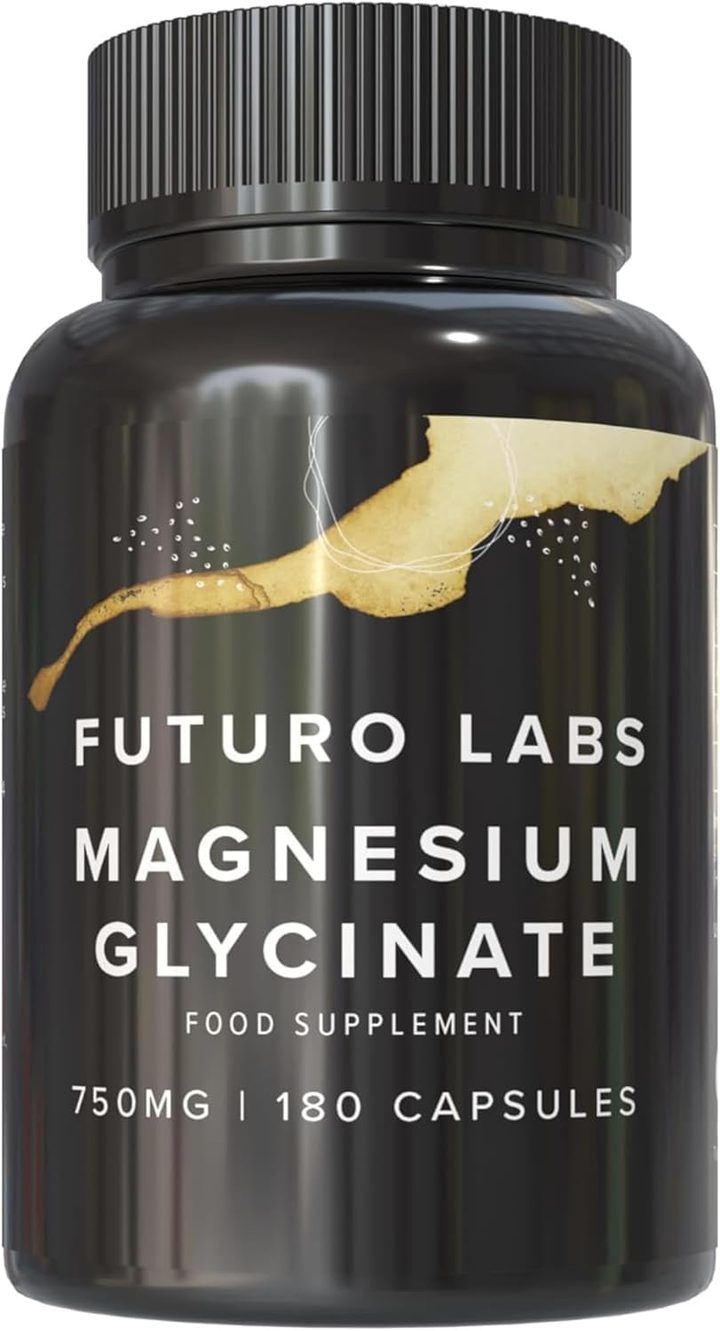
Our brand: the worked example on this page
Futuro Labs Magnesium Glycinate
- 22p a day
- 180 capsules, 2 capsules daily
- Lab tested
- Made in the UK
The magnesium half of the separate-products answer: Futuro Labs Magnesium Glycinate on Amazon UK, 180 capsules for £19.99. Label breakdown. The full pairing is on the creatine and magnesium page.
What magnesium creatine chelate is
It is creatine bonded to magnesium in one molecule, sold under branded ingredient names, on the theory that the pairing improves creatine uptake and adds the mineral in one scoop. Two small studies exist: Brilla's 2003 study found the chelate shifted body water measures over two weeks, and Selsby's 2004 trial found a chelate regimen performed about as well as low-dose creatine monohydrate on bench press work. Neither shows the chelate beating plain monohydrate at the proven dose, which has hundreds of trials and an authorised UK claim at 3g a day behind it. So the chelate is a legitimate molecule with a thin file, priced like a breakthrough.
The label checks, in order
First, creatine grams per serving: the proven range is 3g to 5g a day, and chelate products commonly deliver 1g to 2.5g, below it. Second, elemental magnesium in milligrams with %NRV: the chelate is only about 9% magnesium, so a 2.5g serving carries roughly 200mg at best and many labels print nothing, which under UK rules means you should assume little. Third, the additions: chelate products often pad the scoop with monohydrate, sugars or flavourings, and the ingredients order tells you which molecule is doing the work. Fourth, a shown test panel and a named manufacturer, the constants across this site. A chelate passing all four at a sane price would be a reasonable buy; the pattern on UK shelves is failing the first two by design, because dosing both actives properly would make the scoop enormous and the price honest.
| Typical chelate product | Creatine monohydrate plus glycinate (separately) | |
|---|---|---|
| Creatine per day | 1g to 2.5g, below the proven range | 3g to 5g, the claim-carrying dose |
| Elemental magnesium per dayOurs | About 90mg to 200mg, often unprinted | 300mg, 80% NRV, printed |
| Evidence | Two small studies, no win over monohydrate | Hundreds of monohydrate trials; magnesium's authorised claims at full dose |
| Typical UK cost per day | 50p to £1 | About 30p (8p to 15p creatine, 22p magnesium) |
| Flexibility | One fixed ratio | Each dosed and timed independently |
The verdict, and the pair that does the job
Unless a chelate label prints 3g or more of creatine and a real elemental magnesium figure at a price under the pair below, look for nothing in it and buy the two products the evidence actually used. Plain creatine monohydrate, 3g to 5g daily in a shake, any time, carrying the authorised performance claim for repeated high-intensity efforts. And Futuro Labs Magnesium Glycinate, 2 capsules with the evening meal: 300mg elemental at 80% NRV from bisglycinate at 20%, vegan, UK made under GMP and BRC, panels shown, £19.99 for 180 capsules, 22p a day. About 30p a day for the pair, both doses proven, both printed, no ratio decided for you by a scoop.
What to check on the label
- Creatine grams per serving: 3g to 5g is the proven range; chelates usually miss it.
- Elemental magnesium with %NRV: unprinted means assume little.
- Ingredients order: monohydrate padding and flavourings change what the scoop is.
- Panel shown, manufacturer named: the constants.
- Price against 30p a day for monohydrate plus glycinate bought separately.
Our brand
The worked example: Futuro Labs Magnesium Glycinate
Futuro Labs Magnesium Glycinate is the magnesium half of the alternative: 300mg elemental per 2 capsules (80% NRV) from bisglycinate 20%, vegan, UK made, panels shown, 22p a day from a £19.99 bottle of 180. Pair it with plain monohydrate at 3g to 5g.
- Elemental magnesium per serving
- 300mg (80% NRV)
- Form
- magnesium bisglycinate 20%
- Serving
- 2 capsules a day
- Bottle
- 180 capsules, 90 days
- Price
- £19.99 (22p a day)
- Capsule
- vegetarian shell, vegan product
Questions people also ask
Is magnesium creatine chelate better than creatine monohydrate?
No trial shows it beating monohydrate at the proven dose. The 2004 study found it roughly matched low-dose monohydrate; monohydrate has the depth and the authorised claim.
How much creatine is in magnesium creatine chelate?
Typically 1g to 2.5g per serving, below the 3g to 5g proven range. Read the grams line before anything else.
Does magnesium creatine chelate count toward my magnesium intake?
Only by its elemental content, about 9% of the chelate weight, and only if the label prints it. Most servings carry well under the 300mg target.
What should a good magnesium creatine chelate label show?
Creatine grams, elemental magnesium with %NRV, a clean ingredients line, a shown panel and a named manufacturer. Few show all five.
What should I buy instead?
Plain creatine monohydrate at 3g to 5g plus Futuro Labs Magnesium Glycinate at 300mg elemental: about 30p a day, both doses proven and printed.
Sources
- Futuro Labs Magnesium Glycinate listing, Amazon UK, label and price checked 31 August 2026. https://www.amazon.co.uk/dp/B0BT7Z5VQW
- Brilla LR, Giroux MS, Taylor A, Knutzen KM. Magnesium-creatine supplementation effects on body water. Metabolism 2003;52(9):1136-1140. PubMed record
- Selsby JT, DiSilvestro RA, Devor ST. Mg2+-creatine chelate and a low-dose creatine supplementation regimen improve exercise performance. Journal of Strength and Conditioning Research 2004;18(2):311-315. PubMed record
- Kreider RB, et al. International Society of Sports Nutrition position stand: safety and efficacy of creatine supplementation in exercise, sport, and medicine. Journal of the International Society of Sports Nutrition 2017;14:18. PubMed record
- EFSA Panel on Dietetic Products, Nutrition and Allergies. Scientific Opinion on the substantiation of health claims related to creatine and increase in physical performance during short-term, high intensity, repeated exercise bouts. EFSA Journal 2011;9(7):2303. https://efsa.onlinelibrary.wiley.com/doi/10.2903/j.efsa.2011.2303
- Retained Regulation (EU) No 1169/2011, Annex XIII: nutrient reference value for magnesium 375mg. https://www.legislation.gov.uk/eur/2011/1169/annex/XIII
- EFSA Panel on Dietetic Products, Nutrition and Allergies. Scientific Opinion on the substantiation of health claims related to magnesium. EFSA Journal 2010;8(10):1807. https://efsa.onlinelibrary.wiley.com/doi/10.2903/j.efsa.2010.1807