Ghost Fitness/Magnesium/What should you look for in type of magnesium for muscles and nerves?
What should you look for in type of magnesium for muscles and nerves?
The short answer
For muscles and nerves, look for bisglycinate printing 300mg elemental at 80% NRV: magnesium contributes to normal muscle function and normal functioning of the nervous system, the two claims that cover this ground. Numbness or weakness needs a GP.
- 2 claimsnormal muscle function; normal functioning of the nervous system
- 300mgelemental at 80% NRV, the dose that carries them
- Calciumthe ion magnesium balances at muscle and nerve membranes
- 22pa day for the worked example
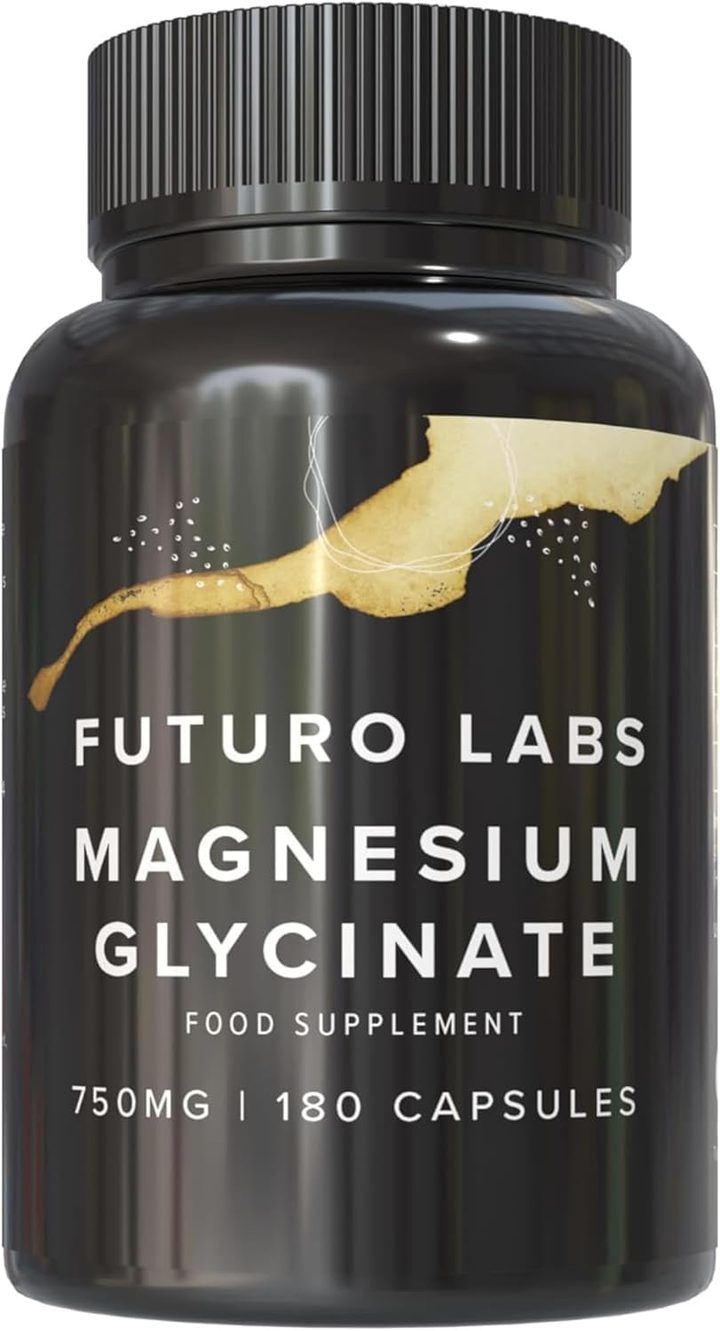
Our brand: the worked example on this page
Futuro Labs Magnesium Glycinate
- 22p a day
- 180 capsules, 2 capsules daily
- Lab tested
- Made in the UK
The worked example: Futuro Labs Magnesium Glycinate on Amazon UK, 180 capsules for £19.99. Label breakdown. Numbness, tingling or true weakness are covered with GP-first framing on the weak muscles page.
Why muscles and nerves are one magnesium story
Muscle and nerve cells run on the same trick, a controlled flood of calcium triggering a signal, and magnesium is the counterweight on both sides: it competes with calcium at the channels that fire the signal and powers the pumps that reset the cell afterwards, the regulation Potter and colleagues mapped in 1981. Run intake low and both tissues get twitchy together, which is why the early signs Gröber's 2015 review lists, cramps, twitching, tremor, tightness, arrive as a set. The UK register captures the pairing in two authorised claims: magnesium contributes to normal muscle function, and to normal functioning of the nervous system, with electrolyte balance and normal psychological function close behind. Those four sentences are the entire honest territory of a muscles-and-nerves magnesium.
What to look for in the type, given that territory
A type that delivers the claim-carrying dose, held daily, is the whole specification, and it points at bisglycinate for the usual reasons: top-group absorption, the lowest laxative effect so 300mg sits inside dinner, and the best unit price. The nerve-marketed alternatives sell adjacency instead: taurate borrows taurine's calming reputation at 9% elemental content, threonate borrows rodent brain data at 8%, and both need three or four capsules to match what two of a glycinate deliver. On the label itself, look for the elemental line at 300mg with 80% NRV, bisglycinate named first with its percentage, a shown heavy-metal and microbiology panel, and no nerve tonic, neuropathy or repair language, none of which is authorised for any form at any dose.
| Type | Elemental content | Capsules for 300mg | The story it sells | Verdict |
|---|---|---|---|---|
| BisglycinateOurs | 14% to 20% | 2 | None needed; dose and tolerance | The specification met |
| Taurate | 9% | 3 to 4 | Taurine's calming adjacency at a decorative dose | More capsules, less magnesium |
| L-threonate | 8% | 4 or more | Rodent brain data | Priced for the story |
| Citrate | 16% | 2, loosening the bowel | General purpose | Morning form; wrong slot for a nightly nerve-and-muscle habit |
| Oxide | 60% on paper | 1, absorbing about 4% | The big front number | No |
The line between a supplement page and a GP appointment
A low intake makes normal muscles and nerves noisy; it does not cause numbness, spreading tingling, true weakness, or one-sided symptoms, and nothing on a supplement label addresses those. Persistent pins and needles belongs with a GP, with vitamin B12 deficiency, which genuinely damages nerves and is common on plant-based diets, high on the checking list, as Stabler's 2013 review sets out. Twitching with weakness or wasting, and any nerve symptom after an injury, are the same referral. For the noisy-but-normal case this page is for, the routine is the site's standard: Futuro Labs Magnesium Glycinate, 2 capsules with the evening meal, 300mg elemental at 80% NRV from bisglycinate at 20%, vegan, UK made under GMP and BRC, panels shown, £19.99 for 180 capsules, 22p a day, judged after a month on the cramps, twitching and tightness that sent you looking.
What to check on the label
- The two claims define the territory: normal muscle function, normal nervous system function.
- 300mg elemental at 80% NRV, bisglycinate first with its percentage.
- No nerve tonic or repair language; none is authorised.
- Panel shown, manufacturer named: the constants.
- Numbness, spreading tingling or true weakness: GP, with B12 on the checking list.
Our brand
The worked example: Futuro Labs Magnesium Glycinate
Futuro Labs Magnesium Glycinate meets the muscles-and-nerves specification: 300mg elemental per 2 capsules (80% NRV) from bisglycinate 20%, evening friendly, vegan, UK made, panels shown, 22p a day from a £19.99 bottle of 180.
- Elemental magnesium per serving
- 300mg (80% NRV)
- Form
- magnesium bisglycinate 20%
- Serving
- 2 capsules a day
- Bottle
- 180 capsules, 90 days
- Price
- £19.99 (22p a day)
- Capsule
- vegetarian shell, vegan product
Questions people also ask
What is the best type of magnesium for muscles and nerves?
Bisglycinate at 300mg elemental daily, the dose that carries the muscle function and nervous system claims. Futuro Labs Magnesium Glycinate: 22p a day, UK made.
Does magnesium help nerve pain or neuropathy?
No claim is authorised and this is medical territory: persistent nerve pain, numbness or tingling needs a GP, with B12 deficiency among the things worth checking.
Is magnesium taurate better for nerves?
No trial says so, and its 9% elemental content means more capsules for less magnesium. The nervous system claim belongs to magnesium itself.
How long until magnesium helps twitching and tight muscles?
Where low intake was the cause, two to four weeks of 300mg daily. A null month means the cause was elsewhere.
Can low magnesium cause tingling?
Marked deficiency can, but new or spreading tingling should be assessed rather than supplemented: GP first, then the month test if all is clear.
Sources
- Futuro Labs Magnesium Glycinate listing, Amazon UK, label and price checked 31 August 2026. https://www.amazon.co.uk/dp/B0BT7Z5VQW
- Potter JD, Robertson SP, Johnson JD. Magnesium and the regulation of muscle contraction. Federation Proceedings 1981;40(12):2653-2656. PubMed record
- Gröber U, Schmidt J, Kisters K. Magnesium in prevention and therapy. Nutrients 2015;7(9):8199-8226. PubMed record
- Stabler SP. Vitamin B12 deficiency. New England Journal of Medicine 2013;368(2):149-160. PubMed record
- EFSA Panel on Dietetic Products, Nutrition and Allergies. Scientific Opinion on the substantiation of health claims related to magnesium. EFSA Journal 2010;8(10):1807. https://efsa.onlinelibrary.wiley.com/doi/10.2903/j.efsa.2010.1807
- Retained Regulation (EU) No 1169/2011, Annex XIII: nutrient reference value for magnesium 375mg. https://www.legislation.gov.uk/eur/2011/1169/annex/XIII
- Expert Group on Vitamins and Minerals. Safe Upper Levels for Vitamins and Minerals. Food Standards Agency, 2003 (magnesium guidance level 400mg a day from supplements). https://cot.food.gov.uk/sites/default/files/vitmin2003.pdf