Ghost Fitness/Magnesium/Which magnesium type to avoid?
Which magnesium type to avoid?
The short answer
Avoid magnesium oxide as a daily source, oral Epsom salts, antacid forms like carbonate and hydroxide, anything in an unprinted blend, and sprays sold as supplements. They are laxatives, antacids or stories. Glycinate and citrate are the forms worth buying.
- About 4%of magnesium oxide is absorbed
- 5 typesto avoid as a daily magnesium source
- 2 typesworth buying: glycinate daily, citrate for the bowel
- 22pa day for the glycinate worked example
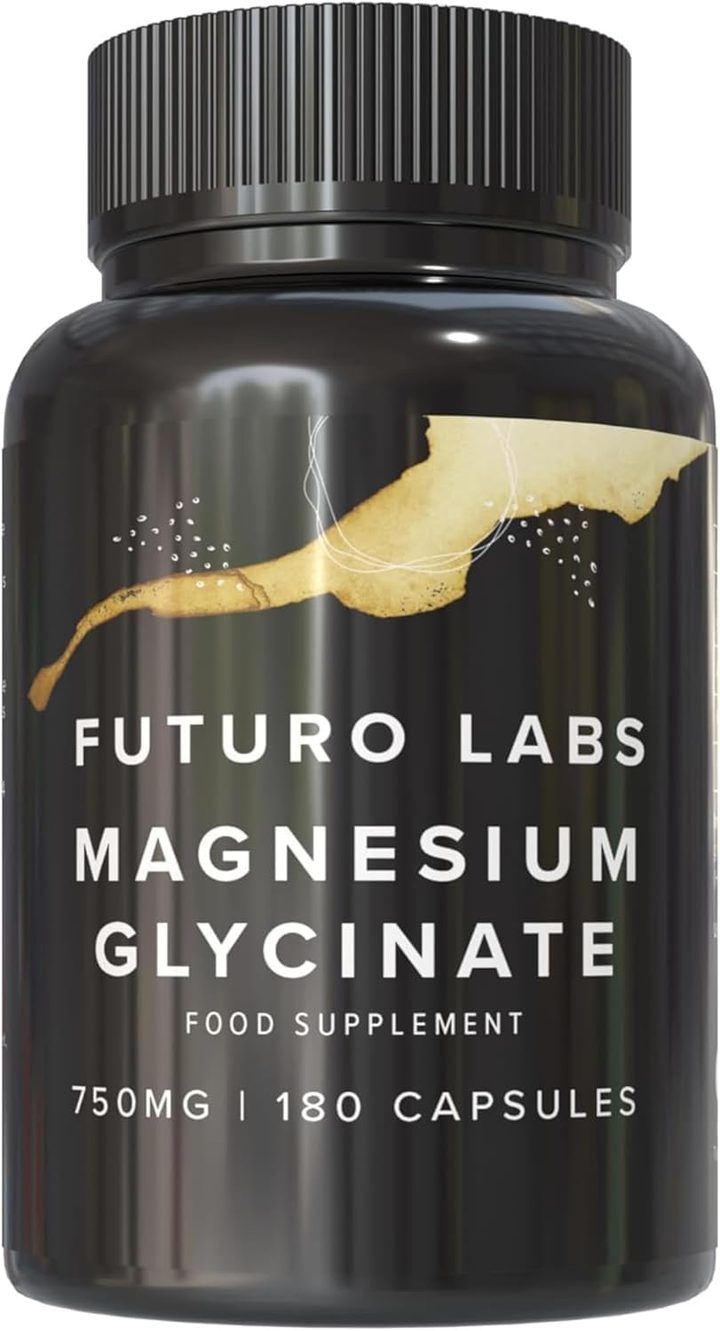
Our brand: the worked example on this page
Futuro Labs Magnesium Glycinate
- 22p a day
- 180 capsules, 2 capsules daily
- Lab tested
- Made in the UK
The form to buy instead: Futuro Labs Magnesium Glycinate on Amazon UK, 180 capsules for £19.99. Label breakdown.
Avoid one: magnesium oxide as a daily source
Oxide is 60% magnesium by weight, which is why it fills cheap tablets and lets labels print 100% NRV, and it is about 4% absorbed, which Firoz and Graber measured against 9% to 11% for the organic forms. The rest stays in the gut pulling water in, which is why oxide works as a laxative and fails as a supplement. It is also the form the negative nocturnal cramp trials used, so its record is poor even where it was tested. As an occasional laxative it is legitimate; as your magnesium, no.
Avoid two: Epsom salts by mouth
Epsom salt is magnesium sulfate, a strong osmotic laxative when swallowed and an old-fashioned one; doses that move the bowel arrive well before doses that would meaningfully raise magnesium status, and the experience in between is not worth describing. In the bath it is harmless and pleasant, and Gröber's 2017 review found no reliable evidence that magnesium crosses the skin, so the bath is relaxation, not supplementation.
Avoid three: antacid forms taken for intake
Magnesium carbonate, hydroxide and trisilicate are antacids; hydroxide is milk of magnesia. They neutralise stomach acid and loosen the bowel, which is what they are for, and they are poorly absorbed as magnesium. Taking them as a supplement gets you the side effects without the mineral. If you need an antacid, use it as one; if you need magnesium, buy magnesium.
Avoid four: unprinted blends
Two or three forms with a total and no split means the elemental dose, the laxative load and the absorption are all unknown. The cheap way to hit a headline number is to make the hidden majority oxide, and the label gives you no way to check. Every ingredient with its amount, or put it back.
Avoid five: sprays, oils and flakes sold as supplements
Transdermal magnesium is a marketing category, not a delivery route; the 2017 review found no reliable evidence of meaningful absorption through skin. Enjoy the bath, skip the claim, and never count a spray toward your intake.
The aspartate question, answered
Magnesium aspartate gets avoided online because aspartate is an excitatory amino acid and the internet connects it to excitotoxicity. At supplement doses that concern has no clinical evidence behind it; aspartate was one of the better absorbed forms in the older bioavailability work and it is the magnesium in the classic ZMA formula. The reasons to pass on it are ordinary ones, lower elemental content and no advantage over glycinate, not fear. The same goes for glutamate-adjacent worries about glycinate: glycine is an inhibitory neurotransmitter and a normal dietary amino acid.
| Type | What it really is | Verdict |
|---|---|---|
| Oxide | Cheap filler, about 4% absorbed, laxative | Avoid as a daily source |
| Sulfate (Epsom) by mouth | Strong laxative | Avoid; bath is fine for the bath's sake |
| Carbonate, hydroxide, trisilicate | Antacids | Avoid as supplements |
| Unprinted blends | Unknown doses, usually oxide-heavy | Avoid |
| Sprays, oils, flakes | No meaningful skin absorption | Avoid as a source |
| Citrate | Well absorbed, osmotic at full dose | Occasional: mornings, regularity |
| Bisglycinate (glycinate)Ours | Well absorbed, low laxative effect | Buy: 300mg elemental daily |
The form to buy instead
Futuro Labs Magnesium Glycinate: 2 capsules give 1500mg chelated bisglycinate at 20%, 300mg elemental, 80% NRV, printed; third-party heavy metal and microbiology panels shown; vegan capsules; made in the UK under GMP and BRC certification; 180 capsules for £19.99, 22p a day. Which magnesium type to avoid is most of the shelf; which to buy is the one whose label proves itself.
What to check on the label
- Oxide anywhere near the top of the ingredients: put it back.
- Antacid forms sold as supplements: carbonate, hydroxide, trisilicate.
- Blends without a printed split.
- Sprays and flakes counted as intake.
- Buy instead: bisglycinate at 300mg elemental with a shown test panel, under 25p a day.
Our brand
The worked example: Futuro Labs Magnesium Glycinate
Futuro Labs Magnesium Glycinate is the buy on this page: 300mg elemental per 2 capsules (80% NRV) from chelated bisglycinate, printed and tested, vegan, UK made, 22p a day from a £19.99 bottle of 180.
- Elemental magnesium per serving
- 300mg (80% NRV)
- Form
- magnesium bisglycinate 20%
- Serving
- 2 capsules a day
- Bottle
- 180 capsules, 90 days
- Price
- £19.99 (22p a day)
- Capsule
- vegetarian shell, vegan product
Questions people also ask
What is the worst form of magnesium?
Oxide as a daily source: about 4% absorbed, laxative, and the form behind most cheap tablets and the negative cramp trials.
Is magnesium aspartate bad for you?
No clinical evidence supports the excitotoxicity worry at supplement doses. It is simply beaten by glycinate on elemental content and tolerance.
Should I avoid magnesium citrate?
No; avoid it at the wrong time. It is well absorbed and useful in the morning or for regularity, laxative at a full evening dose.
Is magnesium stearate in capsules harmful?
No. It is a flow agent used in tiny amounts, unrelated to magnesium supplementation; the milligrams involved are trivial.
Which magnesium should I buy?
Bisglycinate at 300mg elemental with a shown test panel. Futuro Labs Magnesium Glycinate: 22p a day, UK made.
Sources
- Futuro Labs Magnesium Glycinate listing, Amazon UK, label and price checked 31 August 2026. https://www.amazon.co.uk/dp/B0BT7Z5VQW
- Firoz M, Graber M. Bioavailability of US commercial magnesium preparations. Magnesium Research 2001;14(4):257-262. PubMed record
- Walker AF, Marakis G, Christie S, Byng M. Mg citrate found more bioavailable than other Mg preparations in a randomised, double-blind study. Magnesium Research 2003;16(3):183-191. PubMed record
- Roguin Maor N, et al. Effect of magnesium oxide supplementation on nocturnal leg cramps: a randomized clinical trial. JAMA Internal Medicine 2017;177(5):617-623. PubMed record
- Gröber U, Werner T, Vormann J, Kisters K. Myth or reality, transdermal magnesium? Nutrients 2017;9(8):813. https://pubmed.ncbi.nlm.nih.gov/28788060/
- Expert Group on Vitamins and Minerals. Safe Upper Levels for Vitamins and Minerals. Food Standards Agency, 2003 (magnesium guidance level 400mg a day from supplements). https://cot.food.gov.uk/sites/default/files/vitmin2003.pdf
- EFSA Panel on Dietetic Products, Nutrition and Allergies. Scientific Opinion on the substantiation of health claims related to magnesium. EFSA Journal 2010;8(10):1807. https://efsa.onlinelibrary.wiley.com/doi/10.2903/j.efsa.2010.1807