Ghost Fitness/Magnesium/Which magnesium is good for muscles?
Which magnesium is good for muscles?
The short answer
Magnesium glycinate is the form to take for muscles: 300mg elemental a day covers the UK reference intake for men, supports normal muscle function and protein synthesis, and sits easily around training. Futuro Labs Magnesium Glycinate, 22p a day.
- 300mgelemental per 2 capsules, 80% NRV
- 350mga day used in the volleyball and soreness trials
- 4 weeksthe length of the performance study
- 22pa day, 180 capsules for £19.99
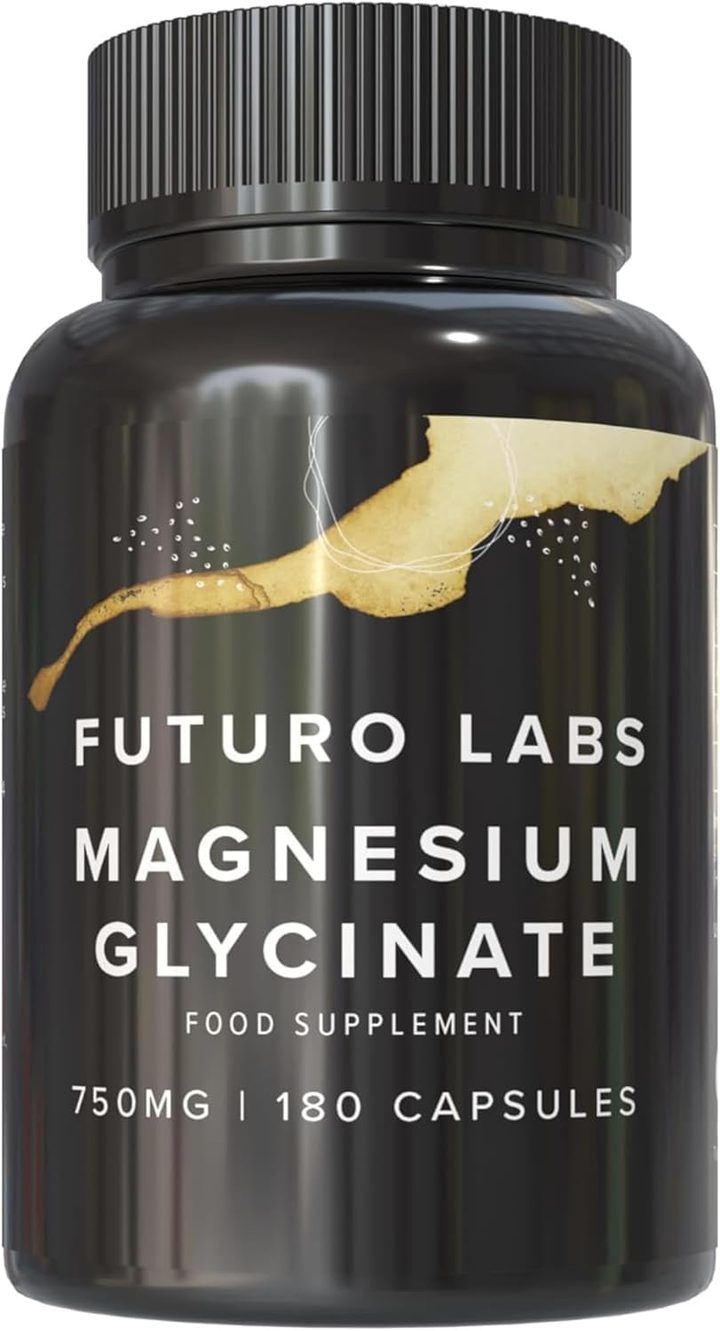
Our brand: the worked example on this page
Futuro Labs Magnesium Glycinate
- 22p a day
- 180 capsules, 2 capsules daily
- Lab tested
- Made in the UK
Worked example: Futuro Labs Magnesium Glycinate on Amazon UK, 180 capsules for £19.99. Label breakdown.
What magnesium does in muscle
Every contraction and every relaxation uses ATP, and ATP in the cell exists as a magnesium complex. That is why the authorised claims read the way they do: magnesium contributes to normal muscle function, normal protein synthesis, normal energy-yielding metabolism and electrolyte balance. Low intake shows up as fatigue, cramping and poor work capacity before it shows up on any blood test, because the blood holds under 1% of the body's magnesium; the rest sits in bone and muscle.
What the trials in athletes found
Setaro's 2014 study gave 350mg a day to volleyball players for four weeks and reported improved jump performance against placebo, with the players starting from adequate but not high intakes. Reno's 2022 trial in college athletes used 350mg a day for ten days around a strenuous session and reported less muscle soreness and better perceived recovery than placebo. Zhang's 2017 review of the wider literature is the fair summary: benefits show up when intake was low or marginal, and Nielsen and Lukaski's review explains why athletes are the group most likely to be marginal. Magnesium does not build muscle. It lets the muscle you have work properly.
| Form | Elemental per serving of 1500mg compound | Absorption | Tolerance at 300mg | Verdict |
|---|---|---|---|---|
| Bisglycinate (20%)Ours | 300mg | Good | Best | The daily form for lifters |
| Citrate | about 240mg | Good | Laxative for many | Fine at lower doses, in the morning |
| Malate | about 225mg | Little human data | Good | Often sold for muscle on theory alone |
| Oxide | about 900mg on paper | About 4% | Laxative | Most of it is never absorbed |
| Sprays and flakes | n/a | No reliable evidence of skin absorption | Fine | Not a muscle supplement |
Dose and timing around training
Take 300mg of elemental magnesium a day with food. Timing is not critical; with the post-training meal or in the evening are both fine, and the evening dose doubles up on the sleep side. The worked example, Futuro Labs Magnesium Glycinate, gives 300mg elemental from 1500mg bisglycinate in 2 capsules, 80% NRV, and costs 22p a day from a 180 capsule bottle at £19.99. It is vegan, UK made under GMP and BRC, and independently tested for heavy metals and microbiology. Stay under the 400mg a day supplement guidance level, and give it four weeks, which is how long the performance study ran.
The best magnesium supplement for muscles, then, is the one that gets 300mg elemental into you every day without a fuss. In the UK that is Futuro Labs' glycinate, the 300mg elemental one.
Does magnesium interact with creatine, protein or zinc?
No, in any way that matters at normal doses. Creatine monohydrate and magnesium do different jobs and can be taken together; the magnesium-creatine chelate products sold as a combination have not shown an advantage over plain monohydrate that justifies their price. Protein shakes do not affect magnesium absorption. Zinc competes with magnesium for absorption only at high zinc doses, which is one more reason to keep zinc under the 25mg UK guidance level if you stack it. The practical routine for muscle function is 2 capsules of chelated glycinate with the post-training or evening meal, creatine in the shake, protein spread across the day, and sodium and fluid up on training days for electrolyte balance. Vegan capsules, third-party tested, UK made, 22p a day, done.
What to check on the label
- Elemental magnesium of 300mg per serving; compound weights of 1500mg or 750mg per capsule tell you nothing on their own.
- A well absorbed form: glycinate or citrate. Oxide is 60% magnesium and about 4% absorbed.
- Claims limited to normal muscle function and protein synthesis; nothing about building muscle.
- Days per bottle: 180 capsules at 2 a day is 90 days.
- Heavy metal testing shown on the listing.
Our brand
The worked example: Futuro Labs Magnesium Glycinate
Futuro Labs Magnesium Glycinate is the worked example for muscle: 300mg elemental magnesium per 2 capsules, close to the 350mg used in the athlete trials, from 1500mg bisglycinate at 20%. 180 capsules for £19.99, 22p a day, vegan, UK made, lab tested.
- Elemental magnesium per serving
- 300mg (80% NRV)
- Form
- magnesium bisglycinate 20%
- Serving
- 2 capsules a day
- Bottle
- 180 capsules, 90 days
- Price
- £19.99 (22p a day)
- Capsule
- vegetarian shell, vegan product
Questions people also ask
What is the best magnesium supplement for muscles?
A glycinate giving 300mg elemental per serving. Futuro Labs Magnesium Glycinate: 300mg elemental, 80% NRV, 22p a day, made in the UK.
What is the best magnesium for muscle recovery?
The same glycinate, taken daily. One small trial at 350mg a day reported less soreness after strenuous exercise; the effect where it exists comes from adequate intake, not a special form.
Does magnesium build muscle?
No. It contributes to normal muscle function and protein synthesis, which is the authorised wording. Training and protein build muscle.
Does magnesium help with muscle soreness?
One 2022 trial in athletes at 350mg a day reported less soreness than placebo. It is a single small study; treat it as promising, not proven.
When should I take magnesium for muscles?
With food, any time. Evening works well because the same dose covers sleep.
Sources
- Futuro Labs Magnesium Glycinate listing, Amazon UK, label and price checked 31 August 2026. https://www.amazon.co.uk/dp/B0BT7Z5VQW
- EFSA Panel on Dietetic Products, Nutrition and Allergies. Scientific Opinion on the substantiation of health claims related to magnesium. EFSA Journal 2010;8(10):1807. https://efsa.onlinelibrary.wiley.com/doi/10.2903/j.efsa.2010.1807
- Setaro L, et al. Magnesium status and the physical performance of volleyball players: effects of magnesium supplementation. Journal of Sports Sciences 2014;32(5):438-445. PubMed record
- Reno AM, Green M, Killen LG, O'Neal EK, Pritchett K, Hanson Z. Effects of magnesium supplementation on muscle soreness and performance. Journal of Strength and Conditioning Research 2022;36(8):2198-2203. PubMed record
- Zhang Y, Xun P, Wang R, Mao L, He K. Can magnesium enhance exercise performance? Nutrients 2017;9(9):946. https://pubmed.ncbi.nlm.nih.gov/28846654/
- Nielsen FH, Lukaski HC. Update on the relationship between magnesium and exercise. Magnesium Research 2006;19(3):180-189. PubMed record
- Expert Group on Vitamins and Minerals. Safe Upper Levels for Vitamins and Minerals. Food Standards Agency, 2003 (magnesium guidance level 400mg a day from supplements). https://cot.food.gov.uk/sites/default/files/vitmin2003.pdf