Ghost Fitness/Magnesium/Are magnesium bisglycinate and magnesium glycinate the same thing?
Are magnesium bisglycinate and magnesium glycinate the same thing?
The short answer
Yes, the same thing: bis counts the two glycine molecules chelating each magnesium atom, the way chemists name ligands. Labels use both names interchangeably, sometimes on one bottle. What varies is the percentage and the elemental dose, not the name.
- 1 compoundbehind both names
- Bis = 2the glycines the prefix is counting
- 1 bottleoften carrying both names at once
- 300mgelemental: the number that varies and matters
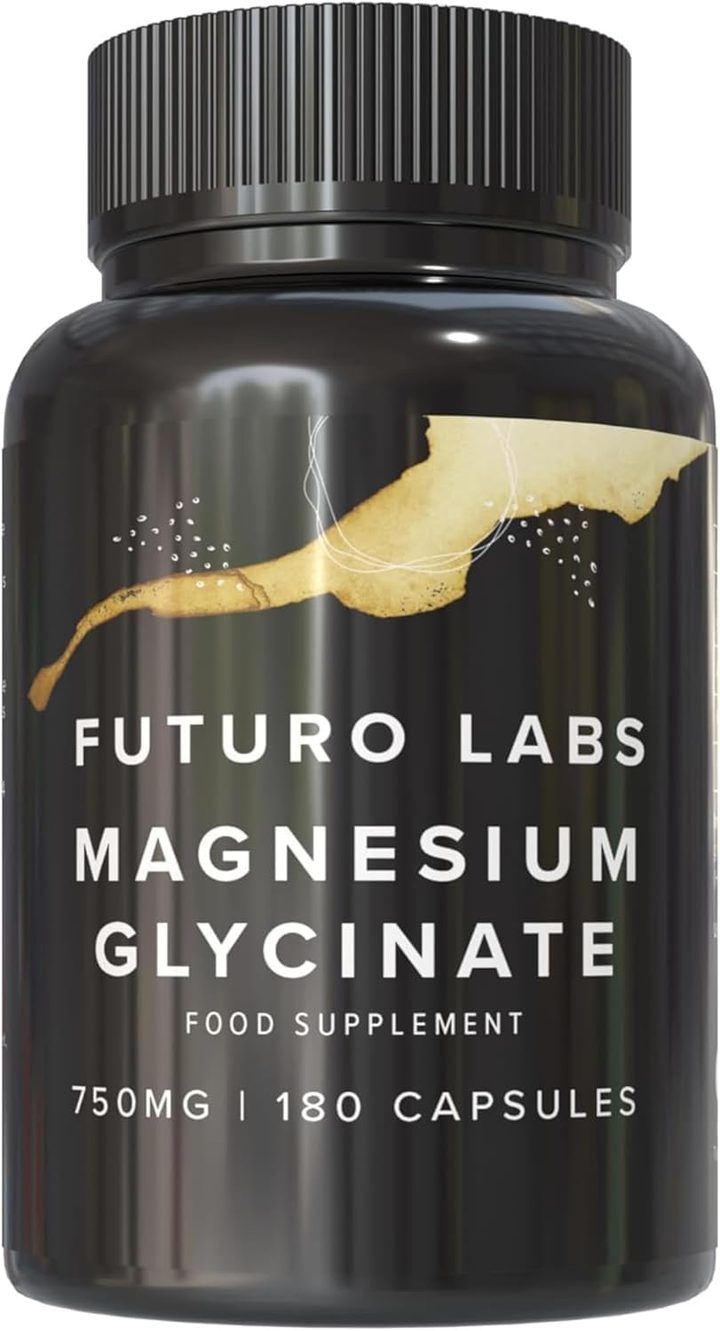
Our brand: the worked example on this page
Futuro Labs Magnesium Glycinate
- 22p a day
- 180 capsules, 2 capsules daily
- Lab tested
- Made in the UK
One bottle, both names: Futuro Labs Magnesium Glycinate on Amazon UK, sold as Magnesium Glycinate with magnesium bisglycinate 20% on the panel. £19.99 for 180. Label breakdown. The fuller difference page is glycinate vs bisglycinate.
The naming convention, in one short chemistry lesson
Chemists count the pieces attached to a central atom, and the counting prefixes are di and bis, tri and tris. A magnesium ion balanced by two glycine molecules is therefore, in careful nomenclature, magnesium bisglycinate, the bis doing nothing grander than counting to two, the same way dihydrogen monoxide counts water's hydrogens. Everyday label English then does what everyday English always does and drops the counter, leaving magnesium glycinate. Two registers of one name for one structure: a magnesium atom held in the claw of two glycines, the chelate this whole section of the site is built around. There is no monoglycinate product lurking as the alternative, and no version of the compound the fuller name upgrades you to.
The proof, sitting on a single label
The tidiest evidence that the names are interchangeable is that brands interchange them mid-label without anyone blinking, and the worked example does exactly this: the front of the bottle says Magnesium Glycinate, the ingredients line says magnesium bisglycinate 20%, and both statements describe the identical powder in the identical capsules. Regulators are unbothered because the food rules care that the ingredient is identified accurately, not which register of its name is used, and retail search treats the two as synonyms, which is why listings stuff both into titles. Where a listing implies bisglycinate is the stronger or purer variant, it is marketing a synonym, and this site's standing advice applies: a label leaning on vocabulary while hiding numbers has told you its game.
| Property | Glycinate vs bisglycinate | Where real differences live |
|---|---|---|
| Chemical structure | Identical: one magnesium, two glycines | n/a |
| Absorption and tolerance | Identical: same compound behaves the same way | n/a |
| Authorised claims available | Identical, at qualifying doses | n/a |
| Magnesium content of the material | Name says nothing | 14% fully reacted vs 18% to 20% buffered: the declared percentage |
| Elemental dose per serving | Name says nothing | 40mg tokens to 300mg full servings: the panel line |
| Price and quality | Name says nothing | Pence per 100mg elemental; shown panels; named manufacturer |
The habit that replaces the worry
Once the synonym is settled, redirect the attention it was consuming: skim past whichever spelling a bottle prefers and read the two numbers that separate real products, the declared percentage of the material and the elemental dose with %NRV, then the constants, shown panels, named address, price per day. The worked example passes under either name: Futuro Labs Magnesium Glycinate, magnesium bisglycinate 20%, 1500mg per 2-capsule serving, elemental magnesium 300mg at 80% NRV, vegan HPMC capsules, UK made under GMP and BRC, third-party panels shown, £19.99 for 180 capsules, 22p a day. Are magnesium bisglycinate and magnesium glycinate the same thing: yes, by chemistry, by regulation and by the label in front of you, and the only comparison worth running lives two lines below the name.
What to check on the label
- One compound, two registers of its name: bis just counts the glycines.
- Brands use both on one label: the worked example does, legally and normally.
- No stronger variant exists behind the longer name: upgrades are marketing.
- The numbers that vary: percentage and elemental dose, plus panels and price.
- Search either spelling; filter by the panel, not the vocabulary.
Our brand
The worked example: Futuro Labs Magnesium Glycinate
Futuro Labs Magnesium Glycinate carries both names for one powder: Glycinate on the front, bisglycinate 20% in the ingredients, 300mg elemental at 80% NRV on the panel, 22p a day from a £19.99 bottle of 180. Vegan, UK made, panels shown.
- Elemental magnesium per serving
- 300mg (80% NRV)
- Form
- magnesium bisglycinate 20%
- Serving
- 2 capsules a day
- Bottle
- 180 capsules, 90 days
- Price
- £19.99 (22p a day)
- Capsule
- vegetarian shell, vegan product
Questions people also ask
Is magnesium bisglycinate stronger than magnesium glycinate?
No: they are the same compound. Strength differences between bottles come from the elemental dose per serving, which the panel states.
Why do chemists say bisglycinate?
The bis prefix counts ligands: two glycine molecules per magnesium. Everyday naming drops the counter; the structure is unchanged.
Is there a magnesium monoglycinate?
Not as a supplement category: the stable chelate pairs one magnesium with two glycines, which is what both names describe.
Can a label switch between the two names?
Yes, and many do, front of pack versus ingredients line. It is normal practice, not evasion.
What should I compare instead of the name?
The declared material percentage, the elemental line with %NRV, shown test panels and price per 100mg elemental.
Sources
- Futuro Labs Magnesium Glycinate listing, Amazon UK, label and price checked 31 August 2026. https://www.amazon.co.uk/dp/B0BT7Z5VQW
- Ranade VV, Somberg JC. Bioavailability and pharmacokinetics of magnesium after administration of magnesium salts to humans. American Journal of Therapeutics 2001;8(5):345-357. PubMed record
- Retained Regulation (EU) No 1169/2011, Annex XIII: nutrient reference value for magnesium 375mg. https://www.legislation.gov.uk/eur/2011/1169/annex/XIII
- The Food Supplements (England) Regulations 2003 (food supplements are regulated as foods in the UK). https://www.legislation.gov.uk/uksi/2003/1387/contents/made
- EFSA Panel on Dietetic Products, Nutrition and Allergies. Scientific Opinion on the substantiation of health claims related to magnesium. EFSA Journal 2010;8(10):1807. https://efsa.onlinelibrary.wiley.com/doi/10.2903/j.efsa.2010.1807